To handle allergies in breakfast catering without confusion, you should clearly label allergy-safe foods and keep them separate from allergen-containing items. Designate specific areas and utensils for allergy-friendly options, and double-check ingredients to prevent cross-contact. Train your staff to recognize allergies and communicate with guests about safety measures. Stay organized and attentive during service to guarantee all precautions are maintained. For more tips on maintaining safety and clarity, continue exploring effective allergy management strategies.

Get kitchen staples and gadgets delivered free with Prime
- Fast, free delivery on millions of items
- Prime Video, Amazon Music and more included
- Member-only deals all year
Key Takeaways
- Clearly label allergy-safe options and keep them separate from allergen-containing foods.
- Designate dedicated preparation and serving areas to prevent cross-contact.
- Train staff thoroughly on allergy protocols and effective guest communication.
- Use separate utensils, plates, and signs for allergy-friendly items throughout service.
- Maintain an updated allergy list and double-check ingredients before serving each dish.
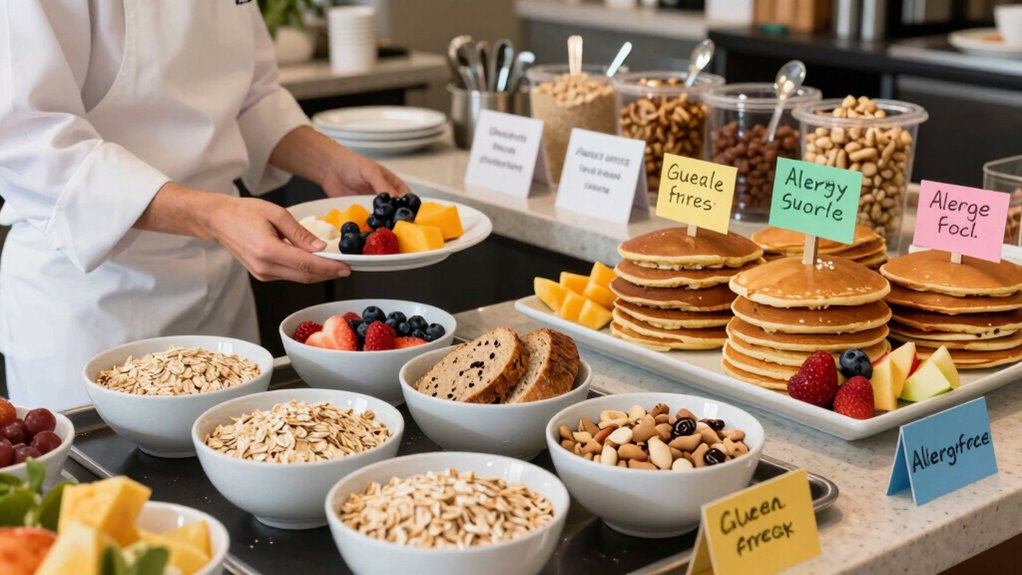
Are you prepared to manage allergies effectively in breakfast catering? Navigating this area requires a clear understanding of allergies and how to prevent cross-contact. Nut allergy awareness is especially crucial, as nuts are common allergens that can cause severe reactions. You need to be vigilant about ingredient labels and food preparation areas to guarantee nuts aren’t accidentally introduced into dishes. Clearly labeling items with nuts and communicating with your guests about potential risks can make a significant difference. When it comes to gluten-free options, you must be equally attentive. Many breakfast items, like muffins, pancakes, and granola, may contain gluten, so offering dedicated gluten-free alternatives is essential. These options should be prepared separately from gluten-containing foods to prevent cross-contamination.
Effective allergy management in breakfast catering includes vigilant labeling, separate preparation, and clear communication with guests.
To handle allergies without confusion, start by gathering detailed information from your guests about their specific dietary restrictions. Ask if they have allergies to nuts, gluten, dairy, eggs, or other common allergens. This helps you plan your menu and avoid surprises on the day of the event. Once you understand their needs, set up a clear labeling system. Use distinct signs or tags for allergy-safe items, and keep allergen-containing foods separate from others. Consistency is key — always double-check ingredients and cross-contact risks when preparing dishes. If you’re serving multiple options, designate a specific area for allergy-friendly foods, making it easier for guests to identify safe choices without confusion. Additionally, understanding outdoor cooking techniques can help you better prepare and serve allergen-safe meals in various settings. Being aware of food safety practices is also crucial for preventing cross-contact and ensuring allergen control. Incorporating knowledge about proper cleaning procedures can further reduce the risk of accidental allergen transfer between dishes. Developing a comprehensive allergy management plan can help streamline your process and ensure consistent safety measures are followed.
Communication is essential in allergy management. Make sure your staff is trained to recognize allergies and understands the importance of avoiding cross-contact. Encourage staff to ask guests about their allergies and to inform them about the precautions you’ve put in place. When serving breakfast, use separate utensils, plates, and serving dishes for allergy-safe foods whenever possible. For gluten-free options, clearly communicate which items are safe, and avoid using shared equipment that might have come into contact with gluten. Additionally, training staff on allergy protocols ensures everyone is prepared to handle allergy concerns confidently and effectively.
Finally, staying organized and attentive throughout the event helps prevent mistakes. Keep an allergy list handy, and review it before serving each dish. Regularly clean surfaces and utensils to reduce cross-contact risk. When guests know you take allergies seriously and have measures in place, they’ll feel more comfortable and respected. By being proactive about nut allergy awareness, offering gluten-free options, and maintaining clear communication, you can handle allergies in breakfast catering smoothly and confidently, guaranteeing everyone enjoys a safe and satisfying meal.
As an affiliate, we earn on qualifying purchases.
Frequently Asked Questions
How Can I Identify Hidden Allergens in Breakfast Foods?
To identify hidden allergens in breakfast foods, you should carefully read ingredient labels, as they often list potential allergens. Additionally, conduct allergen testing on ingredients and prepared dishes to catch any contaminants or cross-contact. Always verify that suppliers provide accurate allergen information, and communicate with them about your specific needs. Being diligent with labels and testing helps you prevent allergic reactions and guarantees safe, inclusive catering.
What Training Should Staff Receive About Allergy Management?
You should guarantee staff receives thorough allergy awareness training, focusing on recognizing allergens, cross-contact prevention, and proper communication with guests. Conduct regular staff training sessions to keep everyone updated on allergy protocols and emergency procedures. Emphasize the importance of clear labeling and asking guests about allergies. Well-trained staff can confidently handle allergy concerns, reduce risks, and create a safe, inclusive breakfast catering experience for all guests.
How Do I Communicate Allergy Information to Guests Effectively?
Imagine it’s the roaring twenties all over again, and you’re entrusted with guest safety. You communicate allergy information clearly by using allergy awareness signage, verbal confirmations, and detailed menus. Guarantee your staff is proactive, approachable, and knowledgeable. Encourage guests to ask questions and share their allergies. Consistent, transparent communication ensures everyone feels secure and valued, turning breakfast into a safe, enjoyable experience for all.
What Are the Best Practices for Cross-Contact Prevention?
You should implement strict cross-contact prevention by thoroughly cleaning surfaces and utensils between uses, and using separate equipment for allergen-free options. Incorporate clear allergy labeling on all dishes to inform guests, and guarantee ingredient sourcing prioritizes allergen-free ingredients when possible. Educate your staff about cross-contact risks, and always communicate openly with guests about potential allergens. These practices help minimize risks and ensure a safe breakfast experience for everyone.
How Should Emergency Responses Be Handled for Allergic Reactions?
In emergencies, you should activate your emergency protocols immediately, guaranteeing quick response coordination. Notify trained staff and emergency services without delay, providing clear details about the allergic reaction. Stay calm, keep the affected person comfortable, and avoid giving food or liquids unless instructed by medical personnel. Your swift, organized response can prevent escalation and ensure the individual gets the necessary treatment promptly. Always review and rehearse these protocols regularly.
Conclusion
By being brave with boundaries, you’ll banish blunders and build better breakfast experiences. Clear communication, careful checks, and conscientious catering create a confident, clutter-free culinary scene. When you prioritize precise labels and proactive planning, you prevent potential pitfalls and promote peace of mind for all. With a mindful mindset and meticulous methods, you transform breakfast catering into a safe, satisfying, and seamless start to every day. Your allergy-aware approach guarantees everyone enjoys their morning meal without worry or wonder.
NFL season / tailgating Picks
team gear
As an affiliate, we earn on qualifying purchases.