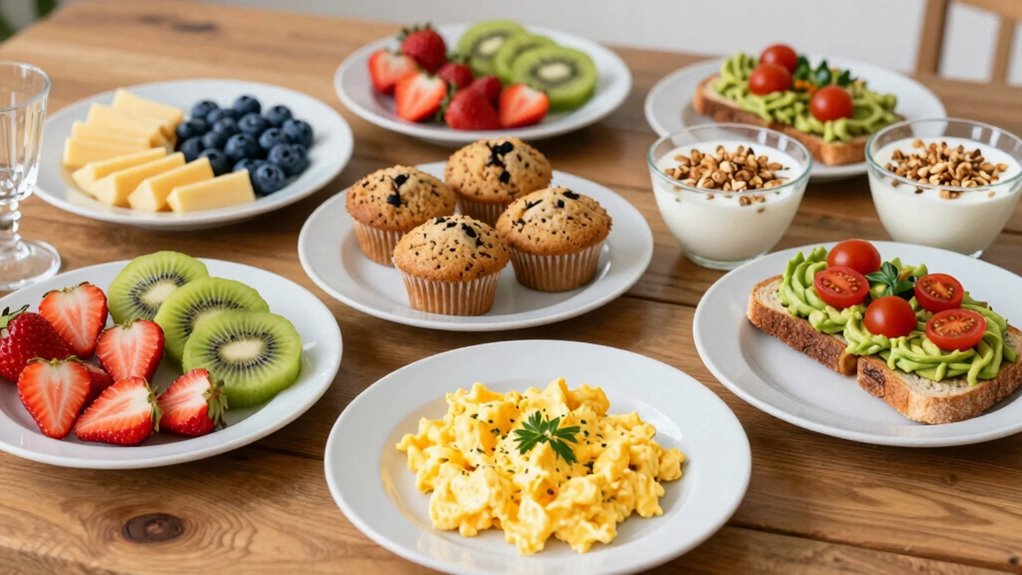

To build a breakfast catering menu for mixed dietary needs, start by including clearly labeled gluten-free and vegan options, like fresh fruit, grain bowls, and plant-based baked goods. Incorporate textures and flavors to appeal to various tastes, offering both indulgent and healthful choices. Be transparent with labels and accommodate familiar flavors with healthy twists. Planning ahead guarantees you create a welcoming, inclusive menu. Keep exploring to discover even more ways to meet diverse guest needs effortlessly.
Open a free Amazon Business account
Business pricing, bulk buying and tax-exempt orders.
As an affiliate, we earn on qualifying purchases.
Key Takeaways
- Include a variety of gluten-free, vegan, and allergen-friendly options clearly labeled for easy guest identification.
- Offer diverse textures and flavors to cater to different preferences and dietary restrictions.
- Incorporate familiar, health-conscious choices like whole grains, plant-based milks, and naturally gluten-free items.
- Plan menu items that are naturally inclusive, such as tofu scramble, grain bowls, and fruit salads with simple ingredients.
- Communicate transparency through clear labeling to demonstrate attentiveness and facilitate informed guest choices.

Creating a breakfast catering menu that satisfies diverse dietary needs can seem challenging, but with thoughtful planning, you can craft options everyone will enjoy. The key is to include a variety of dishes that cater to common dietary restrictions and preferences, making sure your menu is inclusive. Start by offering gluten-free options, such as fresh fruit platters, gluten-free muffins, or grain bowls with quinoa or rice. These choices are naturally free of gluten and appeal to guests with celiac disease or gluten sensitivities. Incorporating vegan substitutions is equally important, especially for those avoiding animal products. You can prepare vegan breakfast sandwiches with plant-based sausage and dairy-free cheese, or serve tofu scramble instead of traditional eggs. These substitutions not only accommodate vegans but also appeal to health-conscious guests seeking lighter, plant-based choices.
When designing your menu, think about offering a range of textures and flavors. For example, include crunchy granola, creamy yogurt alternatives like coconut or almond yogurt, and savory options such as roasted vegetables or beans. This diversity ensures that all guests find something they enjoy, regardless of their dietary restrictions. Keep in mind that labeling is vital; clearly identify gluten-free items, vegan options, and any dishes containing common allergens. This transparency helps guests make informed choices and shows your attentiveness to their needs.
Balancing indulgence with healthfulness helps to keep your menu appealing to a broad audience. For baked goods, consider offering gluten-free and vegan muffins, scones, or bread. For beverages, include plant-based milks like almond, soy, or oat milk alongside regular options. These small touches demonstrate your commitment to inclusivity and enhance guest satisfaction. Incorporate familiar flavors and comfort foods, but adapt them with dietary-friendly ingredients where possible. For example, serve fruit salads with a drizzle of honey or agave, and have a selection of whole-grain and gluten-free bread for toast.
Ultimately, the success of your breakfast catering menu depends on your ability to think ahead about different dietary needs and preferences. By including gluten-free options, vegan substitutions, and clearly labeling everything, you create a welcoming environment where everyone feels considered. The effort you put into offering diverse, thoughtful choices will be appreciated and remembered, making your catering stand out and guaranteeing all your guests start their day on a positive note.
As an affiliate, we earn on qualifying purchases.
Frequently Asked Questions
How Can I Accommodate Allergies in My Breakfast Menu?
To accommodate allergies, you should clearly label nut allergy precautions on your menu and use nut-free ingredient sourcing whenever possible. Implement strict cross-contamination prevention measures in your kitchen and train staff to handle allergen concerns carefully. Regularly review ingredient labels and stay updated on allergen information. By taking these steps, you guarantee safety for all guests and build trust in your catering service.
What Are the Best Gluten-Free Breakfast Options?
You should include gluten-free snacks like fruit and nut mixes, yogurt parfaits, or rice cakes topped with spreads. Breakfast smoothies are also a great option—blend fresh fruits, vegetables, and dairy or dairy-free milk for a tasty, gluten-free meal. These options cater to gluten sensitivities while offering variety and flavor, ensuring everyone at your event finds something satisfying. Always label items clearly to avoid cross-contamination.
How Do I Ensure Vegan Choices Are Satisfying?
To guarantee vegan choices are satisfying, focus on flavorful substitutions and plant-based protein. For example, you could serve a chickpea scramble packed with spices, mimicking traditional eggs but providing rich flavor and texture. This approach appeals to vegans and meat-eaters alike, highlighting how flavorful substitutions can elevate dishes. Incorporate hearty plant-based proteins like tofu or tempeh to boost satisfaction, making sure your vegan options are both delicious and filling.
What Are Popular Low-Carb Breakfast Catering Ideas?
You can offer popular low-carb breakfast catering ideas like savory egg muffins, smoked salmon platters, and cheese boards. Incorporate sweet alternatives such as berries or nut-based yogurt dips to satisfy sweet cravings without carbs. Include protein-packed options like Greek yogurt, boiled eggs, or sausage links. These choices cater to low-carb diets while providing variety, flavor, and satisfying textures that guests will enjoy.
How Should I Label Dietary-Specific Items for Guests?
You should use clear menu labels with dietary icons to indicate specific needs, like gluten-free, vegan, or keto options. Place these icons prominently next to each item so guests can easily identify suitable choices. Make sure the icons are simple and universally understood. Consistent use of dietary icons on your menu labels not only helps guests navigate their options confidently but also shows your attention to accommodating diverse dietary needs.
Conclusion
By carefully balancing flavors and accommodating various dietary restrictions, you create a welcoming breakfast menu. For example, a café in Portland added gluten-free muffins and vegan smoothies alongside traditional options, leading to increased customer satisfaction and repeat business. When you consider diverse needs—offering gluten-free, vegan, and low-sugar choices—you not only cater to more guests but also stand out as an inclusive, thoughtful caterer. Your effort can turn every breakfast into a delightful, memorable experience.
Back to school Picks
back to school
As an affiliate, we earn on qualifying purchases.