In breakfast catering, meeting gluten-free, vegan, and keto needs requires careful ingredient selection, clear labeling, and strict cross-contamination prevention. Use gluten-free grains, plant-based proteins, and low-carb vegetables while avoiding common allergens and starches. Train staff on allergen awareness and maintain separate preparation areas. Balancing flavor and nutrition with colorful presentation makes dishes appealing. For more tips on creating safe, satisfying options that cater to various dietary restrictions, explore the strategies ahead.
Key Takeaways
- Clearly label and separate gluten-free, vegan, and keto options to prevent cross-contamination and ensure dietary safety.
- Use appropriate ingredients like gluten-free grains, plant-based proteins, and low-carb vegetables to meet specific dietary needs.
- Train staff in allergen awareness, proper handling, and sanitation to avoid cross-contact and maintain food safety standards.
- Incorporate appealing presentation techniques and garnishes tailored to each diet to enhance visual appeal and guest satisfaction.
- Engage with clients through detailed communication to understand their dietary restrictions and customize breakfast offerings accordingly.
Hamilton Beach Panini Press, Sandwich Maker & Electric Indoor Grill, Upright Storage, PFAS-Free Nonstick Easy Clean Grids, Stainless Steel (25410)
HOT SANDWICHES & MORE: Easily make hot pressed sandwiches of varied thicknesses, from grilled cheese and Reubens to...
As an affiliate, we earn on qualifying purchases.
Understanding Gluten-Free Dietary Needs
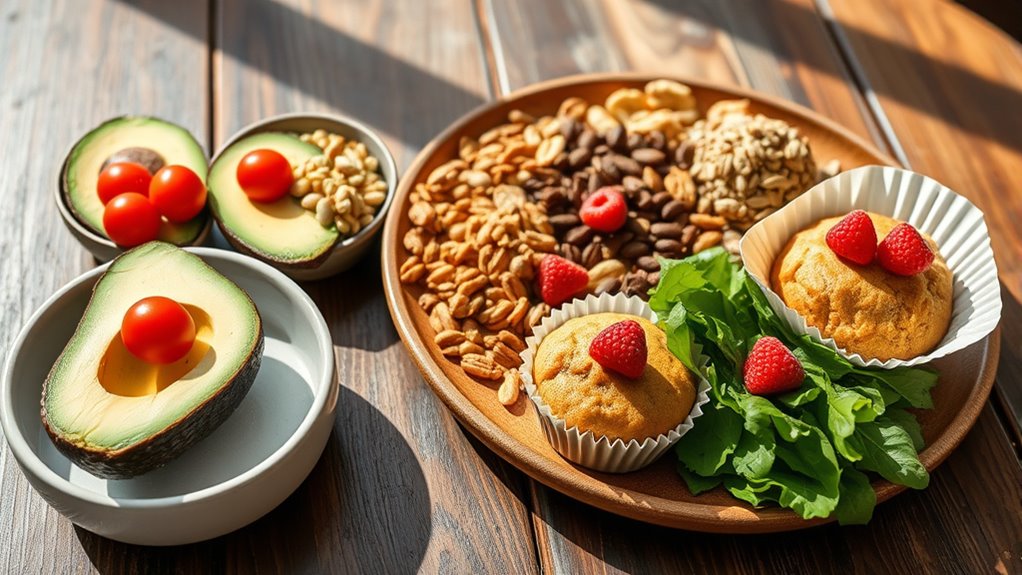
Understanding gluten-free dietary needs is essential for ensuring all guests can enjoy breakfast offerings safely. You should focus on incorporating gluten-free grains like rice, quinoa, and millet, which provide necessary dietary fiber and variety. These grains not only support digestion but also help guests feel full longer. When selecting ingredients, verify that they are processed in gluten-free environments to prevent cross-contamination. Educate your staff about the importance of avoiding gluten-containing products like wheat, barley, and rye. Clear labeling and dedicated preparation areas can help prevent accidental exposure. Additionally, emphasizing the use of natural, unprocessed ingredients can further reduce the risk of gluten contamination. By prioritizing gluten-free grains rich in dietary fiber, you ensure your breakfast options are inclusive, nutritious, and safe for guests with gluten sensitivities or celiac disease.

Chefman Electric Panini Press Grill, Compact 2-Slice Sandwich Maker, Non-Stick Coated Plates, Opens 180 Degrees, Dishwasher Safe, Removable Drip Tray, Stainless Steel/Black
HUNGRY FOR A SANDWICH? With just the push of a button, this Grill-Panini Press Combo can be used...
As an affiliate, we earn on qualifying purchases.
Crafting Vegan Breakfast Options
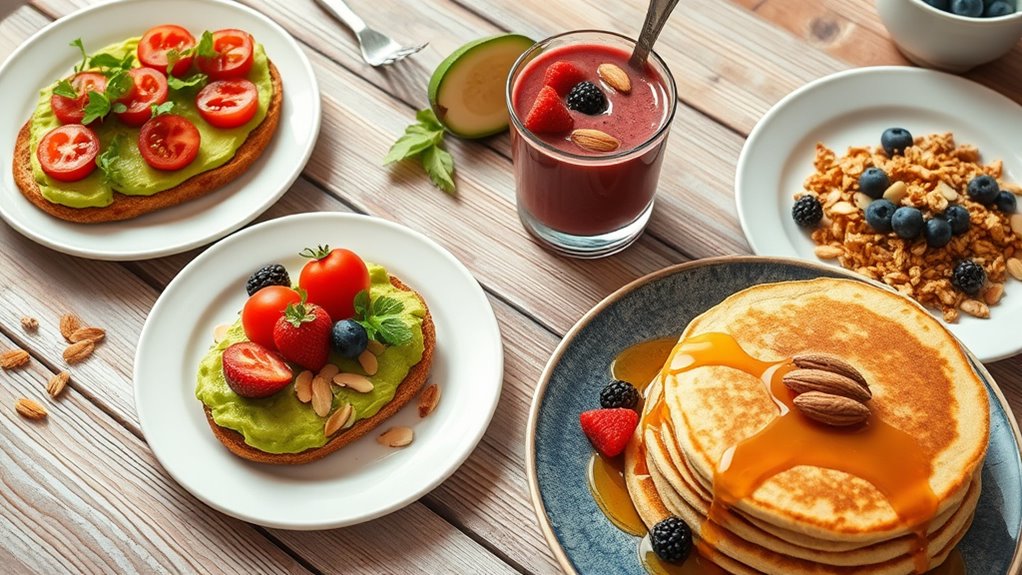
To create appealing vegan breakfast options, you’ll want to focus on key ingredients like fruits, grains, and plant-based alternatives. Incorporating protein sources such as tofu, tempeh, or legumes helps satisfy hunger and boost nutrition. With some creative dish ideas, you can offer diverse, flavorful breakfasts that cater to vegan guests and stand out on your menu. Additionally, paying attention to venting requirements and proper preparation techniques can ensure safety and quality in your offerings.
Vegan Breakfast Ingredients
Vegan breakfast options rely on a variety of plant-based ingredients that provide both flavor and nutrition. You can craft satisfying dishes using staples like vegan cheese for creamy texture and flavor, or a flavorful tofu scramble that mimics eggs. These ingredients serve as versatile building blocks for your menu. Incorporating diversified asset classes such as nuts and seeds can also enhance the nutritional profile of your vegan breakfast offerings.
| Ingredient | Flavor Profile | Best Use |
|---|---|---|
| Vegan cheese | Mild, nutty, tangy | Spread, melted on toast |
| Tofu | Neutral, soft, firm | Scrambled or blended into smoothies |
| Chia seeds | Nutty, gelatinous | Puddings, toppings |
| Avocado | Rich, buttery | Toasts, dips |
These ingredients enable you to create vibrant, satisfying vegan breakfast options that cater to diverse tastes.
Plant-Based Protein Sources
Plant-based protein sources are essential for creating hearty and satisfying vegan breakfast options. They help guarantee your menu meets nutritional needs while appealing to plant-based eaters. Consider these options:
- Soy products like tofu, tempeh, and edamame provide complete proteins and versatile textures.
- Lentil varieties such as red, green, and brown lend themselves to hearty stews or spreads.
- Chickpeas can be mashed into spreads or added to salads for extra protein.
- Seitan offers a meat-like texture, perfect for creating vegan breakfast sausages or strips.
Creative Dish Ideas
Creative breakfast dishes can showcase the versatility of plant-based proteins while appealing to a wide range of tastes. You can experiment with baking techniques to create vegan muffins, breakfast casseroles, or fluffy pancakes that highlight textures and flavors. Incorporate colorful vegetables, fruits, and nuts for visual interest. When plating, focus on aesthetics by balancing colors and shapes, using garnishes like fresh herbs or fruit slices to elevate the presentation. Think beyond traditional formats—try layered parfaits or stuffed wraps for variety. These approaches not only highlight the adaptability of vegan ingredients but also make your offerings more enticing. Engaging plating aesthetics combined with innovative baking techniques help craft memorable, vibrant vegan breakfast options that cater to diverse preferences. For added visual appeal, consider using unique and wicked planters to display fresh herbs or edible flowers, enhancing the overall presentation.
Panini Press Grill, Yabano Gourmet Sandwich Maker Non-Stick Coated Plates 11" x 9.8", Opens 180 Degrees to Fit Any Type or Size of Food, Stainless Steel Surface and Removable Drip Tray, 4 Slice
Quickly Cook Delicious Meals: With 1200W high-power output and uniform heating technology, you can prepare mouth-watering grilled dishes...
As an affiliate, we earn on qualifying purchases.
Designing Keto-Friendly Menus

Designing keto-friendly menus for breakfast requires selecting ingredients that are low in carbohydrates but rich in healthy fats and protein. To create appealing options, consider these steps:
- Choose base ingredients like eggs, avocados, and full-fat dairy for satisfying dishes.
- Incorporate keto snack ideas such as cheese sticks, nuts, or bacon to boost fats and flavor.
- Plan keto meal prep options like egg muffins or cauliflower hash to save time and ensure consistency.
- Use low-carb vegetables like spinach or zucchini to add fiber without increasing carbs.
- Incorporate fiber-rich foods such as chia seeds and flaxseeds to support gut health and meet daily fiber goals.
Focusing on these elements helps craft a menu that’s both delicious and aligned with keto principles. This approach makes it easier for you to serve satisfying breakfasts that support your guests’ dietary needs.

Abizarch Grilled Sandwich Maker,Camping Toastie Maker, Stove top Panini Press Pan with Non-Stick Plates, Double Sided Hot Toasted Sandwich Maker Breakfast Frying Pan for Outdoors Camp Home Kitchen
High quality: Made of high-quality aluminum alloy, strong, dura ble and evenly heated, allowing you to cook perf...
As an affiliate, we earn on qualifying purchases.
Common Ingredients to Avoid and Incorporate
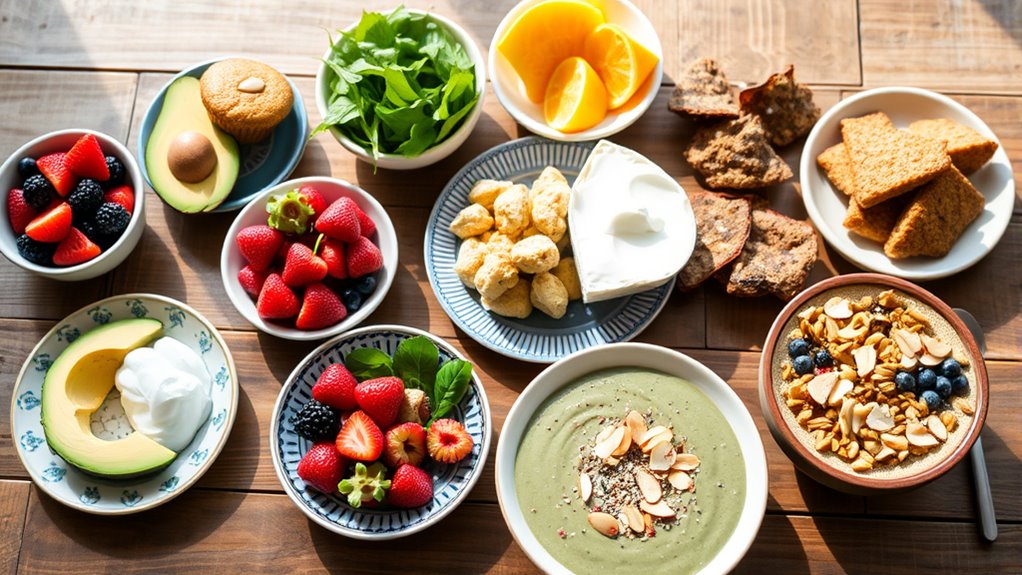
When assembling a breakfast menu, it’s important to recognize which ingredients align with dietary goals and which ones could hinder progress. For gluten-free options, avoid wheat, barley, and rye, and instead incorporate gluten-free grains like quinoa or buckwheat. Vegan diets benefit from ingredients like tofu, nuts, and seeds, but avoid honey or dairy-based products. Keto menus should exclude sugar, starchy vegetables, and grains, favoring healthy fats like avocado, coconut oil, and eggs. To guarantee proper meal presentation and uphold dietary etiquette, select ingredients that complement each other visually and texturally. Avoid cluttered plates with incompatible ingredients, and always consider the dietary restrictions of your guests. Incorporating beach destinations into your menu presentation can inspire a relaxed, vacation-like atmosphere that appeals to diverse dietary preferences. Thoughtful ingredient choices enhance both the appearance and adherence to dietary needs, making your catering more successful.
Tips for Cross-Contamination Prevention

To prevent cross-contamination in breakfast catering, you need to implement strict food handling practices. Start with exhaustive staff training to ensure everyone understands kitchen sanitation protocols and allergen awareness. Then, follow these steps:
Implement strict food handling and staff training to prevent cross-contamination in breakfast catering.
- Use separate cutting boards and utensils for different dietary needs.
- Clean and sanitize all surfaces thoroughly after preparing each item.
- Store allergen-free and special diet ingredients separately, clearly labeled.
- Wash hands frequently and change gloves between tasks to prevent transfer.
- Pay attention to food safety standards, including proper storage temperatures and handling procedures, to further reduce the risk of cross-contact.
Maintaining rigorous kitchen sanitation is essential. Regular staff training reinforces best practices, reducing the risk of cross-contact. By staying vigilant and organized, you’ll protect your guests’ dietary restrictions and uphold safety standards.
Balancing Flavor and Nutrition Across Diets

Balancing flavor and nutrition across different diets can be tricky because ingredients often don’t naturally suit everyone’s tastes or needs. You need to take into account ingredient compatibility challenges to ensure each option is both appealing and healthful. Finding the right flavor-nutrition balance is key to satisfying diverse dietary preferences without sacrificing taste. Incorporating proper ingredient selection can help overcome some of these challenges and create more enjoyable, nutritious options.
Ingredient Compatibility Challenges
Managing ingredient compatibility in breakfast catering can be complex because you need to satisfy both flavor preferences and nutritional requirements across diverse diets. You must navigate issues like allergen cross contact and making effective ingredient substitutions. For example:
- Ensuring gluten-free ingredients don’t cross contact with gluten-containing products.
- Finding vegan alternatives that mimic flavors without compromising texture.
- Selecting keto-friendly ingredients that align with low-carb requirements.
- Balancing taste when substituting ingredients to maintain appeal while meeting dietary needs.
Additionally, understanding Kia Tuning can provide insights into customizing components for optimal performance, which parallels the importance of precise ingredient adjustments in catering. You’ll need to carefully choose products that suit each diet’s restrictions, preventing allergen cross contact. Substitutions must be thoughtfully selected to preserve flavor and nutritional value, making ingredient compatibility a delicate but essential part of your breakfast catering process.
Flavor-Nutrition Balance
Achieving a satisfying breakfast that appeals to various dietary needs requires carefully harmonizing flavor and nutrition. You can do this by selecting spice pairings that brighten flavors without adding unnecessary calories or allergens, ensuring each dish remains nutritious. Incorporate spices like cinnamon or cumin to enhance natural tastes while supporting health goals. Texture enhancement also plays a key role—adding crunch or creaminess makes meals more appealing and satisfying. Balancing bold flavors with wholesome ingredients helps meet diverse dietary requirements, whether gluten-free, vegan, or keto. By thoughtfully combining spices and textures, you create meals that are both nourishing and flavorful, encouraging diners to enjoy their breakfast without sacrificing either nutrition or taste. Additionally, fostering a curiosity about different dietary needs can inspire creative and inclusive menu options that elevate the dining experience.
Presentation and Labeling for Dietary Clarity
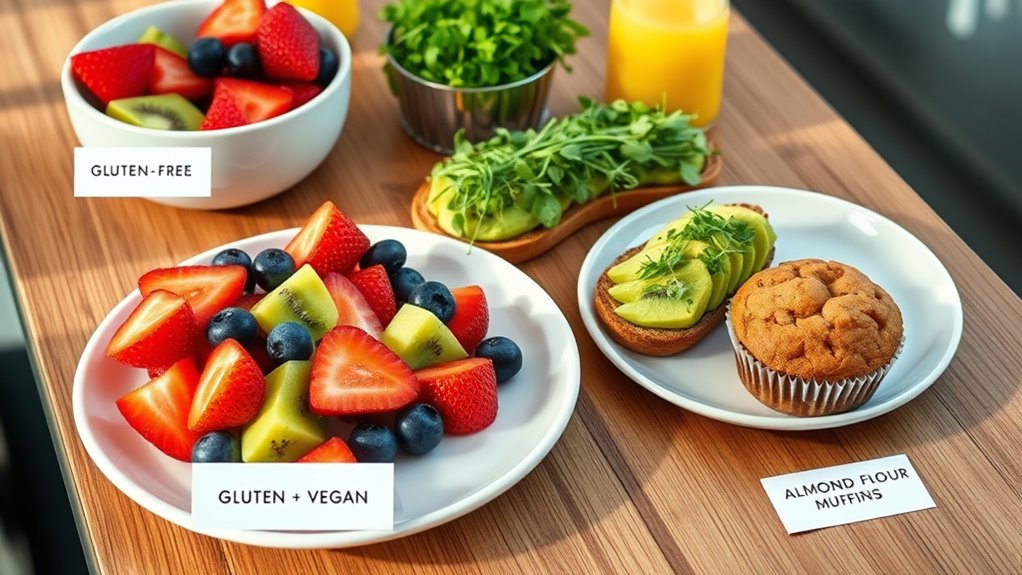
Clear presentation and accurate labeling are essential for helping guests quickly identify breakfast options that meet their dietary needs. Use color coded signage to differentiate categories like gluten-free, vegan, and keto, making selections straightforward. Guarantee ingredient transparency by listing key allergens and dietary components clearly on signs or menus. To maximize clarity, consider these steps:
Use clear, color-coded signage and ingredient lists to help guests easily identify dietary options.
- Use distinct colors for each dietary category to reduce confusion.
- Place signage at eye level near each dish for easy visibility.
- Include brief ingredient lists highlighting potential allergens or restrictions.
- Regularly update labels to reflect ingredient changes or new options.
Collaborating With Clients to Meet Dietary Goals

Effective collaboration with clients is key to designing breakfast options that meet their specific dietary goals. You should prioritize clear client communication to understand their needs, preferences, and restrictions. By engaging in open dialogue, you can tailor meal presentation to highlight dietary accommodations effectively, ensuring clients feel confident in their choices. Ask detailed questions about their dietary priorities and preferences, and share ideas for meal presentation that align with their goals. This collaborative approach helps you create appealing, suitable offerings that satisfy both health requirements and taste. Remember, ongoing communication is essential; check in regularly to confirm the meal presentation continues to meet their evolving needs. Ultimately, working closely with clients ensures their dietary goals are met with confidence and satisfaction.
Frequently Asked Questions
How Do I Accommodate Multiple Dietary Restrictions in One Breakfast Menu?
To accommodate multiple dietary restrictions in one breakfast menu, you should start by conducting dietary preference surveys to understand guest needs. Be mindful of cross-contamination concerns by preparing separate stations or utensils for different dietary options. Clearly label each dish to prevent confusion, and train staff on handling specific dietary requests. This approach guarantees everyone’s needs are met safely and efficiently, creating a welcoming and inclusive breakfast experience.
Are There Any Hidden Gluten or Vegan Ingredients in Common Breakfast Items?
When checking for hidden ingredients, always read labels carefully because gluten and vegan components can conceal in unexpected places like sauces, processed foods, or flavorings. Common breakfast items such as granola, sausages, or bread might contain gluten or animal derivatives. By scrutinizing labels and asking questions about ingredients, you can guarantee your menu truly meets your guests’ dietary needs without unintended allergens or animal products.
How Can I Ensure Allergen Safety When Catering to Diverse Diets?
To guarantee allergen safety when catering to diverse diets, you should implement strict cross contact protocols and thoroughly train your staff on allergen handling. Clearly label all items with allergy information, so guests know what’s safe for them. Use separate utensils and prep areas for different dietary needs, and regularly review your procedures. These steps help minimize risks and create a safe, inclusive breakfast experience for everyone.
What Are Innovative Ways to Add Variety to Keto Breakfast Options?
Did you know that 25% of keto dieters seek variety to stay committed? To add excitement, try creative flavor combinations like avocado and smoked salmon or cauliflower and cheese. Use presentation techniques like colorful toppings or layered bowls to make dishes visually appealing. Experimenting with herbs, spices, and textures keeps keto breakfasts fresh and enticing, ensuring your guests enjoy a delightful and diverse menu every morning.
How Do I Source Reliable Ingredients Suitable for Gluten-Free, Vegan, and Keto Diets?
You should focus on ingredient sourcing by researching reputable suppliers who specialize in gluten-free, vegan, and keto products. Always verify their credentials through supplier verification processes to guarantee quality and safety. Ask for certifications and detailed ingredient lists, and read reviews. Building relationships with trusted vendors helps you consistently access reliable ingredients, giving your clients confidence in your catering options and ensuring you meet their dietary needs effectively.
Conclusion
By thoughtfully tailoring your breakfast offerings, you can turn your catering into a vibrant tapestry of flavors and dietary needs. Remember, clear labels and careful ingredient choices are your guiding stars, helping clients navigate their options with confidence. When you balance nutrition with creativity, you paint a breakfast picture that’s as inviting as a sunrise—warming, inclusive, and full of promise. Your attention to detail transforms simple meals into memorable, health-conscious experiences.