To avoid waste at large breakfast events, focus on careful portioning and mindful serving. Measure out small portions, offer seconds if needed, and avoid giant platters that encourage over-serving. Use reusable serveware to reduce disposables and set up stations with marked portion sizes for self-service. Encourage guests to serve themselves in moderation and provide clear recycling and composting options. Small, intentional choices can make a significant difference—keep exploring for more tips on hosting eco-friendly, waste-conscious gatherings.

Get kitchen staples and gadgets delivered free with Prime
- Fast, free delivery on millions of items
- Prime Video, Amazon Music and more included
- Member-only deals all year
Key Takeaways
- Precisely estimate guest numbers and serve smaller, well-measured portions with options for seconds to prevent over-serving.
- Use reusable serveware and avoid disposable items to reduce waste.
- Incorporate self-service stations with clearly marked portion sizes to encourage moderation.
- Communicate sustainability goals to guests, promoting mindful eating and waste reduction.
- Provide designated recycling and composting stations to properly dispose of leftovers and waste.
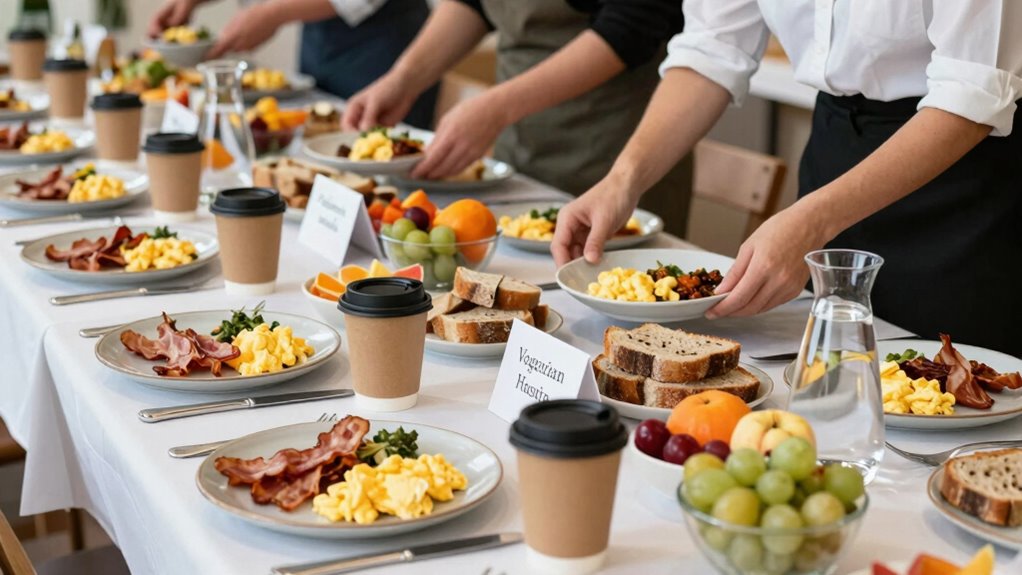
Ever wondered how to make large breakfast events more sustainable? The key lies in smart planning and mindful choices that minimize waste without sacrificing guest experience. One effective way to do this is by paying close attention to food portioning. Instead of offering giant platters that invite over-serving, you can carefully measure and control portions to match the expected number of guests. This not only prevents leftover food from going to waste but also helps you avoid the common problem of uneaten dishes. When you plan the menu, think about different appetites and serve smaller, well-calculated portions that guests can easily ask for seconds if they’re still hungry. This approach not only reduces waste but also shows respect for food and resources. Incorporating sustainable practices into your planning can further enhance your event’s eco-friendliness.
Carefully portion food and plan menus to reduce waste and respect resources at large breakfast events.
Another essential step is to switch to reusable serveware. Instead of disposable plates, cups, and cutlery, choose durable, eco-friendly options that guests can use throughout the event and then wash for reuse. Reusable serveware might require a little extra effort in terms of cleaning, but it markedly cuts down on the amount of single-use plastics and paper waste generated. Plus, it elevates the overall presentation, making your event feel more polished and thoughtful. When you combine reusable serveware with proper food portioning, you create a more sustainable event that reduces landfill contributions and conserves natural resources. Additionally, providing guidance on portion control can further help guests enjoy their experience while minimizing waste. Using waste reduction techniques during your event planning can further maximize your sustainability efforts. Implementing waste management strategies can streamline disposal processes and reduce environmental impact. Being aware of indoor air quality and ensuring proper ventilation can also enhance guest comfort during events, making the experience more enjoyable overall.
To maximize these efforts, consider setting up stations where guests can serve themselves, with clearly marked portion sizes—think small bowls or serving spoons that encourage moderation. This empowers guests to control their intake and prevents overly generous servings that lead to leftovers. Also, communicate your sustainability goals upfront, so guests understand the importance of mindful consumption. Having composting and recycling stations on-site is another smart move, allowing you and your guests to dispose of waste responsibly.
Incorporating these practices shows your commitment to sustainability and sets a positive example for others. When you plan with food portioning in mind and opt for reusable serveware, you reduce waste appreciably and make your large breakfast event more environmentally friendly. These small, deliberate choices make a big difference, helping you host memorable gatherings that respect both your guests and the planet.
As an affiliate, we earn on qualifying purchases.
Frequently Asked Questions
How Can I Estimate the Right Amount of Food to Prepare?
To estimate the right amount of food, start with guest count estimation and plan for portion control. Consider past events or RSVPs to gauge attendance accurately. Prepare slightly less than your estimate to prevent excess, and have options for guests to choose more if needed. This approach minimizes waste while ensuring everyone’s needs are met. Tracking attendance patterns over time helps improve your estimates for future events.
What Are Eco-Friendly Options for Disposable Tableware?
Did you know that over 300 million tons of plastic are produced globally each year? To make your event eco-friendly, choose biodegradable alternatives like compostable plates, cups, and utensils. Reusable options, such as ceramic or glass ware, are even better if you can manage washing facilities. These choices considerably cut down waste, helping the environment while impressing your guests with your sustainability efforts.
How Can I Encourage Guests to Minimize Waste?
You can encourage guests to minimize waste by implementing guest education through signs or announcements that explain the importance of reducing waste. Additionally, use waste tracking to monitor how much waste is generated, which helps identify areas for improvement. Engage your guests by offering incentives for eco-friendly behavior and making it easy to dispose of waste properly. Clear communication and active involvement foster a responsible attitude, ultimately reducing overall waste at your event.
What Are Effective Ways to Donate Leftover Food?
You can donate leftover food through food redistribution programs or donation partnerships with local shelters and food banks. Reach out to organizations that accept prepared meals and establish clear procedures for safe, timely donations. Guarantee proper storage and packaging to maintain food quality. By creating these partnerships, you make sure your excess breakfast items benefit those in need, reducing waste and supporting your community effectively.
How Do I Handle Dietary Restrictions Without Excess Food?
Handling dietary restrictions is like steering through a maze—you need a clear map. You can achieve this through meal customization, allowing guests to select options that meet their needs. For allergy management, clearly label all dishes and keep allergen information handy. Communicate with your caterers to prepare versatile options, ensuring everyone’s dietary needs are met, reducing waste, and making your event welcoming and inclusive for all attendees.
Conclusion
By planning thoughtfully and communicating clearly, you can turn your breakfast event into a well-orchestrated symphony rather than a chaotic spill of leftovers. Embrace the art of balance, like a tightrope walker carefully adjusting each step, ensuring every plate finds its rightful home. When you master waste reduction, your event becomes a garden in full bloom—vibrant, sustainable, and inviting for all. In this dance of details, you’re shaping a future where generosity and mindfulness grow hand in hand.
Halloween Picks
halloween
As an affiliate, we earn on qualifying purchases.