In the Andes, breakfast is a meaningful tradition that highlights local ingredients like quinoa porridge and ch’arki, reflecting the region’s rich cultural history. You’ll find traditional dishes prepared with care, emphasizing flavor, texture, and authenticity. Quinoa offers a nutritious start, while ch’arki provides high-quality dried meat with a deep, smoky flavor. To experience the beauty of these staples and their cultural significance, continue exploring these timeless flavors and stories.

Get kitchen staples and gadgets delivered free with Prime
- Fast, free delivery on millions of items
- Prime Video, Amazon Music and more included
- Member-only deals all year
Key Takeaways
- Traditional Andean breakfast features quinoa porridge, prepared with organic grains, fresh fruits, nuts, and natural sweeteners.
- Ch’arki is dried, salted meat preserved through sun-drying and mountain breezes, offering rich flavor and chewy texture.
- Breakfast rituals reflect cultural symbolism, honoring ancestors and fostering community bonds through shared meals.
- Modern chefs innovate by blending native ingredients like quinoa and ch’arki with international flavors and presentation styles.
- Consuming these foods offers cultural insight, connecting travelers to Andean history, traditions, and sustainable farming practices.
As an affiliate, we earn on qualifying purchases.
The Significance of Breakfast in Andean Culture

In Andean culture, breakfast isn’t just a meal; it’s an essential tradition that sets the tone for the day. It carries deep cultural symbolism, representing more than nourishment—it honors ancestors and community bonds. Ritual practices often accompany breakfast, reinforcing spiritual connections and social cohesion. Sharing food at dawn reflects respect for the land and natural cycles, emphasizing gratitude and harmony. These rituals highlight the significance of morning meals as sacred moments, fostering a sense of identity and continuity. By observing these customs, you participate in a rich cultural heritage that values tradition, spirituality, and collective well-being. Breakfast in the Andes isn’t merely about sustenance; it’s a crucial expression of cultural values passed down through generations.
Traditional Ingredients and Their Origins

Many traditional ingredients used in Andean breakfasts have deep roots in the region’s history and geography. These ingredients carry cultural significance, shaping local traditions and daily life. Ancient grains like quinoa and kiwicha are staples because they thrive in the high-altitude environment. Ch’arki, dried and salted meat, reflects centuries of preservation methods. Potatoes, originating from the Andes, symbolize sustenance and heritage. Additionally, corn plays a crucial role in rituals and meals. These ingredients connect you to a rich cultural history, demonstrating resilience and resourcefulness. Understanding their origins reveals how geography and history influence culinary practices. By appreciating these ingredients, you gain insight into the enduring traditions that make Andean breakfasts unique and meaningful. preservation methods have been essential for survival in the region’s challenging climate.
Preparing Authentic Quinoa Porridge
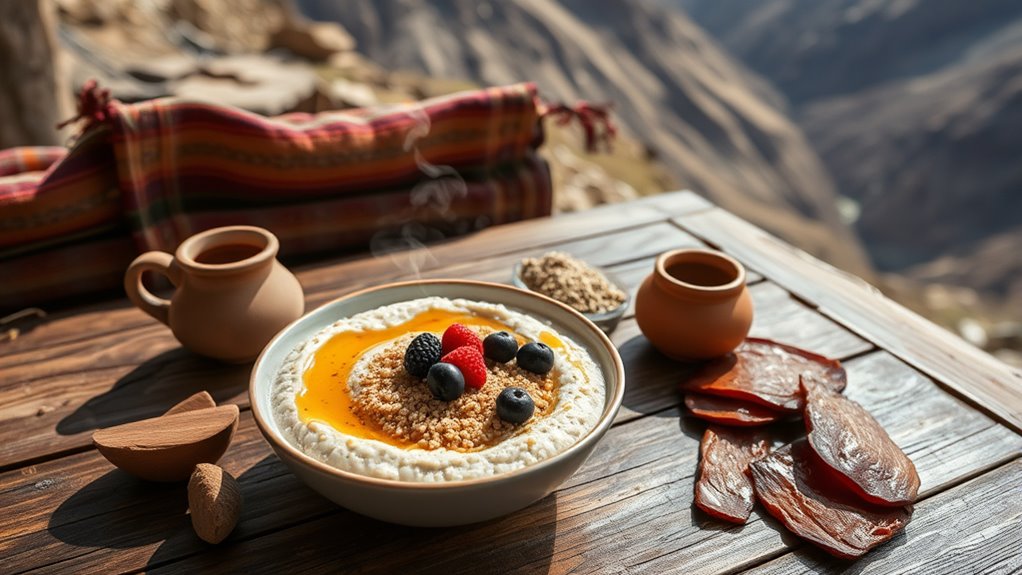
To make authentic quinoa porridge, start by choosing high-quality quinoa for the best flavor and texture. Use proper cooking techniques, like rinsing thoroughly and simmering until tender, to guarantee a creamy consistency. You can naturally enhance the flavor with ingredients like fresh fruits, nuts, or a touch of local honey. Incorporating scenic views and charming local shops can also elevate your overall experience when preparing and enjoying regional dishes.
Selecting Quality Quinoa
Choosing high-quality quinoa is essential for making authentic and flavorful porridge. Look for quinoa that comes from sustainable sourcing, guaranteeing the farmers prioritize eco-friendly practices. Check for labels indicating organic or fair-trade certification, which often reflect better quinoa cultivation methods. Select quinoa with a uniform size and color, free from dirt or debris. Consider whole, unwashed quinoa if you prefer to rinse it yourself, as this often retains more flavor. Avoid pre-rinsed varieties if you want fresher taste, but be ready to rinse thoroughly. By choosing carefully, you ensure your porridge benefits from superior flavor and texture, while supporting sustainable quinoa cultivation practices that protect the environment and local communities. Incorporating audit processes into your selection can help verify the quality and sourcing standards of your quinoa.
Proper Cooking Techniques
Once you’ve selected high-quality quinoa, the next step is to master the proper cooking techniques to bring out its best flavor and texture. Start by rinsing the quinoa thoroughly with cold water to remove saponins, ensuring food safety and reducing bitterness. Use appropriate cooking equipment, like a heavy-bottomed pot, to prevent burning. Combine rinsed quinoa with water or broth in a 1:2 ratio, then bring it to a boil. Reduce heat to a simmer, cover, and cook for about 15 minutes until the grains are tender and have absorbed most of the liquid. Avoid overcooking to prevent mushiness. Stir occasionally and let it rest for a few minutes before serving. Proper technique guarantees a fluffy, nutritious quinoa porridge that highlights its natural flavor. Incorporating advanced processing power can further enhance your cooking experience by enabling precise temperature controls and smart kitchen appliances.
Enhancing Flavor Naturally
Enhancing the flavor of your quinoa porridge naturally involves using fresh, wholesome ingredients that complement its nutty taste. You can elevate your breakfast by adding herbal infusions like chamomile or mint, which provide subtle, aromatic notes. Experiment with spice combinations such as cinnamon and cardamom to create warmth and depth. Incorporate natural sweeteners like honey or maple syrup for a gentle sweetness that pairs well with the grains. Fresh fruit, chopped nuts, or a splash of citrus juice also brighten the dish. To maximize flavor, consider simmering your quinoa in herbal infusions before cooking or sprinkling spices during the final minutes. Using the right air purification technology can also help ensure your kitchen remains free of odors and airborne contaminants, enhancing your overall cooking experience. These simple steps help you enjoy a flavorful, authentic quinoa porridge that’s both nourishing and satisfying.
The Craftsmanship Behind Ch’arki
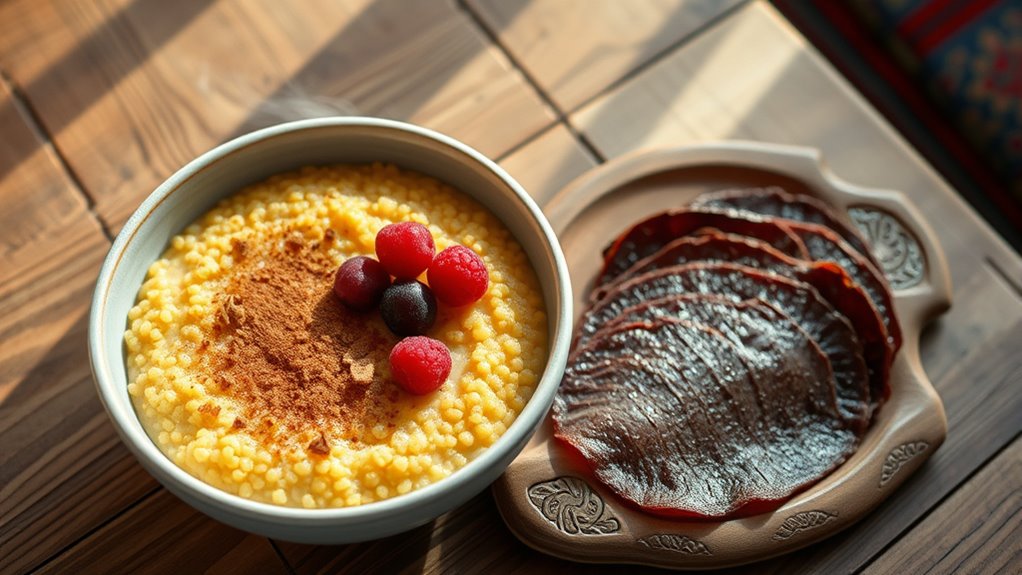
You can see the skill in traditional drying techniques that give ch’arki its distinctive qualities. These methods develop the meat’s flavor and texture, making each piece unique. Understanding this craftsmanship reveals why ch’arki remains a cherished part of Andean breakfasts, and appreciating the emotional significance of these methods can deepen your respect for the cultural heritage involved.
Traditional Drying Techniques
Traditional drying techniques are at the heart of making ch’arki, a cherished Andean dried meat. These ancient preservation methods have been passed down through generations, ensuring the meat’s longevity and flavor. You’ll notice that the drying process involves carefully selecting fresh meat, often beef or llama, and then exposing it to natural elements. The key is to control humidity and airflow, which prevents spoilage while preserving nutrients.
Here are some aspects of these drying methods:
- Sun-drying in open-air environments
- Using mountain breezes for natural airflow
- Hanging meat on wooden frames
- Covering meat with local herbs or spices
- Relying on traditional knowledge for timing and conditions
This craftsmanship preserves the meat’s quality and cultural significance.
Flavor and Texture Development
The meticulous drying process in making ch’arki not only preserves the meat but also develops its unique flavor and texture. As the meat dries, natural enzymes activate, enhancing aroma and creating a rich, smoky scent that signals authenticity. The slow drying fosters aroma enhancement and deepens the savory notes, making each piece more flavorful. The process also produces a compelling textural contrast: the exterior becomes firm and leathery, while the interior remains tender and chewy. This contrast heightens the eating experience, offering a satisfying bite that emphasizes craftsmanship. The careful balance of drying time and environmental conditions guarantees that ch’arki achieves its signature aroma and textural profile, reflecting centuries of tradition and skill passed down through generations.
Variations and Modern Twists on Classic Dishes
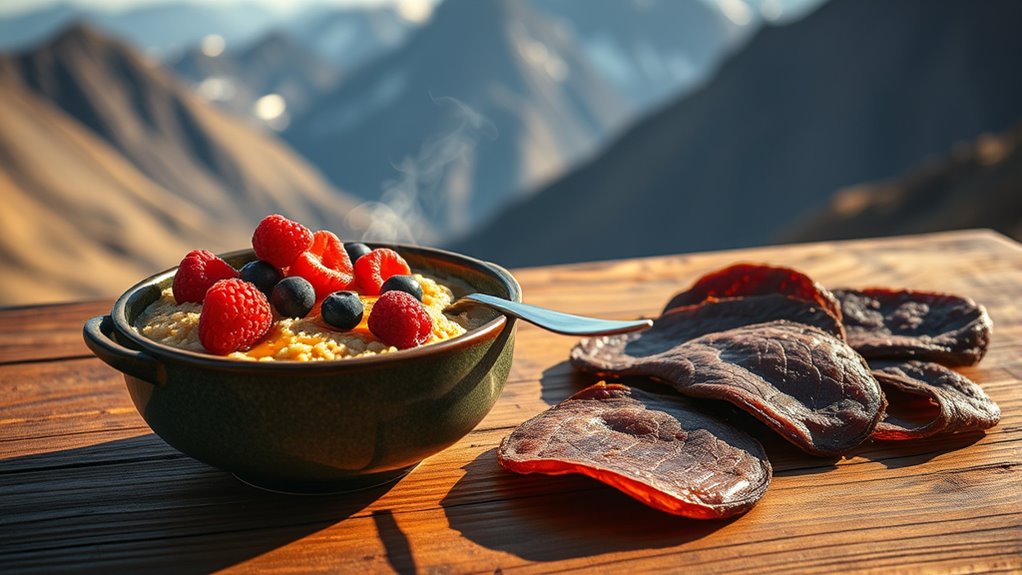
Modern chefs have begun reimagining classic Andean breakfast dishes by blending local flavors with innovative techniques. They create exciting fusion recipes that appeal to contemporary palates, often presenting traditional foods with modern twists. You might see quinoa porridge served in sleek bowls topped with exotic fruits or infused with unexpected spices, transforming it into a vibrant, Instagram-worthy dish. Ch’arki, traditionally dried meat, now appears in sliders or salads, showcasing contemporary presentations that highlight its smoky richness. Chefs also experiment with ingredient pairings, combining native grains and meats with international herbs and sauces. These variations honor tradition while appealing to modern tastes, making Andean breakfasts both nostalgic and innovative. Incorporating food safety considerations and proper handling methods can ensure these creative dishes remain both delicious and safe for consumers. Embrace these creative twists to discover new favorites and appreciate how tradition evolves.
Nutritional Benefits of Andean Breakfast Staples
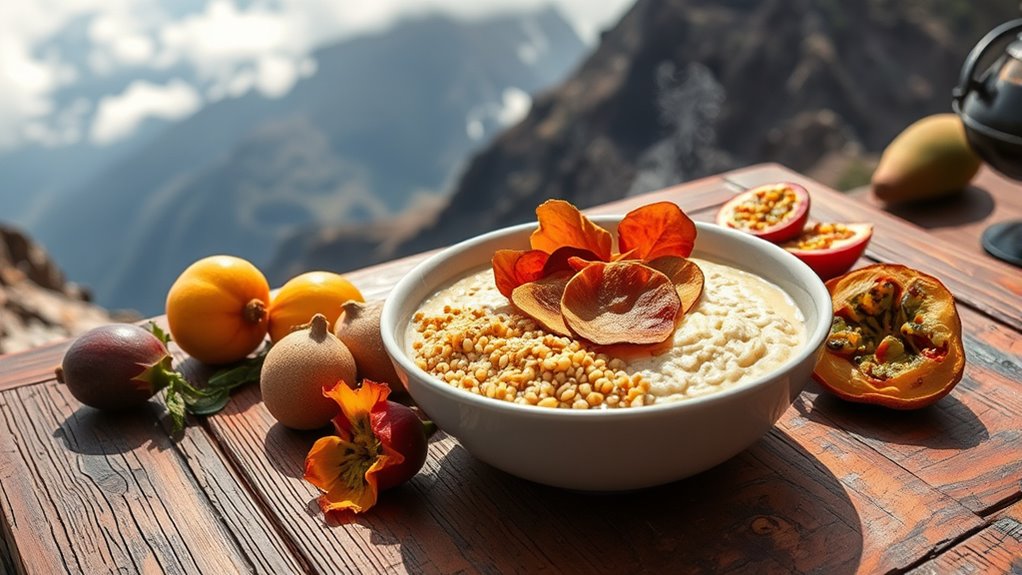
Many Andean breakfast staples pack a powerful nutritional punch, making them excellent choices to start your day. Ancient grains like quinoa are rich in protein, fiber, and essential nutrients that boost energy and support overall health. Ch’arki provides high-quality, sustainable protein from dried meats, perfect for sustained strength. These foods often come from sustainable farming practices, ensuring you nourish your body while respecting the environment. Incorporating rustic decor elements can enhance the authentic farm-to-table experience of enjoying these traditional foods.
Experiencing Andean Breakfasts While Traveling
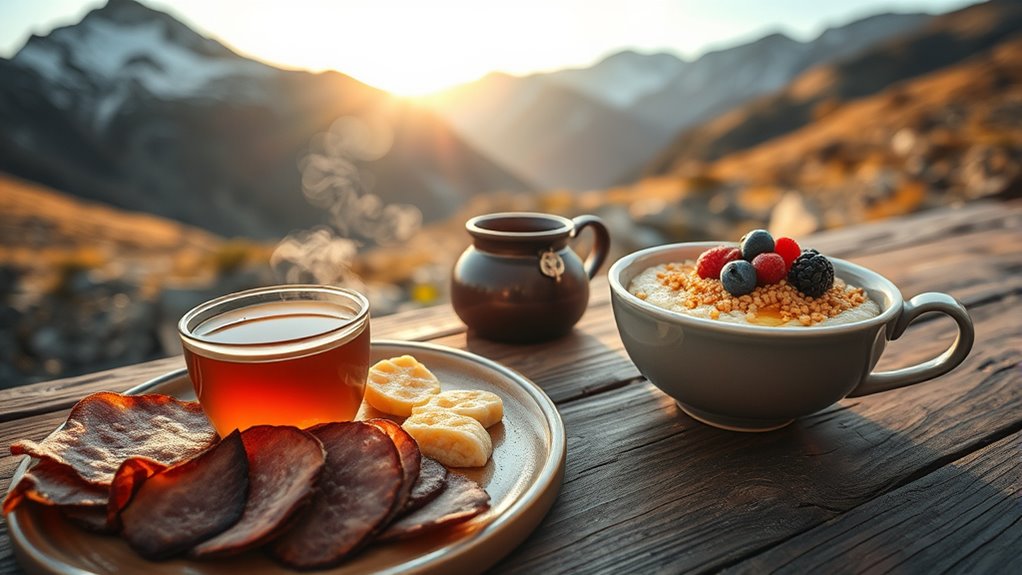
When you travel through the Andes, experiencing local breakfasts offers a genuine taste of the region’s rich culinary traditions. Tasting dishes like quinoa porridge or ch’arki connects you to the cultural symbolism behind these foods, reflecting centuries of history and identity. Engage with local food markets or family-run cafes to see how breakfast embodies community and heritage. Participating in traditional breakfast rituals deepens your understanding of Andean culture. Be open to trying new flavors and learning about their significance. This immersive experience makes your journey more meaningful and memorable. Remember, these breakfasts are more than sustenance—they’re a window into the region’s soul. Enjoy the vibrant, authentic tastes that reveal the heart of Andean life. Exploring cultural symbolism in local dishes enriches your appreciation of the region’s history and identity.
Frequently Asked Questions
How Do Altitude and Climate Affect Andean Breakfast Ingredients?
Altitude effects and climate influence the ingredients used in Andean breakfasts. Higher altitudes mean cooler temperatures, which help preserve foods like ch’arki (dried meat) and affect crop growth, leading to ingredients like quinoa thriving in these conditions. The climate also dictates local food availability, so you’ll find hearty, energy-rich foods like quinoa porridge and dried meats that suit the rugged environment. Your breakfast reflects how altitude and climate shape local culinary traditions.
Are There Regional Differences in Quinoa Porridge Recipes Across the Andes?
You’ll find that quinoa porridge recipes across the Andes are as diverse as the mountains themselves. Regional flavor variations shine through, with ingredient substitutions like local fruits or herbs adding unique twists. Some areas prefer sweeter versions, while others stick to savory styles. You’ll notice these differences reflect local traditions and available ingredients, making each bowl a delicious reflection of its region’s distinct culture and culinary heritage.
What Traditional Utensils Are Used to Prepare and Serve These Dishes?
You’ll find traditional utensils like clay pots and wooden spoons used for preparing and serving these dishes. Cooking methods often involve slow simmering in clay vessels that enhance flavor, while serving traditions favor rustic wooden bowls and cups. These utensils help preserve cultural authenticity, making the experience more authentic and connected to Andean heritage. Your use of these tools reflects respect for tradition and enhances the enjoyment of quinoa porridge and ch’arki.
How Has Globalization Influenced Traditional Andean Breakfast Foods?
Imagine a tapestry where vibrant Andes traditions intertwine with global influences. Globalization, driven by global food chains, has both sprinkled variety into your breakfast options and challenged cultural preservation. While you might now find quinoa porridge alongside imported cereals, these changes can threaten authentic flavors. Yet, many communities fiercely protect their culinary heritage, blending new influences with tradition to make certain the rich tapestry of Andean breakfast foods remains alive and vibrant.
Are There Specific Rituals or Ceremonies Associated With Breakfast Consumption?
You might notice that in Andean culture, breakfast isn’t just a meal—it’s part of ritualistic offerings and ceremonial gatherings. People often gather to share traditional foods, emphasizing community and respect for nature. These ceremonies may include prayers or symbols honoring Pachamama, the earth goddess. Such rituals reinforce cultural identity and connect individuals with their ancestors, making breakfast a meaningful event beyond nourishment.
Conclusion
Embracing Andean breakfast traditions lets you taste more than just food—it’s a journey into rich culture and history. From hearty quinoa porridge to savory ch’arki, these dishes tell stories of resilience and heritage. When you try them, you’re truly digging into the roots of the Andes. So, don’t just scratch the surface—dive in headfirst and discover flavors that have stood the test of time. It’s an experience you won’t want to miss.
NFL season / tailgating Picks
team gear
As an affiliate, we earn on qualifying purchases.