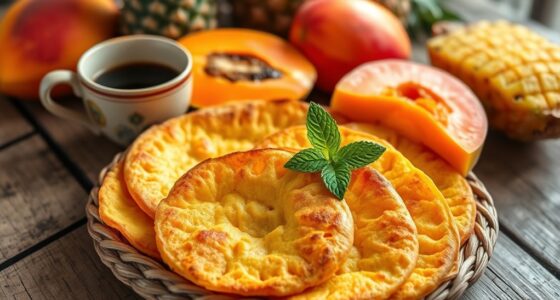
Brazilian breakfast often features warm, cheesy pão de queijo paired with vibrant tropical fruits like mango, papaya, and guava. This combo highlights Brazil’s rich culinary history and regional flavors, offering a hearty and nutritious start to your day. Pão de queijo’s chewy texture and distinct cheese flavor balance beautifully with the sweet, tangy qualities of tropical fruits. To discover more about traditional Brazilian morning favorites and how to enjoy them at home, keep exploring.

Get kitchen staples and gadgets delivered free with Prime
- Fast, free delivery on millions of items
- Prime Video, Amazon Music and more included
- Member-only deals all year
Key Takeaways
- Traditional Brazilian breakfast often features pão de queijo, a cheesy, chewy bread made from tapioca flour and regional cheeses.
- Tropical fruits like mango, passion fruit, and guava complement pão de queijo, adding fresh, vibrant flavors.
- Fresh fruit pairings enhance breakfast nutrition, offering antioxidants, vitamins, and dietary fiber.
- Beverages like Brazilian coffee and tropical fruit juices are commonly enjoyed alongside cheese bread and fruits.
- Regional variations incorporate ingredients like coconut milk or smoked cheeses, reflecting Brazil’s diverse culinary traditions.
As an affiliate, we earn on qualifying purchases.
The Origins of Pão De Queijo and Its Cultural Significance
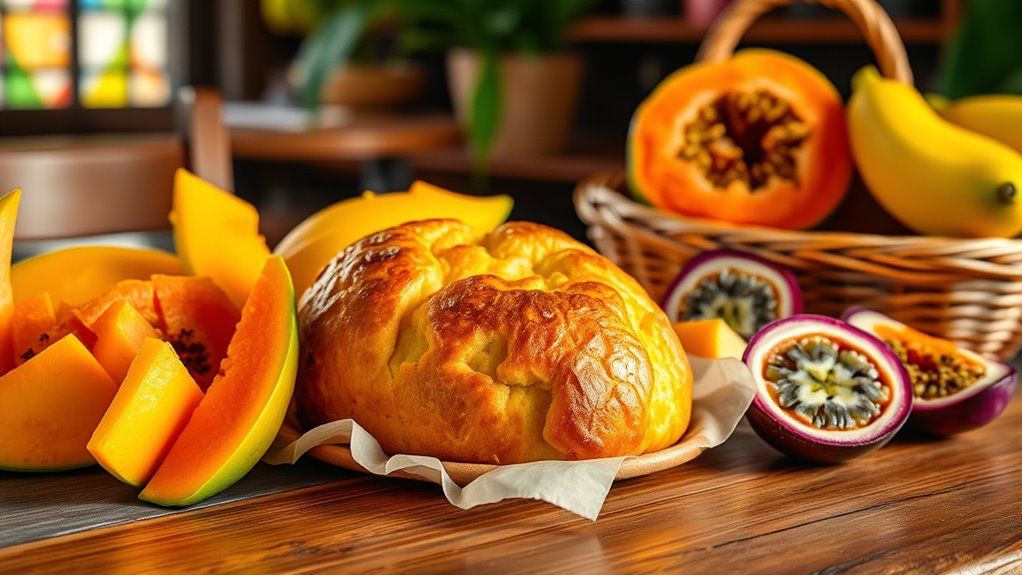
Pão de queijo, a beloved Brazilian snack, traces its roots to the state of Minas Gerais in the 18th century. Its cultural history reflects the ingenuity of local farmers who used cassava flour and cheese to create a hearty, affordable snack. Over time, regional variations emerged, each adding unique ingredients or preparation styles that highlight local tastes. In Minas Gerais, the traditional recipe emphasizes simplicity and tradition, while neighboring regions might incorporate different cheeses or baking techniques. This diversity demonstrates how pão de queijo became more than just food—it became a symbol of regional identity and cultural pride. Today, its popularity extends beyond Minas Gerais, representing a culinary link to Brazil’s history and regional differences. The regional variations showcase the adaptability and cultural richness of this iconic snack.
How to Make Authentic Pão De Queijo at Home
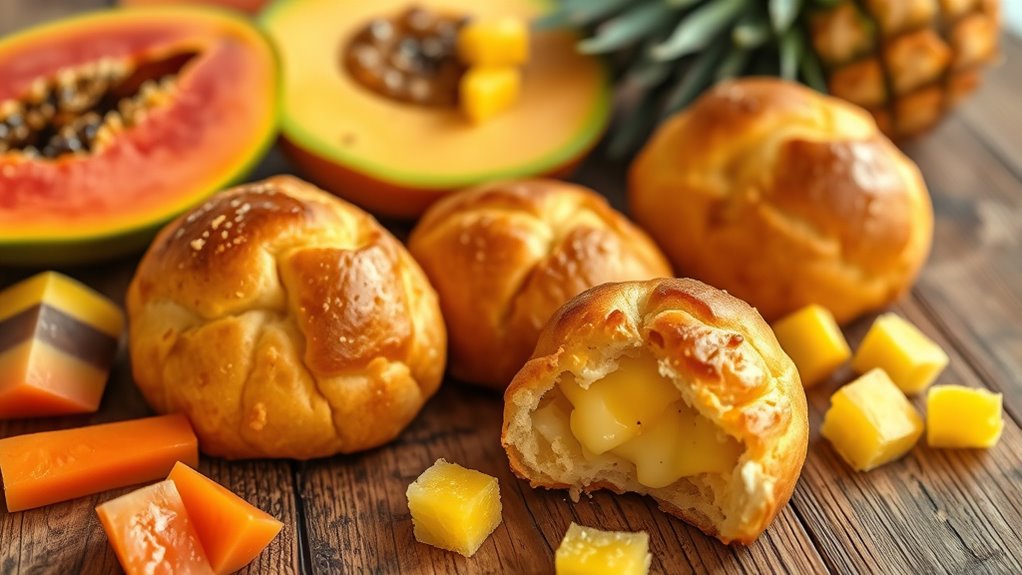
To make authentic pão de queijo at home, start by gathering the key ingredients: tapioca flour, fresh cheese (such as Minas cheese or mozzarella), eggs, milk, and oil. Begin by heating the milk, oil, and a pinch of salt until boiling, then pour this mixture over the tapioca flour, stirring vigorously to create a dough. Let it cool slightly before adding eggs one at a time, kneading until smooth. Incorporate grated cheese last, mixing well. For bakery techniques, guarantee your oven is preheated to 375°F (190°C). Shape the dough into small balls and bake until golden brown, around 20-25 minutes. Pair your pão de queijo with a well-brewed coffee, and enjoy the aroma of Brazilian bakery craftsmanship in your kitchen. Ensuring proper color accuracy during baking can enhance the appearance of your pão de queijo, making it even more appetizing.
Popular Tropical Fruits in Brazil and Their Unique Flavors
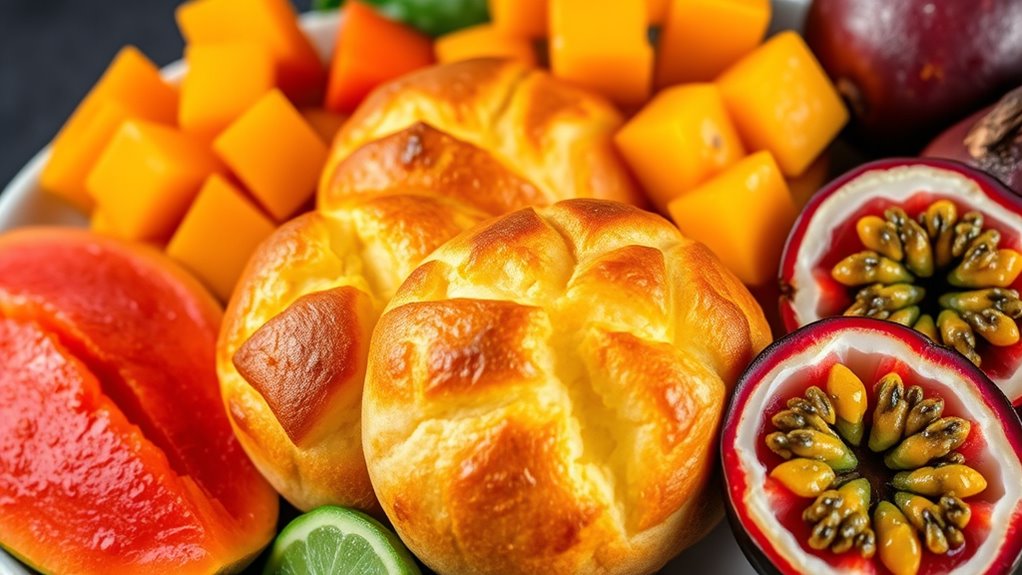
Brazil is home to vibrant tropical fruits with bold flavors you’ll love to try. These exotic varieties are used in everything from smoothies to desserts, adding a unique touch to your breakfast. Exploring their distinct tastes opens up a world of delicious possibilities. For outdoor enthusiasts, understanding seasonal variations can help you enjoy these fruits at their peak freshness and flavor throughout the year.
Exotic Fruit Varieties
Among the many delights of a Brazilian breakfast, exotic fruit varieties stand out for their vibrant flavors and unique textures. These fruits often reflect regional fruit festivals and showcase Brazil’s rich biodiversity. When you explore these exotic options, you’ll notice how fruit preservation techniques help maintain their freshness and intensity. Try these three standout varieties:
- Cupuaçu – A tangy, creamy fruit from the Amazon, perfect for juices and desserts.
- Jabuticaba – Small, grape-like berries that grow directly on the trunk, enjoyed fresh or as jelly.
- Burahem – A rare, sweet-tart fruit with a crunchy texture, often featured at regional festivals.
These exotic fruits bring a distinctive touch to your breakfast, celebrating Brazil’s diverse flavors. Proper storage methods can help preserve their vibrant qualities and extend their enjoyment.
Distinct Flavors and Uses
Many tropical fruits in Brazil boast distinct flavors that make breakfast truly special. For example, ripe mango offers a sweet, tangy taste perfect for a invigorating snack or blending into smoothies. Passion fruit delivers a bold, aromatic flavor that pairs beautifully with a strong cup of coffee, enhancing your breakfast experience. Papaya’s mellow sweetness adds vibrant color and smooth texture to fruit salads, elevating breakfast aesthetics. Guava provides a fragrant, slightly tart flavor that complements cheese or pão de queijo, creating a balanced bite. These fruits aren’t just delicious; they also serve as versatile ingredients for jams, desserts, or garnishes. Their unique flavors bring depth to your morning, making each bite memorable and inviting you to explore Brazil’s rich fruit heritage.
Incorporating Fruits Into Your Breakfast Routine

Adding fresh fruit pairings to your breakfast is an easy way to boost flavor and nutrition. You can experiment with creative recipes like fruit smoothies or topping your favorite dishes with vibrant slices. These simple ideas make your mornings more colorful and delicious. Incorporating nutrient-rich ingredients can also enhance your metabolism and overall wellness.
Fresh Fruit Pairings
Incorporating fresh fruits into your breakfast adds vibrant flavors and essential nutrients that energize your day. You can enjoy fruit smoothies for a quick, invigorating start or create colorful breakfast salads combining tropical fruits like mango, papaya, and pineapple. These pairings boost your nutrient intake while satisfying your sweet tooth naturally. To elevate your morning routine, try:
- Blending berries, banana, and yogurt into a creamy fruit smoothie.
- Tossing slices of kiwi, mango, and watermelon into a vibrant breakfast salad.
- Layering tropical fruits with granola and honey for a delicious parfait.
- Exploring water park destinations nearby for a fun-filled day after your healthy breakfast.
These options are versatile and easy to prepare, making it simple to incorporate fresh fruit pairings into your daily breakfast ritual. Enjoy the burst of flavors and health benefits each morning offers.
Creative Fruit Recipes
Transforming fresh fruits into creative breakfast recipes can turn your morning meal into a delightful culinary experience. Start your day with a vibrant fruit smoothie, blending bananas, berries, and a splash of juice for a quick, nutritious boost. You can also elevate your breakfast with a colorful fruit salad—combine tropical fruits like mango, pineapple, and papaya, topped with a drizzle of honey and a sprinkle of mint. These recipes are versatile and easy to customize, allowing you to experiment with different fruits and flavors. Incorporating fruits into your routine not only adds natural sweetness but also boosts your energy and keeps you satisfied longer. Using fresh, seasonal ingredients enhances the visual appeal of your dishes, making your breakfast both delicious and inviting. With a little creativity, your breakfast can become a flavorful, nourishing start that energizes your entire day.
Traditional Brazilian Breakfast Combos and Serving Ideas
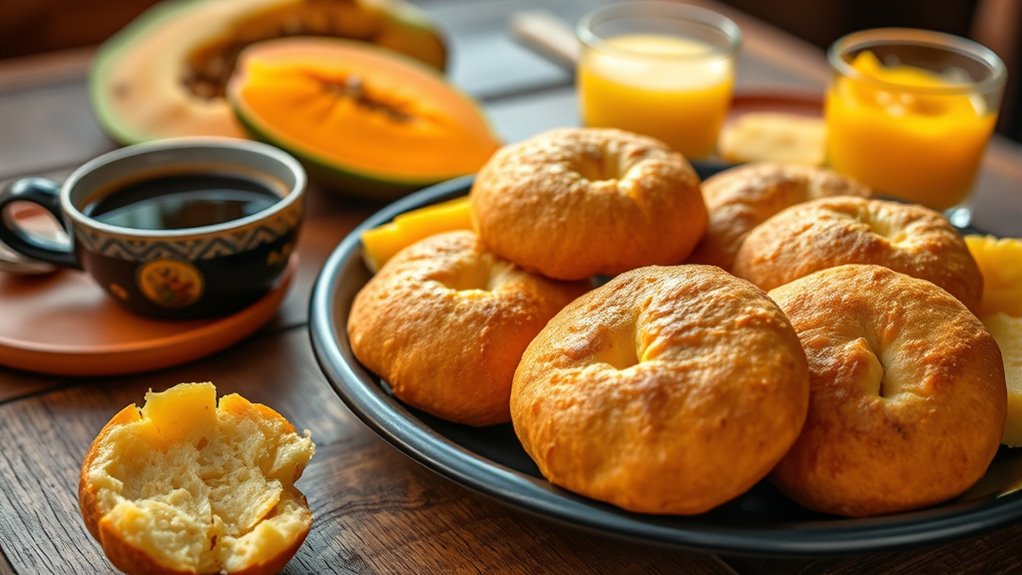
Brazilian breakfast combos are all about vibrant flavors and hearty combinations that start your day right. You’ll find that breakfast traditions in Brazil emphasize the rich coffee culture, often pairing freshly brewed coffee with delicious treats. To enjoy an authentic breakfast, try these classic combos:
- Pão de Queijo with tropical fruits like mango or papaya, complemented by a steaming cup of coffee.
- Freshly baked pão francês with butter, paired with a glass of guava juice or coffee.
- Tapioca pancakes filled with cheese or coconut, served alongside a fruit salad and a strong cafézinho.
These ideas highlight Brazil’s diverse flavors and cultural emphasis on warm, welcoming mornings. Embrace these combos to experience the true essence of Brazilian breakfast traditions.
The Nutritional Benefits of Cheese Bread and Tropical Fruits

Cheese bread and tropical fruits not only make your breakfast colorful and delicious but also pack a punch when it comes to nutrition. Pão de queijo offers dairy nutrition, providing calcium and protein that support strong bones and muscle health. Tropical fruits, like mango and papaya, contain antioxidants that help combat free radicals and boost your immune system. These foods together create a balanced meal rich in essential nutrients. Here’s a quick look at their benefits:
| Nutrient | Source | Benefit |
|---|---|---|
| Calcium | Cheese bread | Strengthens bones and teeth |
| Protein | Cheese bread | Builds and repairs tissues |
| Antioxidants | Tropical fruits | Protects cells from damage |
| Vitamin C | Tropical fruits | Enhances immune function |
| Dietary fiber | Both | Aids digestion |
Exploring Variations of Brazilian Cheese Bread Across Regions
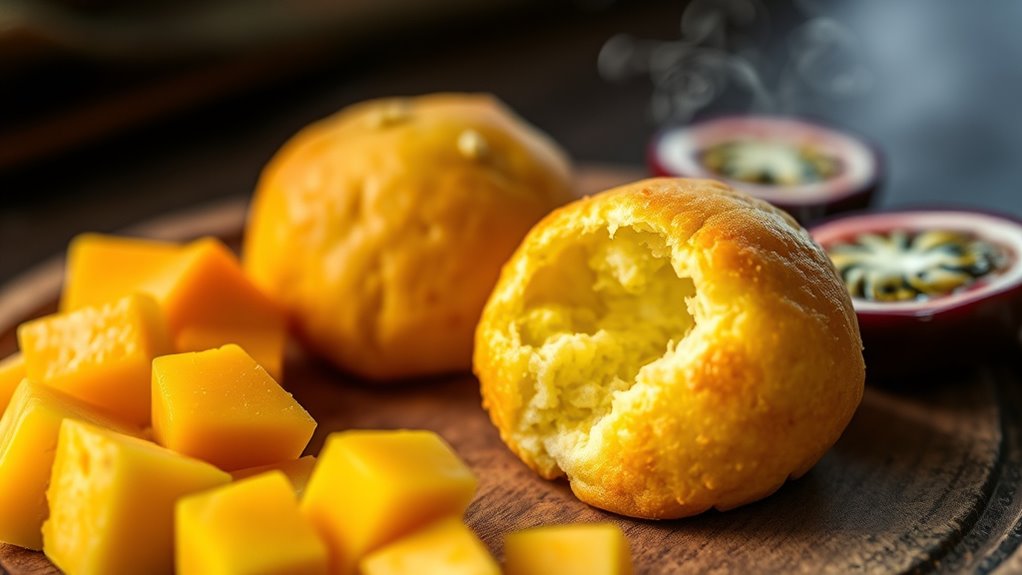
Across Brazil, you’ll find that cheese bread, or pão de queijo, varies considerably from region to region, reflecting local ingredients and culinary traditions. These regional cheese variations showcase cultural adaptations that make each version unique. In Minas Gerais, for instance, the cheese is often more pronounced, using local cheeses like queijo Minas. In the Northeast, coconut milk might be added, giving a tropical twist. Meanwhile, in the South, smoked cheeses add depth of flavor. To explore these differences, consider:
- Tasting Minas Gerais’ traditional, soft pão de queijo with queijo Minas.
- Trying Northeastern versions with coconut milk for a tropical flavor.
- Sampling smoked cheese varieties from the South for a richer taste.
Each variation highlights local ingredients and cultural adaptations, making pão de queijo a versatile and regionally distinct snack.
Additionally, understanding the regional culinary influences helps appreciate the diversity of pão de queijo recipes across Brazil.
Tips for Selecting the Freshest Fruits for Your Morning Plate
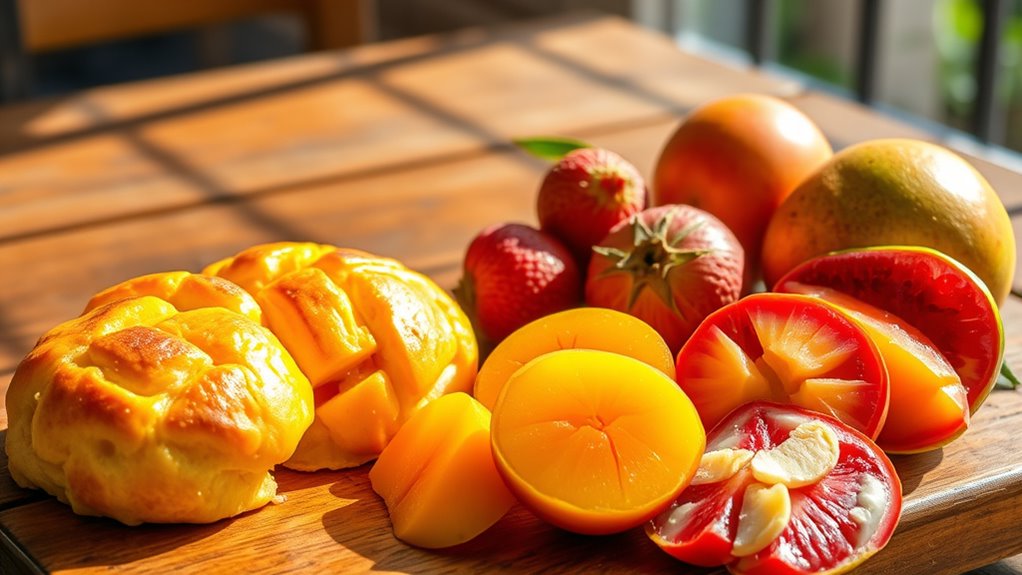
Choosing the freshest fruits for your morning plate starts with knowing what to look for. Check fruit ripeness by gently pressing or smelling—ripe fruits often yield slightly under pressure and have a sweet aroma. Look for vibrant, even color, which indicates good ripeness and quality. Seasonal selection plays a big role, so opt for fruits in their peak season—they tend to be fresher, tastier, and more affordable. Avoid fruits with blemishes, wrinkles, or soft spots, as these can be signs of overripeness or spoilage. Trust your senses: a fresh fruit should feel firm but not hard, smell inviting, and look appealing. Being aware of spoiled lemon juice signs can help you avoid disappointing fruit choices. By paying attention to ripeness and choosing seasonal varieties, you’ll enjoy the best flavors and textures in your Brazilian breakfast.
Pairing Brazilian Breakfast Flavors With Coffee and Other Beverages
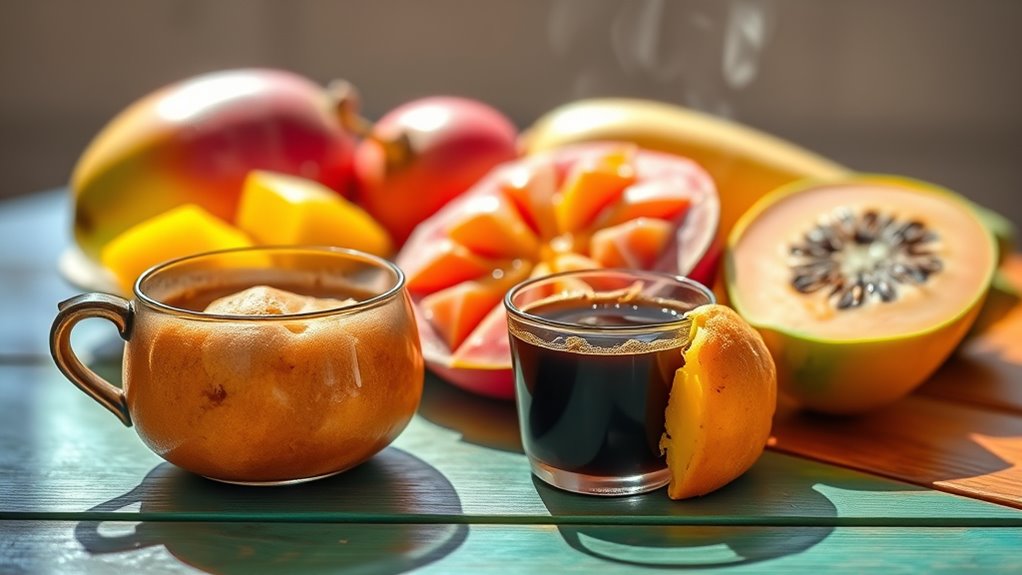
To truly elevate your Brazilian breakfast experience, pairing the right flavors with coffee and other beverages is essential. A well-chosen coffee pairing enhances the savory and sweet notes of pão de queijo and tropical fruits. For a balanced start, consider these three options:
Elevate your Brazilian breakfast with perfect coffee pairings that enhance flavors and refresh your palate.
- Light, milky coffee – complements the chewy texture of pão de queijo and balances the fruit’s acidity.
- Cold fruit juices – like guava or passionfruit, enhance the tropical flavors and refresh your palate.
- Fresh coconut water – adds a natural sweetness and hydration, perfect for a tropical-themed breakfast.
– Incorporating proper beverage pairing techniques can further enhance the overall flavor harmony of your breakfast spread.
Experiment with these breakfast beverages to find combinations that highlight the rich flavors of your favorite Brazilian dishes. Proper coffee pairing creates a more authentic, satisfying breakfast experience.
Frequently Asked Questions
What Are the Health Benefits of Traditional Brazilian Breakfast Ingredients?
You’ll find that traditional Brazilian breakfast ingredients offer great nutritional advantages. For example, they provide essential vitamins, minerals, and healthy fats that support your overall health. Ingredient benefits include energy-boosting carbs from tropical fruits and protein from pão de queijo, which helps with muscle repair. Incorporating these foods into your morning can improve digestion, strengthen immunity, and give you sustained energy throughout the day.
How Do Regional Differences Influence Pão De Queijo Recipes?
You’d think pão de queijo was made the same way everywhere, but regional flavor variations and ingredient substitutions totally spice things up! In Minas Gerais, they might add extra cheese, making it insanely cheesy, while in Bahia, they use local ingredients like cassava flour for a twist. These regional differences give each pão de queijo a unique personality, turning a simple snack into a delicious journey through Brazil’s diverse flavors!
Can Pão De Queijo Be Made Vegan or Gluten-Free?
You can definitely make pão de queijo vegan or gluten-free. For a vegan version, swap traditional cheese with vegan cheese alternatives like cashew-based or soy-based options. To make it gluten-free, use gluten-free flours such as tapioca starch or rice flour. Just mix the ingredients carefully, and you’ll get a tasty, allergy-friendly pão de queijo that everyone can enjoy without compromising flavor or texture.
What Are the Seasonal Tropical Fruits in Brazil?
Imagine a rainbow spilling across Brazil’s vast landscapes—that’s the bounty of seasonal fruits you can savor. During tropical harvests, you’ll find mangoes bursting with sweetness, papayas glowing like sunset fires, and passion fruits with their wild, tangy zest. These seasonal fruits, at their peak, transform dishes into vibrant celebrations of flavor. From summer to winter, Brazil’s tropical harvests gift you a continuous parade of fresh, luscious, and exotic delights.
How Do Brazilian Breakfast Flavors Compare to Other Latin American Cuisines?
You’ll notice that Brazilian breakfast flavors showcase vibrant, diverse profiles influenced by indigenous, African, and Portuguese culinary traditions. Compared to other Latin American cuisines, Brazil’s flavors are often milder and incorporate unique ingredients like cassava and tropical fruits. The culinary influences create a harmonious balance of sweet, savory, and tangy notes, making Brazilian breakfasts distinct and lively, reflecting the country’s rich cultural tapestry and love for fresh, flavorful ingredients.
Conclusion
Now that you know how to enjoy Brazil’s vibrant breakfast, don’t be afraid to try new flavors and make it your own. With cheese bread and tropical fruits, you’re all set to start your day on a high note. Remember, variety is the spice of life — so explore regional twists and fresh combinations. Embrace the flavors, and let your mornings be as colorful as Brazil itself!
Halloween Picks
halloween
As an affiliate, we earn on qualifying purchases.