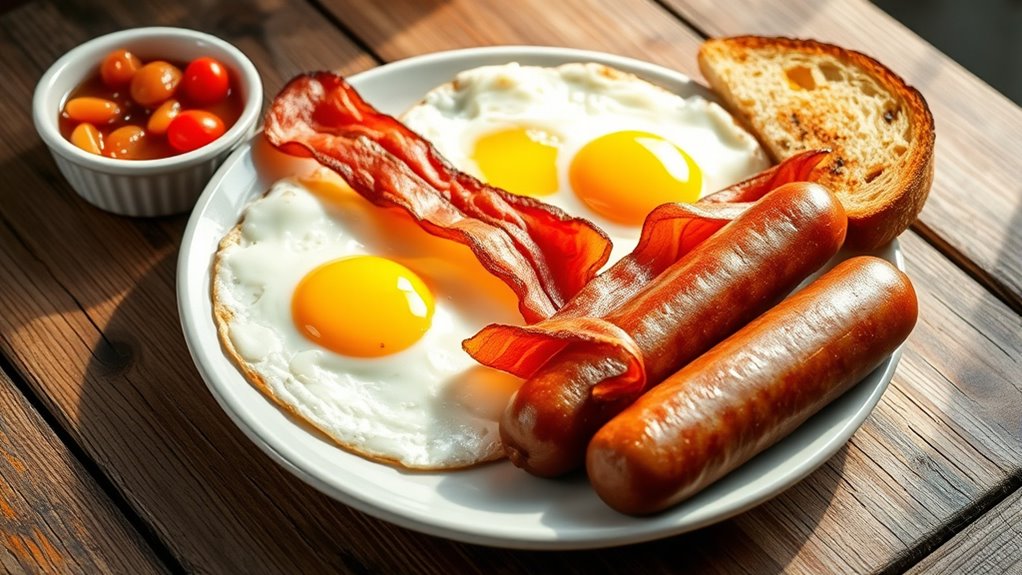

The British full breakfast has deep roots in history, evolving from a practical meal to a symbol of hospitality across the UK. It reflects regional flavors, from hearty Scottish haggis to Welsh laverbread, shaped by local ingredients and traditions. Originally providing energy for laborers, today it celebrates cultural diversity and regional pride. To discover more about how this iconic meal tells Britain’s story, explore the fascinating details behind its ingredients and origins.
Key Takeaways
- The British full breakfast originated as a hearty, practical meal for laborers, evolving into a symbol of hospitality and regional identity.
- Ingredients like bacon, eggs, and black pudding have medieval roots, with regional variations reflecting local produce and traditions.
- Historically, the meal relied on locally sourced ingredients such as pork, eggs, and fish, shaped by geography and cultural influences.
- Over time, the breakfast adapted to changing tastes, incorporating vegetarian options and lighter preparations while maintaining traditional elements.
- The full breakfast showcases Britain’s diverse culinary heritage, with regional flavors and ingredients highlighting local history and culture.
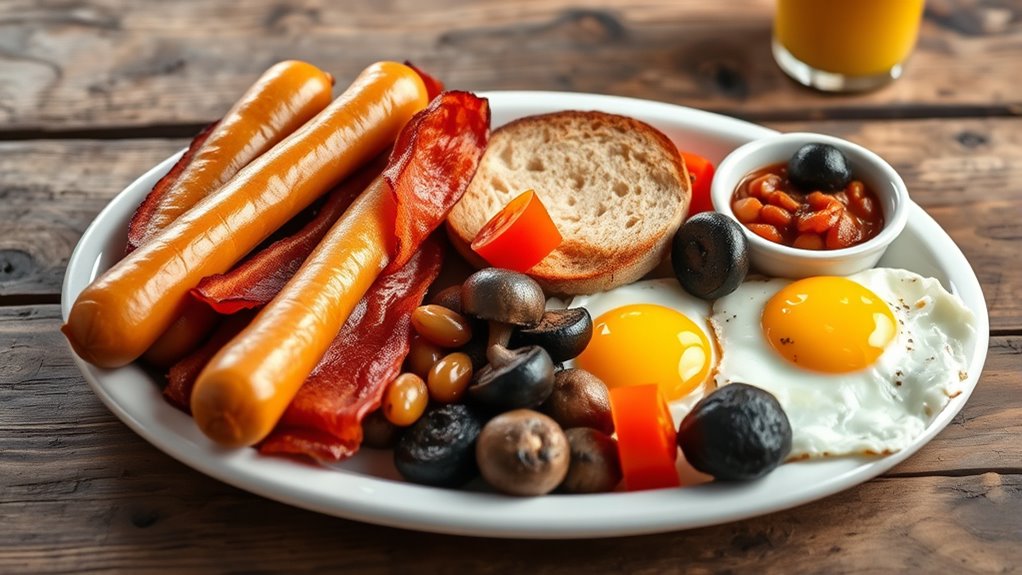
Have you ever wondered what makes a British full breakfast so iconic? It’s more than just a hearty meal; it’s a reflection of regional variations and local tastes that have evolved over centuries. The breakfast ingredients differ across the UK, influenced by geography, history, and local traditions. In England, you’ll find a classic plate laden with bacon, sausages, eggs, black pudding, baked beans, grilled tomatoes, and toast. Meanwhile, in Scotland, the breakfast might include haggis or tattie scones, emphasizing hearty, locally sourced ingredients. Wales often features cockles or laverbread alongside traditional items, showcasing coastal influences. In Northern Ireland, soda bread and potato bread sometimes make an appearance, highlighting regional staples. These regional variations aren’t just about ingredients; they tell stories of local agriculture, fishing, and cultural preferences that have shaped what’s on your plate.
British full breakfasts showcase regional flavors, from haggis in Scotland to laverbread in Wales, reflecting local traditions and history.
The history behind these breakfast ingredients is rooted in practicality and resourcefulness. Historically, the full breakfast served as a substantial start to the day for laborers and farmers, providing enough energy to sustain them through demanding work. Over time, it became a symbol of British hospitality and a staple in pubs, hotels, and homes alike. The ingredients themselves were often locally available: pigs for sausages and bacon, eggs from free-range hens, and beans from imported or local sources. Black pudding, made from blood and oats, dates back to medieval times, while grilled tomatoes and mushrooms became popular in the 19th century as healthier accompaniments. Modern variations also incorporate regional ingredients, reflecting local culinary traditions and tastes.
The evolution of the full breakfast also reflects changing tastes and health consciousness. While traditional ingredients remain beloved, modern takes might feature vegetarian options or lighter alternatives, yet they still honor the hearty origins of the dish. You’ll notice that regional variations influence not only what’s served but how it’s prepared and presented. For example, some areas might prefer their bacon crispy, while others like it more tender. Sausage spices can vary, reflecting local recipes and family traditions. Even the bread choices, from white toast to wholemeal or soda bread, speak to regional preferences and historical availability.
In essence, the British full breakfast isn’t a static dish; it’s a living tradition that adapts to local tastes and ingredients. It’s a culinary tapestry woven from regional variations, each adding its own flavor and character to this iconic meal. When you sit down to enjoy one, you’re not just having breakfast—you’re savoring a piece of Britain’s rich history and diverse regional culture, all on a single plate.
Frequently Asked Questions
When Did the Full English Breakfast Originate?
You’ll find that the full English breakfast originated in the 19th century, evolving from traditional hearty meals eaten by workers and farmers. Its history origins trace back to the aristocracy’s elaborate morning meals, which later became more accessible to the masses. Today, it holds cultural significance as a symbol of British hospitality and tradition, offering a satisfying start to the day with a variety of classic ingredients.
What Regional Variations Exist Within the UK?
Ever wondered how diverse a full English breakfast can be? You find regional sausage varieties like Lincolnshire or Cumberland, each with unique flavors. In Scotland, you might enjoy black pudding and tattie scones, while Wales offers laverbread. Don’t forget regional bread types, from crumpets to soda bread. These regional variations add charm, making each breakfast a delightful exploration of local flavors across the UK.
How Has the Full Breakfast Evolved Over Centuries?
You’ve seen how the full breakfast has evolved over centuries through cultural influences and regional ingredients. Originally simple, it now features diverse items like black pudding, tomatoes, and mushrooms, reflecting local tastes. As you enjoy it today, remember how historical trade, agriculture, and regional customs shaped its ingredients and presentation, making each full breakfast a unique blend of tradition and adaptation across the UK.
Are There Any Traditional Beverages Served With It?
Think of a British full breakfast as a grand stage, where traditional drinks play essential roles. You’re often served a steaming cup of tea, like a warm handshake welcoming the morning. Other traditional drinks include freshly squeezed juice or a glass of cold milk. These beverages complement the hearty meal perfectly, acting as loyal companions that enhance each bite and keep you energized for the day ahead.
What Are Common Vegetarian or Vegan Alternatives?
You can enjoy a meat-free breakfast with plant-based substitutes like vegan sausages, grilled mushrooms, baked beans, and hash browns. For added flavor, include avocado, grilled tomatoes, or vegan-friendly scrambled tofu. Many cafes now offer delicious meat-free options, making it easier to enjoy a hearty, vegetarian or vegan British full breakfast. These plant-based substitutes provide all the satisfaction without compromising your dietary choices.
Conclusion
Think of the British full breakfast as a hearty symphony, each ingredient playing its part to create harmony. It’s more than just a meal; it’s a story etched into the plate, echoing traditions and history. As you enjoy each bite, imagine yourself stepping into a timeless tavern where every flavor whispers tales of mornings past. This breakfast isn’t just food—it’s a warm embrace from the past, inviting you to savor history with every mouthful.