Caribbean breakfasts with saltfish and plantains showcase bold flavors rooted in tradition. You soak and boil salted cod to reduce saltiness, then sauté it with herbs for added flavor. Sliced plantains are fried or baked to bring out their natural sweetness. These dishes highlight simple cooking methods that preserve nutrients and cultural heritage. If you keep exploring, you’ll discover more about the vibrant history and healthiness behind this classic Caribbean morning meal.
Key Takeaways
- Saltfish and plantains showcase Caribbean culinary heritage through traditional preparation methods emphasizing simplicity and flavor.
- Proper soaking and boiling of saltfish reduce saltiness, preserving its high protein and omega-3 content.
- Plantains are sliced and fried or baked, retaining nutrients and developing natural sweetness.
- Cooking techniques help preserve vitamins and minerals, ensuring a nutritious, wholesome breakfast.
- This dish reflects Caribbean cultural diversity, highlighting regional history and authentic, health-conscious flavors.
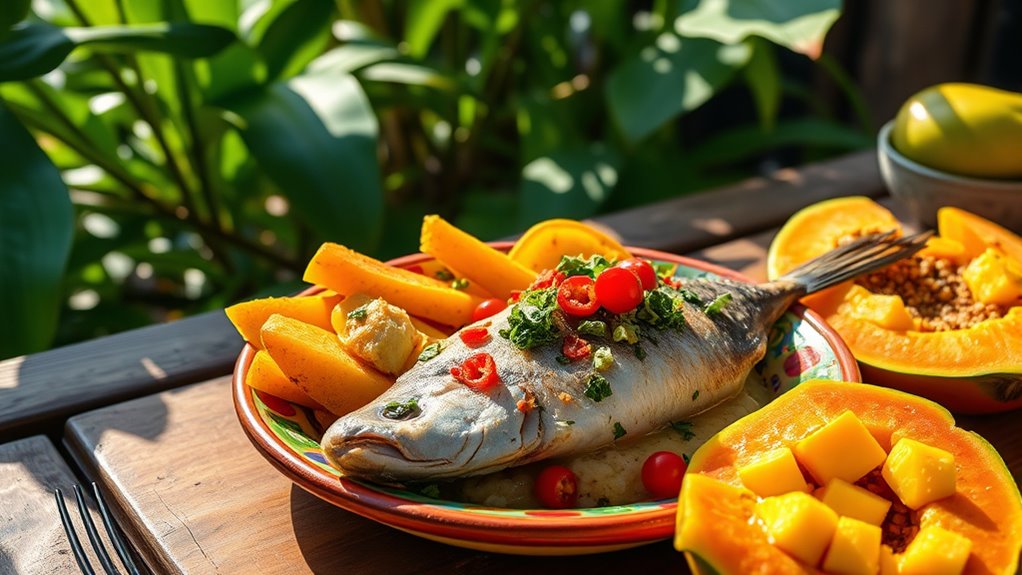
Caribbean breakfasts are a vibrant reflection of the region’s rich cultural diversity and natural flavors. When you enjoy a traditional saltfish and plantains meal, you’re experiencing more than just a tasty start to your day—you’re partaking in a culinary heritage that’s been passed down through generations. The way these dishes are prepared highlights traditional cooking methods that emphasize simplicity and preservation of natural taste. Saltfish, or salted cod, is typically soaked and boiled to remove excess salt, then flaked and sautéed with herbs, onions, and peppers. This process not only enhances flavor but also respects age-old techniques that have stood the test of time. Similarly, plantains are often sliced and fried or baked, techniques that bring out their natural sweetness and firm texture. These methods are rooted in practicality; slow, gentle cooking helps retain nutrients while guaranteeing the ingredients are tender and flavorful. Incorporating traditional cooking methods also helps preserve the nutritional integrity of these ingredients, ensuring you benefit from their full health potential.
By sticking to traditional cooking techniques, you also access the nutritional benefits of these ingredients. Saltfish is a high-protein source packed with essential amino acids, making it a great way to fuel your morning. It’s also rich in omega-3 fatty acids, which support heart health, and provides important minerals like calcium and magnesium. While saltfish might seem salty at first, proper soaking reduces sodium content, making it a balanced addition to your breakfast. Plantains, on the other hand, are a good source of complex carbohydrates, providing steady energy throughout your morning. They contain dietary fiber, which aids digestion and helps you feel full longer. Plus, plantains are rich in vitamins A and C, supporting your immune system and skin health. When cooked using traditional methods like frying or baking, they preserve these nutrients while developing a crispy, caramelized exterior that’s irresistible.
Eating a Caribbean breakfast like saltfish and plantains is more than just satisfying your hunger—it’s a healthy choice rooted in tradition. The careful preparation guarantees you receive maximum nutritional benefits from each bite. These dishes exemplify how simple techniques can create wholesome, flavorful meals that honor the region’s culinary history. When you follow traditional cooking methods, you’re not only preserving cultural authenticity but also making certain that the food retains its natural goodness. So, next time you enjoy saltfish and plantains, remember that you’re embracing a vibrant, nutritious start to your day that celebrates Caribbean heritage and natural flavors.
Frequently Asked Questions
What Are Some Regional Variations of Saltfish and Plantains?
You’ll find regional variations of saltfish and plantains that showcase unique flavor profiles and traditional cooking methods. In Jamaica, they add Scotch bonnet peppers for heat, while in Puerto Rico, they incorporate sofrito for depth. In Trinidad, they often include local herbs and spices, and in Barbados, they might serve it with a hint of lime. These regional touches highlight diverse cultural influences and culinary traditions across the Caribbean.
How Do You Properly Store Leftover Saltfish?
You want to keep leftover saltfish fresh and safe. Store it in an airtight container or tightly wrapped in plastic wrap and place it in the refrigerator. For longer storage, consider freezing it in a sealed bag, removing excess air. Remember, saltfish freshness tips include consuming it within two days of refrigeration and reheating thoroughly. Proper storage prevents spoilage and preserves flavor, ensuring your next meal tastes just as good.
What Are Healthy Alternatives to Traditional Saltfish?
If you’re looking for healthy saltfish substitution, consider using smoked salmon or grilled chicken for a protein boost without excess salt. For plantain alternatives, try baked sweet potatoes or zucchini slices, which add fiber and nutrients. These options keep your meal flavorful and balanced while reducing sodium intake. You’ll enjoy a delicious breakfast that supports your health goals without sacrificing taste.
Can This Breakfast Be Prepared Vegan or Vegetarian?
Sure, you can totally make this breakfast vegan or vegetarian—if you enjoy trading tradition for tofu! Swap saltfish for plant-based proteins like seasoned jackfruit or tempeh, and use vegan seasonings to mimic that savory kick. With vegan substitutions, your plantains and other ingredients stay the same, but you get a delicious, cruelty-free twist that’s just as satisfying. Who knew plant-based mornings could be so flavorful?
What Are Tips for Balancing Flavors in This Dish?
To balance flavors, start with flavor enhancement by adding a touch of acidity, like lime juice, to brighten the dish. Use ingredient pairing wisely—pair salty saltfish with sweet plantains to create contrast. Incorporate herbs such as parsley or cilantro for freshness. Adjust seasoning gradually, tasting as you go, to guarantee no single flavor overwhelms. This approach creates a harmonious, well-rounded breakfast that highlights each ingredient’s unique qualities.
Conclusion
As you savor the smoky saltfish and golden plantains, you can almost hear the lively chatter of a Caribbean morning. The aroma wraps around you like a warm breeze, inviting you to taste the island’s vibrant spirit. Each bite dances on your palate, a symphony of flavors sun-kissed by the tropical sun. This breakfast isn’t just a meal; it’s a rhythmic celebration of culture, awakening your senses to the heartbeat of the Caribbean.