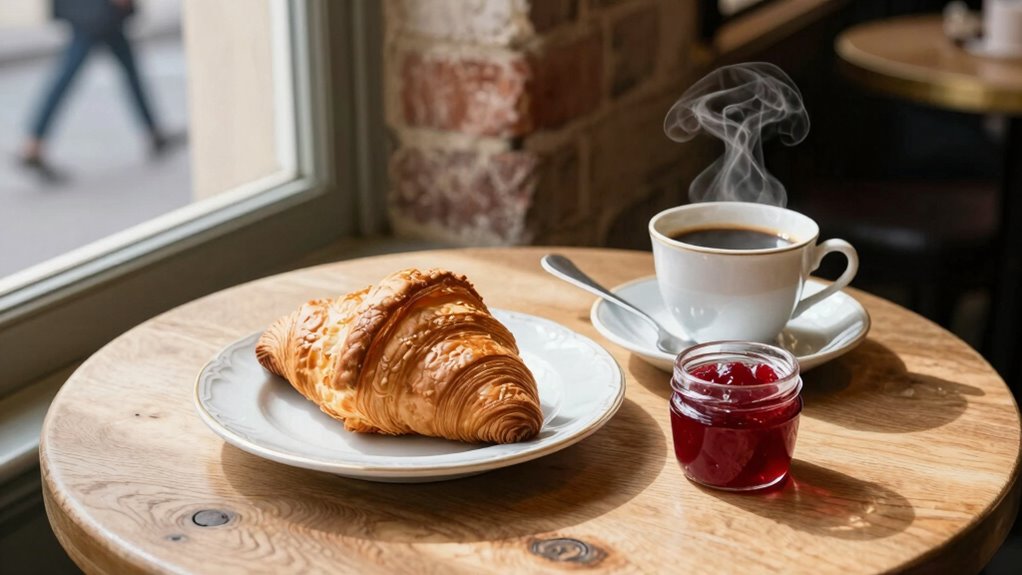

You might expect a lavish spread, but French breakfasts are actually quite simple. They focus on just a few high-quality items like croissants, baguettes, butter, and jam, paired with coffee or café au lait. This minimalist approach reflects a long-standing tradition of elegance, practicality, and savoring each bite without overindulgence. If you stay curious, you’ll see how this straightforward style beautifully emphasizes freshness and mindful enjoyment, rooted in centuries of culinary practice.

Get kitchen staples and gadgets delivered free with Prime
- Fast, free delivery on millions of items
- Prime Video, Amazon Music and more included
- Member-only deals all year
Key Takeaways
- French breakfasts prioritize quality and minimalism, focusing on a few well-made items rather than elaborate spreads.
- Regional influences and historical traditions emphasize simplicity, practicality, and fresh, local ingredients.
- The cultural philosophy values savoring a single item, promoting mindful enjoyment over quantity.
- Breakfast options are typically quick and straightforward, suited to busy French daily routines.
- The emphasis on elegance and moderation leads to a less complicated, more refined morning meal than many visitors expect.

Many visitors expect a lavish, elaborate French breakfast, but in reality, it’s often much simpler and more relaxed. Instead of grand spreads filled with multiple courses, the typical French breakfast tends to be modest, focusing on quality over quantity. You might find yourself enjoying a croissant or a piece of baguette with some butter or jam, accompanied by a café au lait or a simple black coffee. This straightforward approach reflects a cultural preference for starting the day with just enough to energize without overindulgence.
French breakfasts are simple, focusing on quality with a croissant, baguette, and coffee for a relaxed start.
Understanding why French breakfasts are so uncomplicated involves exploring regional variations and historical influences. Across different parts of France, you’ll notice small differences that shape the breakfast experience. For instance, in the north, bread and butter are staples, often paired with a hot beverage, while in the south, you might encounter more fresh fruit or a tartine topped with local specialties. These regional variations aren’t just about ingredients—they also speak to local customs and agricultural practices, which influence what’s readily available and favored in each area. Additionally, the culinary traditions of France have long prioritized simplicity and elegance in daily routines, including breakfast. A strong emphasis on seasonal ingredients also influences the minimalistic approach, ensuring freshness and quality in every bite. Moreover, the emphasis on mindful eating encourages enjoying each component without rushing or over-consuming.
Historical influences have also played a significant role in shaping the simplicity of French breakfasts. Traditionally, French cuisine has emphasized moderation and practicality, especially considering the country’s culinary history rooted in rustic, farm-to-table origins. During earlier centuries, breakfast was seen as a light meal that prepared people for a busy day’s work, rather than an elaborate feast. The French approach to breakfast reflects this pragmatic attitude, favoring quick, nourishing options that are easy to prepare and enjoy. Over time, this pragmatic tradition persisted, even as France became known for its gourmet cuisine, but breakfast remained a more subdued affair.
Furthermore, the French value the quality of their food over quantity, which explains the simplicity. Instead of filling up on a large, complicated meal, they prefer to savor a single, well-made item—like a flaky croissant or a freshly baked baguette—paired with a perfectly brewed cup of coffee. This ritual allows them to appreciate the flavors and textures without feeling overwhelmed. So, when you experience a French breakfast, remember that it’s less about abundance and more about mindful enjoyment, influenced by regional customs and historical practices that have endured through the ages. Additionally, this emphasis on culinary simplicity highlights the French tendency to prioritize quality and tradition over extravagance.
As an affiliate, we earn on qualifying purchases.
Frequently Asked Questions
Do French Breakfasts Usually Include Hot Dishes?
French breakfasts usually don’t include hot dishes. Instead, you’ll often enjoy sweet pastries like croissants or pain au chocolat, along with bread and butter or jam. Savory options are available, but they’re typically light, such as cheese or ham. The focus is on simple, fresh flavors, making the breakfast straightforward and quick. You won’t find heavy cooked meals, which is part of what keeps French mornings so relaxed.
Are French Breakfast Items Expensive?
Like a knight’s armor, French breakfast items are generally affordable, especially when you choose local ingredients. You’ll find simple yet delightful options that follow traditional breakfast customs, such as croissants, baguettes, and fresh fruit. While some specialty items or imported goods might be pricier, most morning staples remain budget-friendly, allowing you to enjoy authentic breakfast traditions without breaking the bank.
Is Coffee the Main Beverage for Breakfast in France?
Yes, coffee is the main beverage for breakfast in France. You’ll often see locals starting their morning rituals with a café au lait or espresso, as coffee preferences are deeply rooted in French culture. It’s simple and quick, fitting seamlessly into busy mornings. Unlike elaborate breakfast spreads, the focus is on a good cup of coffee, making French breakfast more straightforward than many visitors expect.
Do French Breakfast Routines Vary by Region?
You’ll find that French breakfast routines do vary by region, with about 60% of locals sticking to traditional customs. In Brittany, you might enjoy galettes, while in Provence, lavender-infused pastries are popular. Regional pastry differences influence local breakfast customs, creating delightful variations across the country. Despite these differences, most French people keep breakfast simple, often just a croissant or baguette with jam and coffee, emphasizing quality over complexity.
Are Breakfast Menus Available in All French Cafes?
Most French cafes don’t have printed breakfast menus; instead, you’ll find daily selections displayed at a local bakery or on a chalkboard. They usually serve traditional pastries like croissants, pain au chocolat, and baguette with butter and jam. You can easily ask the staff about their options, and they’ll happily recommend popular choices, making your breakfast experience simple and authentic without needing to study a menu.
Conclusion
So, next time you enjoy a French breakfast, remember it’s all about understated elegance and simple pleasures. No elaborate spreads or heavy dishes—just a gentle start to your day with fresh bread, a touch of butter, and a warm cup of coffee. It’s a quiet moment, softly unfolding like a delicate bloom, inviting you to savor life’s understated joys. Sometimes, less truly is more, especially when it’s served with a touch of Parisian charm.
NFL season / tailgating Picks
team gear
As an affiliate, we earn on qualifying purchases.