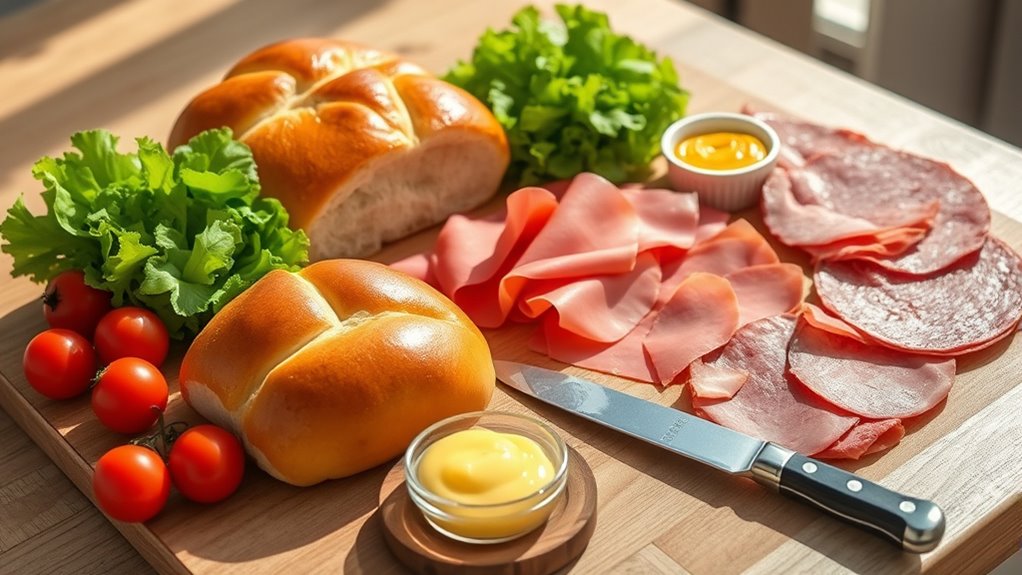

A traditional German breakfast centers around fresh bread rolls, or Brötchen, often crusty or soft depending on region. You’ll find these paired with a variety of cold cuts like ham, salami, and liverwurst, alongside cheeses such as Emmental and Münster. Classic spreads like butter, honey, and fruit preserves complement the meal. Regional variations and modern twists add delicious diversity, so if you’re curious about how these elements come together, keep exploring for more flavorful details.
Key Takeaways
- Bread rolls (Brötchen) are a core component, with regional variations in texture and ingredients across Germany.
- Cold cuts like ham, salami, and liverwurst are essential, reflecting regional tastes and preferences.
- Popular cheeses include Emmental and Münster, often served alongside bread and meats.
- Traditional spreads such as butter, honey, and fruit preserves complement the bread and cold cuts.
- Modern twists incorporate artisanal breads and organic, locally sourced ingredients for added flavor and variety.
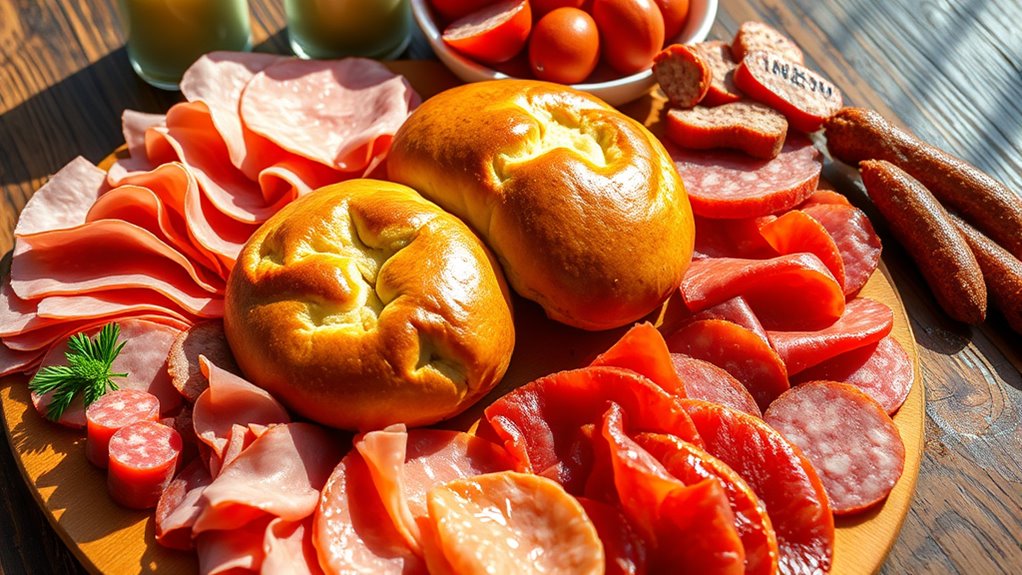
Starting your day in Germany means enjoying a hearty and flavorful breakfast that reflects the country’s rich culinary traditions. One of the most iconic elements is the simple yet satisfying combination of fresh bread rolls, known as Brötchen, paired with an assortment of cold cuts. These staples form the backbone of a typical German breakfast and are deeply rooted in regional variations across the country. In the north, you might find crusty, chewy Brötchen made from rye or whole grain flour, while in the south, softer, buttery rolls are more common. Each region has its own twist on these bread rolls, often influenced by local ingredients and baking styles, giving you a taste of Germany’s diverse culinary landscape right from the start of your day. Traditional German breakfasts often include a variety of spreads such as butter, honey, or fruit preserves, enhancing the bread experience. When it comes to cold cuts, you can expect a wide variety of sliced meats and cheeses that showcase the country’s commitment to quality and craftsmanship. Popular options include thinly sliced ham, salami, and liverwurst, often served alongside a selection of cheeses like Emmental or Münster. The emphasis on cold cuts varies regionally, with some areas favoring more smoked or cured varieties, while others prefer fresh, lightly seasoned options. This regional diversity allows you to experience different flavors and textures, making each breakfast unique depending on where you are in Germany. Modern twists have also made their way into traditional German breakfasts, blending age-old customs with contemporary tastes. Some cafes and households now incorporate artisanal bread options, such as sourdough or multigrain, elevating the simple Brötchen to a gourmet level. Likewise, innovative cold cuts and cheese platters may feature organic, locally sourced ingredients, or even plant-based alternatives for those seeking vegetarian or vegan options. These modern adaptations maintain the essence of the classic breakfast but add a layer of sophistication and variety that appeals to today’s palate. Additionally, understanding ice cream terminology and regional preferences can inspire creative breakfast spreads that incorporate dairy products in various forms. Whether you prefer a classic spread or a modern interpretation, the combination of regional variations and creative twists guarantees that your German breakfast is both comforting and exciting, offering a delicious start to your day.
Frequently Asked Questions
What Are the Regional Variations of German Breakfast Traditions?
You’ll notice regional variations in German breakfast traditions, influenced by local delicacies and seasonal variations. In the south, you might enjoy hearty breads and cheeses, while in the north, fish and fresh dairy are common. In Bavaria, pretzels and weisswurst are popular, whereas in the east, rye bread and pickled vegetables are staples. These variations reflect local tastes and seasonal flavors, making each region’s breakfast uniquely delicious.
How Do German Breakfast Customs Differ Between Urban and Rural Areas?
In rural areas, you’ll find breakfast customs that emphasize hearty, homemade foods like fresh bread, dairy, and local produce, often following traditional breakfast etiquette. In cities, people tend to opt for quicker options, incorporating dairy alternatives like plant-based spreads or yogurts, with a more modern approach to breakfast. Urban dwellers might skip formalities, focusing on convenience, while rural communities preserve longstanding customs.
Are There Vegetarian or Vegan Options for Traditional German Breakfast?
You’ll find that German breakfast options are bursting with variety, even for vegetarians and vegans. Meatless Brötchen options and plant-based cold cuts are now widely available, transforming your morning meal into a colorful, compassionate feast. You can enjoy fresh bread with vegan spreads, tofu cold cuts, and vegetable toppings. These tasty choices let you savor a traditional German breakfast without compromising your lifestyle or values.
What Beverages Are Typically Served With a German Breakfast?
You usually start your German breakfast with coffee, which pairs perfectly with fresh bread and cold cuts. Many enjoy a rich coffee pairing, while others prefer juice options like orange or apple juice for a invigorating twist. Both beverages complement the hearty, flavorful foods, giving you a well-rounded start to your day. Whether you choose coffee or juice, these drinks enhance the traditional German breakfast experience.
How Has German Breakfast Culture Evolved Over Recent Decades?
Imagine your breakfast table as a canvas that’s colorful and ever-changing. Over recent decades, German breakfast culture has blossomed beyond classic Brötchen and cold cuts, embracing bread diversity and dairy innovations. You now find artisanal loaves, gluten-free options, and inventive dairy products like plant-based spreads. This evolution invites you to explore new flavors, making your mornings a vibrant tapestry of tradition and modern culinary creativity.
Conclusion
So, next time you enjoy a traditional German breakfast, remember it’s more than just bread rolls and cold cuts—it’s a taste of history and culture. Each bite tells a story, inviting you to savor the simple joys and timeless traditions. Embrace the rhythm of this hearty morning ritual, and let it remind you that sometimes, the most authentic experiences are found in the familiar. After all, isn’t tradition the heartbeat of every good morning?