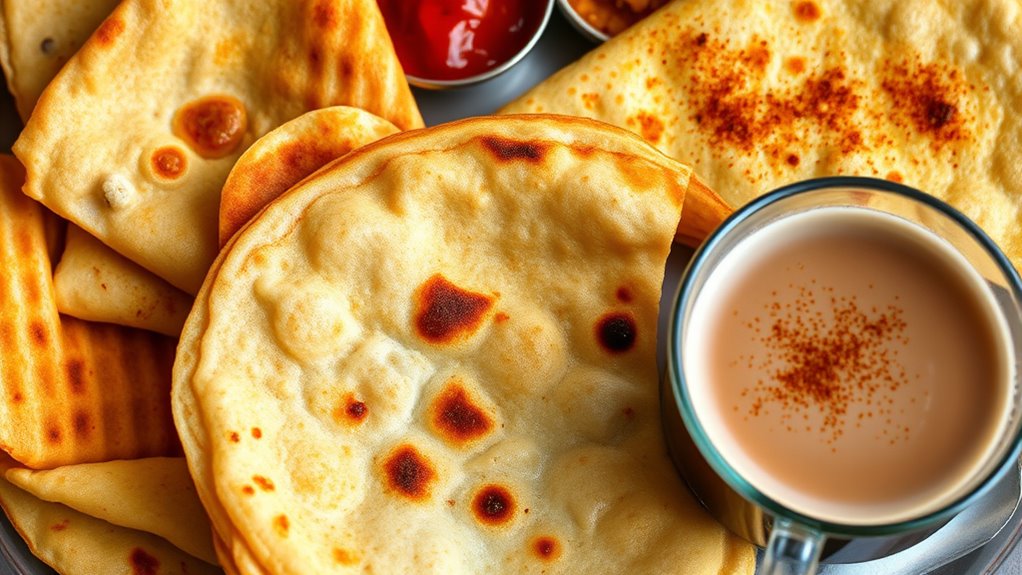

Indian breakfasts like parathas, dosas, and chai highlight regional flavors and ingredients. Parathas are stuffed with vegetables or paneer, while dosas are crispy crepes made from rice and urad dal, often served with sambar and chutneys. Chai offers antioxidants and warmth, energizing your day. These dishes reflect local customs, ingredients, and health benefits, combining tradition with nutrition. If you continue exploring, you’ll uncover even more about these delicious and nourishing start-of-the-day options.

Get kitchen staples and gadgets delivered free with Prime
- Fast, free delivery on millions of items
- Prime Video, Amazon Music and more included
- Member-only deals all year
Key Takeaways
- Parathas, dosas, and chai are iconic Indian breakfast dishes reflecting regional culinary traditions.
- Parathas are stuffed flatbreads with vegetables or paneer, served with yogurt or pickles.
- Dosas are crispy fermented rice and urad dal crepes, commonly paired with sambar and chutneys.
- Chai (tea) offers antioxidants and warmth, complementing breakfast and boosting morning energy.
- These dishes combine tradition and nutrition, showcasing India’s diverse ingredients and regional flavors.

Indian breakfasts are as diverse as the country itself, offering a wide range of flavors, textures, and traditions. When you explore breakfast options across India, you’ll notice how regional variations influence what people enjoy in the morning. In the north, you might find hearty parathas stuffed with vegetables or paneer, often served with yogurt or pickles. Moving south, dosas—thin, crispy crepes made from fermented rice and urad dal—take center stage, paired with sambar and chutneys. In the east, luchis or cholar dal with rice are popular, while the west boasts dishes like the savory, flaky theplas. These regional differences aren’t just about taste; they reflect local ingredients, climate, and culinary customs.
Understanding regional variations helps you appreciate the nutritional benefits of these breakfasts. Parathas, for instance, can be packed with vegetables or lentils, providing fiber, vitamins, and minerals that keep you energized throughout the morning. The fermentation process involved in making dosas enhances digestibility and boosts probiotic content, promoting gut health. Many traditional breakfast dishes incorporate pulses, grains, and vegetables, making them nutrient-dense and balanced. For example, a dosa with sambar supplies protein, fiber, and essential nutrients, while a simple chai offers antioxidants and warmth that invigorate your senses early in the day.
Regional Indian breakfasts offer nutrient-rich ingredients that energize and promote gut health early in the day.
You might also notice how different regions emphasize certain ingredients for their health benefits. In the north, dairy-based accompaniments like yogurt or butter add calcium and healthy fats, supporting bone health and energy levels. South Indian breakfasts often feature ingredients like rice and lentils, which are good sources of complex carbs and plant-based protein. These elements sustain you longer and help maintain blood sugar levels, making breakfast both delicious and nourishing. The diversity means you can tailor your morning meal to meet your nutritional needs while enjoying authentic flavors.
Through these regional variations, Indian breakfasts demonstrate a perfect harmony between tradition and health. They’re not just about satisfying hunger but also about nourishing the body with a variety of wholesome ingredients. Whether you prefer a flaky paratha, a crispy dosa, or a steaming cup of chai, each offers unique nutritional benefits and reflects the rich culinary tapestry of India. So, next time you indulge in these morning favorites, remember how each dish’s regional roots contribute to a balanced, flavorful start to your day. Additionally, exploring traditional cooking methods like fermentation can enhance digestion and increase the nutritional value of your meals.
As an affiliate, we earn on qualifying purchases.
Frequently Asked Questions
What Are Regional Variations of Indian Breakfast Dishes?
You’ll notice regional variations of Indian breakfast dishes through local spices and ingredients. In the South, dosas are crispy and served with coconut chutney, while in the North, parathas are stuffed with potatoes or paneer. Some areas celebrate breakfast festivals featuring regional specialties. These variations reflect local culinary traditions, ensuring that each region offers a unique breakfast experience rooted in its culture and spices.
How Are Traditional Breakfast Ingredients Sourced Locally?
You source traditional breakfast ingredients locally by visiting nearby markets and farmers’ stalls, ensuring freshness and supporting local farmers. You take advantage of seasonal produce availability, which means selecting ingredients at their peak flavor and nutritional value. This practice not only enhances the taste of dishes like parathas and dosas but also promotes sustainable local ingredient sourcing, making your breakfast more authentic and environmentally friendly.
Are There Vegetarian and Non-Vegetarian Options for Breakfast?
Yes, you can find both vegetarian options like parathas filled with vegetables or cheese, and non-vegetarian options such as omelets or meat-stuffed dosas. Many Indian breakfasts cater to diverse dietary preferences, so you’re likely to enjoy a variety of choices. Whether you prefer plant-based dishes or ones with eggs and meats, there’s something for everyone, ensuring a flavorful start to your day.
What Are the Health Benefits of Typical Indian Breakfast Foods?
Think of Indian breakfast foods as a colorful tapestry, rich in health benefits. You get a boost of nutritional value from ingredients like lentils, vegetables, and spices, which support digestion and immunity. These foods cater to various dietary considerations, offering vegetarian options and healthier cooking methods. By choosing traditional dishes like dosas and parathas, you nourish your body with fiber, vitamins, and antioxidants, fueling your day naturally and deliciously.
How Do Indian Breakfast Customs Differ Across States?
You’ll notice that Indian breakfast customs vary across states, influenced by local ingredients and traditions. In the South, you might encounter dosa with a milder spice level and a more relaxed breakfast etiquette, while in the North, parathas often feature spicier fillings and a communal eating style. These regional differences shape how you enjoy breakfast, making each experience unique and culturally rich.
Conclusion
As you explore Indian breakfasts like parathas, dosas, and chai, you’ll find they’re more than just delicious—they’re steeped in history and tradition. Some believe that the popularity of chai spread from ancient trade routes, connecting India to the world long before globalization. So, next time you enjoy these flavors, remember you’re savoring centuries of culture and curiosity, proving that food truly bridges history and modern life in the most flavorful way.
NFL season / tailgating Picks
team gear
As an affiliate, we earn on qualifying purchases.