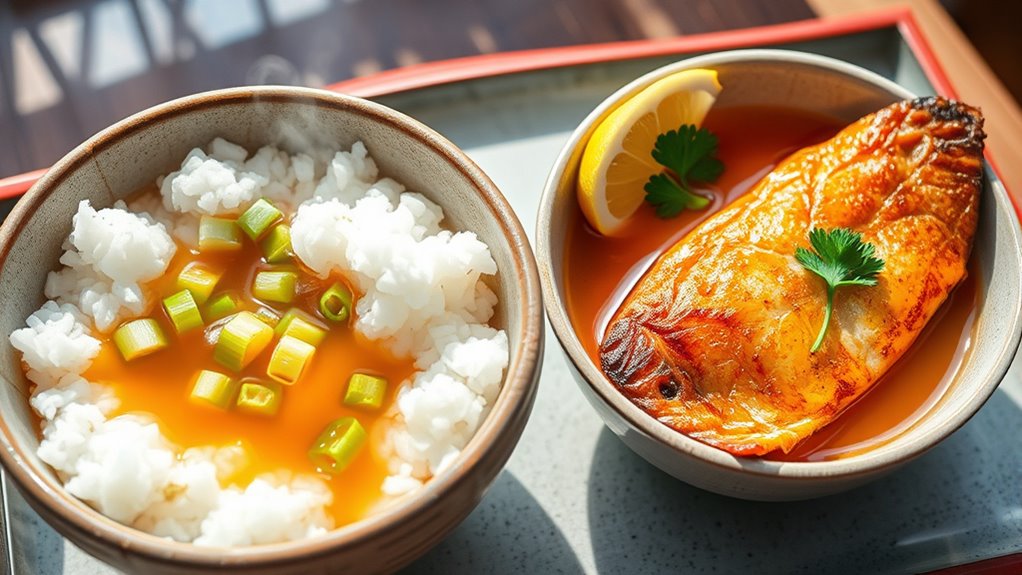

A traditional Japanese breakfast centers around rice, miso soup, and grilled fish, offering a balanced and flavorful start to your day. You’ll often see servings arranged neatly on a tray, emphasizing harmony and presentation. Each component complements the others—fresh fish like salmon or mackerel pairs perfectly with steamed rice and savory miso soup. Discover how regional flavors and cultural practices shape this breakfast by exploring further into Japan’s rich culinary traditions.
Key Takeaways
- Japanese breakfasts commonly include steamed rice, miso soup, and grilled fish for a balanced, nourishing start to the day.
- Rice is served plain to highlight its natural flavor, often accompanied by side dishes and pickled vegetables.
- Miso soup, made with dashi broth and miso paste, provides warmth and umami, often containing tofu, seaweed, or vegetables.
- Grilled fish, such as salmon or mackerel, is seasoned with salt and served as a savory protein component.
- The meal emphasizes harmony, presentation, and traditional etiquette, reflecting regional influences and seasonal ingredients.
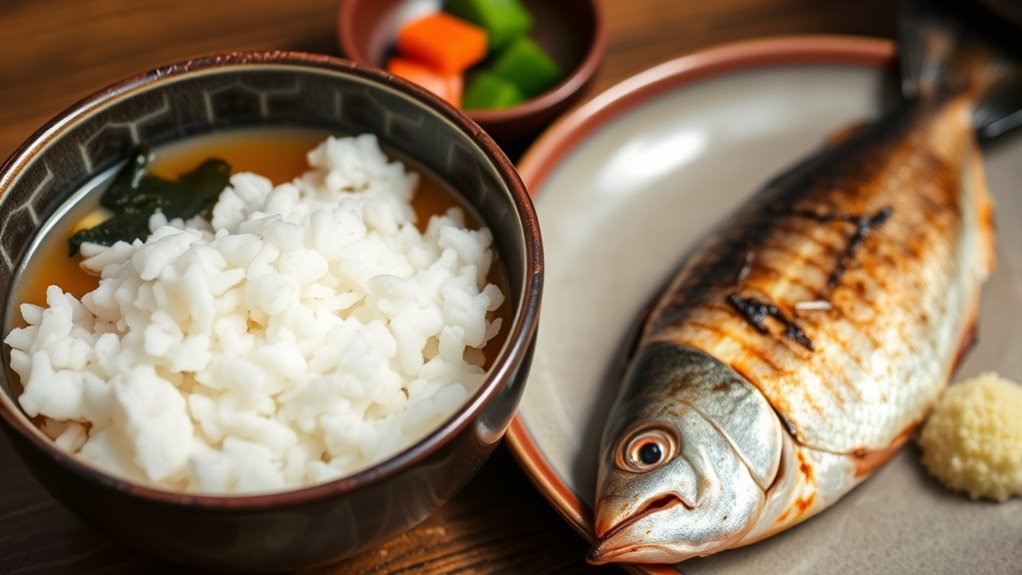
Japanese breakfasts offer a balanced and flavorful start to your day, blending fresh ingredients, savory dishes, and comforting flavors. As you explore these meals, you’ll notice how regional variations influence what’s served, reflecting local tastes and seasonal produce. For example, in coastal areas, you might find more fish and seafood, while inland regions emphasize rice and pickled vegetables. This diversity ensures that no two breakfasts are exactly alike, giving you a chance to experience the unique culinary traditions of each region. Furthermore, understanding traditional breakfast etiquette helps you enjoy the meal respectfully and authentically. Typically, Japanese breakfast is served with a set of dishes arranged neatly on a tray, emphasizing harmony and presentation. It’s customary to start by appreciating the appearance and aroma of each item before eating, and to use chopsticks properly, avoiding sticking them upright in rice, which is considered disrespectful.
Rice is the cornerstone of a traditional Japanese breakfast, often served steamed and plain, allowing its natural flavor to shine. You might find it accompanied by a small bowl of miso soup, which provides warmth and umami. The soup is usually prepared with dashi broth, miso paste, and ingredients like tofu, seaweed, or green onions. This combination offers a comforting, nourishing start to your morning. Alongside, a serving of grilled fish—commonly salmon or mackerel—is typical, seasoned simply with salt to highlight its natural taste. The fish provides healthy protein and omega-3 fatty acids, making it both satisfying and nutritious.
Other side dishes often include pickled vegetables, such as daikon or cucumbers, which add a tangy contrast to the meal. Sometimes, you’ll find a small portion of tamagoyaki, a sweet rolled omelet, adding a touch of sweetness to balance the savory flavors. Each dish is designed to complement the others, creating a harmonious and well-rounded meal. As you partake in a Japanese breakfast, keep in mind that it’s not just about nourishment but also about appreciating the balance of flavors, textures, and presentation. Respect for traditional etiquette enhances your experience, allowing you to connect more deeply with the culinary culture. Whether you’re enjoying a simple rice and miso soup combo or a more elaborate spread, Japanese breakfasts are crafted to energize you while honoring centuries of culinary tradition.
Frequently Asked Questions
What Are Regional Variations of Japanese Breakfast Dishes?
You’ll find regional variations in Japanese breakfast dishes, reflecting local delicacies and flavors. In the Kansai area, you might enjoy lighter, sweeter options like oshizushi, while in northern regions, hearty dishes with preserved foods are common. Modern adaptations incorporate ingredients like tofu or vegetables, blending tradition with contemporary tastes. These regional differences give you a richer experience, allowing you to explore Japan’s diverse culinary landscape through breakfast.
How Do Japanese Breakfast Ingredients Differ Seasonally?
Imagine the changing seasons as a palette, shaping your breakfast ingredients. As winter arrives, you favor hearty miso soups with root vegetables, symbolizing warmth and resilience. Spring brings fresh bamboo shoots and wild greens, reflecting renewal. Summer’s heat shifts focus to lighter fish and cool rice dishes, while autumn’s harvest offers sweet potatoes and mushrooms. These seasonal ingredient shifts deepen regional flavor profiles, making each breakfast a unique reflection of nature’s cycle.
Are Japanese Breakfast Staples Suitable for Western Diets?
Yes, Japanese breakfast staples can suit Western diets through adaptations. Western influences encourage incorporating familiar ingredients like eggs, toast, or vegetables alongside traditional items. You might enjoy a rice bowl with added protein or miso soup with your favorite greens. These Western adaptations make Japanese breakfast elements more accessible, allowing you to experience their flavors while aligning with your dietary preferences and making the most of global influences.
What Are Traditional Beverages Served With Japanese Breakfast?
You’ll often find green tea or barley tea served with a Japanese breakfast, contrasting the warmth of the meal with cool, invigorating sips. These beverages follow long-standing beverage traditions that emphasize harmony and balance. A tea pairing enhances flavors without overpowering, making it a perfect complement. As you enjoy your meal, remember that these simple yet meaningful choices connect you to centuries of Japanese culture and culinary practice.
How Has Japanese Breakfast Culture Evolved Over Recent Decades?
You’ve probably noticed that Japanese breakfast culture has shifted with Western adaptation and modern trends. Today, more people enjoy quick, convenient options like toast, eggs, or cereal alongside traditional dishes. While classic items remain popular, you see a blend of styles, reflecting global influences and busy lifestyles. This evolution makes breakfast more versatile, accommodating diverse tastes without losing the essence of tradition.
Conclusion
Think of a Japanese breakfast as a carefully woven tapestry, each element—rice, miso soup, and fish—adding its unique thread to create a harmonious picture. Together, they form a balanced scene, like a sunrise casting gentle light across a tranquil landscape. By savoring this meal, you’re embracing a tradition that paints your day with calm and clarity, much like dawn breaking to reveal a new, peaceful horizon. Let this breakfast be your morning’s guiding light.