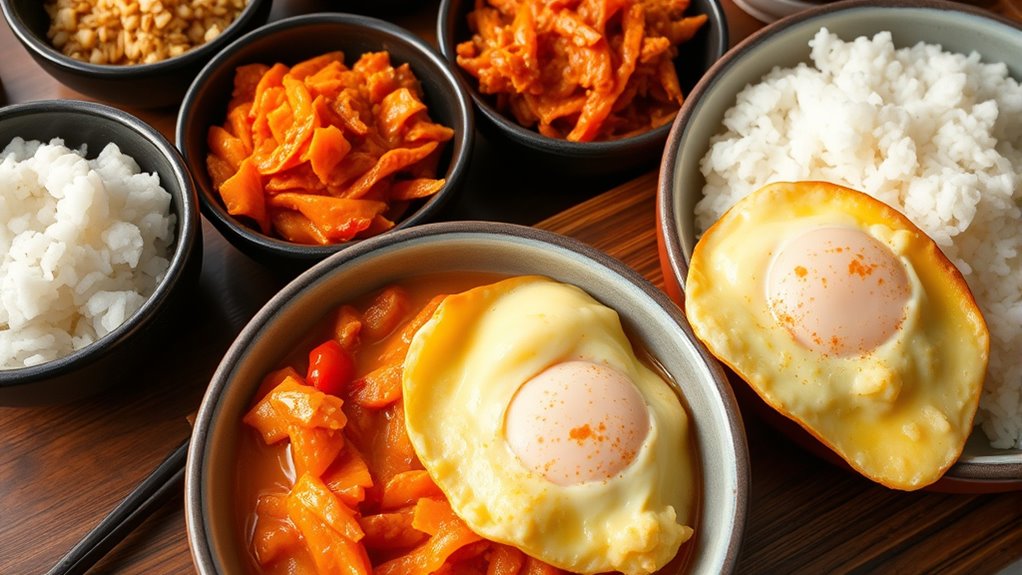

A typical Korean breakfast features fluffy steamed rice served with flavorful side dishes like kimchi and eggs. You might enjoy scrambled eggs, rolled omelets, or fried eggs, which add protein and variety. Kimchi provides probiotics, tangy flavor, and essential nutrients, while fermentation techniques boost flavor and nutrition. This well-balanced meal offers sustained energy and health benefits. Keep exploring, and you’ll discover even more about these traditional dishes and their vibrant flavors.
Key Takeaways
- Korean breakfasts typically feature steamed rice as a neutral base paired with flavorful side dishes like kimchi.
- Kimchi, a fermented vegetable, adds tangy spice and provides probiotics, vitamins, and antioxidants.
- Eggs are commonly prepared as scrambled, fried, or rolled omelets, offering high-quality protein and healthy fats.
- Traditional fermentation techniques enhance flavor and nutritional value, emphasizing fresh ingredients and time-honored methods.
- These meals promote balanced nutrition, supporting energy, digestion, and overall health with nourishing, flavorful ingredients.
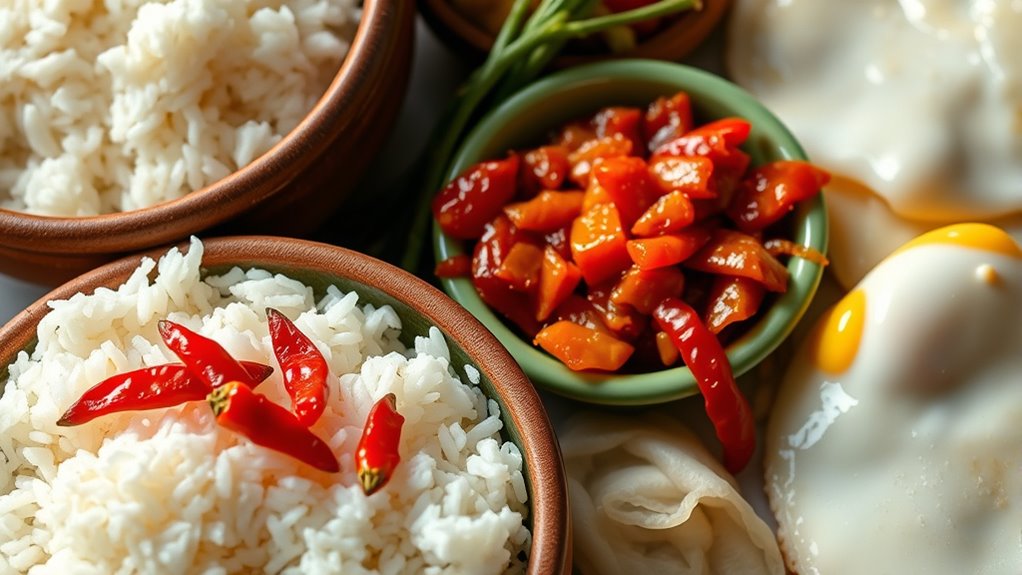
Have you ever wondered what a typical Korean breakfast looks like? If you’re curious about traditional cooking and want to start your day with balanced breakfast nutrition, Korean breakfasts offer a perfect blend of flavors and health benefits. Unlike Western breakfasts that often rely on cereal or toast, Korean mornings emphasize a variety of dishes that work together to provide sustained energy and essential nutrients. The foundation usually consists of rice, which is central to Korean cuisine. It’s often served steamed, warm, and fluffy, acting as a neutral base that complements the more flavorful side dishes.
Korean breakfasts feature rice, kimchi, and eggs for a balanced, flavorful start to your day.
One of the most iconic components of a Korean breakfast is kimchi. This fermented vegetable side dish isn’t just a flavor booster; it’s packed with probiotics that promote gut health and aid digestion. Traditional cooking methods involve fermenting cabbage or radish with chili, garlic, ginger, and other seasonings, which develop a tangy, spicy flavor over time. Incorporating kimchi into your breakfast adds a layer of complexity and provides a significant dose of vitamins and antioxidants. It’s common to see kimchi paired with rice and eggs, creating a harmonious balance of sour, spicy, and savory tastes.
Eggs also play a essential role in Korean breakfast nutrition. You might find scrambled eggs, rolled omelets, or simply fried eggs served alongside rice and kimchi. Eggs provide high-quality protein, essential amino acids, and healthy fats, making them an excellent choice to start your day. Preparing eggs in a variety of ways is part of traditional cooking, and each method brings out different textures and flavors, adding variety to your breakfast. For instance, a rolled omelet filled with chopped vegetables or seaweed can be both visually appealing and nutritious. Additionally, traditional Korean cooking often incorporates fermentation techniques, which enhance the flavor and nutritional profile of staple ingredients like kimchi.
Together, these elements form a well-rounded meal that supports your morning energy needs. The combination of rice, kimchi, and eggs offers complex carbohydrates, healthy probiotics, and high-quality protein—all indispensable for maintaining focus and stamina throughout your day. Korean breakfasts are designed to be nourishing and satisfying, emphasizing fresh ingredients and traditional techniques. This approach not only enhances the breakfast experience but also boosts your overall health. So, next time you’re looking to diversify your morning routine, consider adopting these traditional Korean elements for a flavorful and nutritious start to your day.
Frequently Asked Questions
How Do Koreans Prepare Their Traditional Breakfast Dishes?
You prepare traditional Korean breakfast dishes by using fermentation techniques for kimchi, which involves salting vegetables and allowing them to ferment. Rice is cooked until fluffy, often served plain or with side dishes. Eggs are usually fried or boiled. When setting the table, Koreans follow customs like placing kimchi and rice centrally, and using small bowls and chopsticks, creating a harmonious and respectful meal environment.
Are There Regional Variations in Korean Breakfast Menus?
Yes, there are regional variations in Korean breakfast menus. Depending on where you are, you’ll notice differences in regional ingredients and breakfast customs. For example, in coastal areas, seafood like grilled fish might be common, while inland regions favor hearty stews or porridge. These variations reflect local tastes and available ingredients, making each breakfast experience unique across Korea. You’ll enjoy discovering how regional ingredients shape traditional breakfast customs.
What Are Common Beverages Served With Korean Breakfast?
You’ll often find traditional tea, like barley or green tea, served with Korean breakfast to start your day calmly. Fruit juices, especially fresh pear or apple juice, are also common, offering a revitalizing contrast to savory dishes. These beverages complement the hearty flavors of kimchi, rice, and eggs, making your breakfast both satisfying and balanced. Enjoying these drinks helps you stay energized and prepared for the day ahead.
How Has Korean Breakfast Evolved Over the Decades?
Over the decades, Korean breakfasts have evolved through fusion cuisine and modern adaptations. You’ll notice more diverse ingredients and international influences, like Western bread and coffee alongside traditional kimchi, rice, and eggs. This blend allows you to enjoy familiar flavors while exploring new tastes. As Korean cuisine modernizes, breakfast options become more flexible, catering to busy lifestyles without losing their cultural roots, making your mornings both convenient and authentic.
Are There Vegetarian Options in Traditional Korean Breakfast?
Like a blank canvas waiting for art, Korean breakfast can be vegetarian-friendly. You can enjoy plant-based options such as vegetable jeon (pancakes), tofu dishes, and dairy alternatives like soy milk. Traditional dishes like kimchi and rice remain staples, and you can add seasoned vegetables or seaweed for variety. With a little creativity, you’ll find a nutritious, flavorful meal that respects vegetarian choices while honoring Korean culinary roots.
Conclusion
So, next time you start your day with a simple breakfast, remember how Korean mornings blend bold flavors like kimchi and eggs with humble rice. It’s a striking contrast—comfort and tradition meeting vibrant taste. Just as these dishes bring warmth to the morning, they remind you that even the simplest ingredients can create something extraordinary. Embrace the harmony of flavor and tradition, and let your breakfast become a moment of cultural connection.