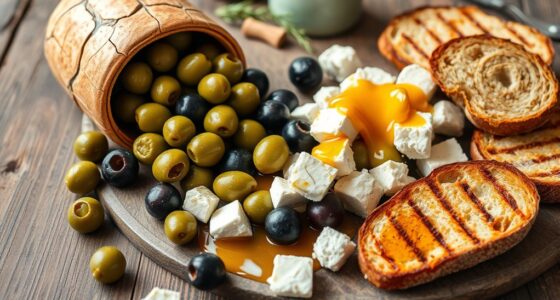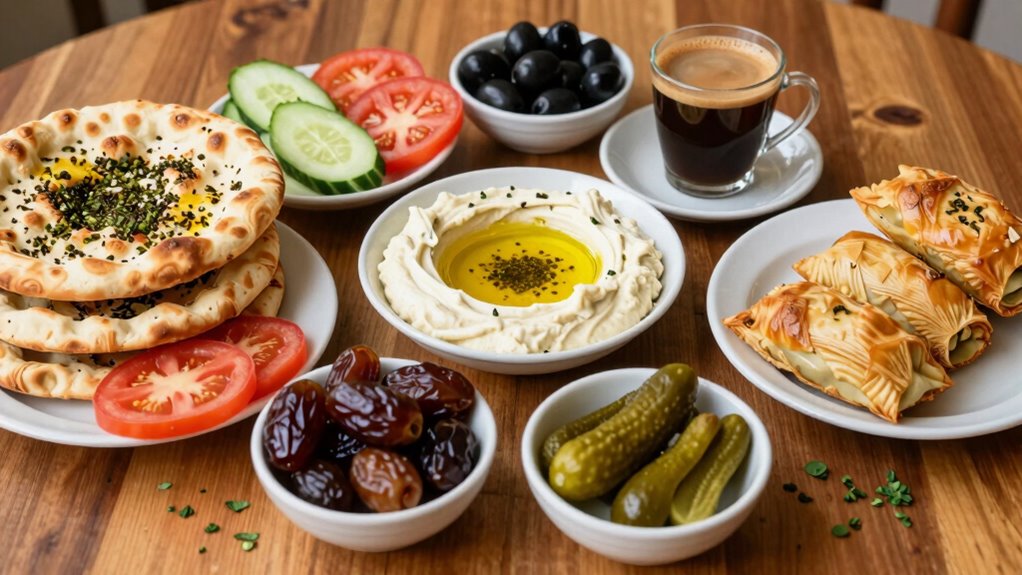

Middle Eastern breakfast tables balance fresh and rich foods by combining ripe vegetables, herbs, and seasonal produce with creamy labneh, flaky pastries, and soft bread. This mix creates a lively contrast of textures and flavors that enhances the meal’s appeal. Traditional cooking methods and shared rituals strengthen community bonds, while beverages like coffee and mint tea complement the dishes. If you keep exploring, you’ll discover how these elements come together to form a vibrant, harmonious breakfast experience.

Get kitchen staples and gadgets delivered free with Prime
- Fast, free delivery on millions of items
- Prime Video, Amazon Music and more included
- Member-only deals all year
Key Takeaways
- Fresh vegetables and herbs provide a cooling, bright contrast to richer items like labneh and flaky pastries.
- Seasonal, biodiverse ingredients ensure a variety of flavors while supporting sustainability and regional agriculture.
- Small, flavorful shared dishes promote community, moderation, and cultural traditions during breakfast.
- Traditional cooking methods enhance ingredient flavors and preserve culinary heritage, balancing richness with authenticity.
- Beverages like Turkish coffee and mint tea heighten sensory experience and complement the meal’s fresh and rich components.
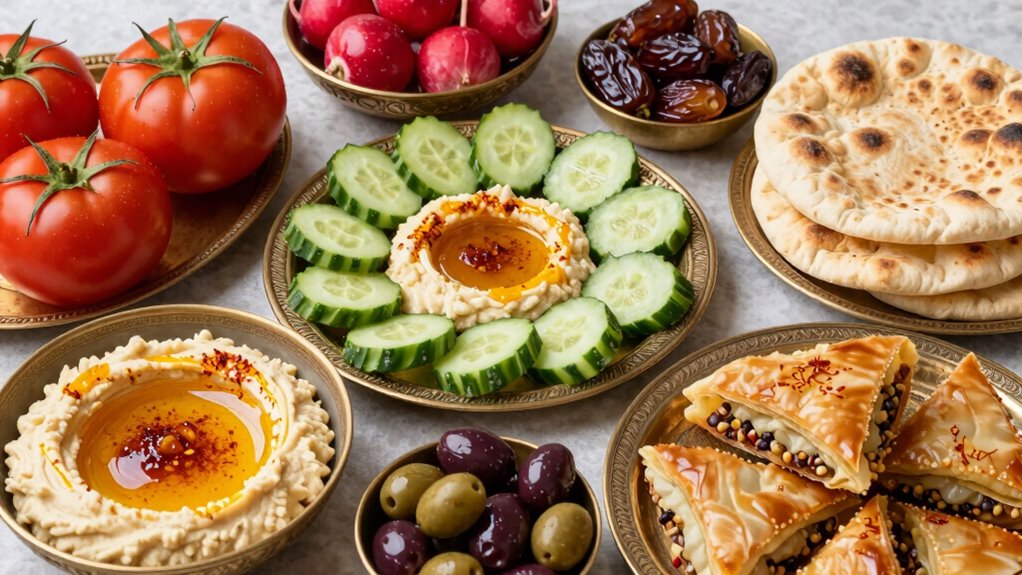
You’ll find that fresh foods, like ripe tomatoes, cucumbers, and herbs, form the foundation of many breakfast spreads. These ingredients bring brightness and a cooling contrast to the richer items, such as creamy labneh or flaky pastries like mana’eesh. The inclusion of fresh bread, often warm and soft, invites you to dip into these spreads, creating a satisfying balance of textures and flavors. The richness of cheeses, oils, and meats is tempered by the freshness of vegetables and herbs, making each bite feel well-rounded and satisfying without feeling heavy. Additionally, the use of biodiversity in sourcing these ingredients ensures a wide variety of flavors and nutritional benefits. Incorporating seasonal ingredients into breakfast tables highlights the importance of local produce and supports sustainable practices. Cultural breakfast rituals play an essential role in maintaining this balance. Meals are often shared among family members, emphasizing community and moderation. You might notice that the focus isn’t on piling up a large quantity of heavy foods but on savoring a variety of small, flavorful items. This approach encourages you to enjoy different tastes and textures, preventing any one dish from dominating the meal. The act of preparing and sharing these foods is as important as the food itself, reinforcing social bonds and cultural identity. The use of traditional cooking methods helps preserve cultural heritage and enhances the flavors of the ingredients used. Exploring culinary traditions reveals how these techniques and practices have been passed down through generations, enriching the cultural significance of the meal. Traditional beverages are carefully chosen to complement the foods on the table. For instance, a cup of thick Turkish coffee might be served alongside sweet pastries, its strong flavor balancing the sweetness, while mint tea provides a revitalizing pause after bites of rich cheeses or oily pastries. These beverages aren’t just thirst quenchers—they’re part of the ritual, heightening your sensory experience and reinforcing the cultural significance of the meal. In the end, the way Middle Eastern breakfast tables combine fresh ingredients with richer ones, guided by cultural breakfast rituals and traditional beverage pairings, creates a meal that’s both nourishing and harmonious. It’s a reflection of a lifestyle that values balance, community, and the joy of sharing diverse flavors in a single, inviting setting.
As an affiliate, we earn on qualifying purchases.
Frequently Asked Questions
What Are Common Beverages Served With Middle Eastern Breakfasts?
You’ll often find coffee culture and herbal infusions served with Middle Eastern breakfasts. Strong, aromatic coffee, like Turkish or Arabic coffee, is a staple, offering a rich start to your day. Herbal infusions, such as chamomile or mint tea, provide a revitalizing and calming complement to the meal. These beverages balance the flavors, enhance the experience, and reflect the region’s rich tradition of flavorful, aromatic drinks.
How Do Regional Differences Influence Breakfast Ingredients?
Did you know regional spice variations can change breakfast flavors dramatically? Depending on where you are, ingredients like za’atar, sumac, or cinnamon shape your meal. Regional influences also determine traditional cooking methods, such as baking flatbreads or slow-cooking stews. These differences reflect local climates, cultures, and history, influencing what fresh and rich foods you find on the table. So, your breakfast experience varies beautifully across the Middle East.
Are Vegetarian Options Common in Traditional Middle Eastern Breakfasts?
Yes, vegetarian options are common in traditional Middle Eastern breakfasts, adding to the breakfast variety. You’ll find dishes like hummus, labneh, olives, fresh vegetables, and falafel, which are all plant-based. These vegetarian dishes complement rich items like cheeses and breads, creating a balanced, flavorful breakfast table. The emphasis on fresh produce and vegetarian options reflects cultural preferences for hearty, healthy, and diverse morning meals.
How Is Breakfast Presentation Important in Middle Eastern Culture?
You see, breakfast presentation holds great cultural symbolism, reflecting hospitality and respect. When you set the table, you focus on aesthetic appeal—arranging foods vividly and harmoniously. This thoughtful presentation shows care and invites conversation, making the meal a shared experience. In Middle Eastern culture, beautiful displays aren’t just about looks—they symbolize warmth and generosity, enhancing the enjoyment and meaning of the breakfast for everyone at the table.
What Are Popular Sweet Versus Savory Breakfast Items?
You’ll find sweet pastries like baklava and ma’amoul alongside savory spreads such as labneh and za’atar, creating a vibrant breakfast scene. Sweet items delight with honey-drizzled treats and nut-filled delights, while savory options offer creamy cheeses and herb-infused dips. This balance appeals visually and flavors-wise, inviting you to savor a variety of textures and tastes. The combination of sweet pastries and savory spreads reflects the rich diversity and harmony of Middle Eastern breakfast traditions.
Conclusion
As you enjoy the vibrant flavors of a Middle Eastern breakfast, remember that balance is key. Combining fresh fruits, vegetables, and herbs with rich cheeses, olive oils, and bread creates a harmonious start to your day. Embrace this culinary dance, knowing that “all things in moderation” lead to both satisfaction and health. So, savor each bite, appreciating the rich tapestry of tastes that awaken your senses and nourish your body.
Fall Picks
fall essentials
As an affiliate, we earn on qualifying purchases.