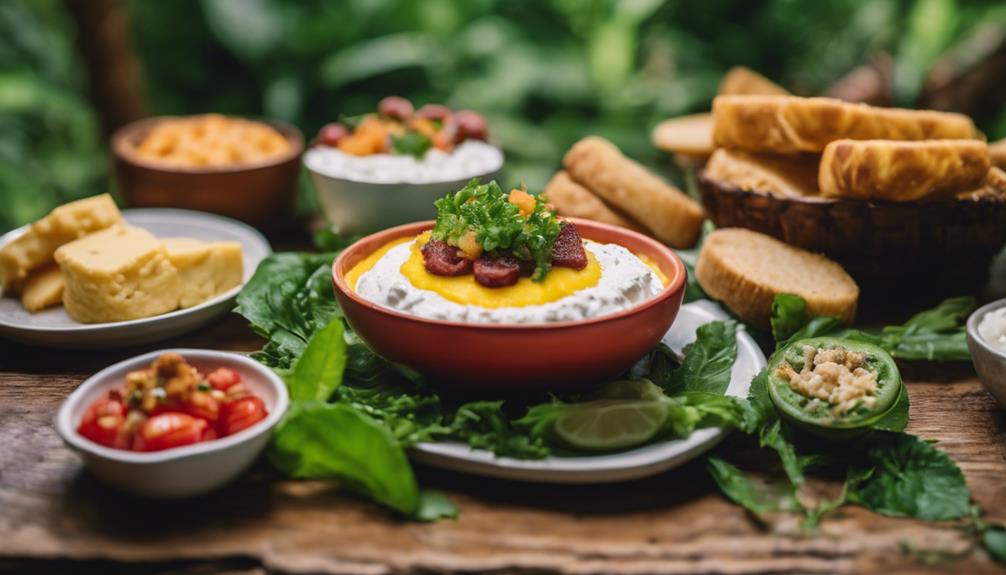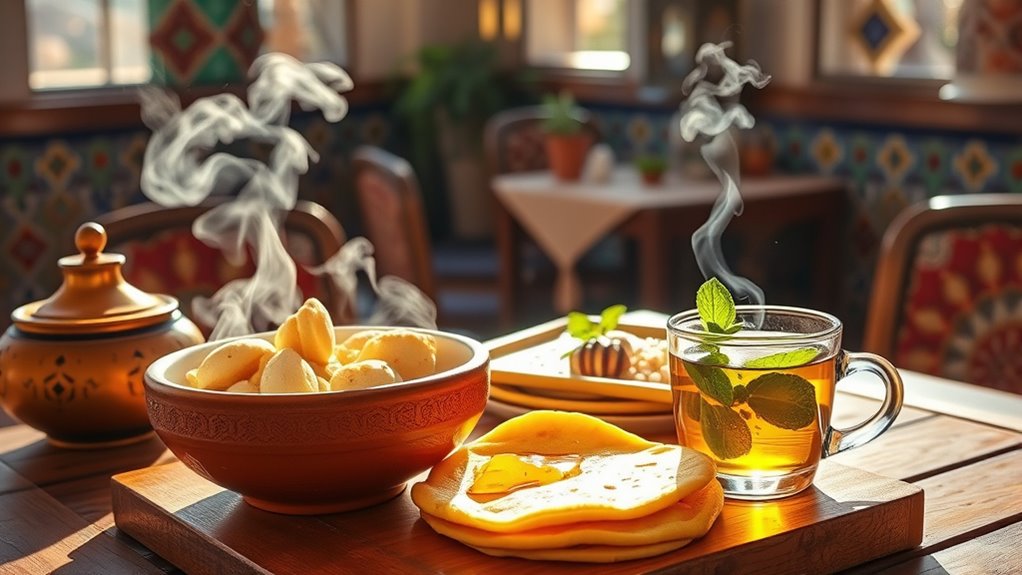

Moroccan morning rituals revolve around sharing hearty B’ssara, fluffy Baghrir, and fragrant mint tea, which are central to family and community life. You can experience these traditions by preparing spices-rich B’ssara, crafting spongy Baghrir pancakes, and pouring hot mint tea, all while embracing the warm hospitality Moroccan culture is known for. These customs promote connection, respect, and cultural identity—explore how these morning delights build bonds and preserve heritage. Keep going to discover more about Morocco’s rich morning traditions.
Key Takeaways
- Moroccan morning rituals often include preparing and sharing traditional foods like B’ssara, Baghrir, and mint tea.
- These rituals emphasize community bonding, respecting elders, and preserving cultural heritage through shared meals.
- B’ssara is a hearty split pea soup flavored with spices, served as a nourishing breakfast staple.
- Baghrir are spongy semolina pancakes with characteristic holes, typically enjoyed with honey or syrup.
- Mint tea, brewed with fresh mint and prepared with care, symbolizes hospitality and social connection in Moroccan mornings.
The Significance of Moroccan Breakfast Traditions

Moroccan breakfast traditions hold deep cultural significance, reflecting the country’s rich history and social values. You’ll notice that breakfast isn’t just about nourishment; it’s a symbol of Moroccan hospitality. Serving a warm, inviting meal demonstrates respect and generosity, welcoming guests into the household. The breakfast symbolism emphasizes connection, community, and shared moments, where offering tea or bread conveys warmth and friendship. These traditions reinforce social bonds, making breakfast a meaningful daily ritual. Additionally, the preparation of traditional dishes like B’ssara, Baghrir, and Mint Tea often involves cultural rituals that deepen the sense of heritage and identity. By participating in these customs, you embrace Morocco’s values of openness and hospitality. Every bite and sip tells a story of centuries-old practices, reminding you that breakfast in Morocco is much more than food—it’s an expression of cultural identity and heartfelt welcome.
Exploring the Heartwarming Flavors of B’ssara
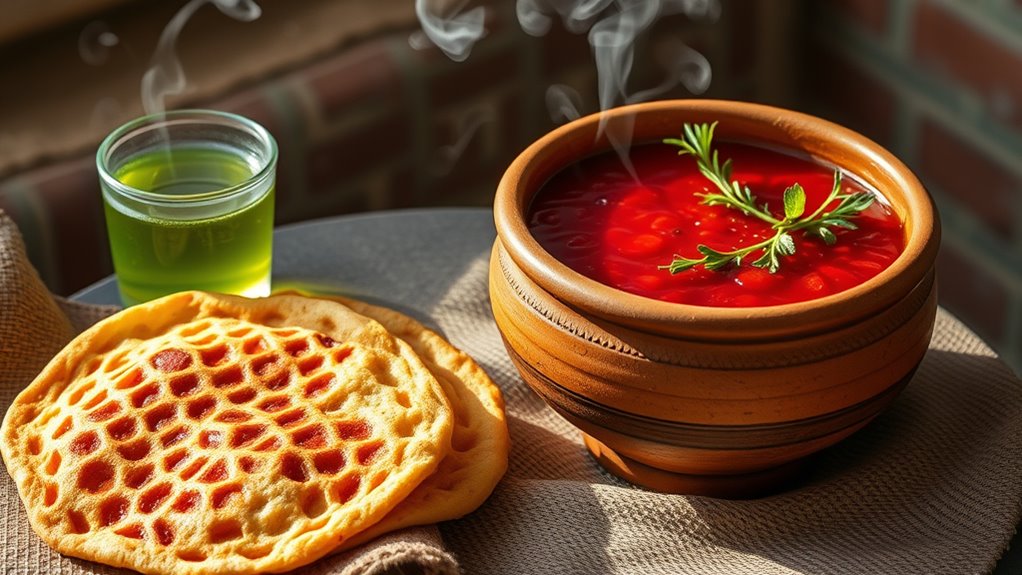
B’ssara, a hearty and comforting split pea soup, captures the essence of Moroccan home cooking with its rich, warming flavors. Its velvety texture is enhanced by traditional Moroccan spice blends like cumin, paprika, and a hint of chili, creating a perfect balance of spice and earthiness. As you savor each spoonful, you may find that the flavors evoke feelings of warmth and familiarity, making it an ideal start to your day. Preparing B’ssara can also become part of your morning meditation routines, allowing you to slow down and connect with the simple joys of cooking. This dish’s heartwarming flavors remind you of the importance of comfort and tradition in Moroccan mornings, bringing a sense of community and peace to your daily ritual. Incorporating traditional Moroccan ingredients into your cooking can deepen your appreciation for authentic flavors and cultural heritage.
Crafting Perfect Baghrir: Moroccans’ Favorite Pancakes
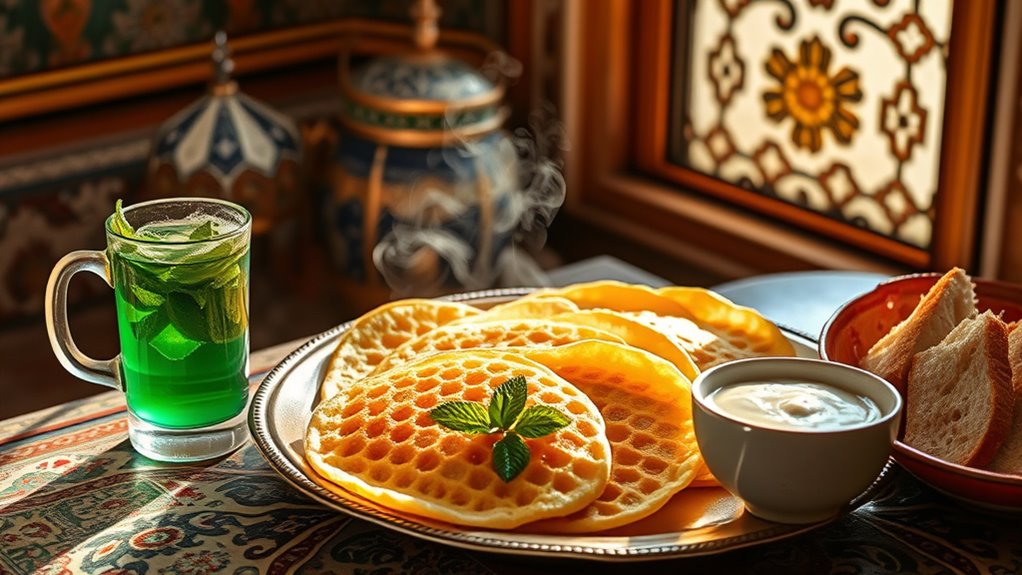
Crafting perfect baghrir requires a delicate balance of ingredients and technique to achieve its signature spongy texture. To do this, you need high-quality ingredient sourcing, especially fresh semolina, yeast, and baking powder. These ingredients contribute not only to the pancake’s lightness but also offer health benefits like improved digestion and energy boost. When preparing the batter, guarantee it’s smooth and let it rest adequately; this fermentation process helps develop flavor and texture. Use a hot, well-greased pan to cook the baghrir evenly, creating the characteristic holes that absorb honey or syrup beautifully. By paying attention to ingredient sourcing and technique, you’ll craft baghrir that’s both delicious and nourishing—an essential part of Moroccan mornings.
The Art of Preparing Authentic Moroccan Mint Tea

Mastering the art of preparing authentic Moroccan mint tea involves more than just steeping tea leaves; it’s a ritual that emphasizes balance, patience, and attention to detail. During traditional tea ceremonies, you start by carefully sourcing high-quality ingredients, such as fresh mint and green tea. The process begins with pouring hot water over the tea, then adding generous sprigs of mint and sugar, which you stir gently without disturbing the leaves. You repeat this process to ensure the tea is properly infused and flavorful. The key is to pour the tea from a height into small glasses, creating a slight foam on top. This attention to ingredient sourcing and technique makes Moroccan mint tea a symbol of hospitality and tradition. Additionally, the automation of processes involved in tea preparation reflects a broader cultural appreciation for craftsmanship and precision.
Cultural Roots and Historical Significance of Morning Rituals
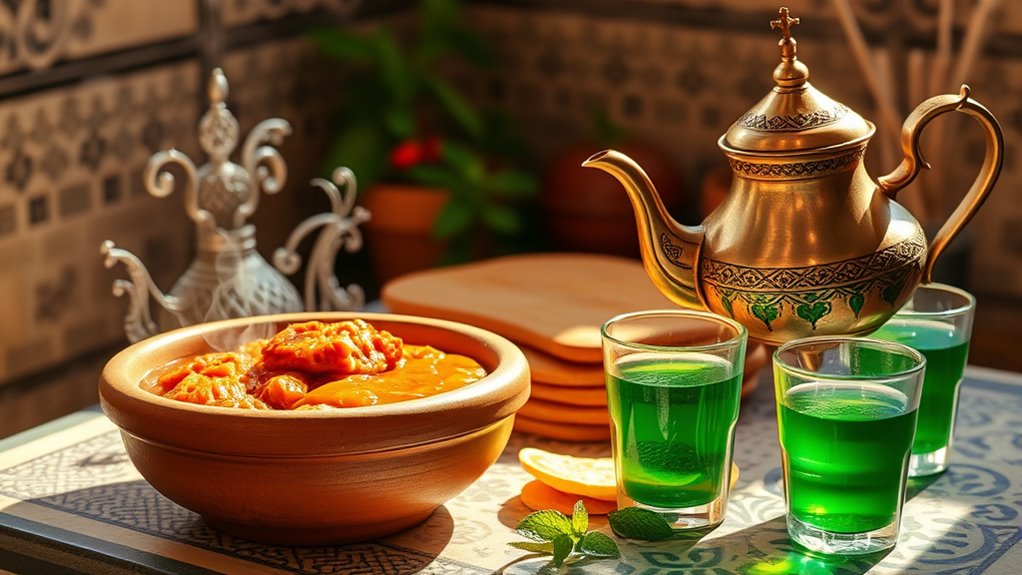
Moroccan morning rituals are deeply rooted in centuries-old traditions that reflect the country’s rich cultural tapestry. These practices carry significant cultural symbolism, embodying hospitality, community, and respect. Historically, the evolution of these rituals reveals influences from Arab, Berber, and Andalusian cultures, shaping the way Moroccans start their day. Sharing tea or hearty dishes like B’ssara and Baghrir isn’t just about nourishment; it’s a way to strengthen social bonds and honor ancestral customs. Over time, these rituals have preserved their importance, even as modern life accelerates. They serve as a living connection to Morocco’s history, offering a glimpse into values that have been passed down through generations. Participating in these rituals also helps reinforce cultural identity and maintain traditional culinary practices. Your participation in these morning routines links you to a cultural heritage that celebrates tradition and togetherness.
Variations and Modern Twists on Classic Dishes

You might find creative B’ssara variations that add unexpected flavors or textures to this traditional dish. Modern twists on baghrir, like incorporating new toppings or fillings, can also refresh your morning routine. These adaptations keep classic Moroccan breakfast favorites exciting and relevant today. Incorporating color accuracy improvements in presentation can further enhance the visual appeal of these dishes.
Creative B’ssara Variations
Creative B’ssara variations breathe new life into a beloved traditional dish by blending classic flavors with innovative ingredients and presentation. You can experiment with spice infusions like cumin, smoked paprika, or harissa to add depth. Vegan adaptations make it accessible for everyone, replacing dairy or meat ingredients with plant-based options. To elevate your dish, consider these ideas:
- Combine roasted garlic and chili oil for bold flavor.
- Top with fresh herbs, such as cilantro or parsley, for brightness.
- Serve in small, elegant cups or jars for visual appeal.
- Add crunchy toppings like toasted almonds or crispy chickpeas for texture.
- Incorporate natural materials like linen napkins or wooden bowls to enhance the rustic aesthetic.
These twists not only honor tradition but also reflect your creativity and desire for fresh, exciting flavors.
Modern Baghrir Twists
Modern twists on baghrir elevate this beloved pancake by blending traditional techniques with innovative flavors and presentation styles. You can experiment with fusion recipes, infusing baghrir with ingredients like turmeric, matcha, or beetroot to add vibrant colors and unique tastes. These creative variations not only make the dish visually appealing but also boost its health benefits, such as added antioxidants and nutrients. You might try serving baghrir with unconventional toppings like ricotta, honey, or fresh herbs, transforming it into a versatile, modern breakfast. Incorporating healthy ingredients and contemporary plating techniques allows you to enjoy a familiar Moroccan classic in a fresh, exciting way, perfect for brunch or a special morning treat.
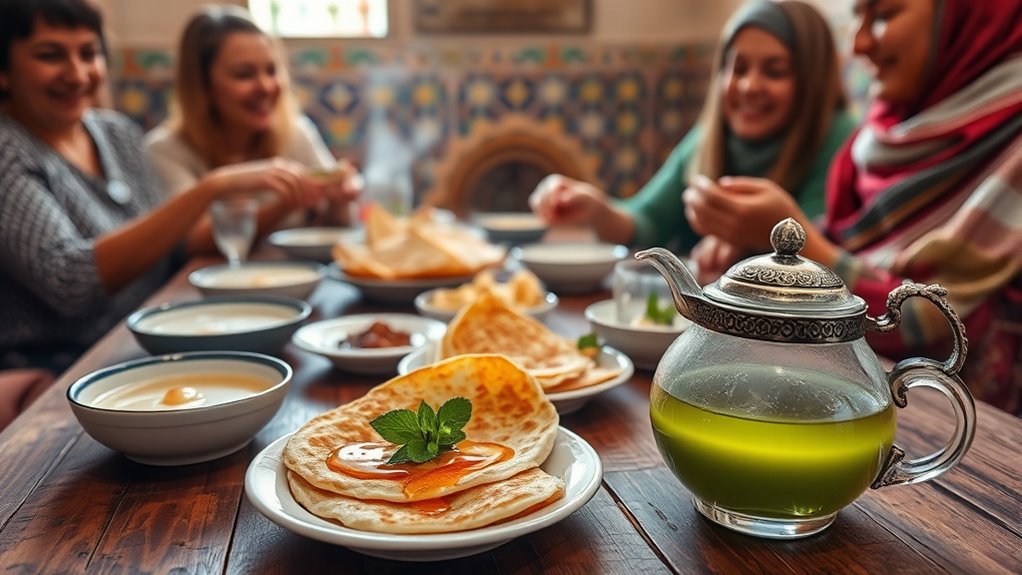
You start your morning by sharing a hearty breakfast with family or neighbors, creating a warm, communal atmosphere. These moments bring people together, strengthening bonds and fostering a sense of belonging. Throughout the morning, community gatherings often unfold, reinforcing the importance of togetherness in Moroccan culture. Engaging in eco-friendly crafts during these gatherings can further enhance the sense of shared creativity and environmental consciousness.
Shared Breakfast Traditions
Sharing breakfast in Morocco is more than just a meal; it’s a cherished moment that brings family and community members together. You’ll notice the importance of tradition, especially around coffee culture and breakfast etiquette. Typically, you’ll observe these key aspects:
- Respect for elders, who often start the meal first, symbolizing respect and hierarchy.
- Using communal dishes, which encourages sharing and connection.
- Sipping mint tea or coffee slowly, highlighting patience and social bonding.
- Engaging in lively conversations that strengthen relationships.
- The practice of insulating the environment during cold mornings, ensuring comfort while maintaining these cherished customs.
These customs foster a sense of unity and reinforce Moroccan values. Whether in a family home or a local café, breakfast becomes a meaningful ritual that celebrates community, heritage, and respect for tradition.
Community Gathering Moments
In Moroccan culture, mornings are often more than just individual routines—they’re vibrant moments when families and communities come together to start the day. During these times, local breakfast customs play a key role, with neighbors gathering for morning social events that strengthen bonds. You might find elders sharing stories over a steaming cup of mint tea, while children laugh and play nearby. These community gathering moments often revolve around simple, traditional foods like B’ssara or fresh bread, fostering a sense of unity. It’s not just about eating; it’s about connection, conversation, and welcoming the new day together. These shared mornings create lasting memories and reinforce the strong social fabric that defines Moroccan life. Incorporating traditional foods into these gatherings helps preserve cultural identity and enhances communal bonds.
Tips for Recreating Moroccan Morning Delights at Home
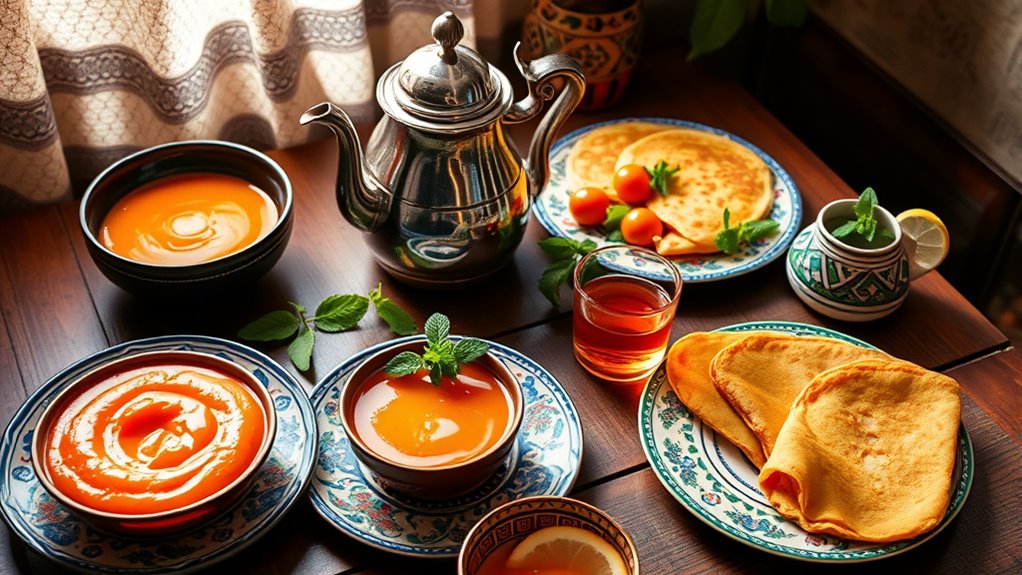
Recreating Moroccan morning delights at home is entirely achievable with a few simple ingredients and techniques. To start, focus on authentic breakfast beverages like fresh mint tea, served in small glasses for an authentic touch. For decorating ideas, use vibrant textiles, colorful plates, and traditional Moroccan cups to create an inviting atmosphere. Here are four tips to enhance your experience:
- Use fresh herbs and spices to flavor your B’ssara and Baghrir, adding authenticity.
- Prepare your mint tea with loose leaves and sweeten it generously for that signature taste.
- Incorporate traditional Moroccan patterns and textiles into your table setting.
- Experiment with serving your breakfast on a low, ornate tray for an authentic vibe.
- Incorporate cultural traditions like specific serving styles or rituals to deepen your Moroccan experience.
These steps help you recreate Moroccan mornings full of flavor and culture right at home.
Frequently Asked Questions
How Do Moroccan Breakfast Traditions Vary Across Different Regions?
You’ll notice that Moroccan breakfast traditions vary across regions, influenced by local ingredients and cultural influences. In coastal areas, seafood might feature more prominently, while inland regions favor hearty grains and pulses. These regional flavors reflect Morocco’s diverse history and cultural exchanges. Whether you’re in the mountains or the plains, each area offers unique morning rituals that highlight local tastes and traditions, enriching your breakfast experience with authentic Moroccan flair.
What Are the Health Benefits of Traditional Moroccan Morning Foods?
You’ll find that traditional Moroccan morning foods offer impressive nutritional advantages, supporting your overall health. For instance, B’ssara is rich in fiber, aiding your digestive health and keeping you full longer. Baghrir provides energy through its complex carbs, while mint tea helps soothe your stomach, promoting better digestion. Incorporating these foods into your morning routine boosts your well-being naturally and deliciously, making each day healthier from the start.
Can Non-Moroccans Easily Recreate Authentic Baghrir at Home?
Think of recreating authentic baghrir at home as crafting a delicate tapestry; it’s achievable with patience. You can follow home recipes, and ingredient swaps like semolina for fine cornmeal work well. While you might not get the exact texture, experimenting with proportions and techniques helps. With a little practice, you’ll bring a piece of Morocco’s morning magic into your own kitchen, creating warm, fluffy pancakes full of tradition.
What Are the Key Ingredients in Moroccan Mint Tea?
You want to know the key ingredients in Moroccan mint tea. It’s simple: fresh green tea leaves, usually gunpowder green tea, are essential. You add herbal infusions like mint leaves for flavor and aroma. Spice blends, such as a touch of cinnamon or anise, often enhance the taste. You boil the tea with these ingredients, then pour and serve with sweetened sugar, creating a revitalizing, aromatic beverage that’s central to Moroccan hospitality.
How Do Moroccan Morning Rituals Influence Daily Social Interactions?
Imagine morning as a warm handshake; Moroccan rituals like sharing mint tea foster cultural bonding and social hospitality. You actively participate in these traditions, which create a sense of community and trust. These rituals set a welcoming tone, encouraging open conversations and stronger relationships. By embracing them, you help preserve cultural identity and nurture social connections, making each day start with warmth and shared purpose.
Conclusion
Embracing Moroccan morning rituals is like opening a window to a world of warmth and tradition. As you savor b’ssara, baghrir, and mint tea, you weave yourself into a tapestry of history and community. These flavors don’t just nourish your body but also awaken your soul, reminding you that every new day is a gift waiting to be unwrapped with love and shared stories. Let these traditions be your bridge to deeper connection and joy.