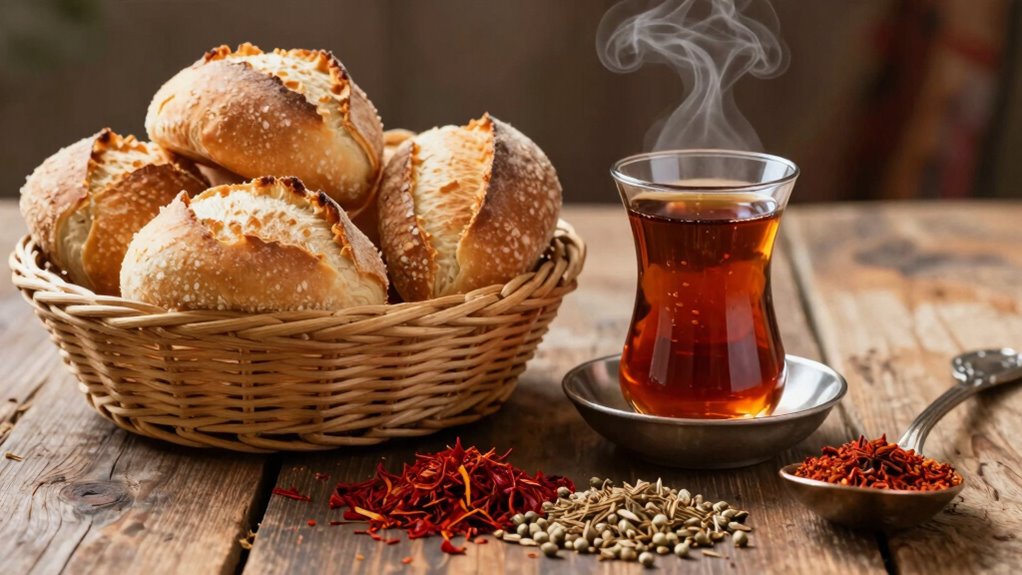

In a North African breakfast, you’ll find a vibrant mix of crusty bread, fragrant mint tea, and bold spices like cinnamon and cumin that create a rich sensory experience. The bread, often shared among family and used as an edible utensil, symbolizes hospitality. The mint tea, prepared with specific rituals, connects people through tradition. Spices deepen the flavors and reflect centuries of cultural exchange. Keep exploring how these elements blend together to embody regional identity and tradition.

Get kitchen staples and gadgets delivered free — and shop member deals
- Fast, free delivery on millions of items
- Access to Prime Big Deal Days deals on October 6–7
- Prime Video, Amazon Music and more included
Key Takeaways
- North African breakfasts feature crusty bread like khobz, used as both food and utensil to scoop ingredients.
- Mint tea is prepared with green tea and fresh mint, poured from a height to create a frothy, welcoming beverage.
- Spices such as cumin, coriander, cinnamon, and cardamom are added to bread and tea, enhancing aroma and flavor.
- The pouring ritual of tea symbolizes hospitality, respect, and social bonding during breakfast gatherings.
- These elements together create a multisensory experience that reflects cultural identity and communal traditions.
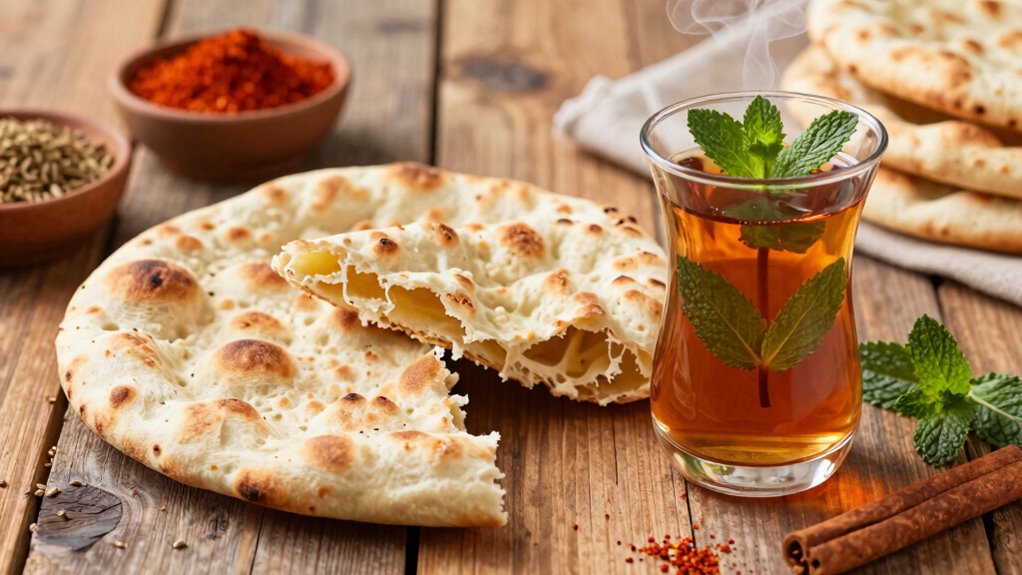
In North Africa, breakfast is more than just a meal—it’s a vibrant tradition that combines fragrant bread, steaming cups of tea, and bold spices to start the day. This lively combination reflects the region’s rich cultural influences and deep-rooted culinary traditions, which have evolved over centuries from diverse historical interactions. When you sit down to enjoy a North African breakfast, you’re not just eating—you’re experiencing a tapestry of flavors, aromas, and customs that connect generations.
The use of bread in North African breakfasts is central, often serving as both a staple and a utensil. You might encounter traditional types like khobz, a round, crusty loaf that’s perfect for scooping up stews, spreads, or honey. These breads carry cultural significance, with recipes passed down through families, embodying local ingredients and baking techniques that have stood the test of time. Culinary traditions in this region emphasize the importance of communal eating, where bread acts as a symbol of hospitality and unity. It’s common for families to gather around a shared loaf, reinforcing social bonds with each bite.
Tea, especially mint tea, plays a pivotal role in North African breakfast rituals. You prepare it by steeping fresh mint leaves in green tea, then sweetening it generously with sugar. The act of pouring the tea from a height into small glasses creates a frothy top, symbolizing hospitality and respect. This ritual isn’t just about quenching thirst; it’s a gesture of welcoming guests and fostering conversation. Tea in North Africa is infused with cultural influences from Arab, Berber, and Ottoman traditions, each adding their nuances to the brewing process and serving customs. Additionally, the tea preparation process often involves specific techniques that enhance its flavor and presentation, reflecting the region’s attention to detail and tradition. The tea serving customs are also an important part of this cultural expression, emphasizing elegance and social bonding. This tradition of tea preparation and presentation highlights the region’s culinary artistry and dedication to hospitality. Furthermore, the spice blends used in the tea and food are carefully crafted to balance warmth and aroma, embodying centuries of regional craft and expertise. These spices are often combined in **regional spice blends** that are unique to each **community**, showcasing the diversity within North African culinary practices.
Spices are the secret behind the region’s bold flavors, often used to enhance bread and accompany tea. Cumin, coriander, cinnamon, and cardamom are common, adding warmth and complexity to everyday meals. These spices, shaped by trade routes like the historic Sahara and Mediterranean exchanges, showcase the culinary influences that have traveled through time and space to define North African breakfast tables. When you taste these spice blends, you’re savoring centuries of cultural exchange, where each ingredient tells a story.
Altogether, North African breakfasts seamlessly blend bread, tea, and spice into a multisensory experience. They are more than just food; they’re a reflection of history, culture, and community. Each element—whether it’s the crust of the bread, the aroma of mint tea, or the depth of spice—embodies traditions that continue to thrive and adapt, inviting you to partake in a daily celebration of cultural identity.
As an affiliate, we earn on qualifying purchases.
Frequently Asked Questions
What Are the Origins of North African Breakfast Traditions?
You’ll find that North African breakfast traditions originate from a mix of cultural influences and historical exchanges. These regions, like Morocco and Tunisia, blend Arab, Berber, and Mediterranean flavors, shaping their morning routines. Over centuries, trade routes and conquests introduced new spices, bread types, and tea customs. This rich history creates vibrant, flavorful breakfasts that reflect the diverse cultural tapestry of North Africa, making each morning a celebration of centuries-old traditions.
How Do Regional Differences Influence Breakfast Ingredients?
Regional differences shape your breakfast ingredients through diverse cultural influences and ingredient variations. In coastal areas, you might find fresh seafood and citrus, while inland regions favor hearty grains and dried fruits. These local ingredients reflect historical trade routes, climate, and cultural exchanges. As a result, your breakfast becomes a unique blend of flavors, textures, and traditions that highlight each region’s distinct culinary identity.
Are There Specific Health Benefits Associated With These Breakfast Blends?
You’ll be amazed at the health benefits these breakfast blends pack! They offer incredible nutritional advantages, fueling your day with essential vitamins and minerals. The spices, like cinnamon and ginger, do wonders for your digestive health, preventing bloating and promoting gut harmony. Drinking traditional mint tea helps detoxify your body and boosts immunity. Embracing these regional breakfasts isn’t just delicious—it’s a powerful way to energize and nurture your health every morning!
How Has Modern Cuisine Adapted Traditional Breakfast Recipes?
Modern cuisine embraces fusion flavors, blending traditional North African breakfast recipes with global ingredients. You’ll find that chefs adapt these recipes through culinary evolution, incorporating new spices, breads, and teas to create innovative dishes. This approach keeps breakfast exciting and relevant, allowing you to enjoy familiar flavors with a contemporary twist. By experimenting with fusion, you experience a richer, more diverse breakfast that honors tradition while embracing modern tastes.
What Are Common Breakfast Rituals or Customs in North Africa?
In North Africa, you’ll find that breakfast is a time for North African hospitality and morning socializing. You typically start your day with warm bread, often accompanied by sweet or savory spreads, and a cup of mint tea. It’s common to gather with family or friends, sharing conversations and enjoying the aroma of spices. These customs emphasize community, warmth, and the importance of starting the day together.
Conclusion
As you explore North African breakfasts, you’ll discover a vibrant mix of bread, tea, and spices that create a truly unique experience. Did you know that in Morocco alone, over 70% of households start their day with mint tea? This tradition highlights how deeply food and culture intertwine in the region. So, next time you enjoy a simple breakfast, remember the rich history behind each sip and bite, connecting you to centuries of flavorful tradition.
NFL season / tailgating Picks
team gear
As an affiliate, we earn on qualifying purchases.