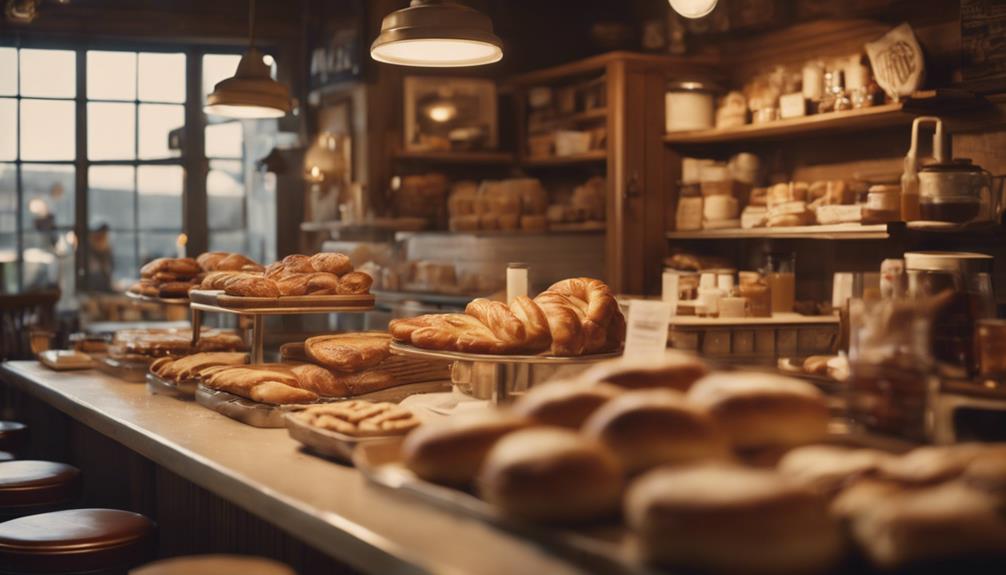
A typical Spanish breakfast often features churros dipped in café con leche, a beloved tradition you’ll find across Spain. You’ll enjoy crispy, golden churros served at local churrerías or bars, where social chatter adds to the experience. This simple yet rich ritual reflects regional tastes and deep-rooted customs emphasizing comfort and community. If you want to discover how these treats vary by region or learn more about their cultural significance, keep exploring.
Key Takeaways
- Churros are crispy, golden pastries commonly enjoyed with café con leche for a traditional Spanish breakfast.
- This pairing is a cultural ritual symbolizing comfort, social bonding, and daily tradition across Spain.
- Madrid features thinner, crispier churros, while regions like Catalonia may have thicker varieties.
- Churros and café con leche are typically enjoyed at local churrerías or small cafés in a casual setting.
- The breakfast emphasizes simplicity, flavor, and regional pride, serving as a quick, satisfying start to the day.
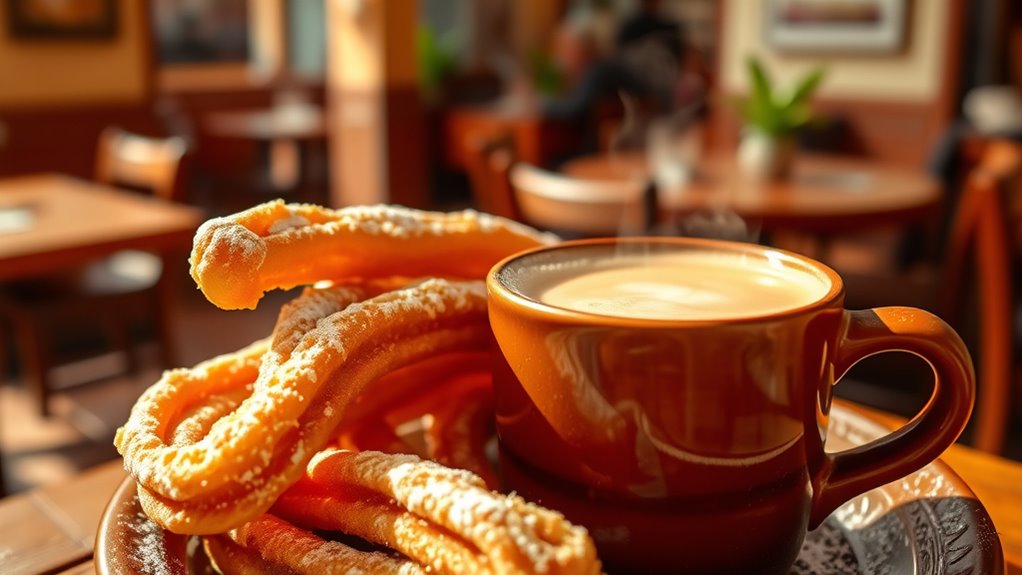
Ever wondered what a typical Spanish breakfast looks like? It’s a simple yet culturally rich start to the day, often centered around a few key items that hold deep cultural significance. In Spain, breakfast isn’t about a large, hearty meal; it’s about quick, flavorful bites that prepare you for the morning. One of the most iconic breakfast choices is churros paired with café con leche. These crispy, golden-dusted pastries are more than just a tasty treat—they’re a symbol of Spanish culinary tradition. You’ll find churros served at local churrerías, where the aroma alone draws in locals and travelers alike. The act of dipping these fried dough sticks into a warm cup of sweetened milk-infused coffee is a ritual that’s deeply embedded in Spain’s cultural fabric. It’s a comforting routine that offers a moment of pause before the day begins.
Cultural significance plays a key role in the popularity of churros with café con leche in Spain. It’s not just about taste; it’s about tradition, social connection, and regional pride. Across different regions, you’ll notice variations in how these treats are prepared and enjoyed. In Madrid, churros tend to be thinner and crispier, often enjoyed in the early morning hours with a quick coffee. In contrast, in regions like Catalonia or Valencia, you might find slightly thicker churros or even different accompaniments, reflecting local tastes and ingredients. These regional variations highlight how local history, climate, and cultural influences shape even the simplest of breakfast foods.
The act of drinking café con leche with churros is an everyday ritual for many Spaniards, symbolizing a moment of comfort and community. It’s common to see locals standing at a small bar, chatting over their morning coffee and fried treats. This tradition emphasizes the importance of social bonds and starting the day with a sense of familiarity. Whether in a bustling city or a quiet village, the experience remains similar—quick, satisfying, and rooted in centuries-old customs. Understanding regional variations helps appreciate how local history and cultural influences shape even the simplest of breakfast foods.
Spanish churros maker
As an affiliate, we earn on qualifying purchases.
As an affiliate, we earn on qualifying purchases.
Frequently Asked Questions
What Are the Origins of Churros in Spain?
You might find it fascinating that the churros history traces back to Spanish snack origins, possibly influenced by Chinese fried dough or North African traditions. Originally, churros were a simple, portable snack for shepherds and farmers, made with basic ingredients. Over time, they became a beloved treat across Spain, especially enjoyed with hot chocolate or café con leche. Today, they symbolize Spanish culinary culture and centuries of flavorful heritage.
How Is Café Con Leche Traditionally Prepared?
You prepare café con leche by brewing strong, rich Spanish coffee and mixing it with hot, steamed milk, creating a smooth, creamy drink. This traditional breakfast beverage pairs perfectly with churros, a popular Spanish coffee tradition. You can adjust the milk-to-coffee ratio to suit your taste, making it a comforting start to your day. Embracing this classic pairing captures the essence of Spanish breakfast customs.
Are There Regional Variations of Spanish Breakfast Foods?
Imagine your taste buds exploring a vibrant tapestry—regional breakfast traditions in Spain vary like colors on an artist’s palette. You’ll find hearty, savory options in the north, sweet pastries in the east, and relaxed seaside mornings in the south. Modern twists on classics like churros and café con leche blend tradition with innovation, giving you a delicious journey through Spain’s diverse morning rituals that awaken your senses anew.
What Is the Best Time to Enjoy Churros in Spain?
You should enjoy churros in Spain during the best morning hours, typically with a cup of café con leche. They’re perfect for a breakfast treat or a mid-morning snack. However, don’t overlook them as late-night snacks; many places serve warm churros well into the evening. Whether you crave them early or late, churros are versatile and delicious at any time, making your experience truly authentic.
Can Churros Be Made Gluten-Free?
Yes, you can make gluten-free churros using gluten-free flours like rice or almond flour, as seen in a recent bakery trial. However, be mindful of cross-contamination concerns in traditional kitchens, which might affect those with severe gluten allergies. Opt for dedicated gluten-free facilities or thoroughly sanitize utensils to enjoy churros safely. These alternatives ensure you indulge without compromising your dietary needs.
café con leche coffee machine
As an affiliate, we earn on qualifying purchases.
As an affiliate, we earn on qualifying purchases.
Conclusion
As you savor a warm churro and a steaming cup of café con leche, remember that the early bird catches the worm. Embrace these simple pleasures, and you’ll find that starting your day with a traditional Spanish breakfast awakens not just your senses but your spirit. Like the morning sun that brightens the sky, these flavors remind us that happiness often comes from the smallest moments. So, indulge and let your day begin with warmth and comfort.
churros baking kit
As an affiliate, we earn on qualifying purchases.
As an affiliate, we earn on qualifying purchases.
Spanish breakfast coffee mug
As an affiliate, we earn on qualifying purchases.
As an affiliate, we earn on qualifying purchases.