

Turkish breakfast is a lively, communal meal full of diverse flavors, rich traditions, and warm hospitality. You’ll find fresh bread, flaky pastries, a variety of cheeses, olives, spreads, and jams that highlight regional ingredients. Heartier dishes like eggs and spicy sausages add protein. The meal emphasizes sharing and togetherness, with beautiful presentation and cultural stories behind each element. Curious about how these traditions have evolved and how to experience them? Discover more to see what makes Turkish breakfast a special celebration of community.
Key Takeaways
- Turkish breakfast is a rich, communal meal rooted in Ottoman traditions emphasizing hospitality, community, and regional diversity.
- It features core components like fresh bread, pastries, cheeses, olives, and seasonal spreads for a balanced, flavorful experience.
- Beverages such as Turkish black tea and herbal infusions complement the meal, enhancing the cultural authenticity.
- Heartier dishes like menemen and eggs, along with modern fusion options, add variety and protein richness.
- The meal celebrates togetherness through inviting presentation, sharing, and emphasizing social bonds and hospitality.

Glass Blenders for Kitchen with Tamper, Blender for Smoothies, Professional Blenders 1500W Motor, 9 Adjustable Speeds, 14 Preset Programs, High-Speed Heating Blender for Nut Milk, Soups, Sauces & More
【BEST BLENDER FOR HOT SOUP & CRUSHING ICE】 Wondering if this can cook hot soup from scratch or...
As an affiliate, we earn on qualifying purchases.
The Origins and Cultural Significance of Turkish Breakfast

Turkish breakfast, or “kahvaltı,” has deep roots that reflect the country’s rich history and diverse cultural influences. You’ll find that Ottoman traditions shaped this meal’s significance, turning it into more than just a morning meal—it became a symbol of hospitality, community, and status. In Ottoman times, breakfast was a special occasion, often shared with family or guests, emphasizing social bonds. The ritual of starting the day with a variety of shared dishes represents unity and abundance, embodying the cultural value placed on hospitality. This breakfast symbolism remains strong today, illustrating how Turkish breakfast evolved from Ottoman influences into a cherished cultural practice that celebrates togetherness and history every morning. Additionally, the specialized dishes and the variety of flavors served highlight the importance placed on communal dining and hospitality in Turkish culture.

13-IN-1 Multifunctional Ultra Silent Cooking Blender with Soundproof Shield | 60oz | 24H Preset & Kee Warm for 6 Hours| Makes Smoothie, Soy Almond Milk, Juice, Soup, Porridge, Boil, Tea, Jam etc
Double-Layer Soundproof Shield: This cooking blender is equipped with a built-in double-layer soundproof shield and an advanced 6-level...
As an affiliate, we earn on qualifying purchases.
Classic Components of a Traditional Turkish Breakfast

You’ll notice that fresh bread and pastries are the foundation of a Turkish breakfast, inviting you to enjoy them with every bite. A variety of cheeses, from soft to hard, adds rich flavors to your meal. Together, these components create a simple yet satisfying start to the day.
Fresh Bread and Pastries
Fresh bread and pastries are the cornerstone of a traditional Turkish breakfast, offering a warm, inviting start to the meal. The bakery aromas fill the air, enticing you with the scent of freshly baked loaves and sweet treats. You’ll notice how the pastry presentation is both simple and appealing, with golden-brown simit, soft pita, and flaky borek displayed beautifully on platters. Each piece is crafted with care, ensuring a perfect balance of crispness and tenderness. As you reach for a piece, the aroma and visual appeal heighten your anticipation. This array of fresh bread and pastries sets the tone for a hearty, flavorful breakfast, inviting you to indulge in the comforting, communal experience that defines Turkish hospitality. Incorporating authentic ingredients enhances the overall freshness and flavor of this traditional spread.
Variety of Cheeses
A colorful array of cheeses often accompanies the warm bread and pastries, adding depth and richness to the breakfast table. Turkish cheese varieties include beyaz peynir (white cheese), kaşar, tulum, and lor, each offering unique textures and flavors. You’ll want to try pairing beyaz peynir with fresh tomatoes and olives for a classic combo, while kaşar melts beautifully over bread or eggs. Cheese pairing tips suggest balancing salty cheeses with sweet fruits like figs or honey, enhancing their flavors. Tulum cheese, with its strong aroma, pairs well with hearty bread and robust herbs. Additionally, understanding the color accuracy of cheese presentation can elevate the visual appeal of your breakfast spread. By exploring these cheese varieties and pairing tips, you can enjoy a richer, more authentic Turkish breakfast experience that highlights the region’s diverse dairy traditions.

Ninja HB150C/HB152 Foodi Heat-iQ Blender, 64 oz, Black
Ninja Foodi Cold & Hot Blender - the blender that crushes now brings the heat.
As an affiliate, we earn on qualifying purchases.
The Art of Bread and Pastry Selection

Choosing the right bread and pastries is essential to creating an authentic Turkish breakfast experience. The variety of bread varieties showcases traditional baking skills and complements every dish. When selecting pastries, consider how pastry techniques influence texture and flavor. To succeed, focus on:
Selecting fresh, traditional bread and pastries elevates your authentic Turkish breakfast experience.
- Choosing fresh, crusty simit or pide for variety
- Incorporating soft, airy borek with delicate fillings
- Using proper pastry techniques for flaky, golden gözleme
- Balancing bread textures to enhance dips, spreads, and cheeses
Mastering bread varieties and pastry techniques ensures your spread reflects true Turkish hospitality. Each item should be fresh, well-prepared, and complement the flavors of other components. The art lies in combining textures and flavors seamlessly, making every bite a memorable part of your kahvaltı.
13-IN-1 Multifunctional Ultra Silent Cooking Blender with Soundproof Shield | 60oz | 24H Preset & Kee Warm for 6 Hours| Makes Smoothie, Soy Almond Milk, Juice, Soup, Porridge, Boil, Tea, Jam etc
Double-Layer Soundproof Shield: This cooking blender is equipped with a built-in double-layer soundproof shield and an advanced 6-level...
As an affiliate, we earn on qualifying purchases.
Cheeses and Olives: The Heart of the Spread
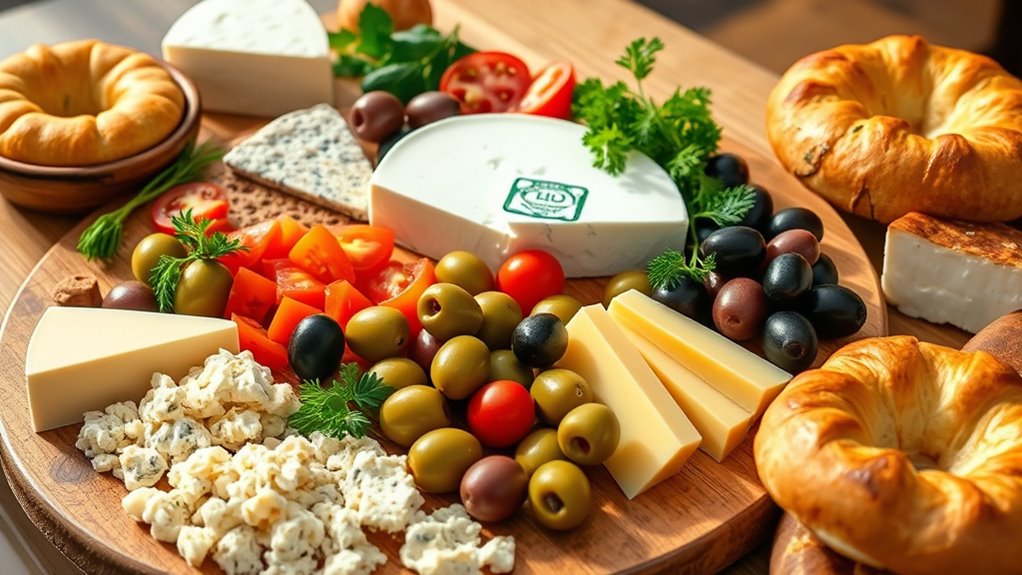
Cheeses and olives form the essential core of a Turkish breakfast spread, offering bold flavors and textures that elevate your entire meal. You’ll find a variety of cheese varieties, from creamy beyaz peynir to tangy kaşar, each adding richness and depth. These cheeses pair perfectly with fresh, crisp vegetables or warm bread. Olive preparations are equally important—they range from brine-cured green and black olives to marinated varieties infused with herbs and spices. The salty, savory notes of the olives complement the cheeses beautifully, creating a balanced flavor profile. For optimal taste, many enthusiasts select high-quality ground coffees for their morning brews, enhancing the overall breakfast experience. By selecting different cheese varieties and experimenting with olive preparations, you craft a vibrant, flavorful foundation that embodies the warmth and hospitality of a traditional Turkish kahvaltı.
Sweet and Savory Jams and Spreads
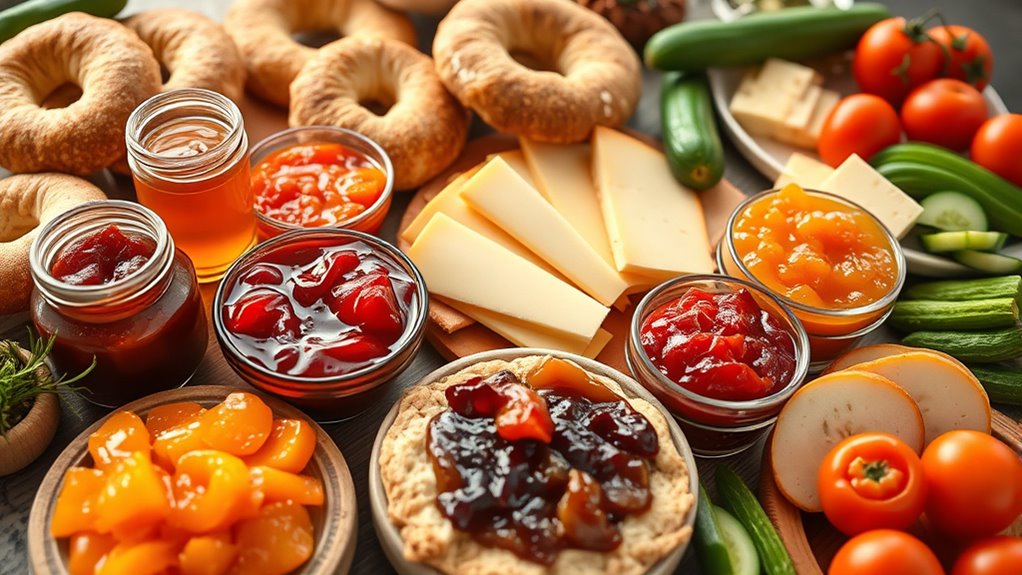
You’ll notice how fruit-based jams add a burst of sweetness to your breakfast, perfectly complementing the cheeses and bread. Nut and honey spreads bring a rich, hearty flavor that balances savory elements. Together, these spreads create a vibrant variety that makes every bite exciting. Incorporating proper storage techniques ensures these spreads stay fresh and flavorful for longer periods.
Fruit-Based Varieties
Fruit-based spreads are a beloved staple of Turkish breakfasts, offering a delightful balance of sweetness and tang. They enhance your fruit platter, adding vibrant flavors to each bite. When selecting spreads, focus on a fresh berry selection for natural sweetness and color. These spreads can be sweet or slightly savory, complementing cheeses and bread. Here are some key points to think about:
- Use seasonal fruits for the freshest taste.
- Pair berry-based spreads with soft cheeses and crusty bread.
- Create variety with fig, apricot, or quince jams.
- Serve alongside a colorful fruit platter for visual appeal.
- Incorporating raw food principles by using minimally processed, natural ingredients can elevate the healthfulness of your spreads.
These spreads bring out the natural flavors of the fruits and make your breakfast both inviting and flavorful. They’re essential for a well-rounded Turkish kahvaltı.
Nut and Honey Combinations
Nut and honey combinations are a classic element of Turkish breakfast spreads, offering rich, sweet, and savory flavors that perfectly complement bread and other toppings. The combination of nut honey, made from finely ground nuts mixed with natural honey, creates a luxurious spread that elevates your morning meal. Honey pairings enhance the depth of flavor, balancing the nuttiness with sweetness. You can enjoy this spread simply on fresh bread or with cheese and fresh fruit. The texture is wonderfully creamy, and the flavors are versatile—ranging from mildly sweet to intensely nutty. These honey pairings highlight the natural essence of the ingredients, making each bite a delightful experience. Incorporating sensory toys into the preparation of breakfast can enhance the tactile experience for children, making the meal more engaging. Nut and honey combinations truly embody the warmth and hospitality of a traditional Turkish kahvaltı.
Heartier Egg Dishes and Protein Options

Turkish breakfast features a variety of heartier egg dishes and protein options that provide both energy and flavor. You’ll find a range of egg varieties, from simple boiled eggs to more elaborate preparations like menemen—scrambled eggs with vegetables and spices. These options serve as excellent protein-rich dishes, fueling your day. To explore these options, consider:
- Menemen – flavorful scrambled eggs with tomatoes, peppers, and herbs
- Omlet – stuffed with vegetables, cheese, or meats
- Cilbir – poached eggs drizzled with garlic yogurt and paprika
- Sucuk and eggs – spicy Turkish sausage cooked with eggs
These dishes highlight how eggs and protein-rich options form a satisfying, flavorful core of the Turkish kahvaltı.
Beverages That Complement the Meal
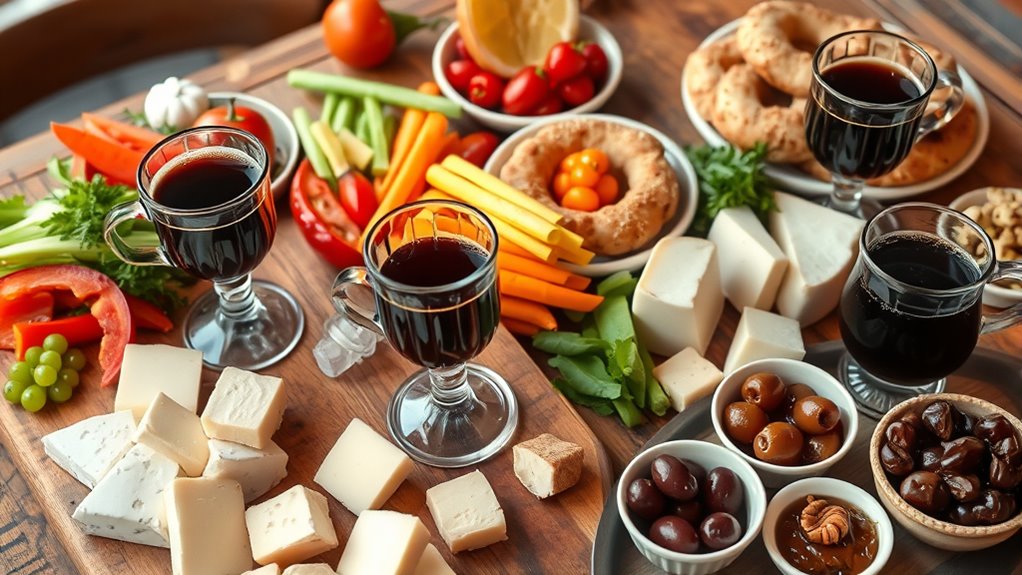
Turkish breakfast is incomplete without the right beverages to enhance the flavors. You’ll find traditional tea varieties that are both strong and comforting, perfect for starting your day. Fresh fruit juices also provide a revitalizing balance and add a burst of natural sweetness to your meal. Embracing attention in creative practice can also help you fully appreciate the subtle nuances of these beverages and enhance your overall breakfast experience.
Traditional Tea Varieties
No breakfast table in Turkey is complete without a steaming cup of tea. Turkish tea, often served during tea ceremonies, is a vital part of the Kahvaltı experience. You might enjoy black tea, which is strong and brewed in a tulip-shaped glass, perfect for savoring slowly. Herbal infusions also play a role, offering calming or invigorating flavors to complement your meal. Here are some traditional tea varieties to contemplate:
- Rize tea – a robust black tea from the Black Sea region.
- Kuşburnu (Rosehip) tea – a herbal infusion rich in vitamin C.
- Ihlamur (Linden) tea – known for its soothing properties.
- Adaçayı (Sage) tea – an aromatic herbal infusion with health benefits.
These options highlight the diversity and cultural importance of Turkish beverages. Understanding the diversity of Turkish teas enhances appreciation for this rich tradition.
Refreshing Fruit Juices
Alongside a warm cup of tea, a glass of fresh fruit juice adds a vibrant touch to your breakfast table. Turkish fruit juice varieties range from sweet pomegranate and apple to tangy cherry and apricot. These juices bring natural sweetness and invigorating flavors, perfectly complementing the savory elements of a traditional kahvaltı. Citrus flavor profiles, like freshly squeezed orange and lemon juice, provide a zesty brightness that awakens your palate. You might also enjoy mixing citrus with other fruit juices for a lively, balanced drink. These beverages not only hydrate but also add a burst of vitamins and antioxidants to your meal. Incorporating mindful consumption when selecting and enjoying your fruit juices can enhance overall satisfaction and promote healthier choices. Whether served plain or with a hint of mint, revitalizing fruit juices are an essential part of the Turkish breakfast experience.
Regional Variations and Unique Local Flavors
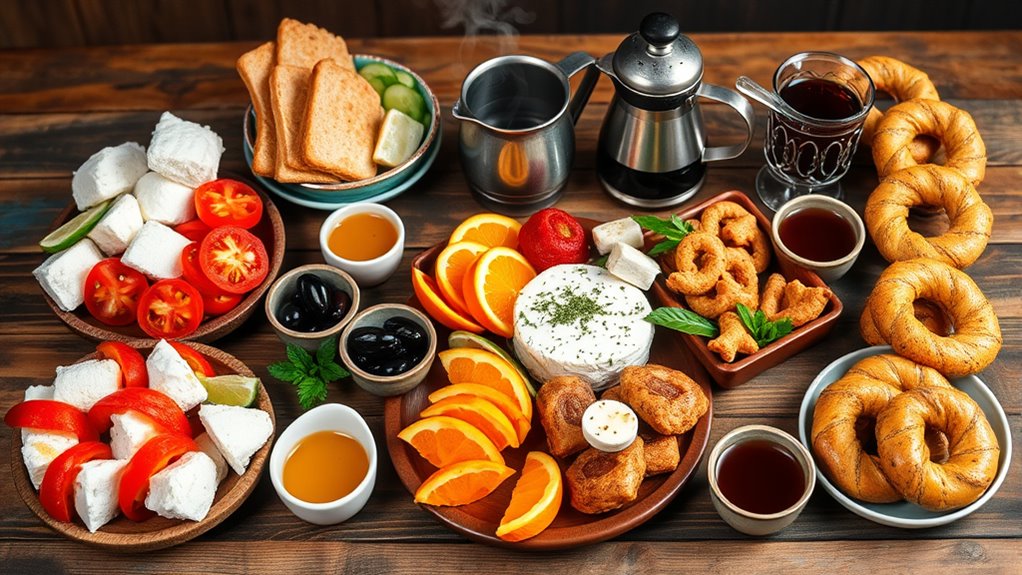
Different regions in Turkey boast distinct breakfast traditions that reflect their unique cultural and geographical influences. You’ll find that regional ingredients and local cooking techniques shape these variations. For example, in the Aegean, fresh olives, tomatoes, and herbs create vibrant flavors, while in southeastern Turkey, flatter bread and spicy cheeses dominate. To appreciate these differences, consider:
- The use of fresh, seasonal produce in coastal areas
- Unique bread types like simit and flatbreads in different regions
- Local cheeses, such as tulum or lor, specific to each area
- Traditional methods like stone-ground grinding or open-fire cooking
These regional ingredients and techniques give each local breakfast its distinct identity, making Turkish kahvaltı a diverse and flavorful experience.
Hosting and Sharing a Turkish Breakfast

Hosting a Turkish breakfast is a warm, communal experience that invites friends and family to gather around a spread of vibrant dishes. Your table setting should be inviting, with small plates, glasses, and utensils arranged neatly to encourage sharing. As a host, you’ll want to follow guest etiquette by offering a variety of items, ensuring everyone feels included. Serve the dishes with a sense of hospitality, and be attentive to your guests’ needs, refilling tea or water as needed. Encourage conversation and camaraderie, making sure everyone gets a chance to enjoy the flavors. Remember, a Turkish breakfast isn’t just about the food, but the shared experience and warmth that come with hosting. Your hospitality makes the meal memorable.
Modern Twists and Contemporary Takes on a Classic Tradition
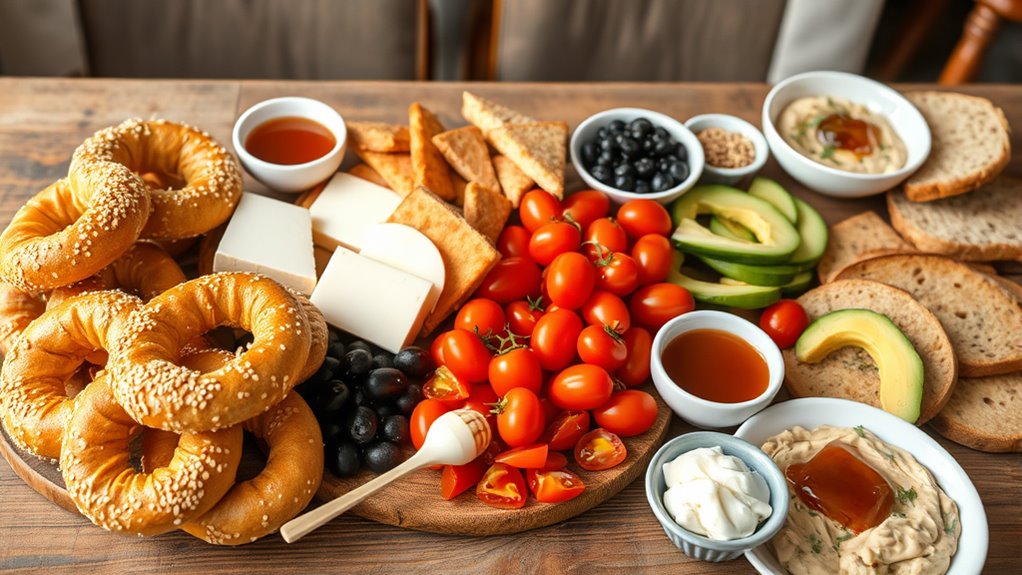
Modern twists on Turkish breakfast seamlessly blend tradition with innovation, appealing to contemporary tastes while honoring age-old flavors. You might find dishes with modern presentation, elevating familiar ingredients into eye-catching plates. Fusion ingredients are also popular, combining Turkish classics with global influences. To enhance your experience, consider these ideas:
- Incorporate avocado or hummus alongside traditional cheeses.
- Serve poached eggs on simit or pide for a modern touch.
- Use colorful vegetable spreads or pickles for vibrant visual appeal.
- Experiment with international herbs and spices to reinvent classic flavors.
These contemporary takes create a fresh, exciting breakfast experience, making your Turkish kahvaltı both familiar and innovative. They honor tradition while embracing modern culinary creativity, perfect for those seeking new flavors without losing cultural roots.
Frequently Asked Questions
How Do Turkish Breakfast Customs Differ Across Various Regions?
You might notice that Turkish breakfast customs differ across regions due to regional variations and ingredient differences. In coastal areas, you’ll find more seafood and fresh herbs, while inland regions favor cheeses, olives, and bread. In the Aegean, olive oil and tomatoes are prominent, whereas in the east, dairy products and meats take center stage. These regional variations make each breakfast unique, reflecting local flavors and culinary traditions.
What Are Some Traditional Etiquette Tips for Serving Turkish Kahvaltı?
You might think serving etiquette at Turkish kahvaltı is just about placing dishes, but presentation standards matter. Always serve with your right hand and arrange items neatly to show respect. Share dishes generously, and avoid rushing guests. Keep a warm, welcoming attitude, and guarantee everyone’s cup is filled. These small gestures reflect hospitality and create a memorable experience, highlighting the importance of tradition and thoughtful serving.
Can Turkish Breakfast Be Adapted for Dietary Restrictions or Allergies?
You can definitely adapt Turkish breakfast for dietary restrictions or allergies. For gluten-free options, include fresh vegetables, cheeses, and meats instead of bread. To accommodate nut allergies, avoid adding nuts or nut-based spreads, and check ingredients carefully. You might also offer gluten-free bread or crackers. By customizing the spread, you guarantee everyone enjoys the flavors and hospitality without risking allergic reactions or dietary conflicts.
How Has Modern Lifestyle Influenced Traditional Turkish Breakfast Practices?
Picture a clock’s hands racing, mirroring your fast-paced mornings. Modern lifestyles push you toward urban dining trends, transforming traditional Turkish breakfast into quick bites or on-the-go options. You might skip the leisurely spread, replacing fresh bread, cheeses, and olives with convenience foods. Yet, the essence of connection and warmth persists, adapting to your busy schedule while still celebrating rich flavors and hospitality in new, efficient ways.
Are There Specific Times of Day Considered Best for Turkish Breakfast?
You might wonder about the best times for Turkish breakfast, but traditionally, it’s seen as part of morning rituals. Meal timing usually places it in the early hours, often between 8 and 10 am, when people enjoy starting their day with fresh, flavorful foods. This timing lets you embrace the cultural significance of the meal, making it a relaxing, social morning ritual that sets a positive tone for the day ahead.
Conclusion
Like a beautifully woven tapestry, Turkish breakfast invites you to savor each vibrant thread of tradition and hospitality. Embrace the rich flavors and warm connections it fosters, turning every meal into a shared story. Just as the Bosphorus connects worlds, your table becomes a bridge—blending history, culture, and heartfelt moments. Immerse yourself in this timeless ritual, and let its timeless charm remind you that good mornings are truly made of good company and great flavors.