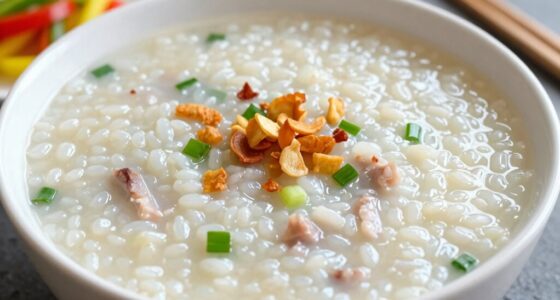
Rice for breakfast is a versatile and energy-rich staple enjoyed worldwide. From Chinese congee and Japanese tamago kake gohan to Southeast Asian coconut rice, cultures embrace rice with unique toppings and flavors. Its neutral base allows for endless customization, blending tradition with modern twists. Proper preparation, choosing nutritious varieties, and exploring regional recipes can elevate your morning bowl. Keep exploring to discover how rice can transform your breakfast experience across different cultures.

Get kitchen staples and gadgets delivered free with Prime
- Fast, free delivery on millions of items
- Prime Video, Amazon Music and more included
- Member-only deals all year
Key Takeaways
- Rice is a versatile, energy-rich staple breakfast ingredient celebrated worldwide for its cultural significance and adaptability.
- Traditional rice breakfast dishes vary regionally, including congee in China, rice and beans in Latin America, and fermented leftovers.
- Toppings and preparation techniques enhance rice’s flavor, with regional ingredients like herbs, eggs, pickles, and nuts adding diversity.
- Sustainable rice cultivation and regional practices influence dish quality, emphasizing local varieties and eco-friendly farming.
- Nutritional benefits include high carbs, probiotics from fermentation, and whole grains, with creative modern twists enriching breakfast bowls.
Japanese tamago kake gohan rice cooker
As an affiliate, we earn on qualifying purchases.
As an affiliate, we earn on qualifying purchases.
Why Is Rice a Perfect Breakfast Staple Worldwide
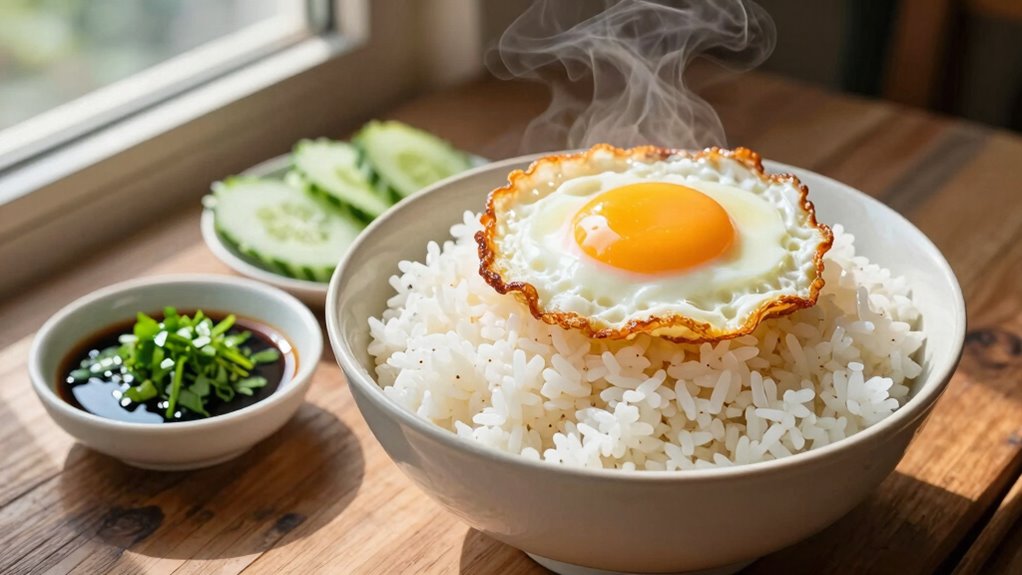
Rice has become a popular breakfast choice worldwide because it provides a versatile and energy-rich foundation for various meals. Its widespread appeal stems from the centuries of rice cultivation that have made it a staple ingredient across cultures. You’ll find rice at the heart of many breakfast rituals, whether it’s paired with savory vegetables, seasoned with spices, or served sweet with fruits. Its neutral flavor allows for endless customization, fitting into different culinary traditions easily. Plus, rice’s high carbohydrate content gives you sustained energy to start your day. Its ease of preparation and adaptability make it an ideal morning staple, connecting millions of people to their cultural roots while fueling their mornings efficiently. That’s why rice remains a beloved breakfast choice worldwide.
How Do Cultures Prepare Rice for Breakfast?
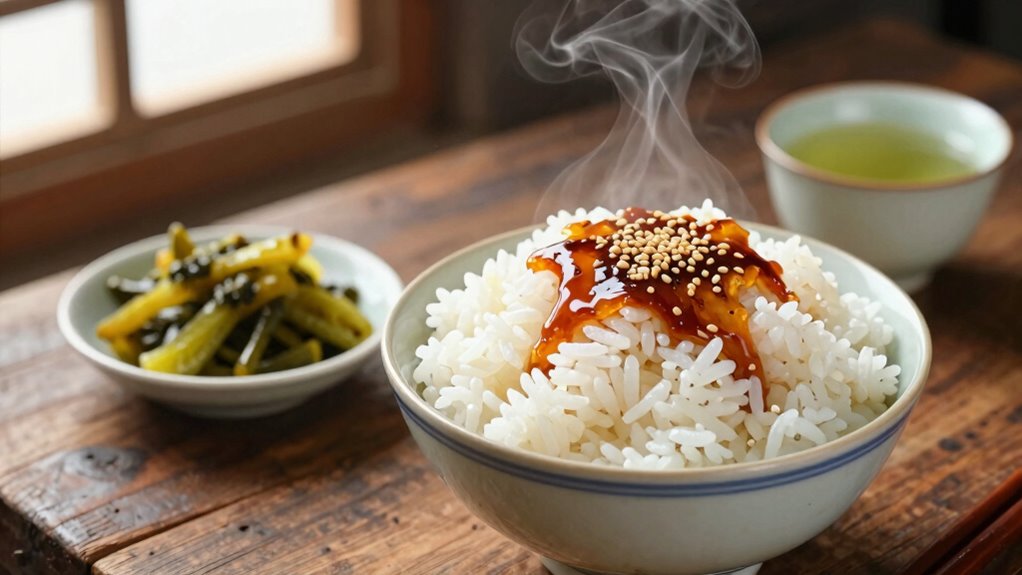
Different cultures have unique ways of preparing rice for breakfast, from simple porridges to elaborate dishes. You might top your rice with savory meats, eggs, or fresh herbs, depending on where you are. Regional flavors influence everything, making rice breakfasts both diverse and flavorful.
Traditional Rice Dishes
Across the world, cultures have developed unique ways to prepare rice for breakfast, reflecting their flavors and traditions. In many regions, rice fermentation transforms leftovers into tangy porridges, while in others, freshly cultivated rice is simply steamed to perfection. You might savor congee in China, a comforting porridge made from slow-cooked rice, or enjoy a hearty rice and bean dish in Latin America. These dishes often honor rice cultivation techniques, emphasizing freshness and tradition. Additionally, the methods used for preparing rice for breakfast highlight the importance of sustainable rice cultivation, ensuring that these cultural practices can be preserved for future generations. This sustainable approach supports local farming communities and promotes environmentally friendly practices. Incorporating traditional rice preparation methods also showcases cultural heritage, strengthening community bonds through shared culinary practices. The art of fermentation plays a vital role in many of these dishes, adding depth of flavor and probiotic benefits. Feel the warmth of a steaming bowl that connects you to centuries of history. Savor the tang of fermented rice that awakens your senses. Experience the comfort of a simple, nourishing breakfast. Celebrate the artistry of rice fermentation and craft. Embrace a tradition that unites communities worldwide.
Common Breakfast Toppings
Many cultures enhance breakfast rice with a variety of toppings that add flavor, texture, and cultural significance. You might top your rice with pickled vegetables or a fried egg, depending on your tradition. Sweet options like honey, fruit, or condensed milk are common in others, transforming plain rice into a comforting bowl. Some cultures pair rice with breakfast beverages like tea or coffee, which complement the flavors and refresh your palate. Proper rice storage guarantees freshness and prevents spoilage, so your toppings stay flavorful. You may also sprinkle sesame seeds, chopped nuts, or herbs for added crunch. These toppings reflect local ingredients and preferences, making each breakfast bowl unique and satisfying. Exploring these options lets you enjoy rice in a way that’s both nourishing and culturally meaningful.
Regional Flavor Variations
Have you ever wondered how various cultures prepare rice for breakfast? In regions with lush rice paddies, breakfast traditions reflect local flavors and history. You might savor a steaming bowl of congee in China, where rice is cooked slowly with ginger and topped with scallions. Or perhaps you enjoy Japan’s ochazuke, rice soaked in green tea, offering comfort and simplicity. In Southeast Asia, fragrant nasi lemak combines rice with coconut milk, chilies, and peanuts, awakening your senses. In South India, rice idlis are soft, fluffy, and paired with spicy chutneys. These regional variations evoke deep cultural identities, connecting breakfast to land, climate, and community. Each preparation celebrates rice’s versatility and the unique flavors that define local breakfast traditions across the globe. Additionally, rice’s global popularity highlights its significance as a staple food in diverse culinary traditions worldwide, reflecting its role in shaping cultural identities and culinary diversity.
What Are Some Popular Asian Rice Breakfast Dishes?
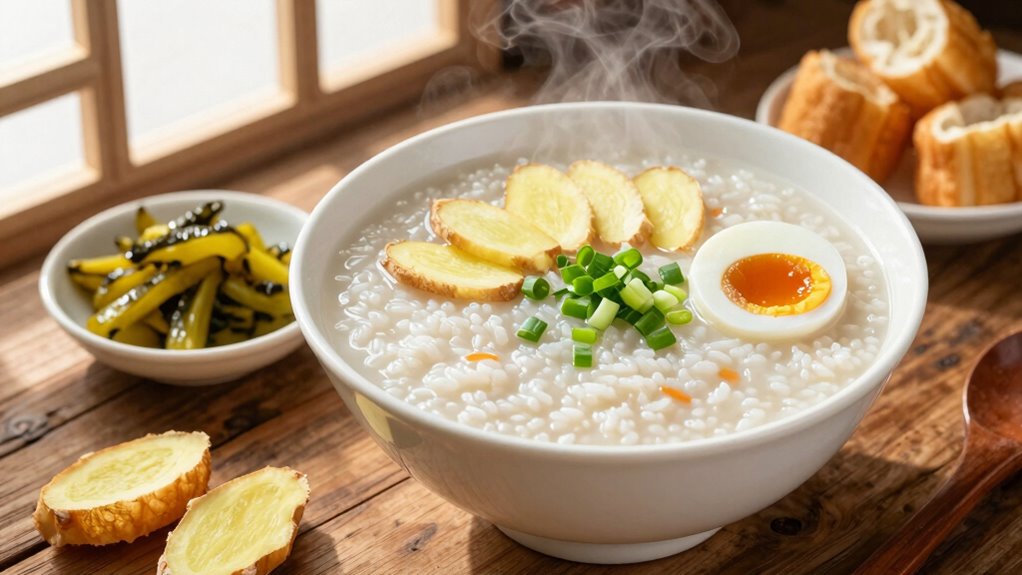
What makes rice such a versatile staple in Asian breakfast cuisine? It’s thanks to its adaptability and cultural significance across regions. Popular dishes include congee, a comforting rice porridge often topped with eggs, pickles, or meat, and nasi lemak from Malaysia, featuring fragrant rice cooked in coconut milk. In Japan, you might enjoy tamago kake gohan, a simple dish of hot rice mixed with raw egg and soy sauce. These dishes often reflect sustainable farming practices and rice harvesting techniques that guarantee quality and flavor. Rice’s neutral taste allows it to absorb various ingredients and spices, making it a perfect base for diverse breakfast options. Its role in traditional rituals emphasizes its importance in cultural heritage, connecting tradition with everyday nourishment. Additionally, the harvesting methods employed in rice production can influence the flavor and texture of these dishes, highlighting the importance of quality rice. The sustainable farming practices used in rice cultivation also help preserve the environment and ensure long-term food security. Moreover, advances in rice cultivation technology have improved yields and quality, benefiting both farmers and consumers. These innovations support collaborative approaches that enhance overall sustainability in rice farming.
What Ingredients and Flavors Make a Delicious Rice Breakfast?
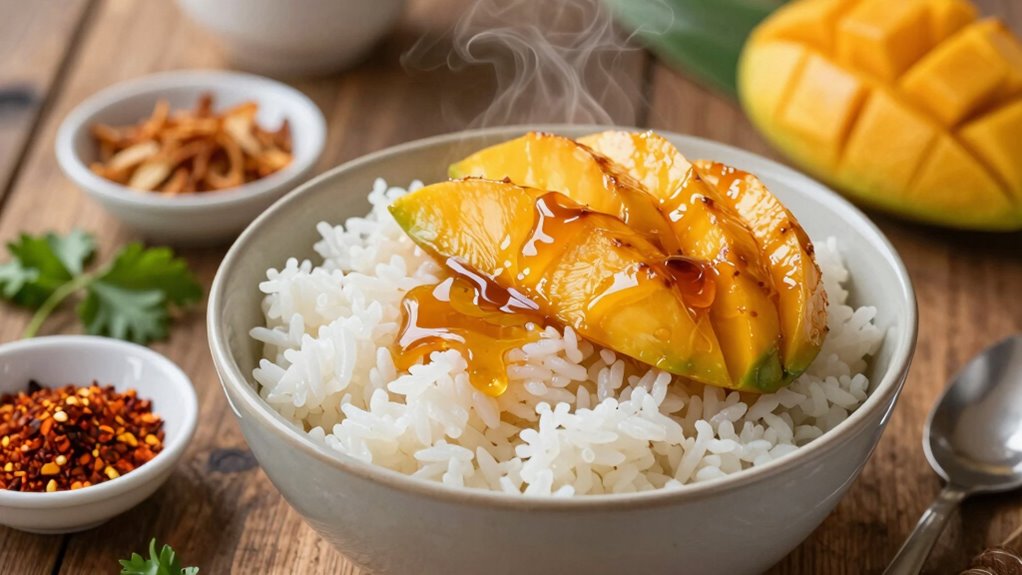
To make a delicious rice breakfast, you’ll want to explore flavor combinations that excite your taste buds. Key ingredients like eggs, vegetables, or savory sauces can transform simple rice into a satisfying meal. Think about what flavors and ingredients you enjoy most to create a breakfast that’s both hearty and flavorful.
Flavor Combinations
The key to a delicious rice breakfast lies in combining flavors that complement each other perfectly. Your choice of ingredients can elevate the rice texture and create a memorable meal. For ideal rice storage, make sure your rice is fresh and well-preserved; this ensures it remains tender and flavorful. When mixing flavors, consider balancing savory, sweet, and umami elements for a harmonious bite. Incorporating well-drained soil and full sun conditions can help ensure your rice remains healthy and flavorful. Proper cooking techniques and creative flavor combinations can transform an ordinary bowl into a delightful experience. Warm spices like cinnamon or cardamom that awaken your senses, bright citrus zest or juice to add zing and freshness, creamy accents such as coconut milk or yogurt for richness, savory toppings like fried eggs or crispy bacon for depth, and crunchy vegetables or nuts for texture contrast and excitement. Additionally, selecting the right cooking methods can enhance the overall flavor and texture of your rice dishes. Understanding food pairing principles can help you develop more harmonious flavor profiles. Exploring cultural flavor profiles from different cuisines can inspire new and exciting breakfast bowls. Experiment with these combinations, and you’ll discover breakfast bowls that delight every morning.
Key Ingredients
A delicious rice breakfast starts with choosing the right ingredients that bring flavor and texture together. The key ingredients include well-cooked rice that acts as a neutral base, so you can layer in bold flavors. For rice pairing, consider toppings like soft-boiled eggs, sautéed vegetables, or savory sauces to add depth. Incorporating herbs and spices such as scallions, ginger, or sesame seeds enhances the taste. Don’t forget breakfast beverages—hot tea, fresh fruit juices, or traditional drinks like soy milk complement the meal perfectly. The right combination of ingredients creates a harmonious balance, making each bite satisfying and energizing. Focusing on Free Floating and fresh, quality ingredients can elevate your rice breakfast into a nourishing and flavorful start to your day.
From Savory to Sweet: Regional Variations in Rice Breakfasts

Regions around the world showcase a remarkable range of rice breakfast dishes, shifting from hearty, savory options to sweet, dessert-like offerings. In many cultures, rice holds deep cultural symbolism rooted in centuries of rice cultivation, representing prosperity, life, and community. These regional variations reflect local flavors and traditions, making each dish a unique experience. A focus on biodiversity in crop varieties can help preserve traditional recipes and adapt to changing environmental conditions. Promoting crop diversity ensures the resilience of rice cultivation against pests and climate challenges. You might savor a spicy, savory congee in China, or indulge in a sweet, coconut-infused arroz con leche in Latin America. The diversity evokes feelings of comfort, celebration, and connection. Recognizing the importance of agricultural biodiversity can support local farmers and maintain the cultural integrity of these diverse breakfast traditions. Supporting local seed varieties is essential for safeguarding these culinary traditions and fostering sustainable farming practices.
How Can You Make Authentic Rice Breakfasts at Home?
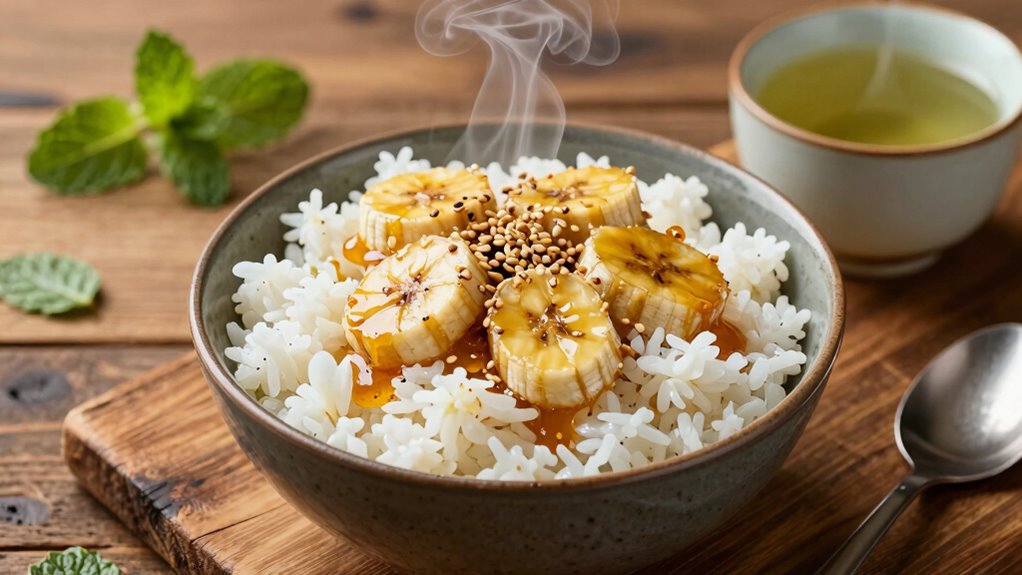
Bringing the vibrant flavors of regional rice breakfasts into your home kitchen is easier than you might think. Start with cooked rice, preferably day-old, to achieve the best texture. For authentic flavors, explore regional toppings and seasonings, like soy sauce, sesame oil, or sweetened condensed milk. Pair your rice breakfast with traditional breakfast beverages such as tea, soy milk, or coffee to complete the experience. To keep your rice fresh and prevent spoilage, follow simple rice storage tips: store cooked rice in an airtight container in the refrigerator and consume within a couple of days. Reheat thoroughly before serving, and don’t forget to add fresh toppings or herbs for extra flavor. These steps will help you create genuine, delicious rice breakfasts at home with ease.
What Are the Health Benefits of Starting Your Day With Rice?
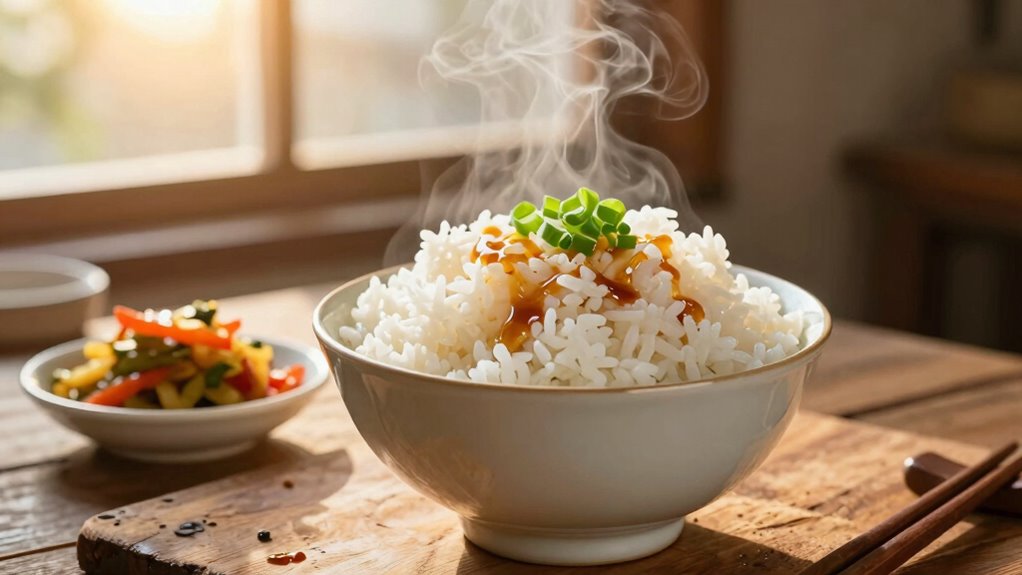
Starting your day with rice can offer several health benefits, especially when you choose whole-grain varieties like brown rice. These benefits are enhanced by traditional rice cultivation methods that preserve nutrients and flavor. Fermentation techniques, used in some rice varieties, boost digestibility and introduce probiotics, supporting gut health. Proper rice preparation methods can further enhance the nutritional value and safety of your breakfast rice. Rice provides sustained energy without causing sugar spikes, keeping you alert longer. It’s also rich in essential minerals like magnesium and selenium, which promote overall wellness. Incorporating rice into your breakfast can help you feel fuller for longer, reducing unhealthy snacking. Additionally, selecting minimal processing methods ensures you retain maximum nutrients and flavor in your rice. Moreover, embracing traditional cultivation practices can help maintain the rice’s natural nutrient profile, further benefiting your health. Furthermore, choosing rice with minimal additives can prevent unnecessary intake of preservatives or artificial ingredients.
Common Mistakes to Avoid When Preparing Rice for Breakfast
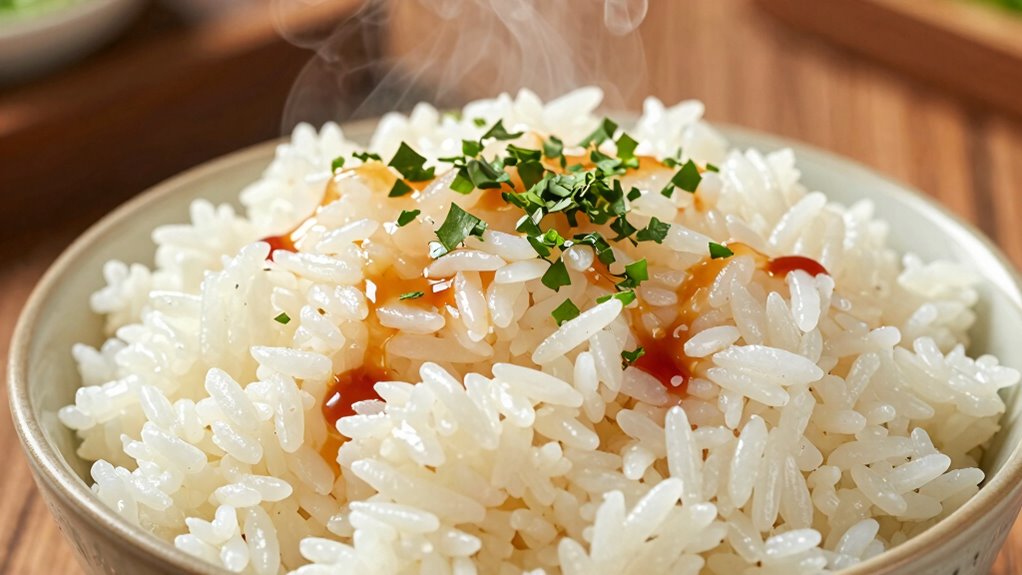
One common mistake to avoid when preparing rice for breakfast is rinsing it excessively, which can wash away valuable nutrients and reduce flavor. Over-rinsing can also affect the rice texture, making it too sticky or too loose, depending on the cooking method. To achieve the perfect breakfast rice, use the right amount of water and choose the appropriate cooking method—whether stovetop, rice cooker, or another technique. Rushing the process or not paying attention to water ratios can result in unevenly cooked rice or undesirable textures. Avoid stirring too much during cooking, as this can break grains apart and alter the texture. Proper preparation guarantees fluffy, tender rice that enhances your breakfast without compromising flavor or nutritional value.
Modern Twists and Creative Ideas for Rice Breakfasts
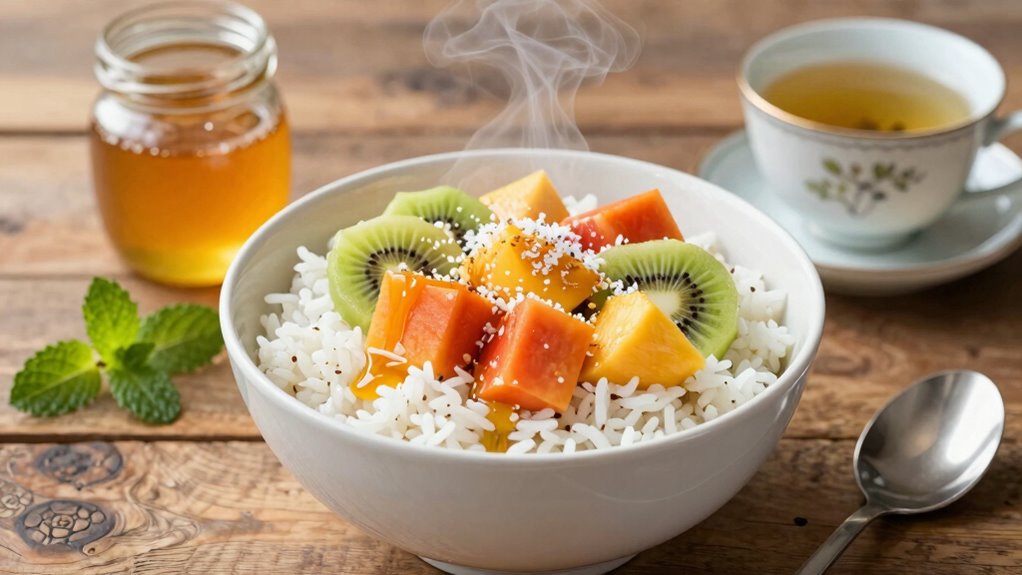
Once you’ve mastered preparing perfect breakfast rice, it’s exciting to explore creative ways to elevate it. Modern twists celebrate cultural symbolism and the history of rice cultivation, transforming your morning bowl into a culinary adventure. Imagine adding vibrant ingredients that honor traditions or experimenting with fusion flavors. You might top your rice with spicy kimchi, a drizzle of honey and nuts, or fresh herbs for a Mediterranean touch. Incorporate colorful fruits or savory eggs to make each bowl unique and satisfying. These ideas connect you to rice’s rich history while inspiring innovation. By blending tradition with creativity, you turn a simple staple into a memorable breakfast experience. Embrace these ideas to make each morning both nourishing and exciting.
Frequently Asked Questions
How Do Regional Climates Influence Rice Breakfast Recipes Worldwide?
You’ll notice that regional climates heavily influence rice breakfast recipes through climate-driven flavor profiles and seasonal rice harvesting. In humid, tropical areas, you might enjoy sweet, fragrant rice, while cooler regions favor hearty, starchy varieties. Seasonal harvesting guarantees fresh rice, affecting taste and texture. These climate factors shape local preferences, making each region’s rice breakfast unique and tailored to its environment, enhancing your breakfast experience worldwide.
Which Rice Varieties Are Best Suited for Breakfast Dishes?
Did you know that jasmine rice is favored for breakfast in Southeast Asia? You should choose rice varieties with soft, sticky grain textures and subtle flavor profiles, like jasmine or glutinous rice, for breakfast dishes. These varieties absorb flavors well and create a comforting, cohesive bowl. Opt for these types to enhance your morning meal, ensuring a satisfying start with the right grain textures and flavor profiles.
How Can Rice Breakfasts Be Adapted for Dietary Restrictions?
You can adapt rice breakfasts for dietary restrictions by choosing gluten-free options like jasmine or basmati rice, ensuring no cross-contamination. For vegan adaptations, skip animal-based toppings and add plant-based ingredients like fruits, nuts, seeds, or plant-based milk. You might also explore using tofu or vegan yogurt as toppings. These adjustments let you enjoy a nutritious, delicious breakfast tailored to your dietary needs.
What Historical Influences Shaped Rice Breakfast Traditions Globally?
Imagine rice as a silent storyteller, revealing history through every grain. Colonial culinary influences introduced new flavors, shaping breakfast traditions across Asia and the Americas, while indigenous grain traditions preserved ancient methods and cultural identity. You see how these influences blend, creating diverse rice breakfast customs worldwide. This harmony of old and new reflects the rich tapestry of history, showing how global exchanges and local roots nourish breakfast tables today.
Are There Specific Utensils Traditionally Used for Rice Breakfast Preparation?
You’ll find that specific utensils like rice scoops are traditionally used for rice breakfast preparation, especially in Asian cultures. The rice scoop design often features a flat, wide shape to easily serve sticky rice without mess. Chopstick etiquette also plays a role in how rice is handled at the table, emphasizing respect and precision. Using these utensils correctly enhances your experience and shows appreciation for the cultural traditions.
Conclusion
Think of rice for breakfast as a blank canvas waiting for your colorful brushstrokes. Whether you enjoy it savory or sweet, traditional or inventive, it’s a versatile way to start your day. Embrace the global flavors and make each morning a delicious adventure. With a little creativity, you’ll turn your breakfast into a symphony of tastes—proof that rice is truly a world-class morning star, shining brightly in your daily routine.
NFL season / tailgating Picks
team gear
As an affiliate, we earn on qualifying purchases.