

Eating soup for breakfast reflects deep cultural traditions that prioritize warmth, nourishment, and social connection first thing in the day. Many countries favor hearty, nutrient-rich soups made with local ingredients, offering hydration and sustained energy. Climate and regional factors influence these choices, promoting lighter or heartier options accordingly. If you want to discover how these traditions can boost your mornings and learn simple ways to enjoy this nourishing habit, keep exploring more ideas.
Key Takeaways
- Soup provides a warm, nourishing start to the day, supporting digestion and sustained energy, especially in colder climates.
- Many cultures value soups as comfort foods that foster social bonds and connect to culinary heritage.
- Nutrient-rich breakfast soups offer hydration, essential vitamins, and proteins, promoting overall health and wellness.
- Regional ingredients and traditional recipes make breakfast soups adaptable, reflecting local flavors and seasonal availability.
- Compared to Western quick breakfasts, soups emphasize mindful eating, nourishment, and sustained fullness throughout the morning.
What Are the Cultural and Historical Origins of Breakfast Soup?

Many cultures have long-standing traditions of starting the day with a warm, nourishing soup, often rooted in their history and local ingredients. These breakfast soups hold deep cultural significance, serving as a way to connect with heritage and community. Historically, many societies relied on simple, hearty ingredients available locally, making soup an accessible and practical choice. For example, in East Asia, congee originated as a humble rice porridge, symbolizing sustenance and comfort. In Europe, broths and stews became breakfast staples through centuries of culinary evolution. These traditions reflect more than taste—they embody cultural identity and historical resilience. By beginning the day with soup, communities preserve their culinary roots while embracing nourishing, communal meals that have stood the test of time.
What Types of Breakfast Soups Are Popular Worldwide?

Across the globe, breakfast soups come in a variety of flavorful and comforting styles that reflect local ingredients and culinary traditions. These soups hold deep cultural significance, often linked to regional customs and communal rituals. For example, miso soup in Japan offers a savory start rooted in centuries of tradition, while Nigerian millet porridge soup combines nutritional value with cultural identity. The historical evolution of breakfast soups shows how societies adapt ingredients to create nourishing, easy-to-prepare dishes. In many cultures, these soups symbolize hospitality and well-being, making them more than just food—they’re a reflection of history, environment, and cultural values. The use of traditional cooking techniques in preparing these soups further highlights their cultural importance and culinary artistry. By exploring these popular varieties, you get a taste of how diverse and meaningful breakfast can be worldwide.
How Do Climate and Regional Factors Shape Breakfast Soup Choices?

Climate and regional factors play a vital role in shaping breakfast soup choices, as local weather conditions influence what ingredients are available and how they are used. Your climate influence determines whether hearty, warming soups or lighter, invigorating options are preferred. In colder regions, people often choose soups made with regional ingredients like root vegetables, grains, or preserved foods that provide sustained energy and warmth. Conversely, warmer areas favor soups with fresh, seasonal produce that are quick to prepare and cooling. Regional ingredients also reflect local farming traditions and cultural preferences, shaping breakfast soup varieties. Understanding these climate and regional influences helps explain why certain soups are popular in specific areas, as they are naturally suited to the environment and available resources. Additionally, knowledge of deep-sky imaging techniques can inspire a new appreciation for the diversity and adaptability found in regional culinary traditions. This adaptability is similar to how different styling products are suited for various hair types and regional climates. Recognizing how climate-driven ingredient choices influence local cuisines reveals the importance of environmental factors in culinary diversity. Moreover, the seasonal availability of ingredients further emphasizes how climate impacts regional breakfast options. For example, preserved foods become essential in colder climates where fresh produce is scarce during winter months.
Why Is Breakfast Soup Nutritionally Beneficial?

Breakfast soup helps keep you hydrated, giving your body the fluids it needs to start the day. It’s also packed with essential nutrients that boost your energy and support overall health. Plus, its easy-to-digest nature means you can enjoy a nourishing meal without feeling weighed down.
Rich in Hydration
Since soups are primarily liquid-based, they naturally provide a significant source of hydration early in the day. This benefit is especially important in cultures where breakfast is a social or traditional ritual, highlighting its cultural significance. Historically, the evolution of breakfast soups reflects a practical approach to nourishment, using easily digestible ingredients that hydrate as they warm you. Additionally, many traditional soup recipes incorporate nutrient-rich ingredients, enhancing their nutritional profile. Incorporating connected fitness technology and tracking hydration levels can further optimize such nourishing habits. In many countries, starting the day with a nourishing, hydrating soup aligns with a holistic view of health and well-being. Consuming soup in the morning helps replenish fluids lost overnight and prepares your body for the day ahead. This simple yet effective practice underscores how hydration plays a crucial role in maintaining overall health, especially when combined with the consumption of whole, natural foods. Additionally, the nutritional benefits of soup include a range of vitamins and minerals that support overall wellness.
Packed With Nutrients
Because breakfast soups often feature a variety of fresh vegetables, lean proteins, and whole grains, they deliver a concentrated source of essential nutrients that support your health. These dishes reflect deep cultural traditions and historical influences, showcasing how societies prioritized nourishing their populations. For example, many Asian cultures incorporate ingredients like seaweed and soy, rich in minerals and antioxidants, while European traditions include hearty legumes and root vegetables. These nutrient-dense ingredients help boost your immune system, provide sustained energy, and improve overall well-being. By embracing breakfast soup, you tap into centuries of culinary wisdom that emphasize balance and nourishment, making it a smart choice to start your day with crucial nutrients that keep you energized and healthy.
Easy to Digest
One reason breakfast soup is especially beneficial is that it’s easy to digest, making it gentle on your stomach first thing in the morning. Soup’s warm, soft textures promote digestive ease, helping you start the day comfortably. As a comfort food, it soothes your stomach and prevents discomfort from heavier, greasy breakfasts. The gentle nature of broth-based soups allows nutrients to absorb quickly, energizing you without overloading your digestive system. Incorporating proper care ensures that your soup retains its nutritional value and flavor. Proper preparation techniques, such as maintaining appropriate temperature control, help preserve the nutritional content and delicate flavors of the ingredients. Understanding reliable cooking methods can further enhance the nutritional benefits and safety of your breakfast soup. Additionally, choosing fresh ingredients can maximize flavor and nutrient retention in your morning meal. Here’s a quick comparison:
| Feature | Soup for Breakfast | Heavy Breakfast |
|---|---|---|
| Digestive Ease | High | Low |
| Comfort Food | Yes | No |
| Nutrient Absorption | Fast | Slower |
Choosing breakfast soup can set a gentle, nourishing tone for your day.
How Can You Make Delicious Breakfast Soups at Home?

To make tasty breakfast soups at home, start with healthy ingredients like vegetables, lean proteins, and whole grains. Use quick tips like simmering bones or adding herbs to create flavorful broths without much effort. Incorporating sound healing science principles, such as using calming sounds or vibrations during cooking, can enhance your sensory experience. Paying attention to nutritional balance and mindful preparation can make your breakfast soups both nourishing and satisfying. Additionally, choosing piercing-safe ingredients that do not irritate the skin can help maintain overall well-being. Incorporating food safety practices ensures your breakfast soups are both delicious and safe to enjoy every day. Being aware of recovery techniques like gentle stirring or mindful ingredient selection can also contribute to a more enjoyable cooking process. With simple adjustments, you can enjoy a nutritious and satisfying morning meal every day.
Healthy Ingredients for Breakfast Soups
Starting your breakfast soup with healthy ingredients sets the foundation for a nutritious and satisfying meal. Embrace cultural traditions and culinary influences by choosing ingredients that reflect different cuisines. Incorporate vegetables like spinach, kale, or bok choy for fiber and vitamins, which are common in Asian and Mediterranean breakfasts. Add protein sources such as eggs, tofu, or lean meats to boost energy and keep you full longer. Whole grains like oats or quinoa can add texture and sustained energy. Using herbs and spices not only enhances flavor but also offers health benefits, rooted in various cultural practices. Additionally, understanding navigation and mapping explainers can help you incorporate wellness into your daily routine, complementing your healthy lifestyle. By selecting fresh, whole ingredients inspired by diverse culinary influences, you guarantee your breakfast soup is both nourishing and delicious.
Quick Tips for Flavorful Broths
Creating a flavorful broth for your breakfast soup doesn’t have to be complicated; small adjustments can make a big difference. Start by using homemade broth or high-quality store-bought options for richer flavor. To add depth, experiment with broth variations like miso, chicken, or vegetable base, depending on your taste. Incorporate aromatics such as garlic, ginger, or herbs early in the simmering process. Keep in mind that proper soup storage helps preserve freshness and flavor, so refrigerate or freeze leftovers promptly. To enhance your broth, consider adding a splash of soy sauce, a dash of vinegar, or a squeeze of citrus. These simple tweaks can elevate your breakfast soups, making every bowl more satisfying and delicious.
How Does Eating Soup for Breakfast Compare to Western Mornings?
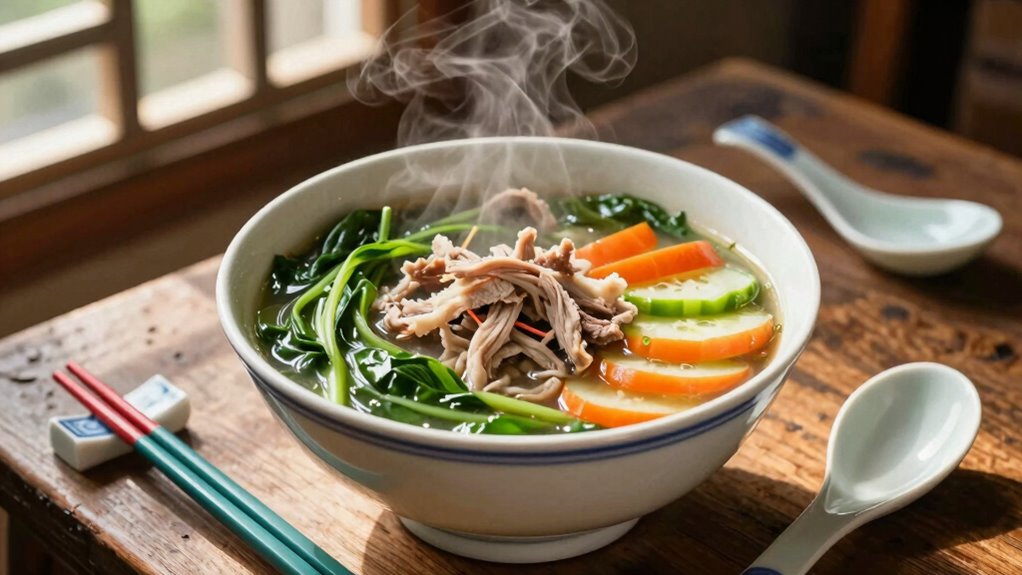
Compared to Western mornings, where many people grab a quick coffee or a light pastry, eating soup for breakfast offers a more substantial and warming start to the day. Western breakfast traditions often prioritize convenience and quick energy, emphasizing caffeine and carbs. In contrast, cultures with diverse breakfast customs, like those that enjoy hearty soups, value a nourishing meal that sustains them longer. This shift reflects their cultural diversity, which influences what’s considered an appropriate morning meal. Soups provide warmth and comfort, aligning with traditions that prioritize health, balance, and social connection in the morning. While Western mornings tend to focus on speed and simplicity, many other cultures embrace breakfast as an opportunity to enjoy a flavorful, filling experience that energizes the entire day. Recognizing the importance of cultural food practices can deepen our understanding of global breakfast habits, including how traditional meals shape daily routines.
What Are the Benefits of Starting Your Day With Hearty Soup?

Eating a hearty soup for breakfast offers numerous health and wellness benefits that can set a positive tone for your day. It’s rooted in cultural traditions and has historical origins that emphasize nourishment and balance. Starting with soup helps you:
- Stay fuller longer, reducing mid-morning cravings
- Boost your immune system with nutrient-rich ingredients
- Support digestion, thanks to warm, easy-to-digest liquids
Many cultures have long valued breakfast soups for their practicality and health benefits. Embracing this tradition can improve your energy levels, foster mindful eating, and connect you to centuries of culinary wisdom. Incorporating hearty soup into your morning routine isn’t just about food; it’s about honoring history and nurturing well-being from the start of your day.
Tips for Creating Your Own Easy and Tasty Breakfast Soup Recipes

To craft your own easy and tasty breakfast soup recipes, start by choosing simple, flavorful ingredients that you already enjoy. Use common essentials like broth, vegetables, and proteins as your base, then get creative with flavor combinations. Incorporate herbs, spices, or a splash of citrus to add depth. Keep your pantry stocked with essential staples like canned beans, rice, and frozen vegetables to make quick, nourishing soups anytime. Experiment with different textures and tastes to find what suits you best. Here’s a quick guide to inspire your creations:
| Ingredient Type | Example | Tip |
|---|---|---|
| Protein | Eggs, chicken | Add for heartiness |
| Vegetables | Spinach, carrots | Use fresh or frozen |
| Seasonings | Garlic, cumin | Enhance flavor |
Frequently Asked Questions
How Do Breakfast Soups Differ Across Various Asian Cultures?
You’ll notice that breakfast soups across Asian cultures show regional variations reflecting their cultural significance. In Japan, miso soup offers a nourishing start, emphasizing harmony and tradition. In China, congee provides comfort and energy, often with regional toppings. In Korea, hot soups like seolleongtang highlight heritage and communal bonds. These differences reveal how each culture’s history and values shape their breakfast choices, making soup a meaningful part of the morning routine.
Are There Specific Ingredients That Make Breakfast Soup More Nutritious?
To make your breakfast soup more nutritious, focus on ingredients that provide a protein boost and fiber content. Incorporate eggs, lean meats, or tofu for protein, and add vegetables like spinach, carrots, or beans for fiber. These ingredients work together to energize your morning, support digestion, and sustain you longer. By choosing nutrient-dense components, you enhance your breakfast’s health benefits, fueling your day with essential nutrients and lasting satisfaction.
Can Breakfast Soup Be Adapted for Vegetarian or Vegan Diets?
Yes, breakfast soup can easily be adapted for vegetarian or vegan diets. You can replace meat with plant-based broths and add meat substitutes like tofu, tempeh, or seitan for protein. Use vegetables, grains, and legumes to boost nutrition and flavor. It’s a versatile way to enjoy a hearty, warming breakfast without animal products, making it suitable for vegans and vegetarians alike.
What Are Common Breakfast Soup Serving Traditions Worldwide?
You’ll find that breakfast soup serving traditions vary widely worldwide, reflecting cultural significance and culinary diversity. In Japan, miso soup is a staple, emphasizing harmony and tradition. In Vietnam, Pho offers a flavorful start, showcasing regional ingredients. In Eastern Europe, hearty broths signal warmth and comfort. These traditions highlight how different cultures use breakfast soup to connect with their heritage, nourish the body, and celebrate their unique culinary identities.
How Does the Texture of Breakfast Soup Influence Appetite?
The texture impact of breakfast soup plays a key role in appetite stimulation. If your soup is smooth and creamy, it’s easy to digest and feels comforting, which can help you start the day gently. Conversely, a chunkier, more varied texture can excite your senses and boost your appetite. Overall, the right texture keeps you satisfied longer and encourages a hearty, energizing breakfast.
Conclusion
Embracing breakfast soup might just be the secret ingredient to a brighter morning. It’s a gentle nudge toward nourishing your body and awakening your senses, no matter where you’re from. So, why not explore this warm, comforting tradition? A simple spoonful could turn your routine into something unexpectedly delightful—an inviting start that whispers, “Good morning” in the most delicious way. Give it a try; your mornings might never look the same.