
TL;DR

Get kitchen staples and gadgets delivered free with Prime
- Fast, free delivery on millions of items
- Prime Video, Amazon Music and more included
- Member-only deals all year
Air fryers cook by circulating hot air, so you can often make snacks with less added oil than deep frying while still getting a crisp texture. Choose ingredients such as vegetables, beans, fruit, tofu, or whole grains; cook in uncrowded batches; and check doneness instead of relying only on time. Air frying does not automatically make packaged food healthy or eliminate acrylamide from browned starchy foods.
A bowl of limp vegetables rarely wins the snack battle against a crunchy bag of chips. An air fryer can help: it circulates hot air around food, giving many snacks browned edges and a crisp texture with less added oil than deep frying.
That’s a cooking advantage, not a health halo. A basket of broccoli is a different snack from a basket of heavily salted packaged bites, even if both come out of the same machine. What you put in—and how much you eat—still matters.
This guide shows you how to choose snack ingredients, get a satisfying crunch, and avoid common cooking and food-safety mistakes. You’ll also get practical starting points for chickpeas, vegetables, fruit, and protein-rich bites, with a reminder that different air fryers cook at different speeds.
Start with vegetables, beans, fruit, tofu, or whole grains; air frying alone does not make a snack nutritious.
Dry ingredients, cut them evenly, use only as much oil as needed, and leave space around food for airflow.
Use the recipe time as a starting estimate because air-fryer models, basket sizes, and ingredient thickness vary.
Cook meat and seafood to a measured safe internal temperature; a crisp exterior is not proof that the center is done.
Cook potatoes and other starchy foods to golden rather than very dark brown, since air frying does not eliminate acrylamide.
Choose ingredients that make a genuinely satisfying snack
Air fryers for healthy snacks work best when you start with nutrient-dense ingredients such as vegetables, beans, fruit, and whole grains. The appliance changes how the food cooks; it doesn’t turn a snack into a nutritious one by itself. A small portion of seasoned chickpeas, for example, brings a different mix of nutrients and staying power than a large portion of salty, highly processed bites.
That distinction matters because crispness can make it easy to keep eating without noticing how much you’ve had. Ingredients with fiber or protein, such as beans or tofu, may feel more substantial than a light, salty snack, though hunger and portion needs vary. Pairing a crisp snack with yogurt, fruit, or another food you enjoy can make it more satisfying without assuming one ingredient has to do everything.
Try thinking of the basket as a quick-cooking pan rather than a health machine. You can make broccoli florets with a little oil and garlic, crisp whole-grain pita into chips, or cook apple slices with cinnamon for a warm, sweet snack. Each gives you a more useful starting point than asking only whether something says “air-fried” on the package. Whole-grain pita, for instance, can still be calorie-dense, while fruit is not automatically filling for every person; the ingredient and serving both shape the result.
Salt, added sugar, and saturated fat still deserve a glance. If a packaged snack is already oily, it may need no extra coating. When you make a batch yourself, seasoning with paprika, black pepper, cumin, lemon zest, or cinnamon lets you build plenty of flavor without leaning on a heavy hand of salt or sugar. This is a tradeoff, not a requirement to avoid salt or sweet flavors altogether: a little seasoning can make a simple ingredient enjoyable, while measuring it helps keep additions from quietly taking over.
For example, on a busy afternoon, you could serve a small bowl of crunchy chickpeas alongside yogurt or a piece of fruit. That’s more satisfying than picking at a basket of chips, and you can adjust the portion to suit your appetite. The useful key points for choosing a snack are simple: look at the ingredient, the portion, and what you add—not just the appliance. If a packaged snack is what fits your day, checking its serving size and label gives you a clearer basis for choosing than its cooking method alone.
As an affiliate, we earn on qualifying purchases.
Get crispy results without pouring on the oil
Air fryers for healthy snacks can make foods crisp through moving hot air, and a light coating of oil can help with browning. You usually need much less added oil than you would for deep frying, but the exact amount depends on the food. Oil helps heat spread across the surface and can improve color and flavor; using more than needed may add calories without making a crowded or wet batch crisp. Frozen packaged snacks may already contain oil, while freshly cut vegetables may benefit from a light spray or a small measured drizzle.
Crunch starts before cooking. Wash vegetables and dry them well; water on the surface uses heat to evaporate and encourages steaming before browning can develop. Cut pieces to roughly the same size so thin edges don’t scorch while thick centers remain firm. Then arrange food in a single layer, leaving room for air to move around each piece. That space has a practical cost: you may need more than one batch, but the extra round is often preferable to a full basket of uneven, soft food.
Here’s a practical starting method for a small batch of vegetables: toss about two cups of dry florets with roughly one teaspoon of oil and your preferred spices. Cook at around 375°F, checking and shaking the basket partway through. Many vegetables take about 8–15 minutes, but size, moisture, and your particular machine can change the timing. Treat the clock as a guide, not a promise. Checking early helps prevent delicate tips from burning while you wait for thicker pieces to soften; if the vegetables need more time, add it in short increments.
Picture broccoli tips turning dark green with a few golden, crisp edges while the stems remain tender enough to bite. If you load the basket until it is crowded, the florets soften instead. Cook in batches when needed, and add a little more time only after checking the food. This small-batch approach is one of the simplest ways to make snacks with a better crunch and fewer disappointments. If speed matters more than maximum crispness, a slightly fuller basket may be an acceptable compromise—just expect to shake it more and check different pieces for doneness.
Try these five easy snacks, with times as a starting point
Air fryers for healthy snacks can handle much more than frozen fries: cooked beans, vegetables, tofu, fruit, and whole-grain bread all make useful small-batch options. The temperature and time below are starting estimates, not guarantees. Basket size, ingredient moisture, piece thickness, and appliance strength all affect how quickly food cooks. Treat the first batch as a calibration: check it before the suggested finish, then use what you see and taste to adjust the next batch rather than compensating with excessive heat.
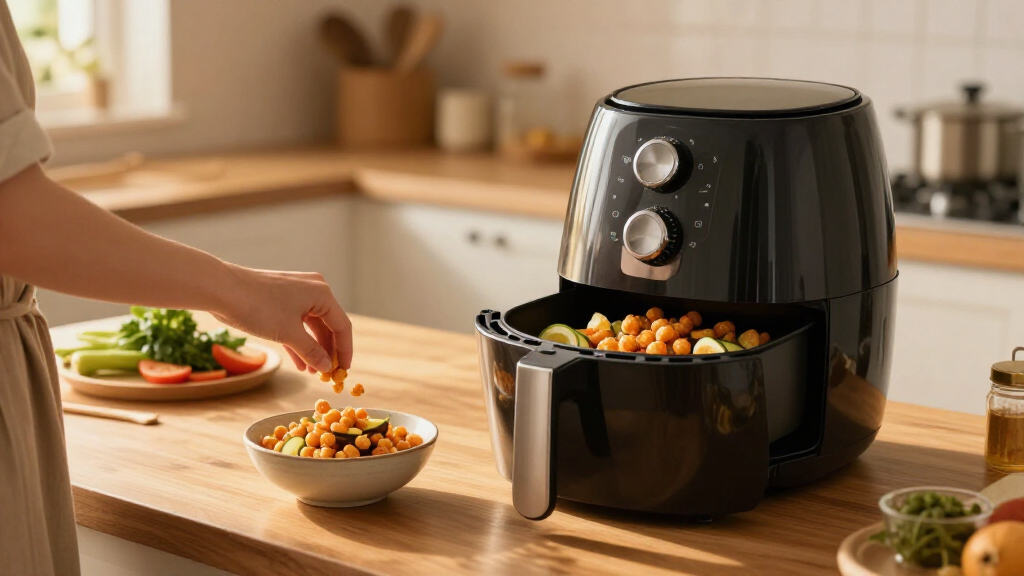
- Chickpeas: Drain and dry cooked chickpeas well, season with a little oil and spices, and cook at about 390°F for roughly 12–18 minutes, shaking once or twice. Surface moisture is a common reason they stay soft, so drying matters as much as the timer. Let them cool briefly; they often firm up as they sit, and checking after cooling gives a better sense of their final crunch.
- Potato or sweet-potato wedges: Cut even wedges, use a light coating of oil, and cook around 380°F for about 15–22 minutes, turning halfway. Look for golden edges and a tender center. The outside may brown before a thick wedge is tender, so test the center and add time if needed; avoid chasing extra crunch until the surface turns very dark.
- Green beans or zucchini: Dry the pieces, season lightly, and try 375°F for around 7–12 minutes, checking early for browning and tenderness. Zucchini releases more moisture than green beans, so it may soften rather than become uniformly crisp. A less crowded layer can help, but it may mean cooking fewer pieces at once.
- Tofu cubes: Pat firm tofu dry, coat lightly with spices, and cook around 375°F for about 12–18 minutes, turning once, until the outside feels firm and browned. Pressing or patting away excess water helps the surface brown, while a light coating can help seasonings stick. Very wet tofu may steam at first, so allow for variable timing rather than adding oil in an attempt to fix moisture.
- Apple or pear slices: Add cinnamon and cook at a moderate temperature, around 325°F, for roughly 8–12 minutes. Check often; thin slices can dry or darken quickly. Thicker slices tend to stay softer, so choose the cut based on whether you want a tender warm snack or a drier, crisp-edged one.
These recipes contain different ingredients, and spice blends or packaged coatings can include allergens such as wheat, soy, milk, or sesame. Check labels if you have an allergy, and prevent cross-contact by cleaning the basket and utensils. Your first batch is a test drive: note the cut size and cooking time that worked in your own air fryer, then adjust the next one. That small record can save both time and ingredients, especially when a few minutes make the difference between tender, browned food and a dried-out batch.
Know when air-fried is healthier—and when the claim falls short
Air fryers for healthy snacks can be a helpful alternative to deep frying because they often use less added oil. That can reduce the calories contributed by oil, depending on the recipe and serving size. It does not mean air frying removes fat or calories already in the food, or that every air-fried snack beats every oven-baked option. The meaningful comparison is between the actual foods and amounts you would eat, not between appliance labels.
Compare a homemade potato wedge with a packaged frozen snack. The wedge may need only a small amount of oil, while the packaged food may already contain oil, salt, and a coating. Air frying can still be a convenient way to cook the packaged version, but the label and serving size tell you more about its ingredients than the appliance does. A lower-oil cooking method also cannot compensate for a portion that is much larger than intended; conversely, a packaged food can fit a snack routine when its ingredients and portion work for you.
| Snack choice | What the air fryer can help with | What to check |
|---|---|---|
| Fresh vegetables | Browned tips and a tender middle with a little oil | Added oil, salt, and portion size |
| Cooked chickpeas | A crunchy outside without deep frying | Dry them well and watch added salt |
| Frozen packaged bites | Quick cooking and crisping | Ingredients, allergens, and package directions |
| Potato wedges | Golden edges with less added oil than deep frying | Avoid very dark browning |
The comparison also involves time and texture. For a small serving, an air fryer may heat quickly and produce crisp edges; for a large group, multiple batches can make the process slower than using an oven. If crispness is your priority, the extra batch may be worthwhile. If convenience is more important, an oven-baked option or a softer, fuller air-fryer batch may suit you better.
For instance, if you want a quick snack after work, a single layer of green beans may cook faster and need less cleanup than heating a full oven. But if you’re feeding six people, repeated small batches can erase that convenience. Air fryers can be handy, not magical: the benefit depends on the food, the portion, and how you prepare it.
Keep snacks safe and avoid overbrowning
Air fryers for healthy snacks still need basic food-safety care: a browned exterior does not prove the center of meat or seafood has reached a safe temperature. For chicken, cook to an internal temperature of 165°F; for fish, the USDA recommends 145°F. Use a food thermometer in the thickest part rather than judging safety by color or crunch. A crisp coating forms at the surface, while the center heats more slowly, especially in thick or uneven pieces; appearance alone can therefore give false reassurance.
Keep raw chicken and seafood separate from ready-to-eat fruit and vegetables. Wash your hands, clean utensils and surfaces, and refrigerate perishable ingredients within two hours of serving—within one hour if the temperature is above 90°F. Refrigerate leftovers at 40°F or below and use them within three to four days. These steps limit the time food spends in conditions where bacteria can grow and reduce the chance that raw-food juices transfer to snacks that won’t be cooked again. A tidy prep area makes it easier to enjoy a snack without bringing raw-food germs along for the ride.
There’s another reason to watch the color of potato snacks. Starchy foods such as potatoes can form acrylamide during high-temperature cooking, especially when they become very dark. Air frying does not eliminate acrylamide. Aim for golden rather than deep-brown wedges, check them early, and avoid leaving the basket running while you get distracted by another task. This is a practical way to reduce excessive browning, not a guarantee that acrylamide will be absent; don’t trade a dark crust for an undercooked center when food safety is involved.
Imagine checking a tray of chicken bites: the coating looks crisp, but your thermometer reads below the safe target in the thickest piece. The outside is not enough; return the batch to the fryer and check again. Follow manufacturer guidance for foil or parchment, too. Loose liners can block airflow or reach the heating element, so keep any approved liner secured beneath the food. A thermometer and the appliance manual answer different questions: one checks the food’s internal temperature, while the other helps prevent unsafe or ineffective setup.
Make the air fryer convenient enough to use again
Air fryers for healthy snacks earn their counter space when they fit the portions you actually cook and don’t create more cleanup than you can stand. They can be quick for one or two servings, especially when you want crisp vegetables without heating a large oven. A small basket, however, may mean several rounds if you’re feeding a group. The best appliance is not necessarily the one with the most settings; it is the one whose capacity and cleanup fit the way you really snack.
Before you buy or pull yours out of storage, think through a normal afternoon. If you usually want one portion of chickpeas or a quick side of broccoli, a compact basket may work well. If you want snacks for a family movie night, check whether you can cook enough in one layer; stacking food often limits airflow and gives you softer results. A larger model may reduce repeat batches, but it also takes more counter and storage space, so compare that convenience with how often you will use the extra capacity.
Noise, counter space, and cleaning matter too. A fryer that rattles loudly in a small kitchen or leaves a greasy basket that takes ten minutes to scrub may not become your most-used appliance. Let the basket cool before washing it, follow the manual’s care instructions, and remove stuck-on residue rather than scraping at a nonstick surface with a metal tool. Ease of cleaning has a direct practical effect: when cleanup feels manageable, you are more likely to use the appliance for everyday vegetables instead of reserving it for occasional treats.
One realistic strategy is to treat air frying as a small-batch tool: cook a quick portion of seasoned vegetables while dinner finishes, or crisp a handful of pita wedges for a snack. If the first batch takes longer than expected, write down the setting and timing. Your own notes beat guessing next time—and a machine that suits your kitchen is more useful than a feature list full of modes you never touch. If repeated batches make the process feel like a chore, choose a simpler method for larger servings rather than forcing the air fryer to do a job it does not handle efficiently.
Frequently Asked Questions
Are air-fried snacks healthier than deep-fried snacks?
They often use less added oil, which can reduce calories contributed by that oil. The result still depends on the ingredients, portion size, and any oil or salt already in packaged food.
Do I need to add oil to an air fryer?
No. Some foods brown and crisp without added oil, while a small amount can help vegetables or potatoes develop color and texture. Check whether frozen or packaged snacks already contain oil before adding more.
How do I make vegetables crispy in an air fryer?
Dry them well, cut them into even pieces, use a light coating of oil if needed, and arrange them in a single layer. Shake or turn the food partway through, and cook in batches if the basket is crowded.
Can I cook frozen snacks in an air fryer?
Usually, yes. Check the package directions, leave room for hot air to circulate, and confirm that the center is hot and fully cooked, especially for meat or seafood snacks.
Does air frying remove calories or fat?
Air frying does not remove nutrients from food in a predictable way. Using less added oil can reduce the calories that would have come from that oil, but the food’s ingredients and serving size still count.
Does air frying prevent acrylamide from forming?
No. Starchy foods such as potatoes can form acrylamide during high-temperature cooking, including air frying. Cook them to a golden color rather than very dark brown, and avoid overcooking.
Conclusion
Make the ingredient your first decision and the air fryer your cooking tool. A small, well-spaced batch of chickpeas or vegetables can deliver the crunch you want with less added oil than deep frying, while careful timing and temperature checks keep the snack enjoyable and safe.
Start with one basket of golden vegetables, not a promise that every fried-looking food is healthy. Let the smell of toasted spices and the snap of a crisp edge be your cue to keep experimenting.
Halloween Picks
halloween
As an affiliate, we earn on qualifying purchases.