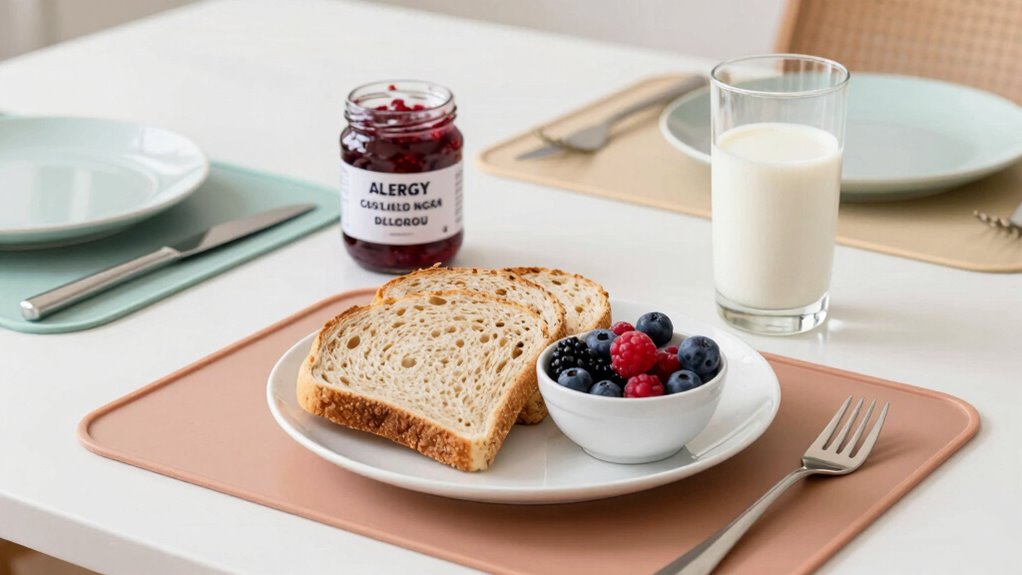
To set up an allergy-safe breakfast, carefully check food labels for allergens, paying attention to wording like “may contain” or “processed in a facility,” and verify ingredients each time you shop. Keep allergy-safe foods separated in clearly labeled containers and store allergen-containing items separately to prevent cross-contact. Establish routines using designated utensils and smart devices that alert you to potential risks. Keep exploring these strategies to build a safer breakfast environment for everyone involved.
Key Takeaways
- Use clearly labeled, dedicated containers for allergen-free and allergen-containing breakfast items to prevent cross-contact.
- Read ingredient labels thoroughly, focusing on allergen mentions and phrases like “may contain” or “processed in a facility.”
- Separate foods by allergen type, storing nuts, dairy, and grains in designated areas with visual cues for quick identification.
- Implement smart devices and sensors to monitor surfaces, utensils, and storage areas for allergen residues regularly.
- Establish consistent routines with allergy-safe ingredients, using automation and visual guides to ensure safe breakfast preparation.
How to Read Food Labels for Allergy Safety

Reading food labels carefully is essential for allergy safety because manufacturers often list hidden sources of allergens. When you read labels, focus on allergen identification by checking for any mention of your specific allergies. Look beyond the front packaging and examine the ingredients list thoroughly. Pay attention to phrases like “may contain,” “processed in a facility with,” or “produced on shared equipment,” as these indicate potential cross-contact risks. Always verify the allergen information each time you purchase a product, even if it’s familiar. Recognizing how ingredients are listed helps you spot hidden allergens that might not be obvious. Being vigilant during label reading ensures you avoid accidental exposure and keeps your breakfast safe and enjoyable. Additionally, understanding vetted sources of allergen information helps ensure the accuracy and reliability of the labels you rely on. Developing familiarity with regulatory standards can further enhance your confidence in interpreting food labels correctly. Knowing how to interpret ingredient lists accurately can also help you identify less obvious allergenic components. Paying attention to manufacturing practices listed on packaging can provide extra reassurance about allergen safety. Furthermore, awareness of labeling laws in your region can help you better understand the information presented on food packaging.
Organize Breakfast Foods to Prevent Allergen Cross-Contact
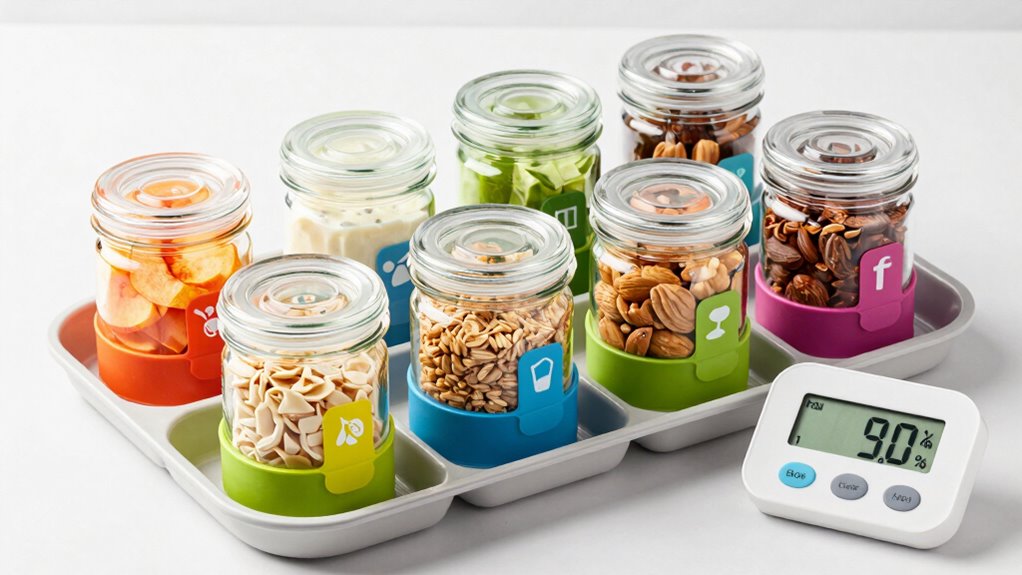
Once you’ve checked food labels carefully, organizing your breakfast foods can help prevent accidental allergen cross-contact. Use designated allergy-friendly containers for each type of food, making it easier to visualize labels and avoid mixing allergens. Group similar items together to streamline prep and reduce confusion. For example, keep nuts, grains, and dairy separate with clear labels. Additionally, consulting Free Floating principles can help you design a more effective and safe storage system. Here’s a simple setup:
| Container Type | Contents |
|---|---|
| Allergy-friendly containers | Gluten-free bread, snacks |
| Regular containers | Non-allergy foods |
| Label visualization | Clear labels on each box |
This organization minimizes the risk of cross-contact, keeps allergens separated, and makes it easier to identify safe options quickly. Proper setup ensures safer, stress-free breakfast prep every day.
Create Safe Breakfast Routines for Allergy Prevention
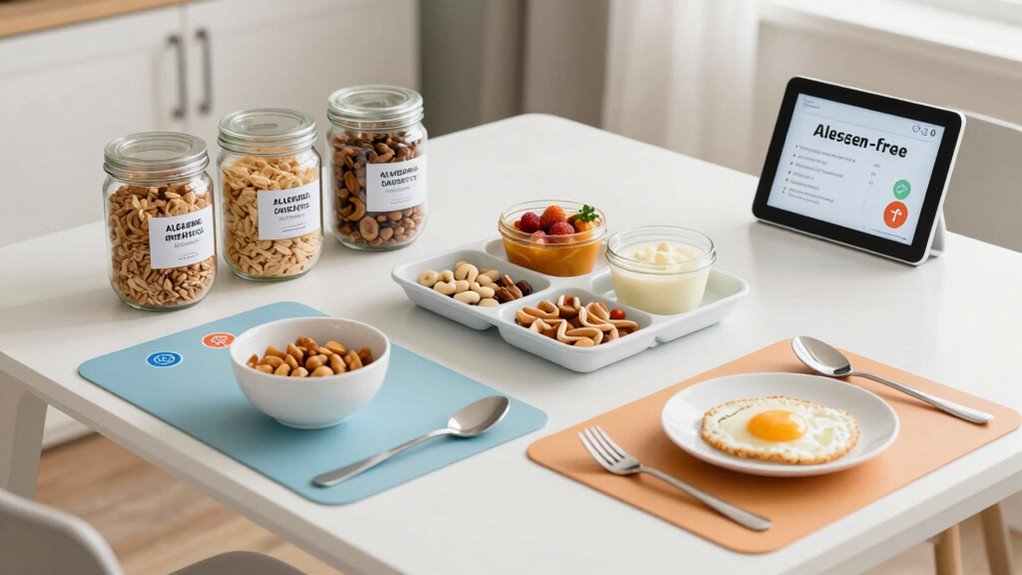
Establishing consistent breakfast routines is essential for preventing allergen exposure and ensuring safety. You should prioritize using allergy friendly ingredients and develop a clear, predictable meal plan each morning. You should also consider integrating technology to enhance safety, such as using smart devices that alert you to potential allergen cross-contact. Incorporating cleaning systems can help maintain a safe environment by reducing lingering allergens on surfaces and utensils. Consistency helps everyone know what to expect, reducing accidental cross-contact or confusion. Prepare ingredients in advance and designate specific utensils and dishes for allergy-safe foods. Stick to a routine that minimizes the risk of mixing allergens with safe foods. Incorporating smart automation devices to remind family members about allergy protocols and keep track of ingredients used can further improve safety. Modern sensor technology can detect allergens on surfaces or in foods, providing an extra layer of protection. Using digital reminders ensures that safety procedures are consistently followed, reducing the chance of oversight. Communicate your plan clearly to family members or caregivers, reinforcing the importance of following it precisely. By creating these safe breakfast routines, you establish a reliable process that reduces risks and builds confidence in managing allergies daily. This proactive approach guarantees safety and makes allergy prevention an integral part of your morning schedule.
Store Breakfast Items Safely to Minimize Risks
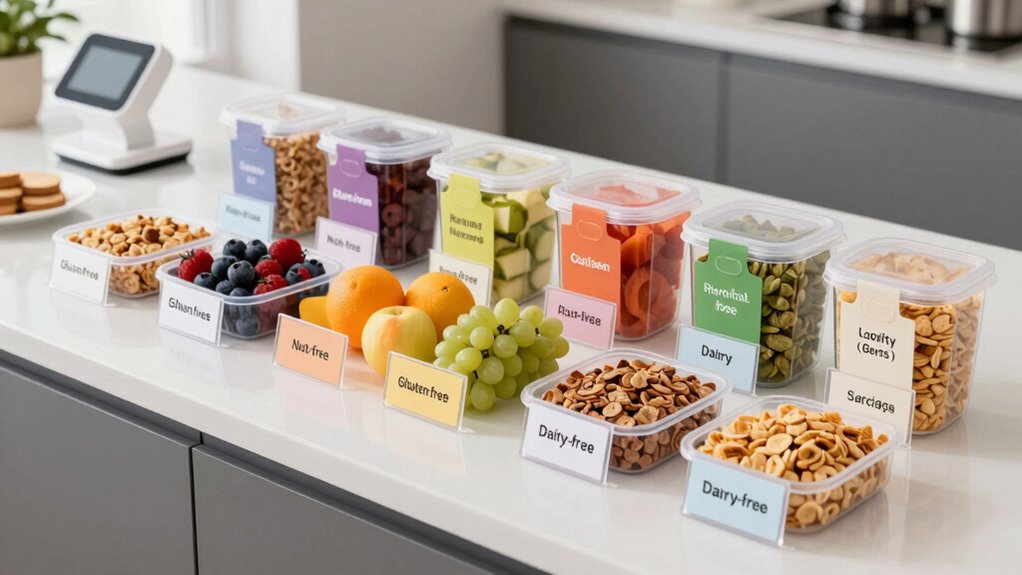
Properly storing breakfast items is a key step in maintaining allergy safety and preventing accidental exposure. To minimize risks, keep nut allergy precautions in mind by storing nuts separately or avoiding cross-contact. Use clearly labeled containers to distinguish nut-containing foods from safe options. For dairy-free options, ensure these items are stored away from dairy products to prevent cross-contamination. Designate specific shelves or sections for allergy-safe foods, and always double-check labels before placing items in storage. Keep allergen-containing items in sealed, airtight containers to avoid spills or accidental contact. Regularly cleaning storage areas to remove residues, especially if different foods are stored in the same space, further enhances food safety practices. Implementing proper storage organization helps prevent mix-ups and cross-contact among different food groups. Maintaining proper food storage can further reduce the risk of allergen cross-contact and create a safer environment. By organizing and separating breakfast items properly, you reduce the chance of accidental allergen exposure and create a safer environment.
Teach Kids and Communicate About Allergy Safety
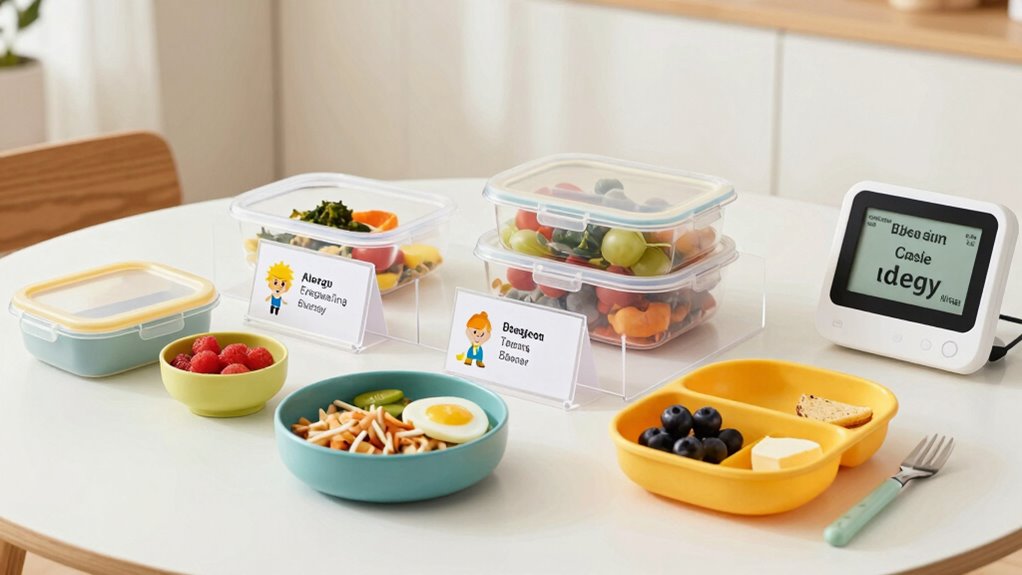
Teaching kids about allergy safety is essential to help them understand the importance of avoiding certain foods and recognizing potential risks. You can boost their allergy awareness by explaining which foods are off-limits and why, making safety a clear priority. Use simple language and visual cues to reinforce key messages. Employ communication strategies that encourage open dialogue, so kids feel comfortable asking questions or alerting you if they’re unsure about something. Role-playing scenarios or practicing emergency responses can build their confidence in handling allergy situations. Consistent conversations help establish routines and make allergy safety a natural part of mealtime. Additionally, understanding regulatory exposure can help children grasp the importance of following safety guidelines and protocols. Explaining label reading and how to interpret ingredient lists can further empower them to recognize potential allergens. Teaching children about specialized food labels can also enhance their ability to identify safe options. Reinforcing the importance of necessary cookies can help them understand how certain information is collected to improve safety measures. Familiarity with allergy management tools can further support them in recognizing and responding to allergy risks. By teaching kids early and maintaining clear, supportive communication, you empower them to make safe choices and reduce the risk of accidental exposure.
Frequently Asked Questions
How Can I Identify Hidden Allergens in Processed Breakfast Foods?
To identify hidden allergens in processed breakfast foods, you should start with careful label reading and ingredient decoding. Always check for allergen statements, even if the ingredient list seems safe, as allergens can be listed under different names. Look for cross-contact warnings and consult reputable resources for unfamiliar ingredients. Staying vigilant and informed helps you spot hidden allergens and make safer choices for your breakfast.
What Are the Best Allergy-Safe Alternatives for Common Breakfast Ingredients?
You can choose gluten-free options like oats or rice cereal for your breakfast. For spreads, opt for nut-free choices such as seed butters or sunflower seed butter. These alternatives help you avoid common allergens while still enjoying a tasty meal. Always read labels carefully to guarantee they’re free from hidden allergens. Incorporating these safe options allows you to start your day confidently and safely.
How Often Should Allergy Safety Routines Be Reviewed or Updated?
You should review your allergy safety routines at least every six months or whenever there’s a change in ingredients, products, or staff. Regular routine review guarantees you stay current with new allergens or recalls, maintaining a safe environment. Updating frequency depends on how often your setup or ingredients change. Stay proactive by scheduling routine reviews, so you catch potential risks early and keep everyone protected.
Are There Specific Storage Tips for Preventing Cross-Contact in Shared Kitchens?
Did you know that cross-contact is responsible for 90% of allergy reactions? To prevent this in shared kitchens, always store allergen-containing foods in separate containers and use designated zones for safe and allergen-free items. Keep utensils, cutting boards, and storage areas clearly marked and dedicated. Regularly clean surfaces and equipment to remove any residue. These simple steps greatly reduce cross-contact risks and ensure a safer environment for everyone.
How Can I Involve Children in Maintaining Allergy-Safe Breakfast Practices?
You can involve children in maintaining allergy-safe breakfast practices by making them part of the meal preparation process. Teach them about allergy labels and the importance of separation, allowing them to help select safe ingredients. Encourage their participation in setting up designated allergen-free zones and labeling foods. This hands-on approach not only educates but empowers children to take responsibility, making safety a fun and integral part of their morning routine.
Conclusion
So, after all this, it’s funny how something as simple as reading labels or separating foods can feel like a secret mission. You’d think avoiding allergens would be straightforward, but nope—your careful routines and smart storage are your best defense. Ironically, the tiniest label or a quick glance can make all the difference. Keep those routines tight, communicate clearly, and you’ll turn allergy safety from a hassle into second nature—because prevention is truly priceless.