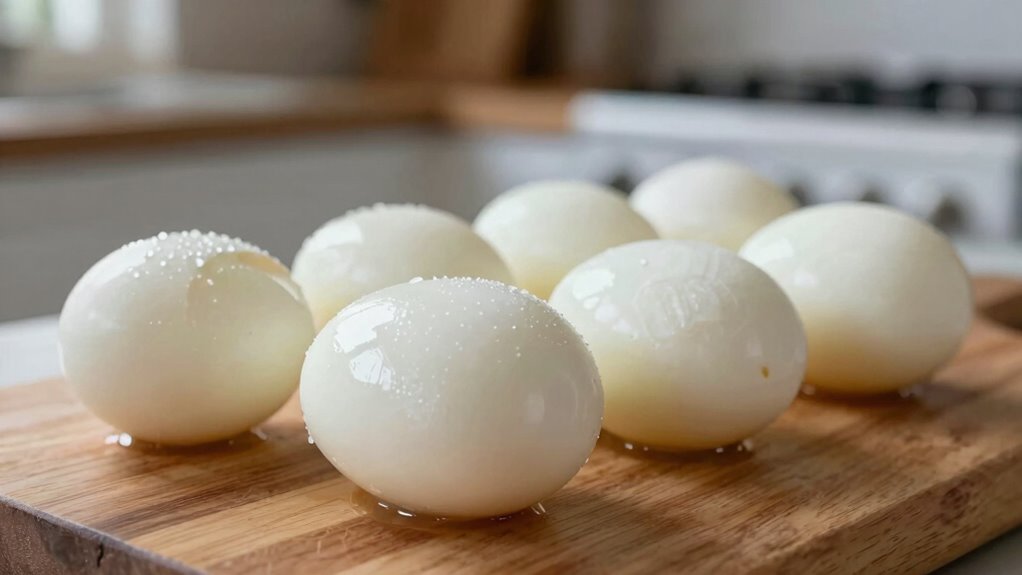

Cooked eggs should not sit out at room temperature for more than two hours, as bacteria can multiply quickly and cause illness. If the temperature is above 90°F, the safe window drops to just one hour. Leaving eggs out longer increases health risks and spoilage potential. To keep your eggs safe, refrigerate promptly and store properly. Want to find out more about how to handle cooked eggs safely? Keep going to learn the full details.
Key Takeaways
- Cooked eggs should not be left at room temperature for more than 2 hours.
- Bacteria multiply rapidly after 2 hours, increasing food safety risks.
- Refrigerate cooked eggs promptly, ideally below 40°F (4°C), to keep them safe.
- If eggs sit out over 2 hours, they should be discarded regardless of appearance.
- Proper storage in airtight containers extends freshness and reduces contamination risk.
How Long Can Cooked Eggs Stay Out at Room Temperature?
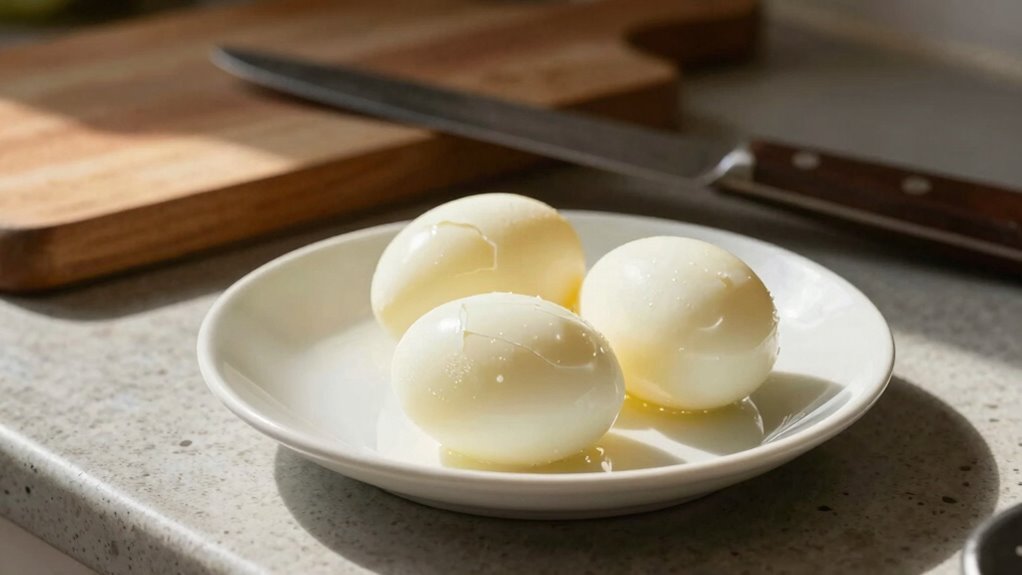
Cooked eggs shouldn’t be left out at room temperature for more than two hours. After that, bacteria can multiply rapidly, increasing the risk of foodborne illness. To keep your eggs fresh, check their egg freshness before cooking and store leftovers promptly. Using proper storage containers is essential; airtight containers help preserve quality and prevent contamination. When storing cooked eggs, choose containers that seal tightly and keep eggs away from other foods to avoid cross-contact. If eggs sit out beyond the two-hour window, even if they look and smell fine, it’s safest to discard them. Proper storage and timely refrigeration help maintain egg freshness and reduce health risks. Additionally, understanding food safety guidelines can help prevent foodborne illnesses. Always prioritize safety over convenience when handling cooked eggs, and be aware of health risks associated with improper storage. Ensuring proper temperature control is crucial in preventing bacterial growth and keeping food safe. Being aware of vetted practices related to food storage can further minimize potential dangers. Maintaining awareness of food safety principles also supports responsible and safe food handling practices.
How Temperature Affects How Long Cooked Eggs Stay Safe
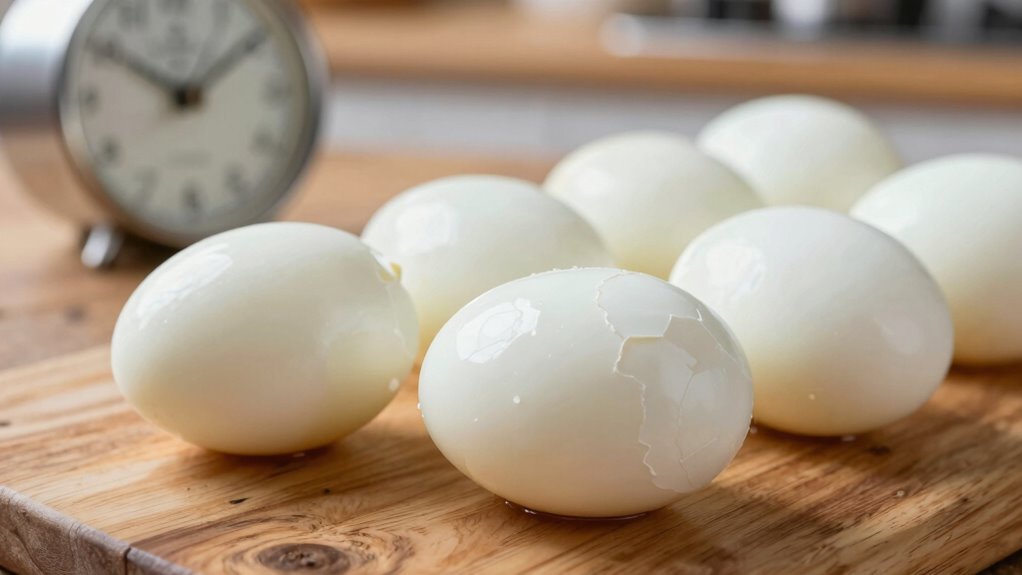
Temperature plays a key role in determining how long cooked eggs stay safe to eat. When storage temperature is too high, bacteria can multiply rapidly, risking foodborne illness. Conversely, keeping eggs at proper temperatures helps preserve egg shell integrity and prevent contamination. Maintaining a stable thermal environment is crucial to avoid temperature fluctuations that can compromise safety. Consider these important points: – Eggs kept below 40°F (4°C) remain safe longer. – Higher temperatures accelerate bacterial growth. – Egg shell integrity weakens with temperature fluctuations, increasing contamination risk. – Avoid leaving cooked eggs in warm environments for extended periods. – Consistent cold storage is essential for safety and quality. Proper refrigeration not only inhibits bacterial growth but also helps maintain food safety standards for cooked eggs. Additionally, understanding the temperature danger zone can help prevent spoilage and ensure eggs remain safe for consumption. Recognizing how temperature control impacts food safety can help prevent foodborne illnesses and extend the safe consumption window of cooked eggs. Maintaining proper storage temperature is essential to keep cooked eggs safe, protect their shell integrity, and prevent spoilage.
Understanding the 2-Hour Rule for Cooked Eggs
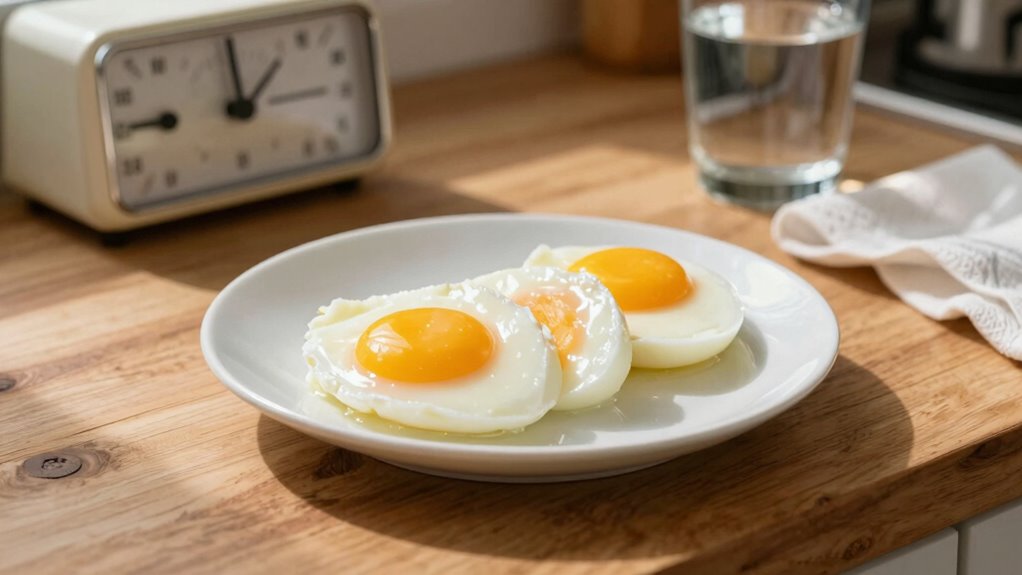
Understanding the 2-hour rule is essential for ensuring your cooked eggs stay safe to eat. After two hours at room temperature, bacteria can multiply rapidly, increasing the risk of foodborne illness. Even if the egg shell integrity appears intact, harmful microbes can develop inside. Pay attention to signs like yolk discoloration, which may indicate spoilage or bacterial growth. If the shell is cracked or compromised, the egg’s safety diminishes sooner. To stay safe, refrigerate cooked eggs within two hours, or discard them if they’ve been out longer. Remember, the 2-hour rule is a simple but critical guideline to prevent health issues and keep your eggs fresh and safe to enjoy. Proper food storage is fundamental in maintaining food safety standards.
What Are the Risks of Eating Eggs Left Out Too Long?
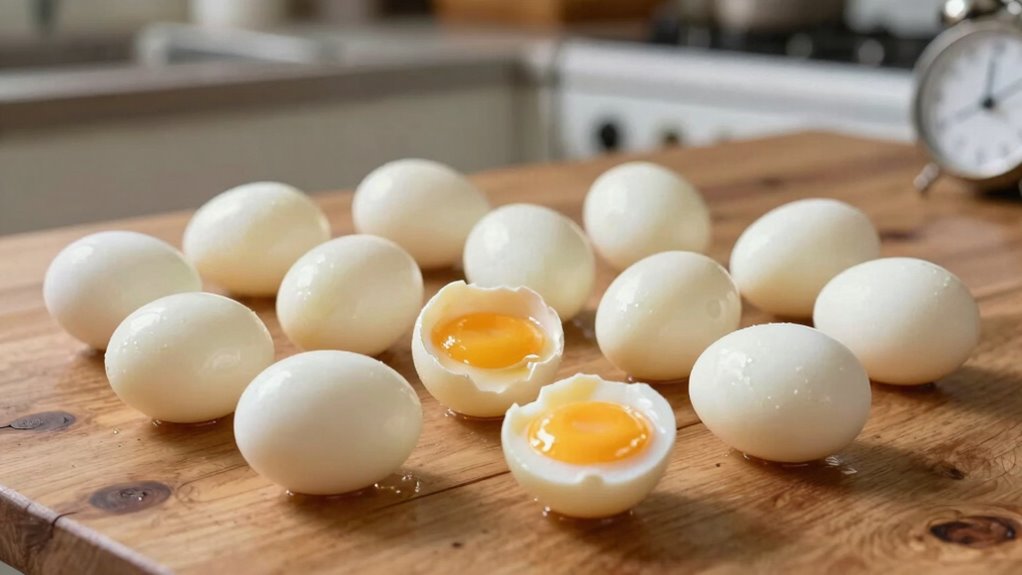
Leaving eggs out too long can expose you to serious health risks. When eggs sit at unsafe temperatures, egg contamination and bacterial growth can occur rapidly. Consuming these eggs may lead to food poisoning, with symptoms like nausea, vomiting, diarrhea, and abdominal cramps. Be aware of the dangers with these risks:
- Increased risk of Salmonella infection
- Bacterial toxins developing on the surface
- Higher chances of foodborne illnesses
- Cross-contamination to other foods
- Reduced egg safety and freshness
Bacterial growth thrives in the “danger zone” temperatures (40°F to 140°F), making it critical to refrigerate eggs promptly. Proper storage is essential to prevent bacterial proliferation and ensure food safety. Additionally, understanding food safety guidelines helps minimize health hazards associated with improperly stored eggs. Neglecting safe handling practices can significantly increase the risk of illness, so always handle cooked eggs carefully and discard any left out beyond recommended timeframes. Properly managing storage durations and maintaining correct temperature control can help you make informed decisions about egg safety and prevent potential health issues.
How to Tell If Your Cooked Eggs Are Spoiled
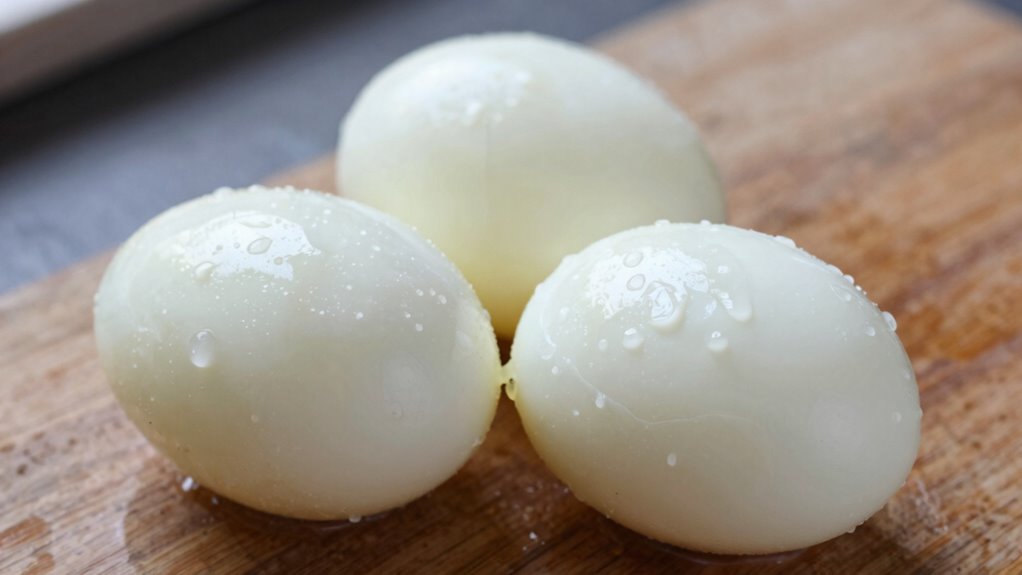
You can usually tell if your cooked eggs are spoiled by checking their appearance, smell, and texture. Fresh eggs typically have a firm, smooth surface and a neutral odor. If the eggs develop a slimy or discolored surface, or emit a sour or sulfurous smell, it’s a sign of spoilage. Pay attention to spoilage indicators like a runny or sticky texture or unusual discoloration. Use this table to identify egg freshness and spoilage:
| Fresh Eggs | Spoiled Eggs |
|---|---|
| Firm, smooth surface | Slimy, discolored surface |
| Neutral smell | Sour or sulfurous odor |
| Solid texture | Runny or sticky texture |
When in doubt, trust your senses—if something feels or smells off, discard the eggs to stay safe.
Best Storage Practices to Keep Cooked Eggs Fresh and Safe
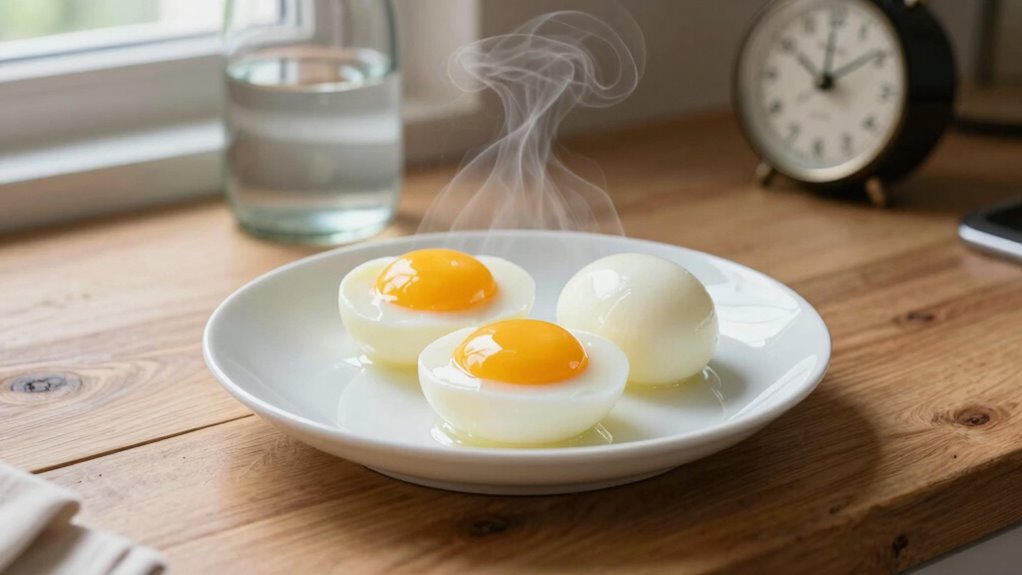
Proper storage is vital to keep cooked eggs fresh and safe to eat. To maximize freshness, store eggs in an airtight container within the refrigerator, ideally at or below 40°F. Keep cooked eggs separated from raw eggs to prevent cross-contamination. When peeling eggs, do so just before eating to avoid moisture loss that could spoil texture. For added flavor, consider egg flavoring options before storing, but do so carefully to avoid moisture buildup. Additionally, understanding proper storage techniques can significantly extend the safe consumption period. Properly storing cooked eggs in refrigeration guidelines helps maintain their quality and safety over time. Using simple tools like thermometers to check storage temperatures can further ensure eggs stay safe. Here’s how to keep your cooked eggs in top condition:
- Store in airtight containers to prevent odors
- Keep peeled eggs covered with damp paper towels to prevent drying
- Label storage date to track freshness
- Avoid leaving eggs out at room temperature for more than two hours
- Use within 3-4 days for ideal safety and flavor
- Incorporating storage guidelines from reputable sources ensures eggs remain safe and tasty longer.
Following these practices ensures safe, tasty eggs every time.
Can You Reheat Eggs That Have Been Left Out?
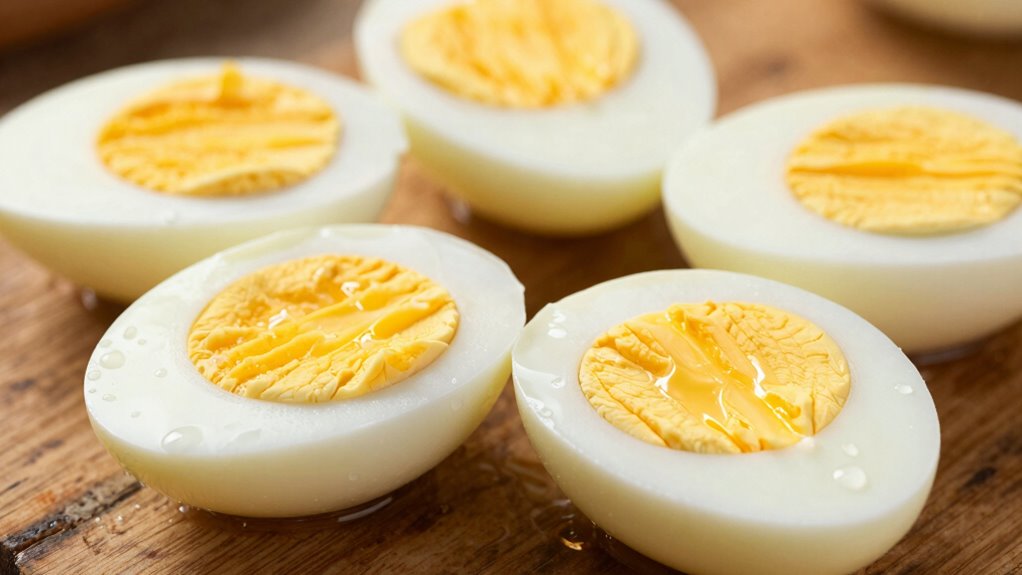
Reheating eggs that have been left out at room temperature carries risks, and it’s generally not recommended. Bacteria can grow quickly when cooked eggs sit out longer than two hours, increasing your chances of foodborne illness. Reheating leftovers might seem like a good solution, but it doesn’t eliminate all bacteria that may have developed. If you’re considering reheating eggs, verify they haven’t been left out for more than two hours. To maintain egg storage safety, it’s best to refrigerate cooked eggs promptly and reheat them thoroughly if you plan to eat them later. Proper food safety practices can help prevent bacteria growth and ensure food safety. Additionally, danger zone temperatures can accelerate bacterial growth on cooked eggs, making prompt refrigeration even more important. AI research into foodborne illness prevention suggests that bacteria can multiply rapidly at certain temperatures, emphasizing the need for proper handling. It’s also important to note that bacterial multiplication can occur even at temperatures just above room temperature, which underscores the importance of prompt refrigeration. However, keep in mind that reheating can’t always undo the potential harm caused by extended exposure to unsafe temperatures. When in doubt, it’s safer to discard eggs left out beyond the recommended time.
Tips for Storing Cooked Eggs for Maximum Freshness
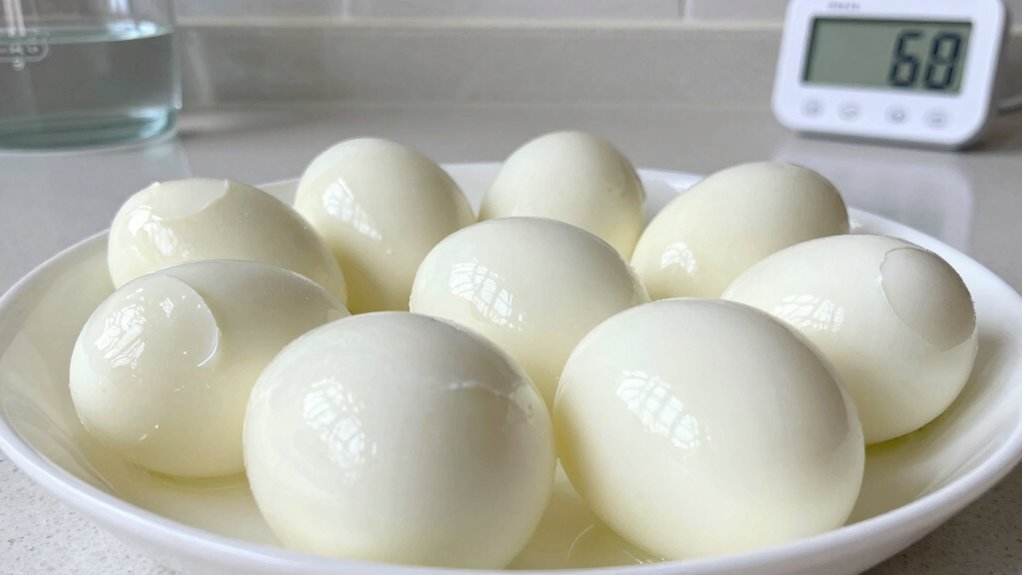
To keep your cooked eggs fresh, focus on proper refrigeration techniques. Using the right storage containers helps prevent contamination and maintains quality. Make sure to store eggs in airtight containers and keep your fridge at the correct temperature for best results. Additionally, avoid leaving cooked eggs out at room temperature for more than two hours to reduce the risk of bacteria growth food safety guidelines. Proper food storage practices are essential to preserving freshness and safety, especially when considering refrigeration best practices for perishable foods.
Proper Refrigeration Techniques
Ensuring your cooked eggs stay fresh begins with proper refrigeration techniques. To maximize freshness, store eggs in an airtight container to prevent odor absorption and contamination. Before refrigerating, allow eggs to cool completely; hot eggs can raise humidity levels. When it comes to egg peeling, refrigerate eggs with shells on to maintain moisture. For egg seasoning, add spices after refrigeration to keep flavors intact. Keep your eggs at a consistent temperature, ideally below 40°F (4°C). Here are some tips to follow:
- Use airtight containers for storage
- Cool eggs before refrigeration
- Keep eggs with shells on for longer freshness
- Label containers with date for freshness tracking
- Avoid overcrowding to ensure proper air circulation
Optimal Storage Containers
Choosing the right storage container is essential for keeping cooked eggs fresh and safe to eat. Opt for airtight containers that prevent air exposure, which can compromise egg freshness and promote spoilage. Avoid using containers that aren’t sealed properly, as this increases the risk of bacteria growth and food poisoning. Clear containers allow you to easily check the eggs without opening them, maintaining their quality. Glass or BPA-free plastic containers are ideal because they won’t absorb odors or stains. Label your containers with the date to track freshness. Proper storage minimizes the risk of food poisoning and keeps your cooked eggs tasting their best. Using the right container ensures your eggs stay safe and fresh longer, reducing waste and health concerns.
What Do Food Safety Guidelines Say About Room Temperature Eggs?
Food safety guidelines emphasize that eggs should not be left at room temperature for extended periods. Leaving eggs out increases the risk of foodborne illness due to bacterial growth when temperature control isn’t maintained. To minimize risk, follow these key points:
- Keep eggs refrigerated at or below 40°F (4°C).
- Avoid leaving eggs out for more than 2 hours.
- Discard any eggs left out longer than this timeframe.
- Be cautious with cooked eggs; they’re also susceptible to bacterial growth.
- Always wash hands and surfaces after handling eggs to prevent cross-contamination.
Frequently Asked Questions
Can Bacteria Grow on Cooked Eggs Kept at Room Temperature?
Yes, bacteria can grow on cooked eggs kept at room temperature. To guarantee food safety, it’s best to limit egg shelf life at room temperature to no more than two hours. After that, bacteria can multiply rapidly, increasing your risk of foodborne illness. Always follow food safety tips, like refrigerating cooked eggs promptly and consuming them within a safe timeframe, to keep your eggs fresh and safe to eat.
Is It Safe to Eat Leftover Cooked Eggs After a Day?
Think of leftover cooked eggs as delicate flowers—they need proper care. You can eat them after a day if they’re stored correctly in the fridge within two hours of cooking. Proper storage techniques, like airtight containers, preserve egg freshness and prevent bacteria growth. But if they sit out longer than two hours, it’s safer to toss them. Your health depends on respecting these simple rules to keep your eggs safe and tasty.
How Do Refrigeration Temperatures Impact Egg Safety?
Refrigeration temperatures are vital for egg preservation, as they slow bacterial growth and keep eggs safe longer. When you store cooked eggs at or below 40°F, you control the temperature effectively, preventing spoilage. Proper temperature control guarantees your eggs stay fresh and safe to eat for up to a week. Always refrigerate cooked eggs promptly, and avoid leaving them out at room temperature to minimize health risks.
Are There Differences Between Storing Boiled and Scrambled Eggs?
Boiled and scrambled eggs differ in storage strategies, but both demand diligent cooling and careful cooking. You should store boiled eggs in their shells in the fridge, maintaining the maximum freshness, while scrambled eggs need to be promptly cooled in an airtight container. Cooking versus cooling is essential; boiled eggs stay firm and intact, while scrambled eggs can become soggy. Proper egg storage methods keep eggs safe, satisfying, and superbly fresh.
What Are the Signs of Foodborne Illness From Eggs?
If you notice egg spoilage, watch for food poisoning symptoms like nausea, vomiting, diarrhea, or stomach cramps. These signs indicate bacteria or toxins have contaminated the eggs, usually from improper storage or extended sitting out. If you experience any of these symptoms after eating cooked eggs, seek medical help promptly. Always store eggs properly and discard any that show signs of spoilage to prevent illness.
Conclusion
Think of your cooked eggs as delicate treasures in a castle’s vault—they need the right conditions to stay safe and fresh. Just as a treasure’s value diminishes when exposed to the elements, eggs lose their safety when left out too long. By following proper storage rules, you protect your culinary gems from decay. Remember, safeguarding your eggs ensures they remain a prized, nourishing gift—delivering both delight and peace of mind.