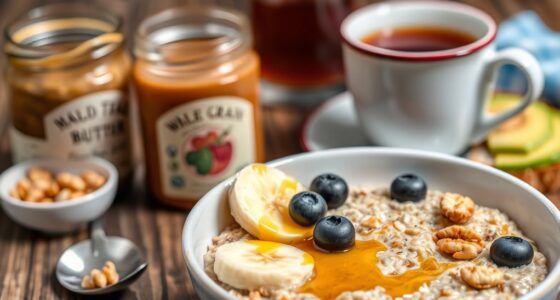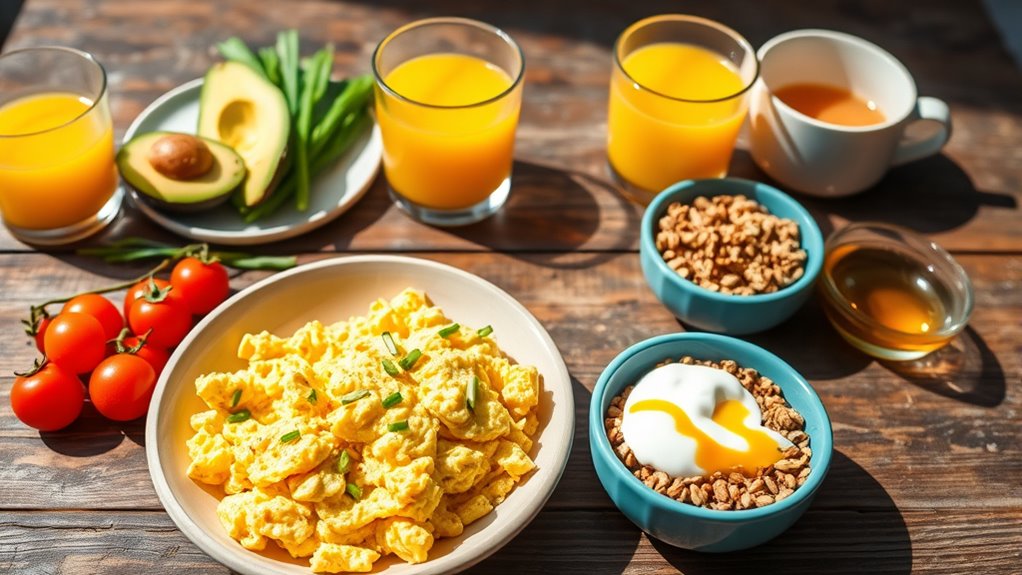

To improve digestion with gluten-free breakfasts, choose options like chia pudding soaked in coconut milk topped with berries, almond flour pancakes with fresh fruit, or veggie egg scrambles. Incorporate gut-friendly ingredients like nuts, seeds, spinach, and berries for fiber and antioxidants. Preparing smoothies or overnight oats can also support better digestion. Stick to natural, minimally processed foods, and you’ll feel satisfied and energized. Keep exploring for more tips on delicious, gut-friendly breakfasts.
Key Takeaways
- Use naturally gluten-free ingredients like fruits, vegetables, nuts, seeds, and gluten-free grains such as almond flour or chia seeds.
- Incorporate fiber-rich foods like berries, chia seeds, and leafy greens to promote healthy digestion.
- Prepare gut-friendly meals like chia pudding and smoothies in advance for quick, easily digestible breakfasts.
- Avoid processed foods and gluten-containing grains to reduce inflammation and support digestive comfort.
- Include healthy fats from nuts, seeds, and coconut oil to aid nutrient absorption and soothe the digestive system.
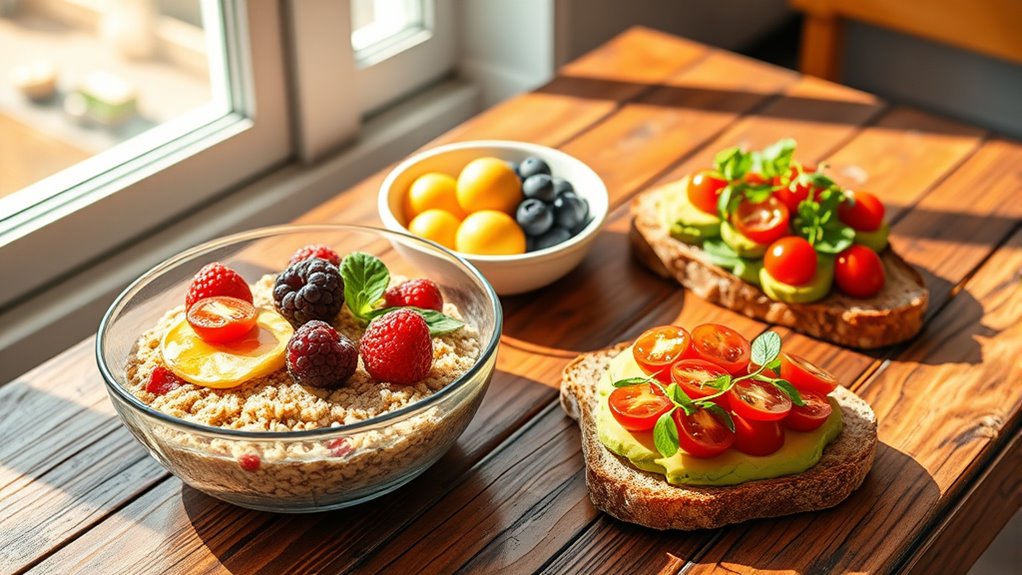
Are you tired of the same old breakfast options that don’t suit your gluten-free lifestyle? Finding satisfying, nutritious mornings can feel like a challenge, but there are plenty of delicious grain-free options and dairy-free alternatives that can keep you energized and support better digestion. The key is to explore foods that are naturally free of gluten and gentle on your stomach, without sacrificing flavor or variety.
Start your day with a hearty bowl of chia pudding made from coconut milk. Soak chia seeds overnight, then add fresh berries and a drizzle of honey or maple syrup for natural sweetness. This simple meal provides fiber and omega-3s, promoting healthy digestion and helping you feel full longer. Since it’s dairy-free, it won’t upset sensitive stomachs or cause bloating, making it an excellent start for those avoiding gluten and dairy.
Start your day with coconut milk chia pudding topped with berries and natural sweetener for gut-friendly, satisfying breakfast.
For a savory option, consider making an egg scramble with vegetables like spinach, peppers, and mushrooms. Use olive oil or coconut oil instead of butter for added dairy-free richness. Pair it with sliced avocado for healthy fats and fiber, which aid digestion and keep you satisfied. These ingredients are naturally gluten-free and easy to digest, giving you a nourishing meal that supports gut health.
Another idea is to try almond flour pancakes. They’re grain-free, made without wheat or oats, and can be topped with fresh fruit or a dollop of dairy-free yogurt. Many recipes also incorporate bananas or eggs, making them both filling and gentle on your digestive system. These pancakes are versatile, allowing you to customize toppings and flavors while sticking to your dietary needs.
If you prefer something quick and portable, whip up a smoothie using coconut milk or almond milk, blending in fruits like berries, a handful of spinach, and a tablespoon of flaxseed. This combination offers fiber, antioxidants, and healthy fats, all of which contribute to better digestion and sustained energy levels. Plus, smoothies are easy to digest and perfect for busy mornings.
Finally, nuts and seeds are excellent for snacking or adding crunch to your breakfast. Almonds, walnuts, and sunflower seeds are naturally gluten-free and provide beneficial fats and fiber. Toss them into your chia pudding, sprinkle over fruit, or enjoy them on their own for a quick, digestion-friendly boost.
With these options, you won’t have to compromise on taste or nutrition. By choosing grain-free options and dairy-free alternatives, you can enjoy breakfast that supports your digestion, keeps you satisfied, and fits seamlessly into your gluten-free lifestyle.
Frequently Asked Questions
Can Gluten-Free Breakfast Options Provide Enough Fiber?
Yes, gluten-free breakfast options can provide enough fiber if you choose the right foods. Incorporate gluten-free snacks like fruits, vegetables, nuts, seeds, and whole grains such as quinoa or oats into your breakfast meal prep. These ingredients boost your fiber intake, supporting digestion and keeping you full longer. By planning ahead, you guarantee a nutritious, fiber-rich breakfast that meets your dietary needs without gluten.
Are Gluten-Free Cereals as Nutritious as Regular Cereals?
Is a treasure chest as valuable as a simple gem? Gluten-free cereals often aren’t as nutritious as regular cereals because they typically contain less fiber and protein. The gluten content in gluten-free options can vary, and cereal processing might strip away some nutrients. You should read labels carefully, as some gluten-free cereals are fortified, but many lack the same nutritional punch, making them less ideal for sustained energy.
How Do I Ensure My Gluten-Free Breakfast Is Balanced?
To guarantee your gluten-free breakfast is balanced, focus on meal planning that includes a variety of nutrient sources. Incorporate protein-rich options like eggs or yogurt, healthy fats such as nuts or avocados, and fiber from fruits or vegetables. This way, you promote nutrient balance, keep your energy steady, and support digestion. Paying attention to diverse food choices helps you create a nutritious, gluten-free breakfast that fuels your day effectively.
Are There Any Gluten-Free Breakfast Recipes Suitable for Kids?
Think of your breakfast as a colorful garden, nurturing your child’s growth. Yes, there are plenty of gluten-free recipes perfect for kids. You can make fluffy gluten-free pancakes topped with fruit, or blend kid-friendly smoothies with bananas, berries, and almond milk. These options are both fun and nourishing, ensuring your little one starts the day happy and energized. Keep it simple, vibrant, and full of wholesome ingredients.
What Are Common Hidden Sources of Gluten in Breakfast Foods?
You should watch out for hidden sources of gluten in breakfast foods, like cross-contamination risks in shared toasters or utensils. Always read ingredient labels carefully, as gluten can conceal in less obvious items like flavored yogurts, sauces, or processed meats. Even small amounts matter if you’re gluten-sensitive, so being vigilant helps prevent accidental gluten exposure and ensures a safer, more comfortable breakfast experience.
Conclusion
Now that you’ve got these gluten-free breakfast ideas, your mornings can be as smooth as a calm lake. Think of your breakfast plate as a blank canvas, ready for vibrant, wholesome colors that fuel your day without any gluten bumps. Embrace these tasty options to support better digestion and start each morning on a bright, healthy note. With a little creativity, your breakfast routine can become a delicious journey toward wellness.