
As a parent, it’s important to know that many breakfast foods, like cereals, flavored yogurts, and snack bars, can contain hidden sugars that raise blood sugar levels and impact your child’s health. These added sugars are often masked under names like dextrose or sucrose, even in foods marketed as healthy. By understanding how to identify and choose healthier options, you can help your child develop better eating habits. If you keep exploring, you’ll learn how to make smarter breakfast choices to keep your family thriving.

Get kitchen staples and gadgets delivered free with Prime
- Fast, free delivery on millions of items
- Prime Video, Amazon Music and more included
- Member-only deals all year
Key Takeaways
- Many breakfast foods contain hidden sugars like dextrose, maltose, and sucrose, which can elevate children’s blood sugar levels.
- Excess sugar intake from processed foods can lead to long-term health issues and weight gain.
- Choosing whole fruits, plain oats, and homemade breakfasts helps reduce added sugar consumption.
- Always read labels carefully to identify hidden sugars in cereals, yogurts, and snack bars.
- Educate children on healthy eating habits and label reading to promote lifelong nutritious choices.
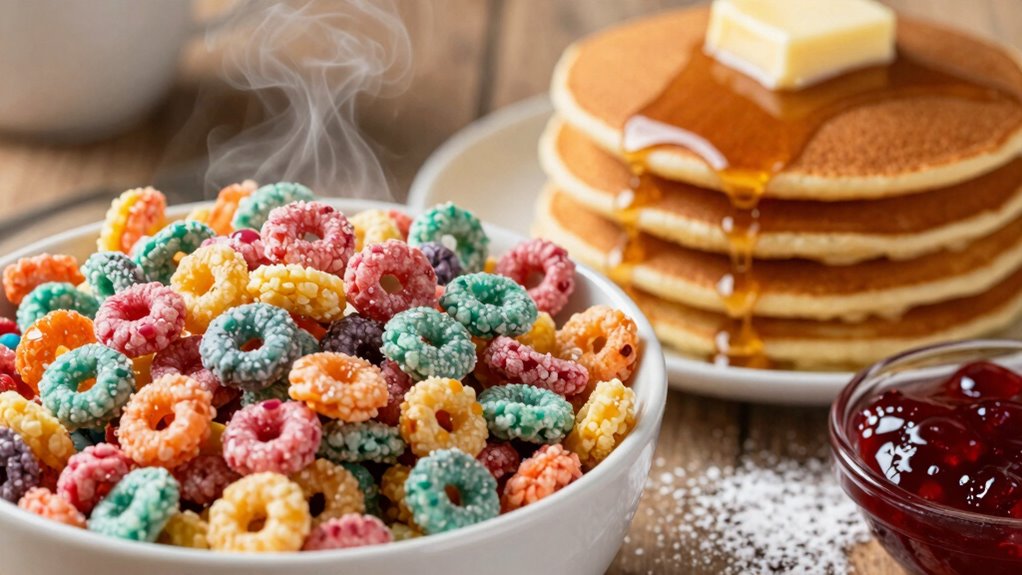
Many breakfast foods you enjoy every morning are loaded with sugar, often more than you realize. It’s easy to overlook the amount of sweetener packed into the foods you think are healthy, especially when they taste so familiar and comforting. Understanding the hidden sources of sugar in breakfast items can help you make smarter choices for your family’s health. Many packaged cereals, flavored yogurts, and breakfast bars contain added sugars that spike blood sugar levels and contribute to long-term health issues. Even foods marketed as “healthy” or “low-fat” often have concealed sources of sugar designed to enhance flavor and texture, so it’s important to read labels carefully. By recognizing these hidden sources, you can better control your child’s sugar intake and promote healthier eating habits.
Many breakfast foods contain hidden sugars, making healthy choices more important than ever.
When you’re shopping or preparing breakfast, consider choosing healthy alternatives that are naturally low in sugar. Whole fruits like berries, apples, or bananas offer natural sweetness without the added sugars found in many processed options. Oatmeal made from plain oats is another great choice, especially when topped with fresh fruit or a sprinkle of cinnamon, which adds flavor without extra sugar. Smoothies can be a nutritious option, but be mindful of the ingredients—limit added sugars by using unsweetened yogurt and natural sweeteners like honey or dates sparingly. Preparing these options at home gives you full control over what goes into your child’s breakfast, reducing the risk of hidden sugars sneaking in through processed ingredients. Being aware of sugar content in processed foods can help you make more informed choices. Additionally, understanding how manufacturers use sugar to improve flavor and texture can help you identify products that may contain hidden sweeteners.
Knowing where hidden sugars hide in common breakfast foods is essential. Many pancake syrups, flavored milks, and breakfast cereals contain high-fructose corn syrup or other sweeteners that you might not expect. Even granola bars and snack packs labeled as “healthy” can have surprising amounts of sugar. These added sugars often appear on ingredient lists under names like dextrose, maltose, or sucrose, making it harder to identify the true sugar content. Becoming familiar with these hidden sources is especially important given how sugar is often disguised in processed foods to improve flavor. Recognizing these hidden sources of sugar can help you develop better strategies for reducing overall intake and maintaining a balanced diet. By becoming familiar with these hidden sources, you empower yourself to make better choices and teach your children about reading labels and understanding what they’re eating.
Ultimately, reducing sugar in breakfast foods isn’t about eliminating treats entirely but about making smarter decisions. Opt for whole, minimally processed foods that provide nutrients and sustained energy. Educate your kids about the importance of balanced eating, so they develop healthy habits early on. When you’re aware of hidden sources and explore healthy alternatives, you set a foundation for a healthier lifestyle that can benefit your entire family for years to come.
As an affiliate, we earn on qualifying purchases.
Frequently Asked Questions
How Can I Identify Hidden Sugars on Food Labels?
To identify hidden sugars, start by reading labels carefully. Look at the ingredient list for terms like high-fructose corn syrup, cane sugar, or syrups, which indicate added sugars. Remember, names can be confusing, so become familiar with different names for sugar. Checking the nutrition facts panel also helps, especially the grams of added sugar per serving. Being vigilant guarantees you choose healthier options for your family.
Are Natural Sugars in Fruit Healthier Than Added Sugars?
Yes, natural sugars in fruit are generally healthier than added sugars. They come with fiber, vitamins, and minerals that support your child’s health, digestion, and energy levels. Natural sugars in fruit benefit your child’s immune system, brain development, and overall well-being. Unlike added sugars, they provide essential nutrients, promote satiety, and help maintain a balanced diet. Emphasize fruit benefits to give your child wholesome, nutritious start to the day.
What Are Healthy Alternatives to Sugary Breakfast Cereals?
You can switch to healthy grains like oats, whole wheat, or bran flakes instead of sugary cereals. These options are naturally lower in sugar and packed with fiber. Add nutritious toppings like fresh fruit, nuts, or seeds to boost flavor and nutrients without extra sugar. This way, you give your kids a satisfying breakfast that fuels their day, supports healthy eating habits, and keeps added sugars in check.
How Does Sugar Intake in Breakfast Affect My Child’s Energy Levels?
Jumping straight into it, sugar intake at breakfast can be a double-edged sword for your child’s energy levels. It might trigger sugar cravings and lead to energy fluctuations later in the day, leaving them tired and irritable. When your kid eats high-sugar breakfast foods, they get a quick spike in energy, but it often crashes fast. Opt for balanced, nutrient-rich options to keep their energy steady and avoid the rollercoaster.
What Are the Long-Term Health Risks of High Sugar Consumption?
High sugar consumption can lead to long-term health risks like sugar addiction and metabolic impact. You might notice your child craving more sugary foods, which fuels a cycle of addiction. This excess sugar can disrupt metabolism, increasing the risk of obesity, type 2 diabetes, and cardiovascular issues later in life. It’s essential to limit sugar intake early on, helping your child develop healthier habits and protect their long-term well-being.
Conclusion
While it might seem easier to let kids enjoy their favorite sugary cereals, being mindful of sugar content helps set healthy habits early on. You might worry that cutting back means more fuss at breakfast, but with simple swaps like oatmeal or fruit, you can make mornings both nutritious and enjoyable. Remember, small changes now can lead to lifelong benefits—so why not start today for a healthier future?
Columbus Day / Indigenous Peoples' Day Picks
long weekend sales
As an affiliate, we earn on qualifying purchases.