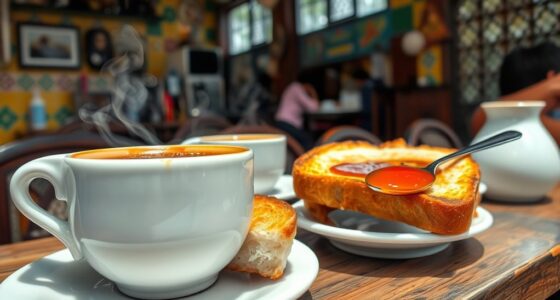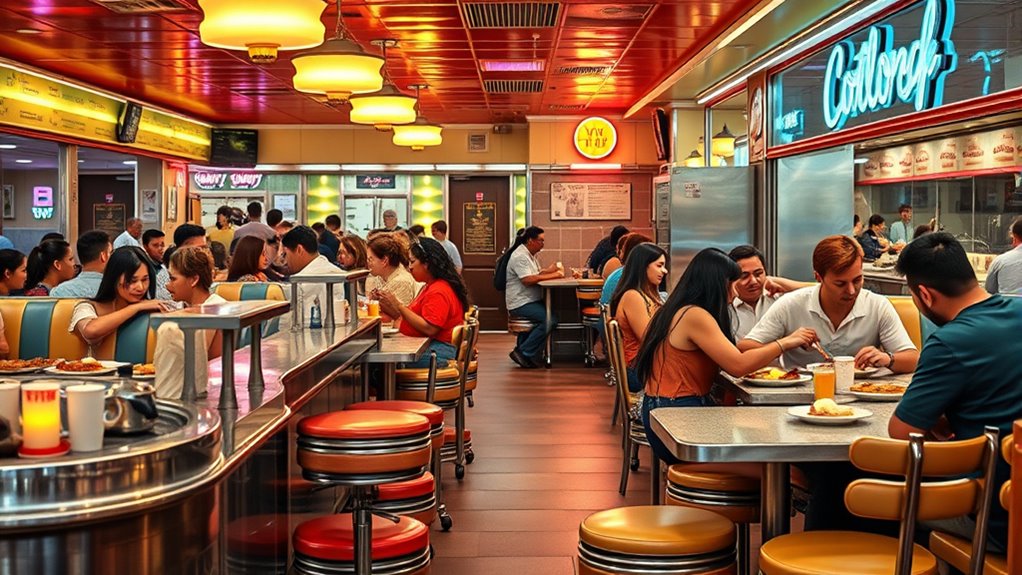

You’ll discover that NYC diners started as simple horse-drawn wagons and evolved into iconic steel structures that reflect the city’s diverse culture and lively breakfast traditions. During the mid-20th century, they became essential social hubs, blending immigrant influences into their menus and atmospheres. These diners foster community bonds and create a unique city identity. To learn how these traditions are preserved and adapted today, keep exploring their fascinating history and ongoing evolution.

Get kitchen staples and gadgets delivered free with Prime
- Fast, free delivery on millions of items
- Prime Video, Amazon Music and more included
- Member-only deals all year
Key Takeaways
- NYC diners originated in the late 19th century as mobile, horse-drawn eateries, evolving into permanent steel structures with iconic neon and chrome designs.
- Mid-20th century marked the golden age of diner culture, serving as social hubs reflecting NYC’s diverse immigrant communities through fusion menu items.
- Diners have historically functioned as community gathering spaces, fostering social bonds across generations through shared meals and local traditions.
- Preservation efforts maintain vintage signage, furniture, and decor, blending nostalgic charm with modern updates to sustain their cultural significance.
- Their breakfast culture emphasizes quick, affordable service with classic items like eggs, bacon, and coffee, symbolizing NYC’s vibrant, inclusive social fabric.
As an affiliate, we earn on qualifying purchases.
The Origins of NYC Diners: From Horse-Drawn to Steel Structures
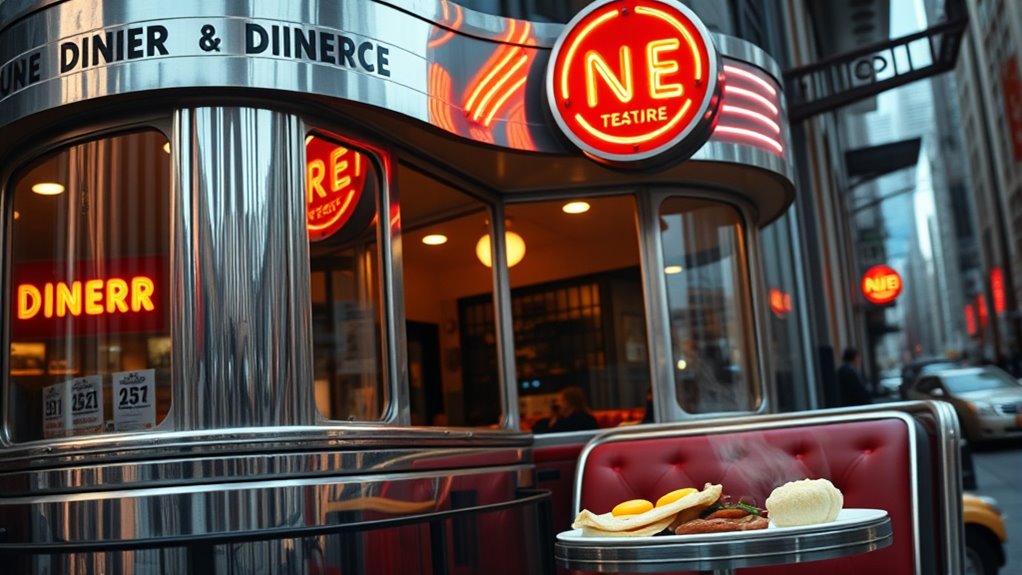
As New York City’s population grew in the late 19th century, entrepreneurs sought ways to serve workers and travelers quickly and affordably. Early diners had horse-drawn origins, resembling small, mobile eateries that could move to where people needed them most. These humble beginnings evolved as innovations in construction emerged. The steel structure evolution allowed diners to expand beyond simple wagons or tents, creating more permanent and sturdy buildings. Steel frameworks made it possible to build larger, more comfortable spaces that could accommodate growing crowds. This shift from horse-drawn setups to steel-framed structures marked a turning point, enabling diners to develop into the iconic fixtures still found throughout the city today. This transformation laid the foundation for the classic NYC diner experience.
The Golden Age of Diner Culture in the Mid-20th Century

The mid-20th century marked the golden age of New York City’s diner culture, when these establishments became central to urban life and social interaction. Diners thrived as bustling hubs where locals gathered for breakfast rituals, starting their day with steaming coffee and crispy bacon. Diner fashion also flourished, with customers sporting leather jackets, Betty Boop pins, and slicked-back hair, creating a lively, colorful scene. Imagine:
- Waitstaff in crisp uniforms, balancing trays of pancakes and eggs
- Patrons in casual, vintage attire, chatting over steaming mugs
- Neon signs glowing against the night, beckoning late-night diners
This era defined the city’s vibrant, communal spirit, making diners more than just eateries—they became iconic symbols of New York’s bustling, diverse culture. Exploring the benefits of curiosity, we can see how these diners fostered social connections and community engagement, reflecting a collective curiosity about each other and the world around them.
Architectural Innovations and the Iconic Look of NYC Diners

Architectural innovations transformed New York City diners into distinctive landmarks that reflect both functionality and style. Neon lighting became a hallmark, illuminating the streets and drawing attention to their presence, especially at night. The glow of vibrant colors created a lively atmosphere and made diners easily recognizable. Chrome accents further defined their iconic look, adding a sleek, modern touch that combined durability with visual appeal. These shiny surfaces, used for countertops, fixtures, and trim, conveyed a sense of cleanliness and efficiency. The streamlined, often pastel-colored exteriors with curved roofs and glass panels contributed to their distinctive appearance. Together, neon lighting and chrome accents helped build the timeless, recognizable aesthetic that continues to symbolize the classic New York City diner experience. Preservation efforts have helped maintain these architectural features, ensuring their historical significance endures amid urban development.
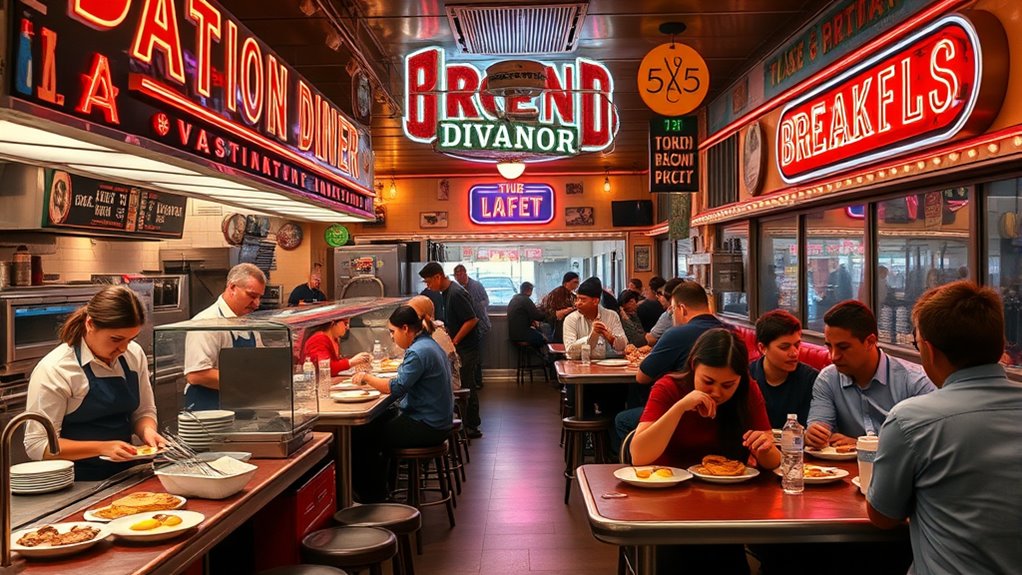
You’ll notice how NYC diners reflect the city’s rich cultural mix through their menus and staff. Many serve dishes inspired by different countries, creating a unique culinary fusion. Multilingual signs and diverse service crews make the atmosphere welcoming to all patrons.
Cultural Fusion in Cuisine
Immigration has profoundly shaped New York City diners, infusing their menus and atmospheres with diverse cultural influences. This blend gives rise to fusion cuisine, where culinary innovation transforms traditional dishes into exciting new flavors. You might see a classic American breakfast served alongside a spicy chorizo hash inspired by Latin traditions, or bagels topped with smoked salmon and wasabi cream, reflecting Japanese influence. The atmosphere often mirrors this diversity, with decor showcasing vibrant murals or vintage photos from various immigrant communities. Imagine:
- A diner offering Korean-inspired kimchi pancakes alongside classic bacon and eggs
- French toast with a drizzle of dulce de leche from Latin America
- A cozy setting decorated with souvenirs from Italy, China, and the Caribbean
This culinary fusion exemplifies how immigration continues to redefine New York City’s breakfast culture, and establishing shared goals can further enhance the communal experience within these diverse spaces.
Multilingual Service Environments
As diverse communities settle into New York City’s vibrant neighborhoods, diners have become multilingual hubs where language barriers dissolve and cultural exchange thrives. You’ll notice many diners now offer multilingual menus, making ordering easier for non-English speakers. This shift reflects the city’s rich immigration history, as owners adapt to serve a wide array of customers. Instead of relying solely on language skills, staff often learn key phrases or use visual cues to communicate. Multilingual service environments create a welcoming atmosphere, encouraging diners from different backgrounds to share their traditions through food. These adaptations not only preserve cultural identities but also foster a sense of community. By breaking down language barriers, diners become spaces where diversity is celebrated and everyone can enjoy the city’s legendary breakfast culture. Additionally, the incorporation of multilingual service demonstrates how the dining scene continually evolves to meet the needs of a diverse population.
The Role of Diners in Community and Social Life
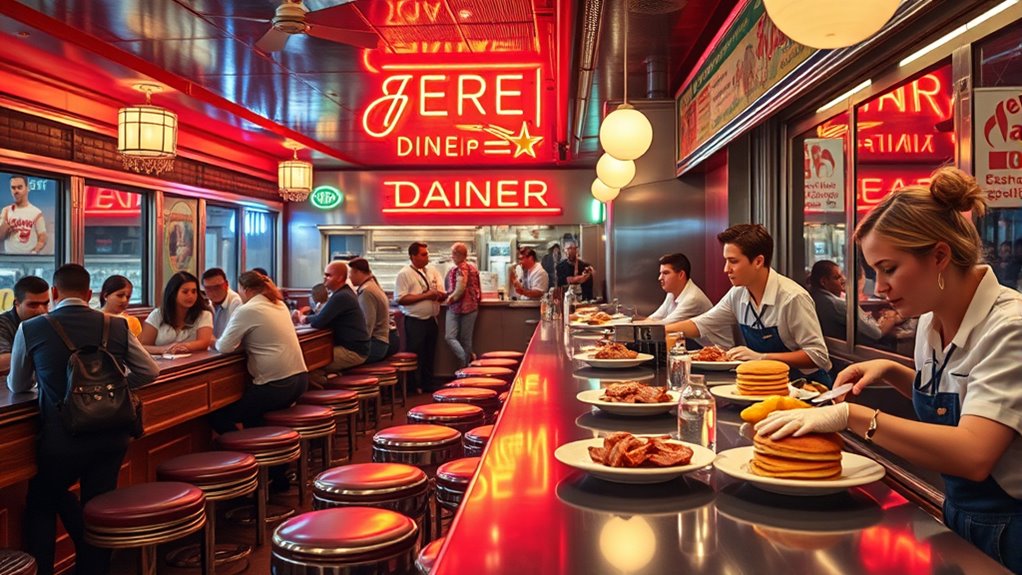
Diners aren’t just places to eat—they’re community hubs where locals gather and connect. You’ll find different cultures interacting and sharing stories over coffee and breakfast. These spots help shape the social fabric of New York City, making every visit more than just a meal. Their rustic decor and welcoming atmosphere foster a sense of familiarity and belonging among patrons.
Gathering Places for Locals
Dinters have long served as essential gathering spots where locals come together to share more than just a meal. You walk in and feel the warm, familiar atmosphere that sparks diner nostalgia, connecting generations. These spots are where friendships form, stories are exchanged, and community bonds strengthen. Imagine sitting at the counter, surrounded by the aroma of freshly brewed coffee and sizzling breakfast innovations. You might see:
- Regulars exchanging jokes and news over steaming plates
- Waitstaff knowing your order by heart
- Groups celebrating milestones or simply unwinding
Diners foster a sense of belonging, making them more than just places to eat—they’re community anchors. Their role in social life isn’t just about breakfast; it’s about shared experiences and local identity.
Cultural Melting Pot Interactions
In the vibrant tapestry of New York City, diners serve as crucial crossroads where diverse communities come together to share more than just a meal. You experience how soda fountain history shaped early social hubs, blending different backgrounds over classic sodas and milkshakes. Diner music trends also reflect this cultural mix, with jazz, blues, and later rock melodies filling the air, uniting patrons through shared rhythms. These spaces foster community bonds, offering a place to converse, celebrate, and connect. The color accuracy of the environment, including lighting and decor, can also influence the mood and interactions within these spaces. Below is a glimpse of how different groups interact:
| Community Group | Typical Diner Interaction |
|---|---|
| Immigrants | Sharing stories over coffee |
| Artists | Creative collaborations |
| Students | Studying and socializing |
| Workers | Breaks and camaraderie |
| Elders | Reminiscing and storytelling |
Modern Changes and the Preservation of Classic Diner Traditions
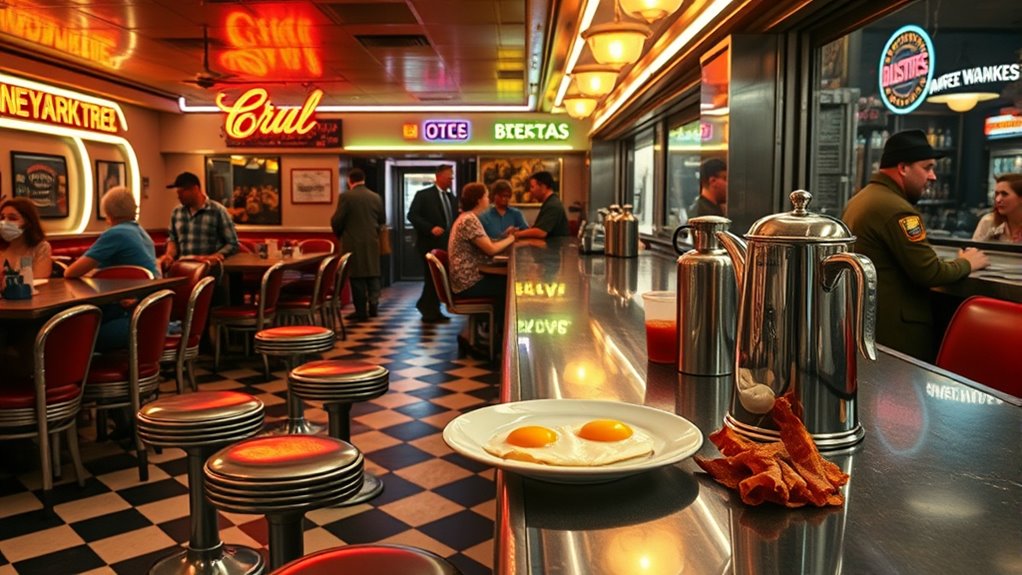
Although modern developments have transformed many aspects of New York City’s dining scene, efforts to preserve classic diner traditions remain strong. Diner nostalgia drives communities to keep vintage charm alive, from neon signs to counter stools. Breakfast innovation continues, blending old-school favorites with new flavors to attract diverse patrons. You might find:
- A steaming plate of classic eggs and bacon alongside trendy avocado toast
- Retro jukeboxes playing familiar tunes while servers wear vintage uniforms
- Diners showcasing their history through preserved signage and original decor
Additionally, some establishments incorporate reclaimed materials and vintage appliances to enhance their nostalgic ambiance. These efforts help maintain the authentic atmosphere that defines NYC diners. While menus expand with creative dishes, the heart of diner culture—friendly service and tradition—remains unchanged, ensuring that the classic diner experience endures amid modern change.
The Future of NYC Diners in a Changing Culinary Landscape
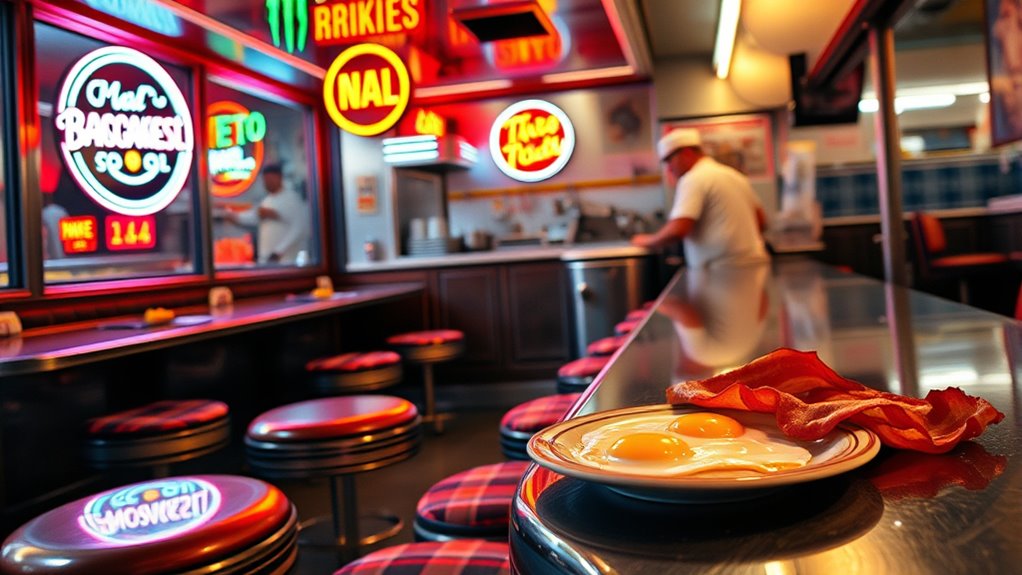
As New York City’s dining scene continues to evolve, diners face the challenge of balancing tradition with innovation. Diner sustainability will become essential as owners adopt eco-friendly practices, reduce waste, and source local ingredients to stay relevant. Technological integration also plays a crucial role; expect more digital menus, contactless payments, and online ordering to streamline your experience. These advancements help diners and owners adapt to changing expectations while preserving the classic diner atmosphere. Essential oils for respiratory health and other wellness trends may influence future menu offerings and customer experiences in diners. Future diners will likely see a blend of nostalgic charm and modern efficiency, ensuring they remain welcoming and functional. Staying flexible and open to innovation will be key for NYC diners to thrive in this dynamic culinary landscape, maintaining their place as cultural landmarks for generations to come.
Frequently Asked Questions
How Did New York City Diners Influence American Breakfast Traditions?
You see, New York City diners revolutionized American breakfast traditions through their unique architecture and round-the-clock service. Their design, with counter seating and neon signs, made breakfast accessible and inviting. Late-night dining became a hallmark, encouraging people to enjoy breakfast foods anytime. This approach influenced nationwide eateries, fostering a culture where breakfast is not just morning fare but an all-day, social experience that continues to shape American dining habits.
What Are Some Unique Regional Variations of Diner Cuisine Within NYC?
You’ll find unique regional variations of diner cuisine in NYC, like spots serving fresh local seafood along the waterfront. In neighborhoods with strong Jewish communities, you can enjoy classic Jewish deli breakfast options, such as bagels with lox and smoked fish platters. These variations reflect the city’s rich cultural tapestry, offering diverse flavors and traditions that make each diner experience special and distinctly local.
How Have Diners Adapted to Modern Dietary Trends Over the Decades?
Imagine a diner that’s evolved like a chameleon, blending seamlessly into modern trends. You’ll notice many now offer vegan options and gluten-free menus, catering to diverse diets. Over decades, diners have adapted by embracing plant-based ingredients and allergy-conscious choices, making sure everyone feels welcome. So, whether you crave classic pancakes or plant-based alternatives, these changes help you enjoy a hearty breakfast tailored to your lifestyle.
What Role Did Prohibition-Era Culture Play in Diner Development?
Prohibition-era culture, especially speakeasy culture, considerably influenced diner development. You can see how the bootlegging influence led to the creation of informal, accessible spots that offered food and drinks discreetly. Diners adopted the lively, open atmosphere of speakeasies, making them social hubs. This legacy of secrecy and inclusivity shaped diners into the welcoming, versatile spaces you enjoy today, blending entertainment with everyday dining.
Are There Any Notable Famous Personalities Associated With NYC Diners?
You might be surprised to learn that NYC diners have hosted many famous personalities. Celebrity sightings often turn a simple breakfast into a memorable event, and some diners even serve as spots for political endorsements. These places aren’t just meals; they’re cultural landmarks where you can feel connected to history and fame. Imagine sharing a coffee with a star or witnessing a politician making a statement—diners truly hold a special place in New York’s heart.
Conclusion
So, next time you roll into a NYC diner for your eggs and bacon, remember—you’re part of a delicious, centuries-old saga. These greasy spoon gems have seen horse-drawn carriages, steel structures, and a melting pot of cultures. Embrace the chaos, the charm, and the questionable coffee. Because in New York, even breakfast is a historic adventure—served with a side of nostalgia and a dash of survival instinct.
Fall Picks
fall essentials
As an affiliate, we earn on qualifying purchases.