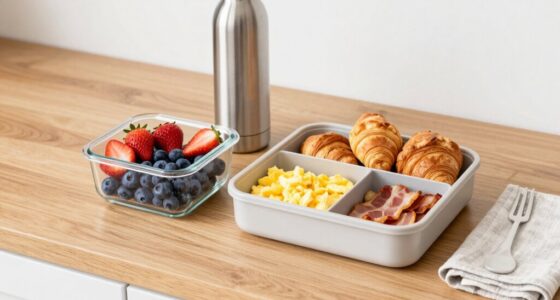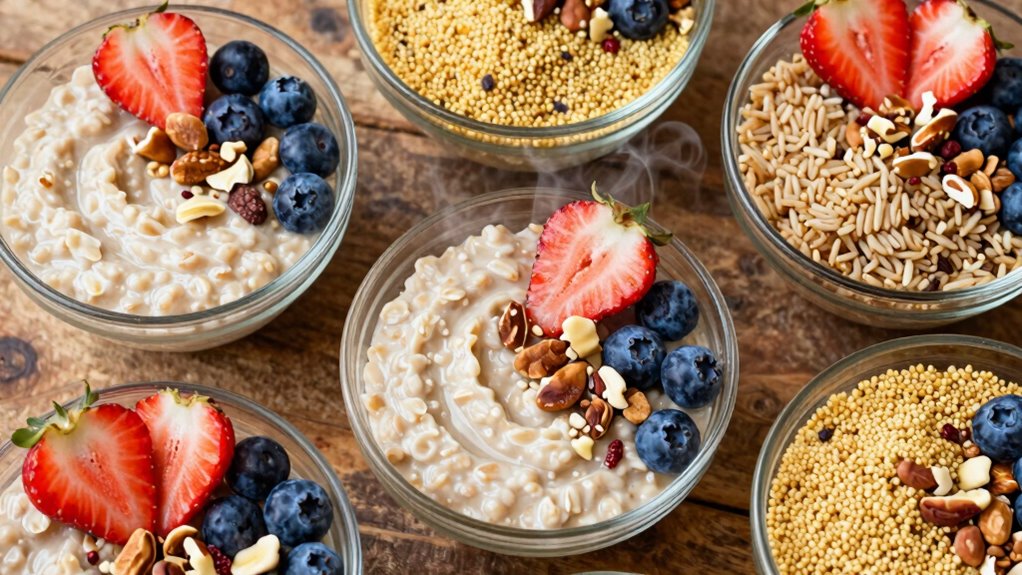

Batch-cooking grains for breakfast saves you time and reduces morning stress by giving you ready-to-eat options like bowls, porridge, or salads. Preparing and storing grains such as oats, rice, or quinoa in airtight containers lets you enjoy nutritious, fiber-rich meals throughout the week. Reheat or serve cold easily, experimenting with flavors and toppings to keep things interesting. Keep going to uncover simple tips and creative ideas to make your morning routine smoother and more varied.

Get kitchen staples and gadgets delivered free with Prime
- Fast, free delivery on millions of items
- Prime Video, Amazon Music and more included
- Member-only deals all year
Key Takeaways
- Batch-cook grains like oats, rice, or quinoa ahead of time for quick breakfast bowls, porridge, or savory dishes.
- Store cooked grains in airtight containers in cool, dark places to maintain freshness and extend shelf life.
- Reheat grains easily in the microwave or on the stove, adding liquids to preserve moisture and texture.
- Customize breakfast bowls with toppings like fruits, nuts, seeds, or spices for variety and enhanced flavor.
- Batch-cooking reduces morning prep time, decision fatigue, and encourages healthier, nutrient-rich breakfast options.
airtight grain storage containers
As an affiliate, we earn on qualifying purchases.
As an affiliate, we earn on qualifying purchases.
Why Batch-Cooking Grains Saves You Time in the Morning
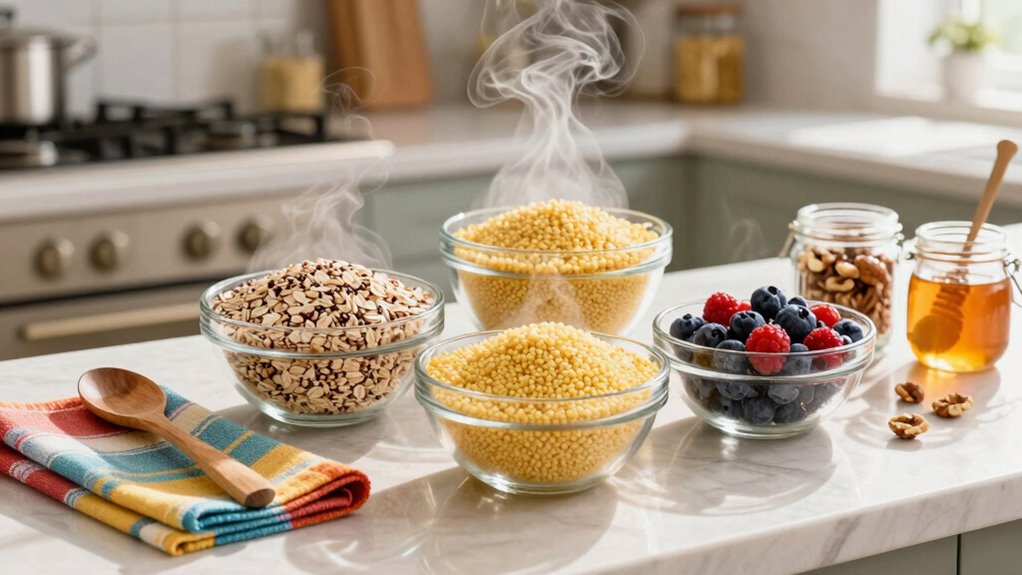
Mornings are often hectic, and figuring out what to eat can add to the stress. By batch-cooking grains ahead of time, you streamline your morning routine and boost kitchen efficiency. Instead of rushing to cook grains from scratch each day, you simply reheat prepped portions, saving valuable minutes. This meal prep method means you spend less time in the kitchen and more time focusing on your day. Batch-cooked grains also reduce decision fatigue—no need to wonder what to make every morning. Plus, having ready-to-eat grains on hand encourages healthier choices and minimizes the temptation of last-minute, less nutritious options. Overall, this simple step transforms busy mornings into smooth, stress-free starts, making your mornings more productive and less rushed.
Which Grains Are Best for Breakfast and Why
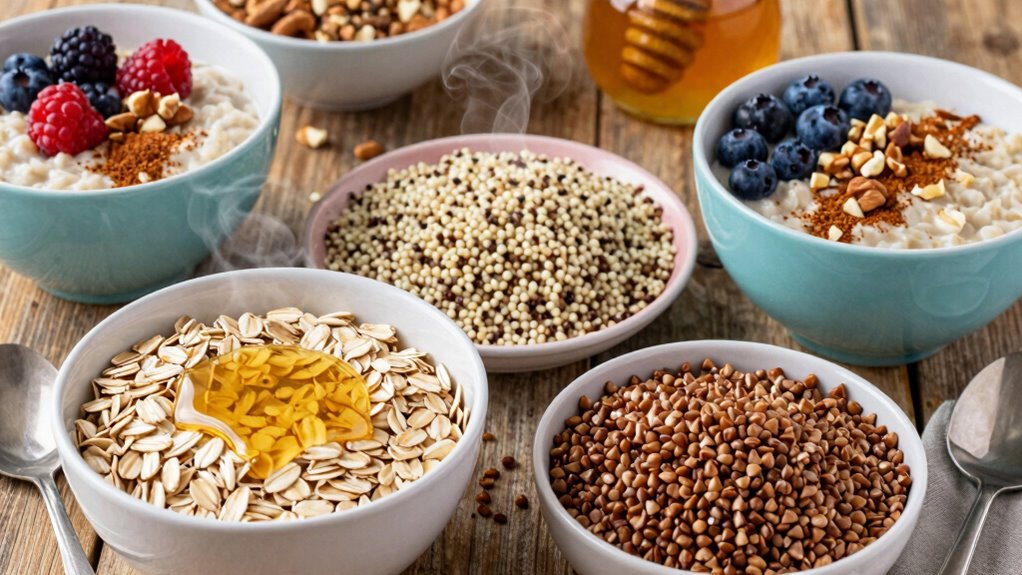
Choosing the right grains for breakfast can boost your morning energy and nutrition. Whole grains offer essential nutrients and fiber, making them a healthy choice, while their ease of preparation and storage saves you time. Plus, you can enjoy a variety of flavors and textures to keep your breakfast interesting.
Nutritional Benefits of Whole Grains
Whole grains are an excellent choice for breakfast because they pack a powerful nutritional punch that supports sustained energy and fullness throughout the morning. They’re rich in fiber, vitamins, and minerals that promote digestion and overall health. Different grain varieties, like oats, barley, and quinoa, offer unique benefits suited for breakfast. Proper cooking techniques reveal their full potential, making grains easier to digest and enhancing flavor. For example, soaking or pre-cooking grains can improve nutrient absorption. Incorporating nutritional benefits techniques during meal preparation can enhance focus and enjoyment of breakfast. Here’s a quick comparison:
| Grain Variety | Nutritional Highlight | Best Cooking Technique |
|---|---|---|
| Oats | Soluble fiber | Quick oats boiling |
| Quinoa | Complete protein | Rinsing & simmering |
| Barley | Beta-glucans | Simmering, pre-soaking |
| Brown Rice | Complex carbs | Slow cooking |
Ease of Preparation and Storage
When selecting grains for breakfast, ease of preparation and storage play a crucial role in making your mornings smoother. Batch-cooked grains save time and reduce stress, especially when stored properly. Good grain storage methods keep grains fresh and prevent spoilage, making breakfast prep quick and effortless. Consider these tips:
- Use airtight containers to keep grains fresh
- Choose grains like oats and rice that store well long-term
- Pre-cook and portion grains for grab-and-go convenience
- Store grains in a cool, dark place to preserve quality
- Label containers for easy identification
Flavor and Texture Variations
Different grains offer a variety of flavor and texture options that can make your breakfast more enjoyable. For a savory twist, add spice blends like cumin, paprika, or curry powder to create rich, savory bowls. These blends enhance grains like quinoa or farro, giving your breakfast a bold flavor. If you prefer something sweeter, fruit infused variations work beautifully—mix in berries, chopped apples, or bananas for natural sweetness and added moisture. Oats become creamy and comforting with a drizzle of honey or maple syrup, while rice or millet absorb flavors well and can be customized endlessly. Texture-wise, you can opt for chewy, tender, or crunchy grains depending on your preference, making your breakfast both satisfying and versatile. Incorporating meal prep techniques ensures you can enjoy these flavorful grains with minimal morning effort and helps reduce food waste by preparing larger batches ahead of time. Additionally, choosing energy-efficient cooking methods can further enhance the sustainability of your breakfast routine. Using batch cooking not only saves time but also preserves nutrients and flavor, making your morning meals more efficient and enjoyable.
How to Cook and Store Grains for Easy Breakfasts
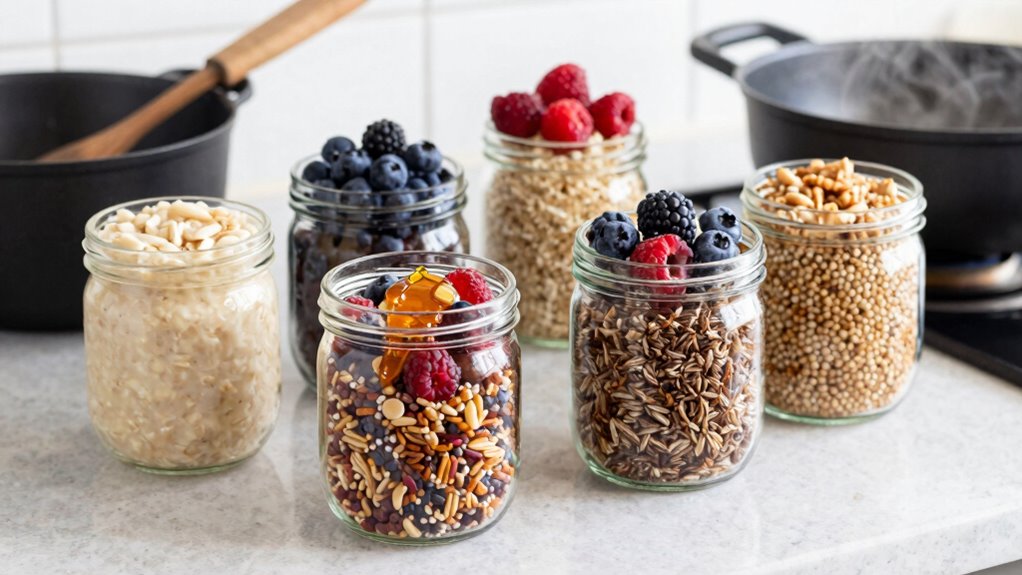
Cooking grains in advance makes your morning routine smoother and more efficient. To start, choose your preferred grain varieties, like oats, quinoa, or brown rice. Cook them according to package instructions, then let them cool. Store your cooked grains in airtight storage containers to keep them fresh. Proper containers prevent moisture and contamination, extending shelf life. You can keep grains in the fridge for up to 4-5 days or freeze for longer storage. Label containers with dates to track freshness. When you’re ready to eat, simply reheat or enjoy cold. Using airtight containers helps maintain the quality and safety of your pre-cooked grains. Incorporating food safety practices ensures your grains stay fresh and free from spoilage. Proper storage conditions are essential to prevent bacterial growth, especially when storing cooked foods. This method saves time and reduces morning stress, giving you more flexibility to customize your breakfast bowls or porridges. Batch cooking grains transforms busy mornings into effortless, nourishing starts.
Creative Ways to Use Batch-Cooked Grains in Breakfast Bowls
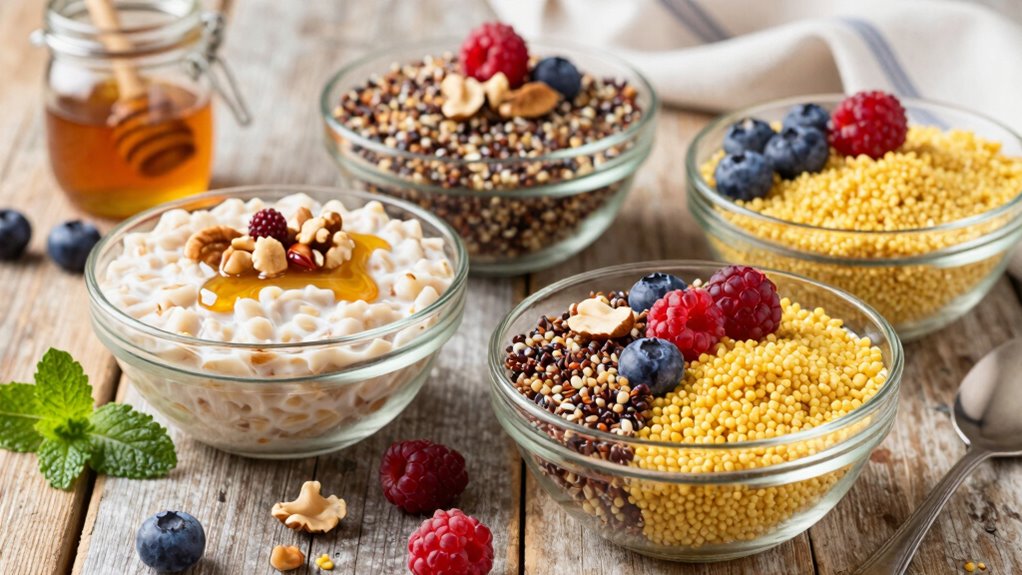
You can transform your batch-cooked grains into breakfast bowls by experimenting with flavor combinations and toppings that suit your taste. Adding fresh fruits, nuts, or a drizzle of honey can elevate the dish, making it both satisfying and visually appealing. Creative presentation ideas, like layering ingredients or using colorful bowls, can make your breakfast even more inviting. Incorporating connected fitness technology such as smart kitchen gadgets can help you track nutritional intake and optimize your meal planning.
Flavor Combinations and Toppings
To elevate your breakfast bowls, experimenting with flavor combinations and toppings can make each meal exciting and satisfying. You can enhance your batch-cooked grains with seasonal flavor pairings, such as pumpkin and cinnamon in fall or berries and mint in summer. Incorporate cultural spice blends like za’atar or cardamom for a global twist. Toppings are key:
- Fresh fruits like sliced bananas or berries
- Nuts and seeds for crunch and healthy fats
- Drizzle of honey or maple syrup for sweetness
- A dollop of yogurt or nut butter for creaminess
- A sprinkle of toasted coconut or granola for texture
Mix and match these elements to keep your breakfast bowls interesting, nourishing, and full of flavor every morning.
Creative Presentation Ideas
Transforming your batch-cooked grains into visually appealing breakfast bowls can turn an ordinary meal into a delightful experience. Use creative plating techniques to layer colors and textures, making each bowl inviting. Incorporate presentation accessories like fresh herbs, edible flowers, or vibrant fruit slices to add flair. For example, try swirling the grains with a drizzle of honey or nut butter for contrast. To help visualize, here’s a simple idea:
| Base | Toppings |
|---|---|
| Warm grains | Fresh berries, sliced fruit |
| Yogurt or milk | Nuts, seeds, edible flowers |
Experiment with different arrangements, stacking ingredients or creating patterns. These presentation ideas make your breakfast both attractive and appetizing, elevating the everyday into a feast for the eyes. Incorporating support breakfast options such as high-protein ingredients can further enhance the meal’s nutritional value. Including visual presentation techniques can also make your bowls more appealing and enjoyable to eat.
How to Reheat and Serve Grains Without Losing Texture
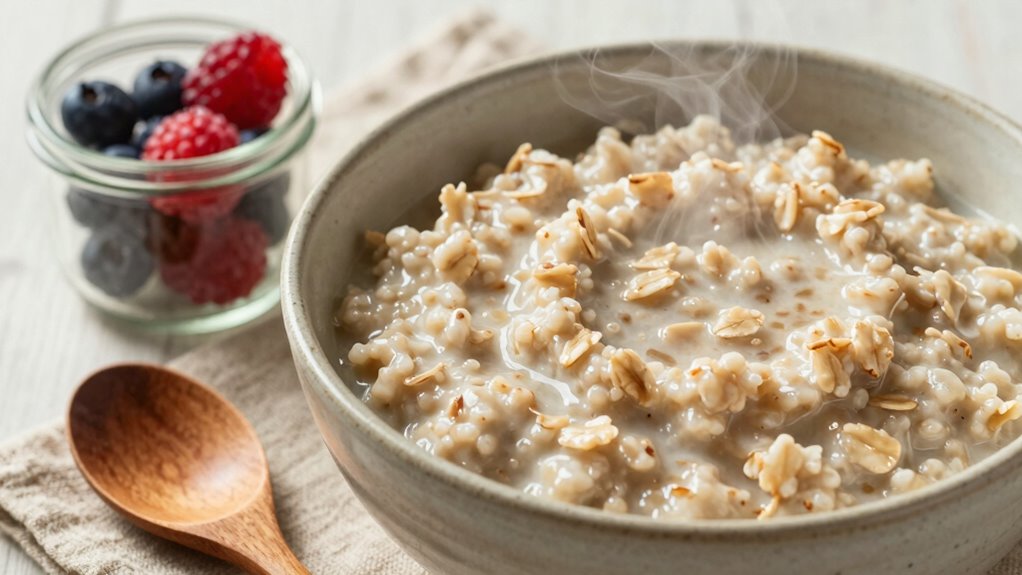
Reheating grains without sacrificing their texture can be straightforward if you choose the right method. Proper grain storage helps prevent drying out or becoming mushy. When reheating, use techniques that preserve moisture and firmness.
Here are some tips:
- Add a splash of water or milk before reheating to keep grains moist.
- Use a microwave with a cover to trap steam and heat evenly.
- Reheat on low heat in a skillet, stirring gently.
- Avoid over-reheating, which can make grains tough or sticky.
- Consider steaming or using a double boiler for gentler reheating.
Toppings and Flavors to Elevate Your Grain-Based Breakfasts
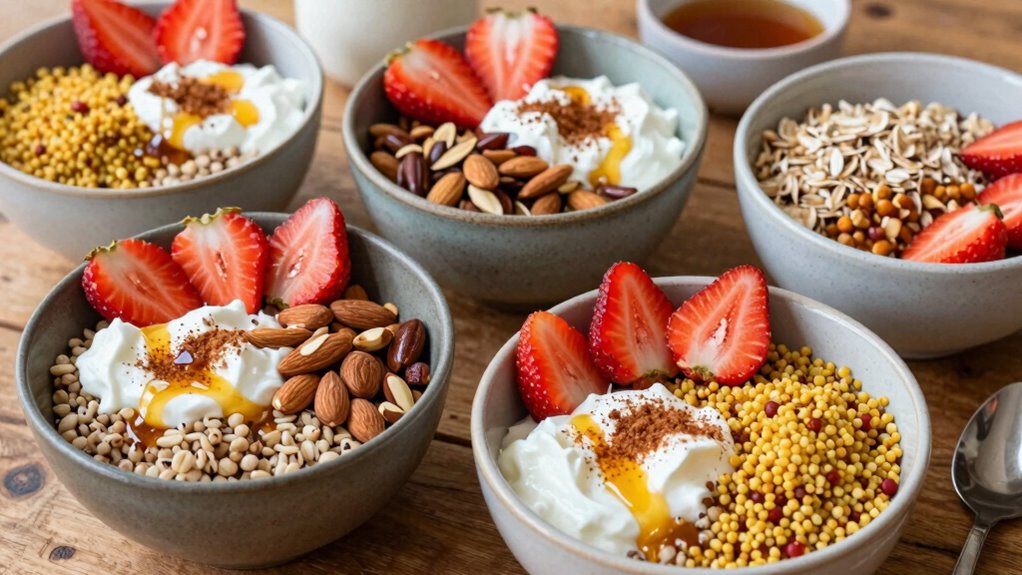
Adding a sprinkle of saline solution or using saline spray helps keep your grains and toppings fresh and free from bacteria, enhancing both flavor and safety.
Fresh Fruit Toppings
Fresh fruit toppings can instantly brighten your grain-based breakfasts, adding natural sweetness and vibrant color. They enhance flavor and provide an invigorating contrast to warm grains. When choosing fruit pairings, consider seasonal options like berries, sliced peaches, or kiwi. Berry toppings are especially popular, offering a tartness that complements creamy porridges or savory bowls. You can also experiment with chopped mango, apple slices, or pomegranate seeds for variety. For a quick upgrade, keep pre-washed berries or sliced fruit handy. Sprinkle some fresh fruit on your grains just before serving to preserve their texture and flavor. These toppings not only make your breakfast more appealing but also boost nutritional value with vitamins and antioxidants. Incorporating fresh fruit toppings can also encourage healthier eating habits and add variety to your morning routine. Additionally, selecting seasonal produce ensures the freshest flavors and strongest nutritional benefits. fresh fruit toppings truly elevate your grain bowls effortlessly.
Nut Butter Drizzles
Nut butter drizzles are a simple yet flavorful way to enhance your grain-based breakfasts. A thin stream of almond, peanut, or cashew butter adds richness and a satisfying texture to your bowls. These breakfast toppings create a creamy contrast that complements the warmth of cooked grains like oatmeal or quinoa. You can warm the nut butter slightly for easier drizzling or mix in a splash of milk for a smoother pour. Nut butter drizzles also boost protein and healthy fats, making your meal more filling. Experiment with different nut butters to find your favorite flavor combinations. Adding these drizzles elevates your breakfast with minimal effort, turning a basic bowl into a more indulgent and nutritious start to the day.
Spiced Syrups
Spiced syrups are a fantastic way to infuse warmth and depth into your grain-based breakfasts. They add a cozy layer of flavor infusions that elevate simple bowls into comforting treats. You can make your own spiced syrups with ingredients like cinnamon, cloves, star anise, or ginger, simmering them with sweeteners like honey, maple, or agave. Drizzle these on oatmeal, porridge, or grain bowls to create a rich, aromatic experience. Experiment with different spice combinations to find your favorite flavor profile. Keep in mind that spiced syrups are versatile—perfect for adding a touch of sweetness and complexity without overpowering the grains. Once you master the base, you can customize your flavor infusions endlessly. It’s an easy way to make breakfast feel special every day. Utilizing net+ certification benefits can also help you develop skills to create more sophisticated flavor profiles and culinary techniques.
Troubleshooting Common Grain Prep Problems
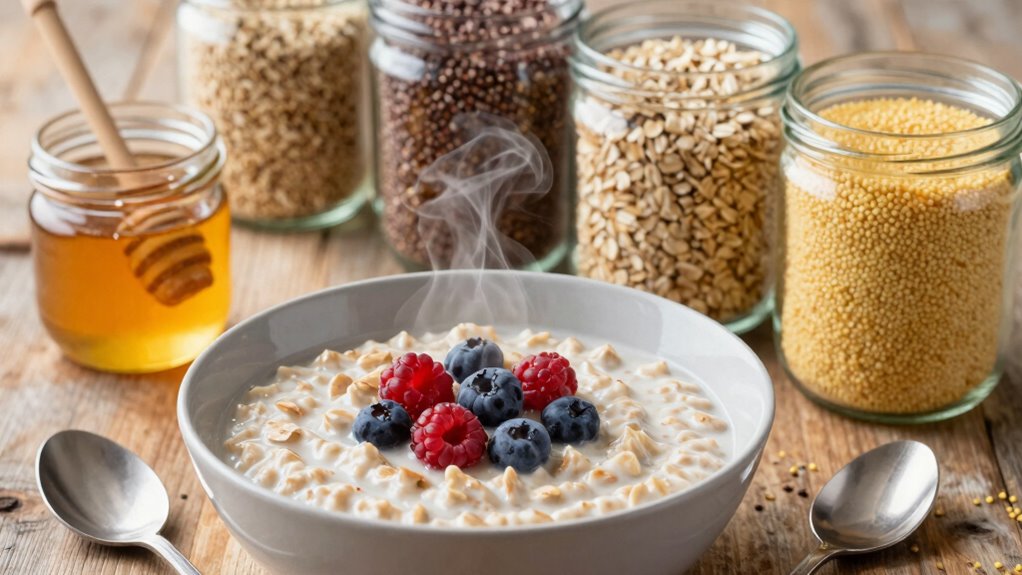
Even with careful preparation, grain dishes can sometimes turn out less than perfect. If your grains are too chewy or gummy, it’s often a sign of insufficient grain soaking beforehand. Soaking helps break down tough starches and softens the grains, making them easier to cook evenly. For texture troubleshooting, try adjusting your soaking time or the amount of water used during cooking. If grains are too mushy, reduce the cooking time or add a splash of cold water after cooking to stop the process. If they’re still undercooked, give them extra time on low heat with a bit more liquid. Remember, experimenting with soaking and cooking times will help you find the perfect balance and prevent common grain prep problems. Being aware of the pinball machine weight can also be useful if you’re considering moving large batches of grains or equipment around your kitchen.
Tips for Eco-Friendly and Cost-Effective Grain Meal Prep

To make your grain meal prep more sustainable and budget-friendly, focus on smart planning and simple swaps. Use reusable containers for grain storage to reduce waste and keep grains fresh longer. Opt for eco-friendly packaging, like compostable bags or glass jars, instead of single-use plastics. Buying grains in bulk not only saves money but also reduces packaging waste. Prepare larger batches to cut down on cooking time and energy use. Keep grains in airtight containers in cool, dark places to extend shelf life. When shopping, choose locally sourced grains to lower carbon footprint. Additionally, incorporating sound healing science principles into your routine can enhance your overall well-being and reinforce mindful eating habits. Practicing mindful consumption helps you develop a more conscious relationship with your food, supporting sustainable choices. These small changes help you save money while reducing environmental impact, making your meal prep more eco-friendly and cost-effective. Incorporating sustainable food practices further supports your efforts to minimize waste and promote environmental health.
How Batch-Cooked Grains Support a Healthy Breakfast Routine
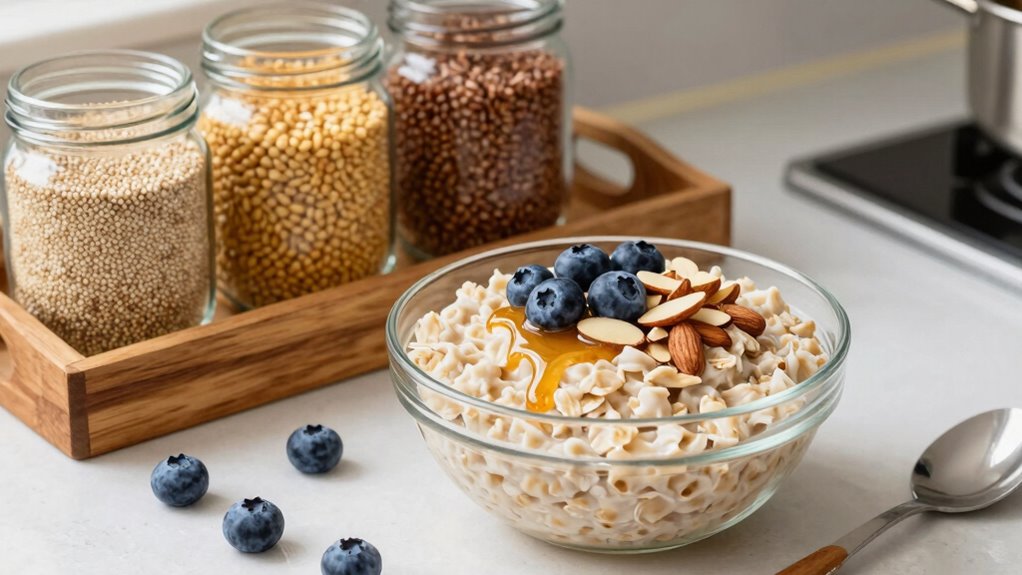
Batch-cooked grains make it easy to maintain a healthy breakfast routine by providing quick, nutritious options at the start of each day. Having a variety of grain varieties like oats, quinoa, and barley on hand means you can switch up flavors and textures effortlessly. Proper storage tips, such as using airtight containers and labeling, keep grains fresh and ready for use. This way, you skip morning prep and avoid unhealthy quick fixes. Keeping your grains organized ensures a seamless breakfast experience. Here’s a quick glance at some storage tips:
| Grain Variety | Storage Tip | Best for |
|---|---|---|
| Oats | Airtight container | Porridge, overnight oats |
| Quinoa | Cool, dry place | Breakfast bowls, salads |
| Barley | Refrigerate after cooking | Hearty breakfast dishes |
| Rice | Use within a week | Breakfast porridge or bowls |
Quick Recipes and Ideas to Use Your Prepared Grains All Week
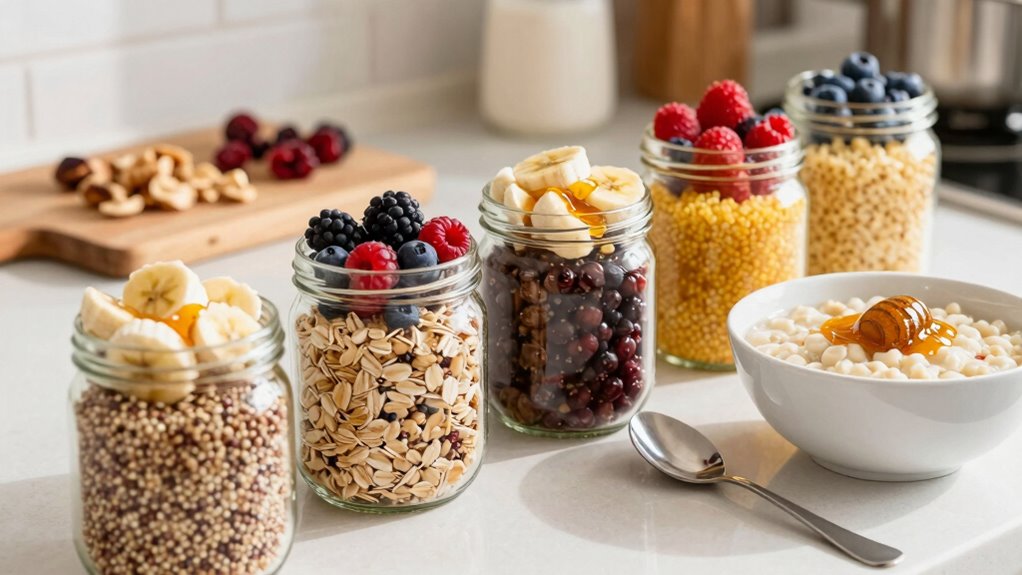
Having pre-cooked grains ready makes weekday mornings much easier, allowing you to whip up nutritious breakfasts in minutes. With a variety of grain varieties stored in airtight storage containers, you can create diverse meals effortlessly. Here are quick ideas to use your prepared grains all week:
- Make overnight oats by mixing grains with milk and fruit overnight.
- Toss grains into salads for added texture and fiber.
- Use grains as a base for breakfast bowls topped with yogurt and nuts.
- Reheat and combine with sautéed vegetables and eggs for a savory start.
- Prepare grain-based smoothies by blending cooked grains with your favorite fruits and liquids.
These ideas help maximize your batch-cooked grains, making busy mornings simple and satisfying. Keep your storage containers organized for easy access and freshness.
Frequently Asked Questions
Can Batch-Cooked Grains Be Customized for Specific Dietary Restrictions?
Yes, you can customize batch-cooked grains for specific dietary restrictions. For gluten-free swaps, choose grains like quinoa, millet, or certified gluten-free oats. For vegan adaptations, skip animal-based ingredients and add plant-based toppings or milks. You can also adjust seasonings and mix-ins to suit your needs, making your batch-cooked grains more versatile and tailored to your dietary preferences.
What Are the Best Storage Containers for Maintaining Grain Freshness?
You want to keep your grains fresh as a daisy, so go for containers with airtight lids or silicone storage options. These keep out moisture and air, which are the biggest culprits in spoiling grains. Look for durable, leak-proof containers that are microwave and dishwasher safe for convenience. With the right storage, your grains stay fresh longer, and you won’t have to play catch-up with stale grains.
How Long Can Cooked Grains Be Safely Stored in the Fridge or Freezer?
You can safely store cooked grains in the fridge for up to 4-5 days, ensuring good grain preservation. For longer storage, freeze them for up to 3 months. When reheating, use gentle techniques like steaming or microwaving with a splash of water to maintain texture and flavor. Proper storage and reheating techniques keep your grains fresh, tasty, and safe to enjoy while minimizing waste.
Are There Gluten-Free Grain Options Suitable for Batch Cooking?
Yes, you can find gluten-free grain options perfect for batch cooking, like quinoa options and millet varieties. These grains are versatile, nutritious, and easy to prepare in bulk, making your mornings simpler. Quinoa offers a protein boost, while millet provides a subtle, nutty flavor. Incorporate these grains into your meal prep routine to enjoy wholesome bowls, porridges, and more, all while keeping your diet gluten-free and delicious.
How Do I Prevent Grains From Becoming Mushy During Reheating?
To prevent grains from becoming mushy during reheating, focus on preserving texture with proper reheating techniques. Reheat grains gently in a microwave with a splash of water, stirring occasionally, or rewarm on the stove over low heat, adding a little liquid if needed. Avoid overcooking, and don’t reheat multiple times. These tips help maintain the grains’ firmness and prevent them from turning mushy, ensuring your breakfast stays delicious.
Conclusion
Think of your batch-cooked grains as the steady heartbeat of your mornings—a reliable rhythm that sets the tone for the day. Each scoop becomes a small victory, a promise of nourishment and simplicity. As you continue this habit, the grains become a symbol of your commitment to mindful, healthy routines. Embrace this rhythm, let it flow, and watch how your mornings transform from chaos to calm—one bowl at a time.
Halloween Picks
halloween
As an affiliate, we earn on qualifying purchases.