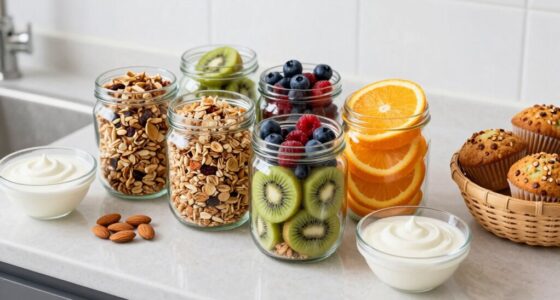
To keep breakfast fresh and tasty until work, choose items resistant to spoilage like smoothies, oats, or hard-boiled eggs, and pack wet and dry foods separately using leak-proof containers. Opt for sturdy, insulated containers for hot or cold options, and layer heavy items at the bottom. Add fresh ingredients just before eating, and prepare everything the night before for convenience. Keep in mind proper storage conditions to avoid sogginess or spoilage—continue step-by-step to master the perfect plan.
Key Takeaways
- Use leak-proof, insulated containers for hot or cold items to maintain freshness and prevent spillage.
- Pack dry ingredients separately from moist or creamy foods to avoid sogginess.
- Prepare and layer ingredients strategically, placing heavier items at the bottom and delicate items on top.
- Keep perishable foods refrigerated until packing and consume within a day for optimal freshness.
- Organize ingredients in advance and include toppings or fresh fruit just before eating to preserve texture and flavor.
Which Breakfast Items Stay Fresh Overnight?
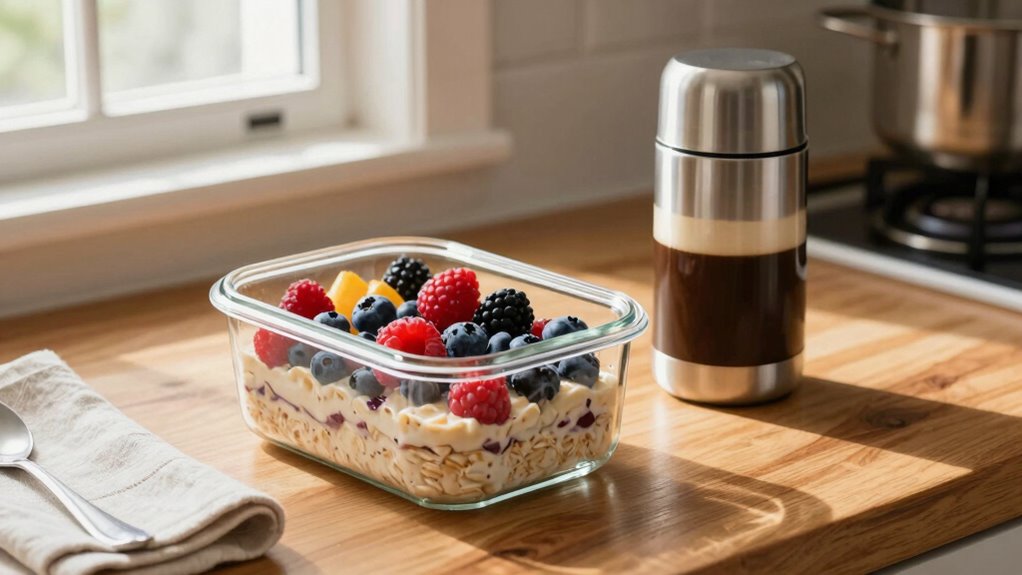
If you want your breakfast to stay fresh overnight, choosing the right items is key. Breakfast smoothies are a popular option because they hold up well if prepared the night before, especially if you use fruit preservation techniques like adding citrus or freezing ingredients beforehand. Fresh fruit, such as berries or sliced bananas, can become soggy or brown overnight, so consider adding them just before eating or using preserved options. Hard-boiled eggs and granola also stay fresh longer in sealed containers. Dairy-based items like yogurt can last overnight if kept cold, but they might separate slightly. Overall, focus on foods that resist spoilage and maintain texture, ensuring your breakfast stays delicious and fresh when you’re ready to eat. Incorporating proper storage techniques can also significantly extend freshness and prevent spoilage, especially by controlling temperature and humidity. Proper airtight containers further help maintain freshness by preventing exposure to air and moisture. Additionally, selecting perishable foods that are less sensitive to temperature fluctuations can make your morning routine even smoother and is especially important for maintaining food safety during overnight storage.
How to Choose the Right Containers for Breakfast
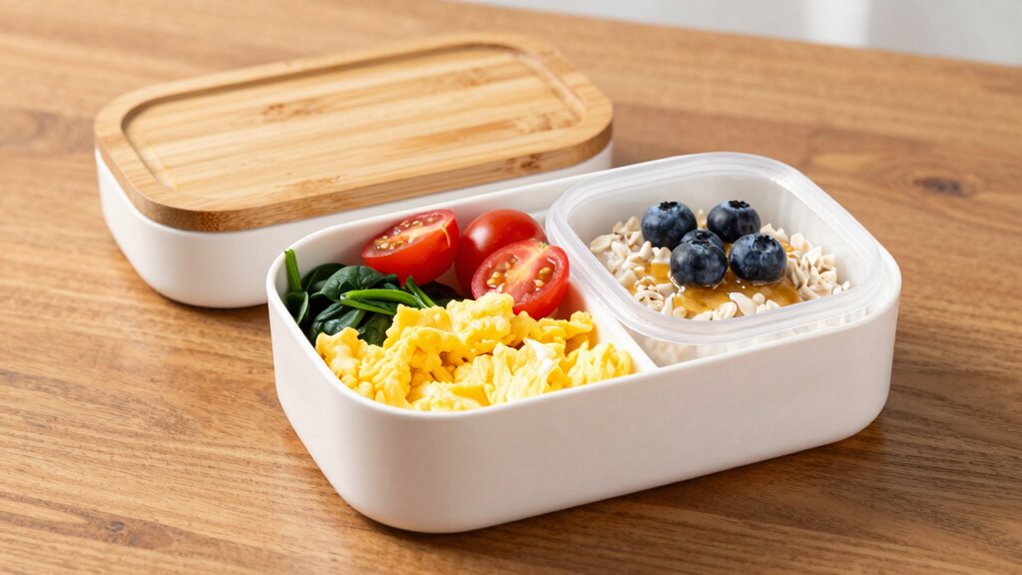
When selecting containers for breakfast, prioritize options that are portable and leak-proof to prevent spills during your commute. Make sure the material is food-safe and suitable for the types of breakfast items you pack, like fruits or hot oats. Choosing the right containers keeps your breakfast fresh, intact, and easy to enjoy at work. Incorporating smart storage solutions can further enhance freshness and convenience. Additionally, selecting containers with proper insulation can help maintain the temperature of your meal, whether hot or cold, throughout your busy morning. For added convenience, look for containers with easy-open lids that allow quick access without hassle. Using high-quality, durable materials ensures your containers withstand daily use and maintain their seal over time. Proper container choices are also essential for safe storage practices, reducing the risk of contamination and spoilage.
Portable and Leak-proof Options
Choosing the right containers for breakfast is essential to keep your meals portable and leak-proof. Look for containers with tight-fitting lids to prevent spills, especially if you’re bringing liquids or moist foods. Consider refrigeration tips—using insulated or airtight containers helps keep food fresh and prevents messes if refrigeration isn’t immediately available. For easy eating on the go, pack portable utensils that fit neatly inside your containers, so you don’t need extra bags. Test the containers beforehand to ensure they won’t leak during transit. Durable, BPA-free options are ideal for repeated use and easy cleaning. Additionally, selecting containers designed for food storage ensures better preservation and organization of your breakfast items. Proper container selection is also important for total‑cost clarity, helping you choose options that are both affordable and durable. Incorporating reusable containers reduces waste and is better for the environment, aligning with sustainable habits. Choosing containers with airtight seals can provide extra security against leaks and spoilage, especially for perishable foods. By selecting reliable, leak-proof containers and incorporating proper refrigeration tips, you’ll keep your breakfast intact and fresh until you’re ready to eat.
Material Suitability for Food
Selecting the right material for your breakfast containers is crucial to guarantee food safety and maintain freshness. The packaging materials you choose influence how well your food stays safe, tastes fresh, and avoids contamination. Opt for BPA-free plastics, glass, or stainless steel—these materials are non-toxic and durable. Avoid flimsy or porous options that may leak or harbor bacteria. Using Gold IRA Markets rated materials can ensure long-term safety and quality. Additionally, choosing food-safe materials that are resistant to staining and odors can help preserve the taste and appearance of your breakfast items.
How to Pack Wet and Dry Foods Without Sogginess?
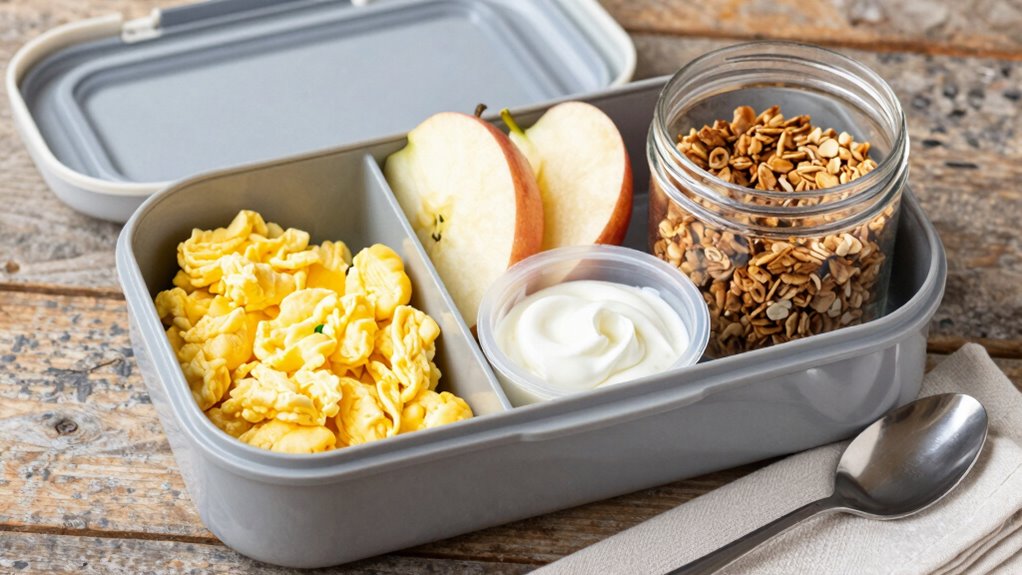
To prevent sogginess, it is essential to pack wet and dry foods separately and use appropriate containers. For spreadable spreads like butter or cream cheese, use small, airtight containers to keep them fresh and prevent leaks. When packing fruit, opt for preservation methods such as airtight jars or vacuum-sealed bags to maintain freshness and avoid moisture transfer. Keep dry items like granola, nuts, or crackers in separate sealed compartments or containers to stay crispy. If you’re including moist foods like yogurt or fruit preserves, pack them in leak-proof containers and add them just before eating. This way, the dry foods won’t absorb excess moisture, ensuring your breakfast stays fresh and prevents sogginess until you’re ready to enjoy it. Additionally, choosing proper packaging techniques can significantly improve freshness and prevent moisture transfer between different food items, especially when considering bakery preservation methods to keep baked goods fresh. Using moisture control methods can further enhance the longevity and quality of your packed breakfast, helping to maintain optimal food texture during transport. Incorporating airtight seals can also be beneficial in maintaining freshness and preventing leaks.
Best Storage Conditions to Keep Breakfast Fresh
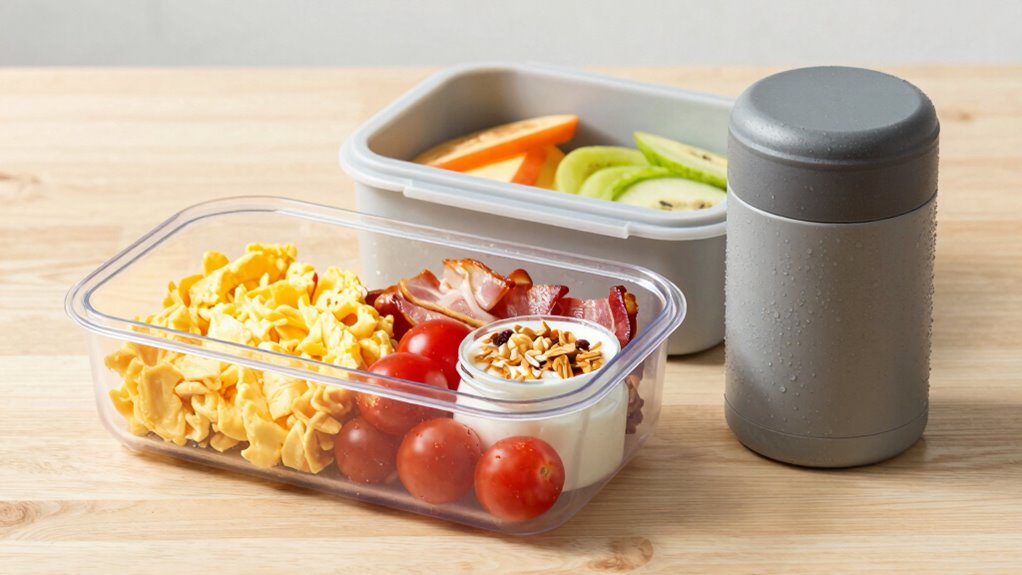
Proper storage conditions play a key role in maintaining the freshness and quality of your breakfast items. To keep your meal prep fresh, store perishable ingredients in the refrigerator at or below 40°F (4°C). Use airtight containers to prevent exposure to air, which can accelerate spoilage and reduce ingredient freshness. Keep dairy, fruits, and cooked items separate from stronger-smelling foods to avoid flavor transfer. For items like cut fruits or cooked grains, consume them within a day or two for ideal freshness. If you’re packing overnight oats or smoothies, refrigerate them until you’re ready to leave. Properly chilled and sealed storage helps preserve ingredient freshness and ensures your breakfast stays tasty and safe until it’s time to enjoy it.
How to Pack Breakfast in the Correct Order for Maximum Freshness
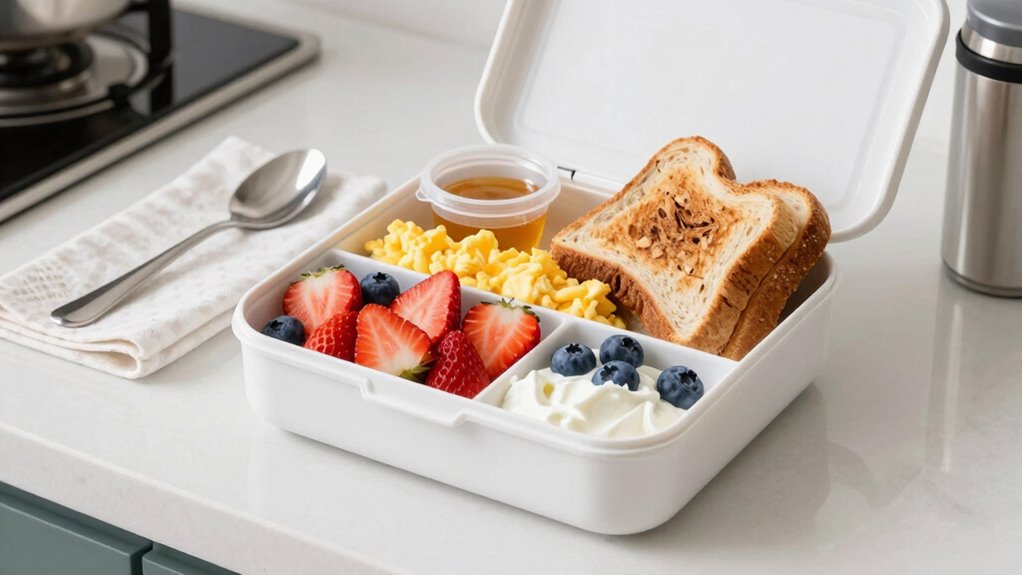
To keep your breakfast fresh, start by layering heavy items first to prevent crushing delicate foods. Keep moist ingredients separate until you’re ready to eat to avoid sogginess. Additionally, using proper storage containers can help maintain optimal freshness and prevent spoilage. It’s also helpful to select airtight seals to keep out air and moisture, which can compromise the quality of your breakfast items until mealtime. Finally, pack your fresh ingredients last so they stay crisp and flavorful until mealtime.
Layer Heavy Items First
When packing your breakfast, placing heavy items at the bottom of the container helps prevent crushing lighter foods and keeps everything fresh. Start by layering heavy items first, such as yogurt containers, granola, or dense fruit like apples or carrots. Your breakfast container choices should be sturdy and stackable, making it easy to arrange these weighty items securely. By layering heavy items at the bottom, you create a stable base that supports lighter foods on top without squishing them. This method also minimizes the risk of leaks or spills, as heavier items won’t shift around during transport. Additionally, using appropriate containers designed for stacking can further enhance stability and freshness. Incorporating smart home solutions like temperature-controlled containers can also help maintain optimal freshness until you’re ready to eat. Choosing the right container with airtight seals further prevents leaks and preserves the quality of your breakfast. Remember, choosing the right container and stacking smartly guarantees your breakfast remains fresh and intact until you’re ready to enjoy it. Proper food storage techniques are essential to keep your breakfast tasting great.
Keep Moisture Separate
Have you ever opened your breakfast container to find soggy cereal or wilted fruit? That’s usually due to poor moisture control. To prevent this, keep moisture separate from dry items by using container separation. You can use compartments, small containers, or resealable bags to isolate wet ingredients. This method maintains the texture and freshness of your breakfast. Here’s a simple way to organize:
| Item Type | Ideal Container | Purpose |
|---|---|---|
| Dry cereals | Airtight container | Prevents moisture from seeping in |
| Fresh fruit | Small sealed bag | Stops moisture from affecting other ingredients |
| Wet toppings | Separate small container | Keeps liquids from making other items soggy |
Using proper container separation ensures your breakfast stays crisp and fresh until it’s time to eat.
Pack Fresh Ingredients Last
After ensuring your dry and wet ingredients are properly separated, focus on packing the freshest items last. This helps maximize fruit preservation and keeps your bread fresh until mealtime. Place delicate fruits like berries or sliced bananas at the top of your container, so they aren’t crushed or soggy. If you’re including bread, pack it last or keep it separate until just before eating to preserve its texture and prevent it from becoming soggy. This way, your breakfast remains appealing and flavorful even hours later. By stacking your items strategically, you prevent moisture transfer that can lead to sogginess or fruit spoilage. Prioritizing fresh ingredients last ensures your breakfast stays crisp, fresh, and delicious when it’s time to enjoy it.
Tips for Adding Ingredients That Extend Freshness

Adding ingredients that extend freshness is key to keeping your breakfast meals delicious and safe to eat. For spreadable toppings like cream cheese or nut butters, consider packing them separately in small containers or squeezing pouches. This prevents them from making other ingredients soggy or spoilage-prone. When it comes to breakfast beverages, opt for shelf-stable options or keep your drinks chilled in a thermos to maintain freshness. Fresh fruit slices can brown quickly, so adding a touch of lemon juice helps preserve their color and flavor. Incorporate ingredients with natural preservatives, like honey or yogurt, to slow spoilage. By using these tips, you’ll ensure your breakfast stays fresh, flavorful, and safe until mealtime.
How to Prepare and Pack Breakfast the Night Before
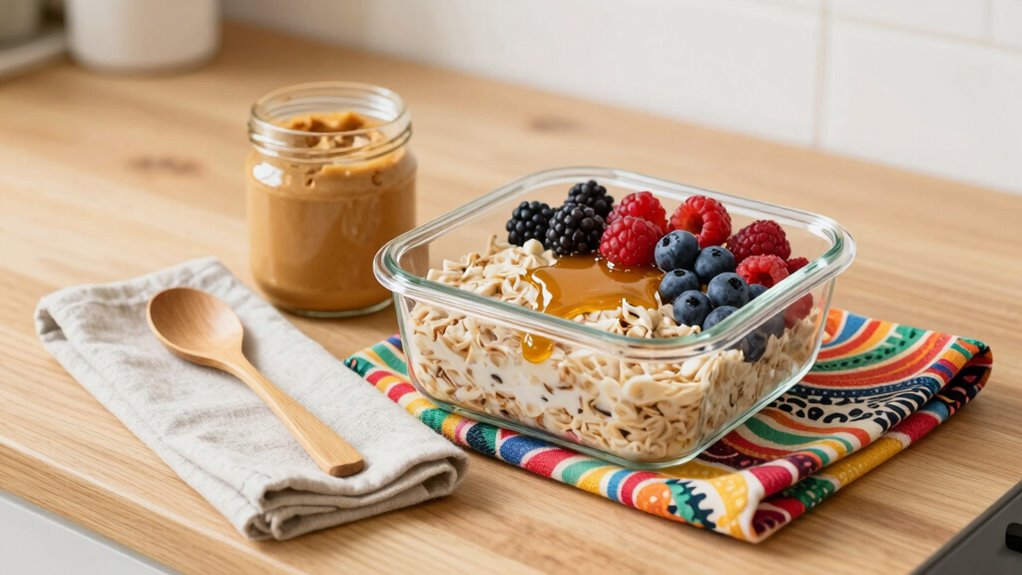
Preparing and packing your breakfast the night before saves time and reduces morning stress. Incorporate meal prep into your routine by batching components like overnight oats, pre-portioned smoothie ingredients, or boiled eggs. This aligns with current breakfast trends that favor convenience and health. Use airtight containers to keep items fresh and organize your meal prep so everything stays appealing until morning. Consider layering ingredients to prevent sogginess, especially with cereals or fresh fruits. By planning ahead, you avoid rushing and make smarter choices—like including protein-rich options or trendy superfoods. This proactive approach ensures your breakfast stays fresh and enjoyable, even after a busy night. In turn, you’ll start your day with a nutritious meal without the hassle or the weirdness that comes from last-minute choices.
Frequently Asked Questions
How Can I Prevent My Breakfast From Spilling During Commute?
To prevent your breakfast from spilling, use sturdy, leak-proof containers with secure lids, which are key in meal prep tips. Double-check that your containers are tightly sealed before heading out. Consider container innovations like stacking or compartmentalized boxes to keep foods separate. Transport your breakfast upright in a bag with a stable base and avoid overfilling. These steps help keep your meal intact during your commute.
What Are the Best Snacks That Stay Fresh Longer?
A wise man once said, “A stitch in time saves nine,” and that’s true for snacks too. You should choose energy bars and nut butters, as they stay fresh longer and are convenient on-the-go options. Store them in airtight containers or resealable bags to keep them crisp. These snacks not only last longer but also provide sustained energy, helping you stay focused until lunch.
Can I Pack Hot Foods for Breakfast Without Spoilage?
Yes, you can pack hot foods for breakfast without spoilage if you use an insulated container or thermos to keep the temperature steady. Preheat the container with boiling water before adding your hot foods, and seal it tightly. This method helps prevent spoilage by maintaining a safe temperature, ensuring your hot foods stay fresh and delicious until you’re ready to eat.
How Do I Keep Fruits From Browning Overnight?
Browning on fruits is like a shadow creeping in—quick and unwelcome. To keep fruits from browning overnight, use fruit preservation tricks like dipping slices in lemon juice or a mixture of water and ascorbic acid. These natural antioxidants prevent browning by blocking oxidation. Store your fruits in airtight containers or wrap them tightly, and keep them refrigerated to maintain freshness. This way, your fruits stay vibrant and appetizing all morning.
Are There Specific Utensils That Help Maintain Food Freshness?
You should use airtight containers and reusable utensils to maintain food freshness. Airtight containers prevent air exposure, keeping your breakfast items fresh and preventing spoilage. Reusable utensils not only reduce waste but also help keep your food sealed and intact. Make sure to choose containers with secure lids and utensils that fit comfortably, so your breakfast stays delicious and fresh until you’re ready to eat.
Conclusion
So there you have it—your foolproof guide to avoiding breakfast disasters. Follow these tips, and you’ll be the envy of every coworker with your perfectly fresh, non-soggy morning feast. Because nothing says “professional” like a breakfast that doesn’t turn into a soggy mess by 10 AM. Now go ahead, pack like a pro, and enjoy your breakfast without the mid-morning miracle of sogginess or spoilage. Who knew breakfast prep could be this exciting?