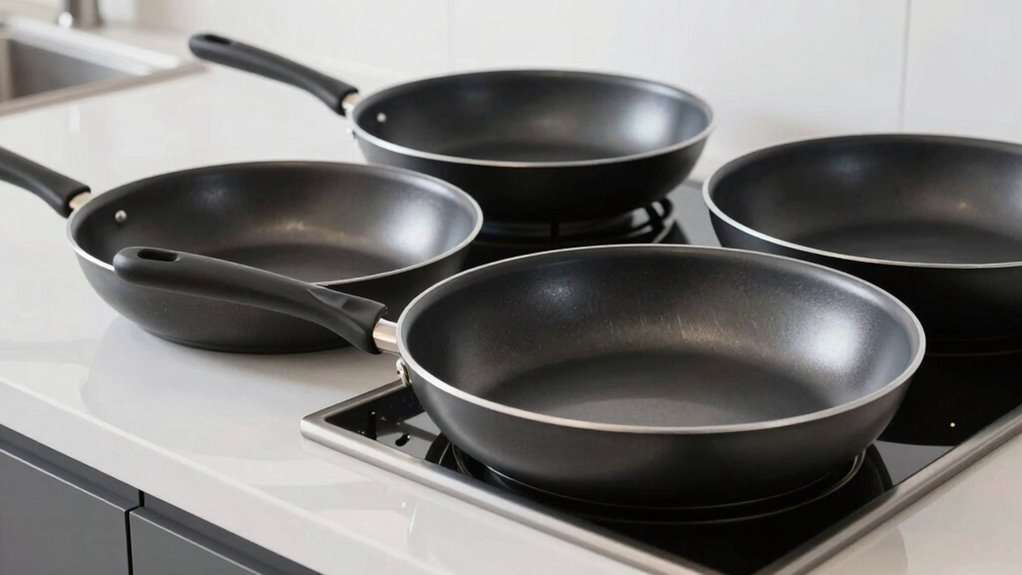
To avoid being duped by false claims about ceramic-coated nonstick pans, focus on genuine indicators like even heat distribution, durable coatings, and reputable brands. Be wary of vague marketing phrases like “reinforced” or “advanced technology,” which often exaggerate benefits. Check for solid warranties and verified reviews. Understand that high-quality ceramic coatings resist scratches, peel less, and last longer—if you know what to look for, you’ll make smarter choices that save money and frustration. Keep exploring to get the full expert advice.
Key Takeaways
- Verify coating quality by checking thickness, adhesion, and manufacturer reputation; avoid vague claims like “reinforced” or “advanced technology.”
- Test heat responsiveness by heating the pan over medium and dropping water; proper dancing indicates good coating integrity.
- Use non-metal utensils and avoid high heat to prevent scratching and coating damage, ensuring longevity and performance.
- Research brands with reputable reviews and warranties for durability and trustworthy performance over time.
- Proper cleaning and storage—gentle cleaning, avoiding abrasive scrubbers, and stacking carefully—extend the pan’s lifespan and maintain nonstick properties.
What Makes Ceramic Coatings Different From Traditional Nonstick Pans?
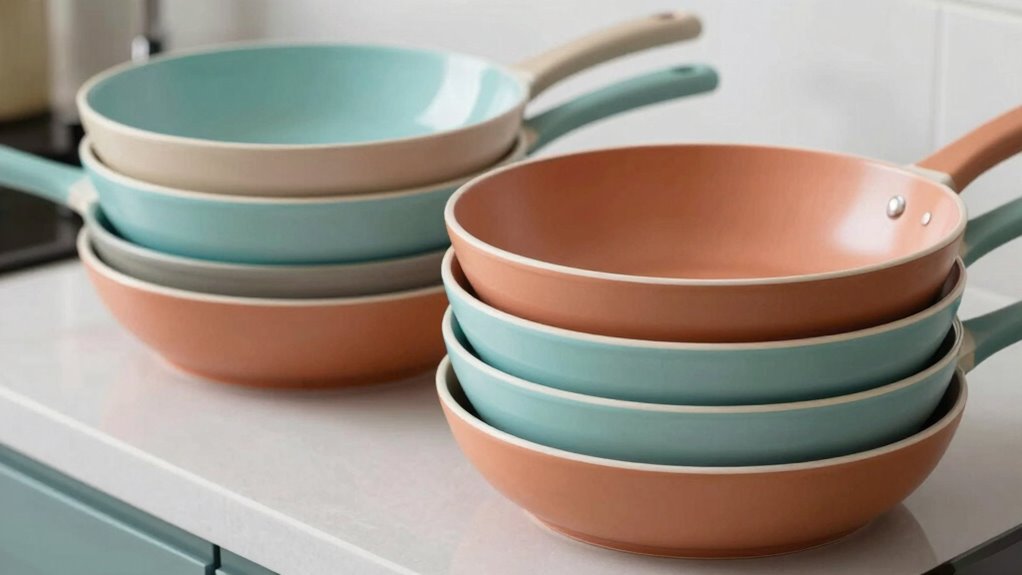
Ceramic coatings differ from traditional nonstick pans primarily in the materials used and how they perform. Unlike Teflon or PTFE coatings, ceramic coatings are made from silica-based substances, which provide a natural nonstick surface. This affects your cooking techniques, as ceramic pans often require lower heat settings and gentle utensils to prevent damage. When considering kitchen ergonomics, ceramic pans tend to be lighter and easier to handle, reducing fatigue during extended cooking sessions. They heat evenly and tend to resist scratches better than traditional pans, offering a different user experience. This makes them suitable for delicate tasks like simmering or sautéing, where precise control and ease of use are essential. Understanding these differences helps you choose the right pan for your cooking style and kitchen setup. Heat distribution also plays a critical role in how well ceramic pans perform compared to traditional options. Additionally, the durability of ceramic coatings is an important factor to consider when selecting cookware. Moreover, proper maintenance can significantly extend the lifespan of ceramic coatings, ensuring consistent performance over time.
Key Features of a High-Quality Ceramic-Coated Pan
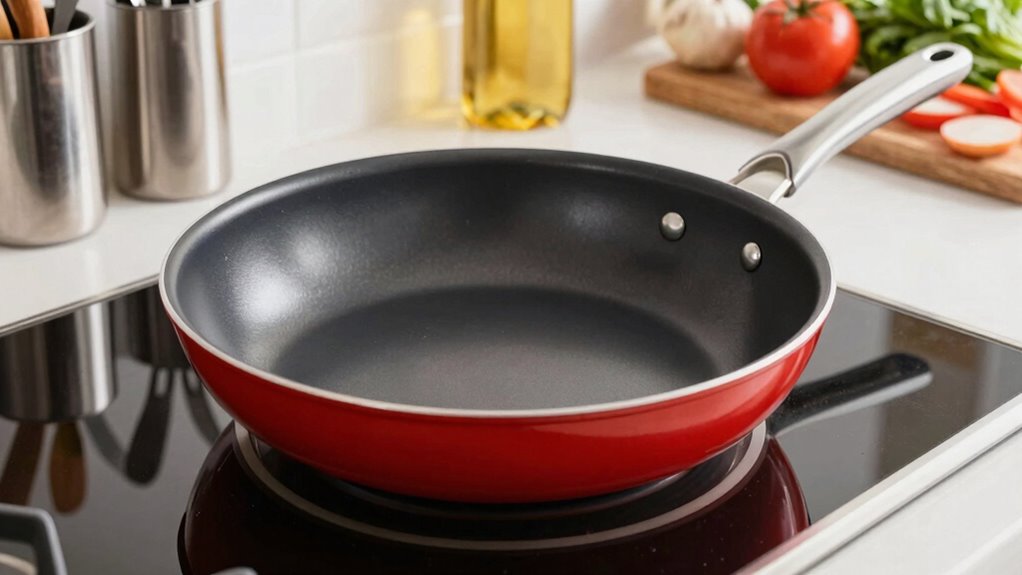
A high-quality ceramic-coated pan features durable coating materials that resist scratches and staining. It also provides even heat distribution, so your food cooks uniformly. Plus, easy cleanup features make your cooking experience more convenient and less time-consuming.
Durable Coating Materials
When choosing a ceramic-coated nonstick frying pan, paying attention to the coating materials is essential for ensuring durability and performance. High-quality coatings feature excellent coating adhesion, preventing peeling and chipping over time. Manufacturing processes, like advanced firing techniques, enhance the coating’s resilience. Look for pans with coatings made from durable ceramic compounds that resist scratches and high temperatures. Additionally, understanding safe installation practices can help you maintain the integrity of your cookware and ensure safe use. Incorporating nanotechnology-enhanced coatings can further improve the pan’s longevity and nonstick performance, especially when combined with proper care and maintenance to extend the life of your cookware.
Even Heat Distribution
High-quality ceramic-coated pans are designed to distribute heat evenly across their surface, which is essential for consistent cooking results. Good heat conductivity ensures that heat spreads uniformly, preventing hot spots that can burn food or cause uneven cooking. When a pan offers even heat distribution, your nonstick efficiency improves because food releases smoothly without sticking or burning. This means you can cook delicate dishes or sauces without constantly adjusting the heat. A ceramic coating alone isn’t enough; it needs to work with a base that promotes even heat flow. Look for pans with a thick, layered base or those made from materials like aluminum or copper, known for excellent heat conductivity. This combination guarantees your cooking is precise, efficient, and free from frustrating hot spots. Proper heat distribution is a crucial factor when choosing a durable and effective ceramic-coated pan. Additionally, thermal conductivity plays a vital role in ensuring that heat moves quickly and evenly throughout the pan’s surface, enhancing overall cooking performance. Ensuring the material quality of your pan directly impacts its ability to maintain consistent heat and durability over time. For optimal results, select pans that incorporate advanced manufacturing techniques to enhance heat retention and distribution.
Easy Cleanup Features
Effortless cleanup is a key advantage of ceramic-coated nonstick pans, making your cooking routine less of a chore. High-quality pans feature surfaces that resist food sticking, so you spend less time scrubbing. These eco friendly coatings are designed to be durable and easy to clean, often outperforming nonstick alternatives. To visualize, consider this table:
| Feature | Benefit | Example |
|---|---|---|
| Smooth ceramic surface | Food slips off easily, cleaning is quick | No stubborn residue |
| Durable coating | Maintains nonstick properties longer | Less frequent re-coating |
| Heat resistance | Prevents sticking during high heat | Simplifies cleanup after cooking |
With these features, your cleanup becomes simple and fast, saving you time and effort.
How to Spot Fake Marketing Claims About Ceramic Pans
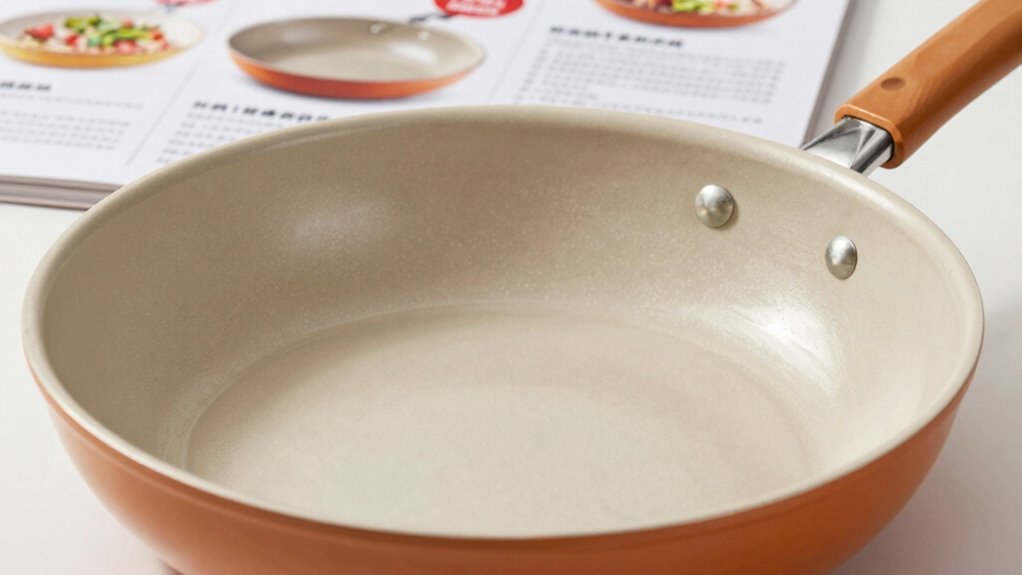
Fake marketing claims about ceramic pans often sound convincing, but you can spot deception by paying close attention to the language used. Beware of marketing hype that promises endless nonstick performance or claims that the pan is completely scratch-proof, as these are usually false claims. Manufacturers may use vague phrases like “reinforced coating” or “advanced ceramic technology” without specific details, so look for transparency. If a product claims to be “bulletproof” or guarantees lifetime nonstick without proper testing, it’s likely exaggerated. Always check for credible reviews and verified certifications. Remember, if it sounds too good to be true, it probably is. By scrutinizing the language and avoiding exaggerated claims, you can better identify genuine ceramic pans from the fake marketing hype.
Evaluating Material Quality and Durability Before Buying

Before you buy, check the material composition and quality of the pan to guarantee it meets your needs. Understanding the long-term durability expectations helps you choose a product that lasts. Don’t settle for anything less than a well-made pan that can withstand regular use. Paying attention to the material quality ensures you select an item capable of enduring daily cooking demands.
Material Composition and Quality
When choosing a ceramic-coated nonstick frying pan, paying close attention to its material composition is essential for guaranteeing durability and performance. The material composition directly influences how well the pan resists scratches, peeling, and warping. Look for manufacturing standards that specify high-quality ceramic layers and sturdy bases. To evaluate this, consider these key factors:
- Verify the ceramic coating’s thickness and adherence for durability.
- Check if the base material is made from heavy-gauge aluminum or stainless steel for even heat distribution.
- Ensure the manufacturer follows strict quality control and safety standards, indicating reliable material composition.
Long-Term Durability Expectations
Evaluating the long-term durability of a ceramic-coated nonstick frying pan starts with examining the quality of its materials. High-quality coatings resist chipping and scratching, maintaining optimal nonstick performance over time. A durable pan preserves its nonstick surface, ensuring easy food release and less need for added fats. Look for pans with thick bases and reinforced coatings, as these features enhance cooking versatility and prevent warping. Consider the manufacturer’s reputation and warranty, which can indicate confidence in durability. Keep in mind that cheaper options often sacrifice longevity, leading to quicker deterioration. Additionally, understanding the security features of the cookware can help protect your investment from damage or misuse. By appraising these factors, you can choose a ceramic-coated pan that delivers consistent nonstick performance and reliable durability, making it a worthwhile investment for everyday cooking.
Price, Warranty, and Brand Reputation: Finding Long-Term Value
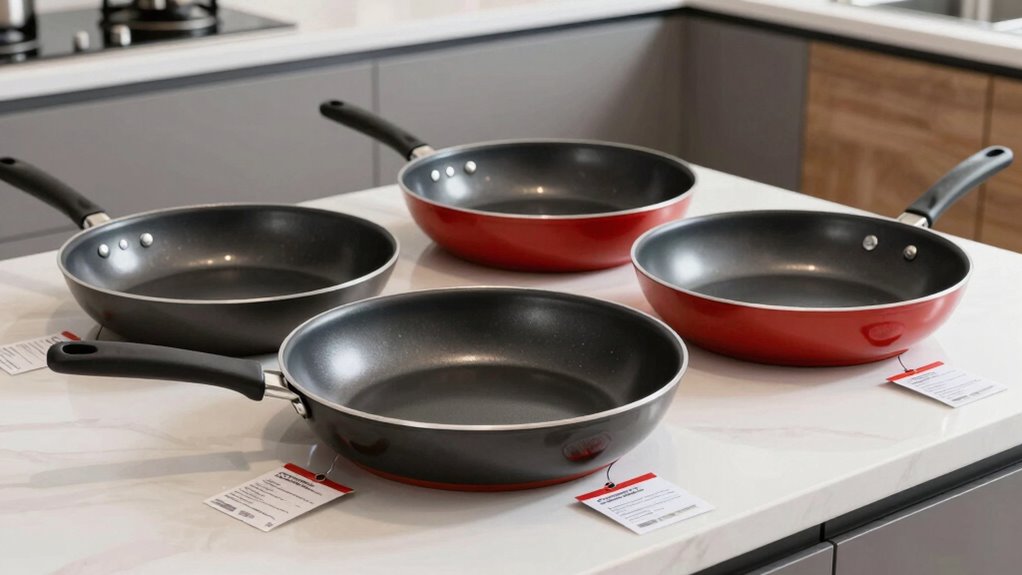
Choosing a ceramic-coated nonstick frying pan that offers the best long-term value means balancing price, warranty, and brand reputation. Start with a thorough price comparison to avoid overpaying for features you don’t need. Look for warranty coverage that protects your investment, ideally covering nonstick coating failure or warping beyond basic defects. Consider established brands with solid reputations, as they often deliver better quality and customer support. Keep these key points in mind:
Prioritize price, warranty, and trusted brands for long-term value in ceramic nonstick pans.
- Compare prices across retailers to find the best deal without sacrificing quality.
- Prioritize pans with all-encompassing warranty coverage, ensuring peace of mind.
- Trust reputable brands known for durability and customer service, which add long-term value.
- Be aware of affiliate relationships that may influence product recommendations and ensure transparency.
- Also, check for independent reviews to get unbiased opinions on product performance and longevity.
- Recognize the importance of product testing and certification standards that verify durability and safety.
How to Test and Use Your Ceramic Pan for Best Performance
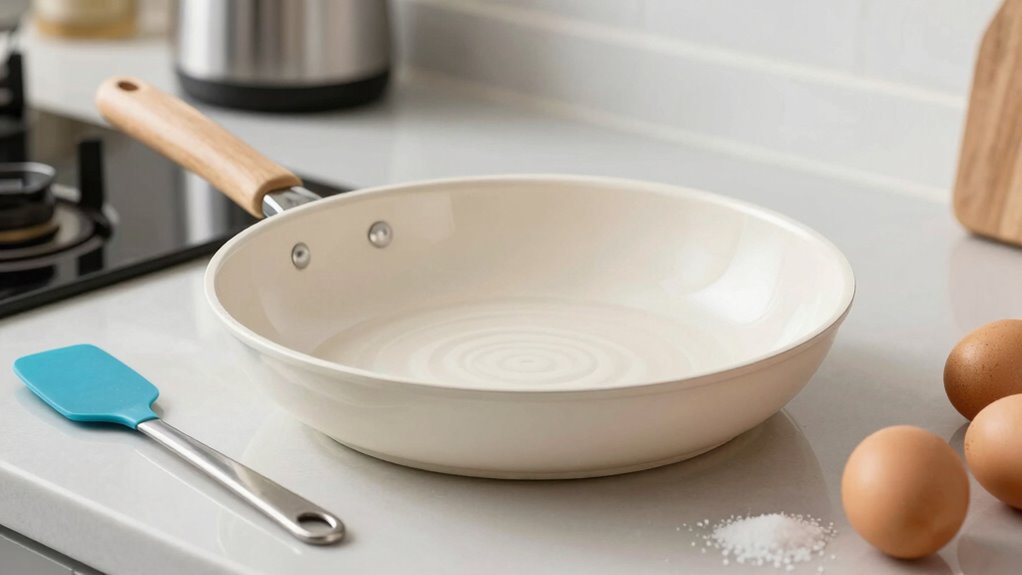
To get the most out of your ceramic-coated nonstick frying pan, it’s important to know how to test and use it properly from the start. Begin by heating the pan over medium heat, which helps you assess its responsiveness and even heat distribution—key aspects of quality cookware materials. When testing, sprinkle a few drops of water; they should dance and evaporate quickly if the coating is intact. Always prioritize kitchen safety by avoiding high heat, which can damage the ceramic coating. Use utensils made of wood, silicone, or plastic to prevent scratching. Proper testing and gentle handling ensure your pan performs well, lasts longer, and keeps your cooking safe and effective. Additionally, understanding the heat transfer properties of your cookware can help you optimize cooking results and prevent damage. Being aware of the material durability can also guide you in selecting the right cookware for your needs and prolong its lifespan.
Maintaining and Caring for Ceramic-Coated Pans to Prevent Damage
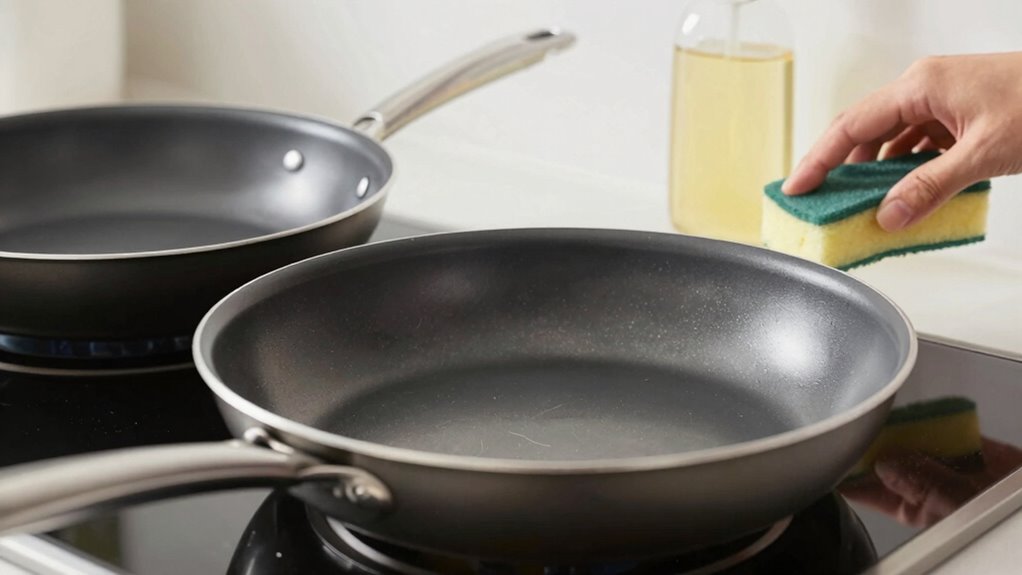
Proper maintenance is essential to keep your ceramic-coated pan in top condition and prevent damage. To do this, follow these tips:
- Use gentle cleaning tips—avoid abrasive scrubbers and harsh detergents that can scratch the coating. Instead, opt for soft sponges and mild soap.
- Store your pan properly—stack with a soft cloth or paper towel between pans to prevent scratches. Hang or place in a dedicated compartment to avoid dents.
- Avoid sudden temperature changes—let the pan cool before cleaning or storing to prevent warping. Proper storage solutions and careful cleaning will extend your pan’s lifespan and maintain its nonstick performance.
- Be aware of the importance of indoor air quality when cooking with nonstick pans, as some cleaning fumes or residues can impact your home’s air safety. Additionally, avoid using metal utensils that can damage the ceramic coating, ensuring your pan remains in optimal condition. Using proper utensil choice can significantly prolong the life of your nonstick surface. Recognizing the investment value of high-quality cookware can also influence your purchasing decisions and confidence in their durability.
Frequently Asked Questions
Are Ceramic-Coated Pans Safe for Dishwasher Cleaning?
Ceramic-coated pans are generally dishwasher safe, but you should still check the manufacturer’s instructions to confirm their coating durability isn’t compromised. Dishwashing can sometimes weaken the coating over time, reducing nonstick performance. To keep your pans in top shape, consider hand washing when possible, especially if you want to prolong their lifespan and maintain ideal dishwasher safety. Proper care helps preserve the coating and ensures your pans last longer.
How Does Ceramic Coating Affect Cooking Temperature Limits?
Ceramic coatings actually limit your pan’s temperature resistance, generally safe up to about 450°F. Higher heat can damage the coating, reducing its durability and nonstick properties. Many believe ceramic pans can handle high heat like traditional cookware, but that’s a myth. To preserve the coating’s durability, stick to medium heat for everyday cooking. Always check your specific pan’s temperature limits to avoid warping or damaging the coating.
Can Ceramic Pans Be Used on Induction Stovetops?
Yes, ceramic pans can be used on induction stovetops if they have induction compatibility, which means they feature a magnetic base. Check for a magnetic or ferrous layer on the bottom, as this guarantees the pan will work with induction. Without a magnetic base, your ceramic pan won’t heat on an induction stove, even if the material itself is suitable for induction cooking.
What Are Common Signs of Ceramic Coating Degradation?
You might notice your ceramic coating peeling or see discoloration signs, which are common signs of degradation. These issues often happen after frequent use or using metal utensils. When the coating starts peeling, it’s losing its nonstick properties, and discoloration indicates the coating’s breaking down. Keep an eye out for these signs to know when it’s time to replace your pan and avoid food sticking or uneven cooking.
Are There Eco-Friendly Options for Ceramic-Coated Cookware?
Yes, eco-friendly alternatives for ceramic-coated cookware exist. You can choose sustainable cookware made from recycled or natural materials like cast iron, stainless steel, or clay. Look for brands that prioritize environmentally responsible manufacturing and non-toxic coatings. These options reduce your impact on the environment and often last longer, making them a smart choice if you’re seeking eco-friendly alternatives that support sustainable cookware practices.
Conclusion
Don’t be deceived by deceptive marketing and flimsy fakes. Focus on features, familiarity, and functionality to find a flawless, long-lasting ceramic-coated pan. By scrutinizing specs, spotting scams, and sticking to trusted brands, you’ll secure a savvy, sustainable skillet. Stay sharp, select smart, and savor the satisfaction of a superior, stain-resistant, and stylish cooking companion that truly stands the test of time. Your perfect pan awaits—make it a smart, satisfying, and lasting choice.