Leavening agents like baking soda and baking powder are key to making fluffy pancakes because they produce carbon dioxide gas that forms tiny bubbles in your batter. These bubbles expand with heat, lifting and aerating the mixture for a light, airy texture. The reactions between acids and bases also influence the rise and flavor. Understanding this chemistry helps you perfect your pancakes. Keep exploring to learn how to master their magic for consistently fluffy results.

Get kitchen staples and gadgets delivered free — and shop member deals
- Fast, free delivery on millions of items
- Access to Prime Big Deal Days deals on October 6–7
- Prime Video, Amazon Music and more included
Key Takeaways
- Leavening agents like baking soda and baking powder produce carbon dioxide gas, which creates bubbles that make pancakes fluffy.
- Acid-base reactions, such as baking soda with buttermilk, release gas that lifts the batter during cooking.
- Proper mixing preserves air bubbles, allowing gas expansion and trapping, resulting in a light, airy pancake texture.
- The temperature triggers gas expansion and bubble stabilization, crucial for achieving optimal fluffiness.
- Balancing leavening amounts and ingredients influences pH and gluten development, affecting pancake rise and softness.
As an affiliate, we earn on qualifying purchases.
What Are Leavening Agents and How Do They Work
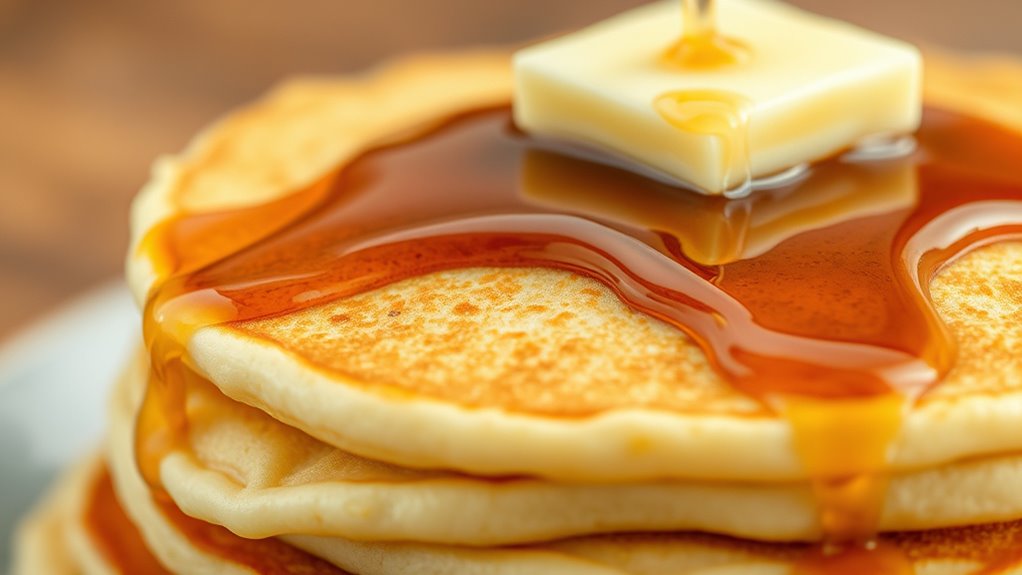
Have you ever wondered what makes pancakes rise and become fluffy? Leavening agents are the key. Their origins trace back centuries, with early methods relying on natural processes like fermenting dough or using beaten eggs. Historically, people used sour milk, yeast, or whipped egg whites to create air bubbles that lift the batter. These methods are considered some of the earliest leavening techniques, relying on biological or physical reactions. Today, commercial leavening agents like baking powder and baking soda have replaced traditional methods for convenience and consistency. But at their core, all leavening agents work by producing gases that get trapped in the batter, causing it to expand and rise. This process is essential for creating the light, fluffy texture we love in pancakes.
The Chemistry Behind Baking Powder and Baking Soda

Baking powder and baking soda are common leavening agents that produce the gases responsible for making pancakes fluffy. Baking soda, or sodium bicarbonate, reacts with acidic ingredients, creating carbon dioxide that helps leaven the batter. This reaction also affects the pH balance, making the batter more alkaline, which can influence gluten development. A higher pH level encourages gluten strands to form more elastically, contributing to the pancake’s structure. Baking powder contains both baking soda and an acid, so it releases gas when moistened and heated, providing a more controlled rise. Understanding this chemistry helps you adjust recipes to achieve the perfect fluffiness. Both agents work by generating gases that expand during cooking, but their chemical interactions with the batter’s pH and gluten determine the final texture.
How Bubbles Form and Make Pancakes Fluffy

When you mix leavening agents into pancake batter, they produce tiny bubbles of gas that are vital to achieving a fluffy texture. These bubbles form through bubble formation, which directly influences the pancake’s texture. As the batter heats, the gas expands, creating more bubbles that lift and aerate the mixture. Here’s what happens:
- Leavening agents release carbon dioxide, forming bubbles.
- The bubbles grow as heat causes gas expansion.
- The bubbles become trapped in the batter, giving pancakes their light, airy structure.
- Proper humidity and temperature conditions are also crucial for optimal bubble development and pancake fluffiness.
This process guarantees the pancake texture is soft and fluffy. Proper bubble formation is essential; too few bubbles result in dense pancakes, while too many can cause them to collapse. Mastering bubble development is indispensable for perfect, fluffy pancakes.
The Impact of Acid-Base Reactions in Pancake Batter

The chemical reaction between acids and bases in pancake batter plays a crucial role in producing carbon dioxide gas, which helps create the batter’s fluffy texture. When you add an acid like buttermilk or yogurt to a basic leavening agent such as baking soda, it triggers an acid-base reaction that releases CO₂. This process also influences the pH balance of your batter, impacting both texture and flavor. A proper pH level ensures the batter rises well without becoming too tangy or flat. Additionally, this reaction can enhance flavor by adding subtle tanginess, making your pancakes more complex and appealing. Maintaining the right balance between acids and bases is key to achieving ideal fluffiness and taste.
Tips for Achieving Perfect Fluffiness With Leavening Agents

To get fluffy pancakes, you need to focus on proper mixing techniques; overmixing can deflate the batter and reduce fluffiness. Make sure you measure your leavening agents accurately, as too much or too little can affect the rise. Paying attention to these details helps you achieve the perfect, airy texture every time. Incorporating the right energetic alignment can further enhance your cooking process and results.
Proper Mixing Techniques
Achieving fluffy pancakes relies heavily on proper mixing techniques, especially when using leavening agents like baking powder or baking soda. To get the right batter consistency, follow these tips:
- Mix just until combined: Overmixing can deflate the batter, resulting in denser pancakes. Stop when the ingredients are incorporated, even if there are a few lumps.
- Use gentle folds: When adding wet to dry ingredients, fold gently to maintain air bubbles that help create fluffiness.
- Avoid excessive stirring: Stirring too vigorously can break down leavening gases, reducing rise and fluffiness. Aim for a smooth, slightly lumpy batter.
- Pay attention to contrast ratio and lighting conditions in your kitchen, as they can influence your perception of batter consistency and pancake fluffiness.
Mastering these mixing techniques guarantees your batter remains light and airy, producing perfectly fluffy pancakes every time.
Accurate Leavening Measurements
Using the right amount of leavening agents is essential for fluffy pancakes, as even slight measurement errors can considerably affect the rise and texture. Achieving accurate leavening measurements depends on your measuring precision—using proper tools like measuring spoons or a scale ensures consistency. Pay close attention to ingredient ratios; too much baking powder or baking soda can cause bitterness or a soapy taste, while too little results in flat pancakes. Always level off your measurements for consistency and avoid scooping directly from containers, which can lead to excess. Carefully measuring and maintaining the correct ratios guarantees ideal leavening action, producing light, airy pancakes. Precision in your measurements is the key to consistently fluffy, perfectly risen pancakes. Proper measurement practices are also essential for maintaining the integrity of the recipe and achieving optimal results.
Common Mistakes That Affect Pancake Rise and Texture
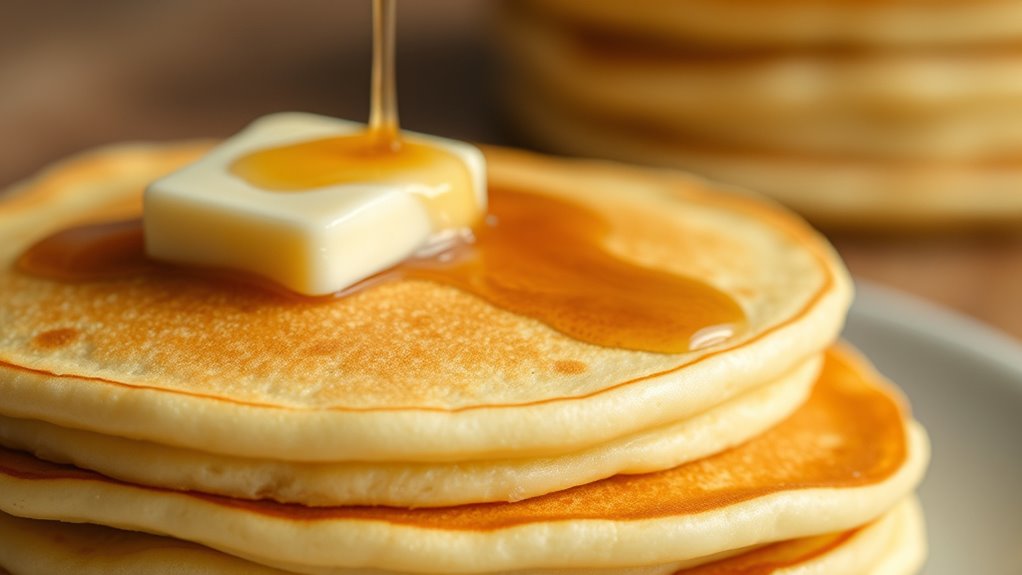
One common mistake that can prevent your pancakes from rising properly is overmixing the batter. When you overmix, you break down the gluten structure and deflate the leavening bubbles, resulting in flatter pancakes. To avoid this, focus on these key points:
- Mix until just combined – don’t overdo it.
- Pay attention to leavening timing; add baking powder or soda right before cooking.
- Use gentle folding techniques to keep air pockets intact.
- Remember that fresh leavening agents are essential for achieving optimal rise and fluffiness.
Proper leavening timing is critical because delaying it can cause the leavening agents to lose effectiveness before cooking. Overmixing batter or misjudging leavening timing will lead to dense, flat pancakes instead of fluffy ones. Keep your mixing minimal and add leavening agents at the right moment for best results.
Experimenting With Different Leavening Combinations
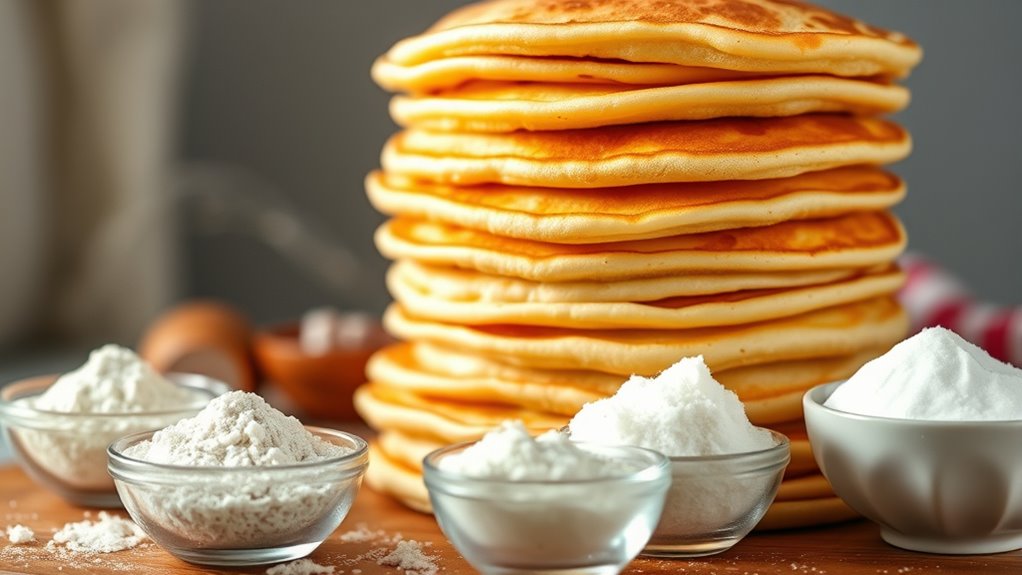
Experimenting with different leavening combinations can reveal a variety of pancake textures and flavors. By trying alternative ingredients like baking soda, baking powder, or whipped egg whites, you can discover unique results. Combining leavening agents might produce lighter, fluffier pancakes or denser, more substantial ones, depending on your preference. You can also explore flavor variations by adding ingredients like buttermilk, yogurt, or even a splash of vinegar to enhance leavening effects. Mixing these options allows you to tailor your pancakes to your taste, whether you prefer a subtle rise or a more pronounced fluffiness. Keep notes on your experiments so you can refine your recipe. Additionally, understanding leavening chemistry can help you optimize your pancake results and achieve the perfect texture every time. Ultimately, experimenting with different leavening combinations opens up a world of delicious possibilities for your pancake creations.
Frequently Asked Questions
Can Alternative Natural Leavening Agents Improve Pancake Fluffiness?
You might wonder if alternative natural leaveners can make your pancakes fluffier. Using alternative ingredients like baking soda with lemon juice or yogurt, which are natural leaveners, can boost rise and create a lighter texture. These natural leaveners release carbon dioxide during mixing and cooking, helping your pancakes become more airy and fluffy. Experimenting with different natural leaveners can enhance your pancake recipe without relying on traditional chemical agents.
How Does Batter Temperature Influence Leavening Effectiveness?
You might notice that batter temperature substantially impacts leavening effectiveness. When your batter is too cold, the leavening agents work sluggishly, resulting in denser pancakes. Conversely, slightly warmer batter activates leavening agents more efficiently, creating better gas expansion and fluffiness. However, if the batter is too warm, it can cause over-leavening or collapse. Striking the right temperature helps maximize leavening effectiveness for light, airy pancakes.
What Role Does Humidity Play in Pancake Rising?
Imagine you’re baking in a humid climate, like an ancient Egyptian bakery. Humidity effects your pancake rise because moisture retention in the batter helps leavening agents produce gas more effectively. High humidity keeps the batter moist, allowing bubbles to expand better, resulting in fluffier pancakes. Conversely, low humidity dries the batter, hampering rising. So, humidity directly influences how well your pancakes rise and stay light and airy.
Are There Health Benefits to Using Different Leavening Agents?
You might wonder if different leavening agents offer health benefits. Some options, like baking soda, are low in calories and can help neutralize stomach acid, while others, like baking powder, contain added ingredients that may affect health considerations. Choosing natural or organic leavening agents can boost nutritional benefits and reduce chemical intake. Ultimately, understanding their effects helps you make healthier choices for your pancakes and overall diet.
How Does Overmixing Batter Affect Leavening and Pancake Texture?
Think of your batter as a delicate dance; overmixing throws off the rhythm. When you overmix, you activate gluten development too much, resulting in a dense, tough pancake. Proper mixing techniques keep the leavening agents working their magic, creating air pockets that make your pancakes fluffy. So, avoid overmixing to preserve the light texture, and remember, gentle folding is key to a perfect, tender pancake every time.
Conclusion
By understanding the delicate dance of leavening agents, you hold the key to transforming simple batter into clouds of perfection. When you master their chemistry and embrace the art of balancing acids and bases, each pancake becomes a fleeting masterpiece—light, airy, and bursting with life. So, experiment boldly, and let your kitchen be a canvas where science and creativity blend, turning humble ingredients into a symphony of fluffy delight.
NFL season / tailgating Picks
team gear
As an affiliate, we earn on qualifying purchases.