

To make French toast that isn’t soggy in the middle, choose sturdy, slightly stale bread like challah or Texas toast, and avoid fresh slices that absorb too much liquid. Dip the bread quickly into a well-mixed custard, just enough to coat without soaking through. Fry at medium heat for about 2-3 minutes per side to develop a crispy exterior while keeping the inside tender. For more tips on perfecting your French toast, keep exploring these key steps.

Get kitchen staples and gadgets delivered free with Prime
- Fast, free delivery on millions of items
- Prime Video, Amazon Music and more included
- Member-only deals all year
Key Takeaways
- Use thick, slightly stale bread like brioche or challah to control liquid absorption.
- Dip bread quickly in custard to prevent overly soaked slices.
- Cook on medium heat to ensure the outside crisps before the inside becomes soggy.
- Properly drain excess custard before frying to avoid excess moisture.
- Aim for a golden-brown exterior with a tender, cooked interior to prevent middle sogginess.
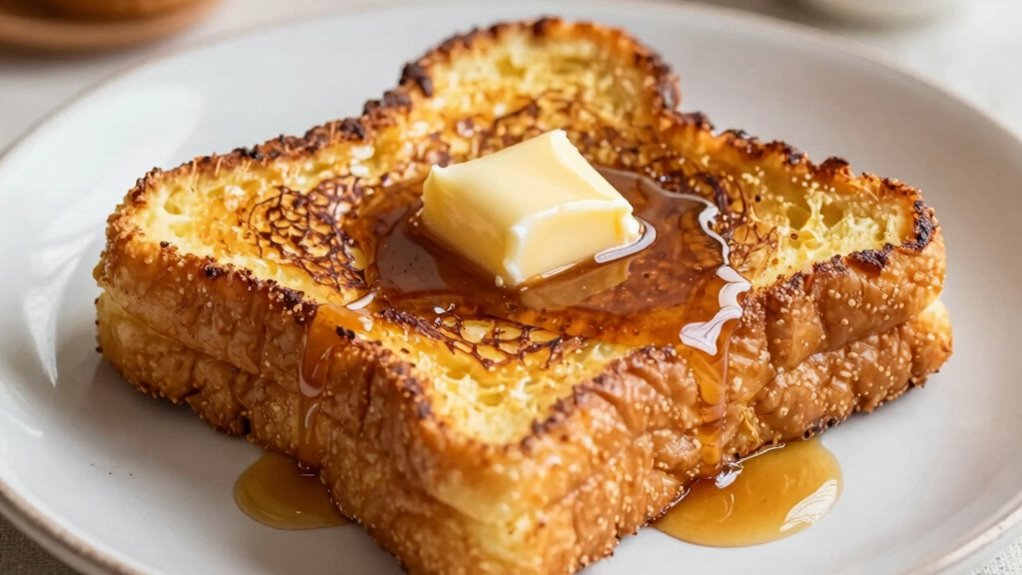
Making French toast is a simple and delicious way to start your day. To guarantee it turns out perfectly cooked, you need to pay attention to a few key details. One of the most important is choosing the right bread. The perfect bread selection is essential because it influences how well the toast absorbs the custard without becoming soggy in the middle. Thick slices of day-old bread, like brioche, challah, or Texas toast, are ideal. They’re sturdy enough to soak up the mixture without falling apart or turning mushy. Fresh bread tends to absorb too much liquid too quickly, leading to soggy centers, so opting for slightly stale bread helps control absorption and results in a more balanced texture.
Choosing the right bread, like brioche or challah, ensures perfect French toast without sogginess.
When preparing your custard, use eggs, milk, vanilla, and a pinch of salt. Whisk them together thoroughly, and then dip each slice of bread, allowing it to soak just enough to be coated but not overly saturated. The goal is to get the bread evenly coated without drenching it. If the bread is too soaked, it’ll likely turn soggy in the middle when cooked. Conversely, if it’s not soaked enough, the French toast won’t be flavorful or moist enough. So, find that sweet spot by dipping quickly but thoroughly, then letting the excess drip off before frying. Paying attention to the bread’s texture and absorption capacity can make a big difference in achieving perfect French toast. Additionally, managing the custard’s moisture content is crucial for preventing sogginess. Ensuring the custard has the right consistency helps control how much liquid the bread absorbs during dipping. You can also consider using properly stored bread to optimize absorption and texture.
Cooking your French toast at the right temperature is vital. Use a non-stick skillet or griddle set to medium heat. Too hot, and the outside will burn before the inside cooks through; too low, and it will take longer to cook, increasing the risk of sogginess. Cook each slice for about 2-3 minutes per side, until it’s golden brown and crispy on the outside. Keep an eye on the heat and adjust as needed to prevent burning. Proper heat management is essential for achieving that perfect crisp exterior and tender interior.
Once cooked, you can serve your French toast with traditional toppings that complement its rich flavor. Fresh berries, a dusting of powdered sugar, a drizzle of maple syrup, or a dollop of whipped cream are classic choices that enhance the dish without overpowering it. Remember, the key to avoiding sogginess is in the bread selection, proper soaking, and cooking at the right temperature. When you get these steps right, you’ll enjoy French toast that’s perfectly crispy on the outside and tender in the middle—an irresistible breakfast every time.
Frequently Asked Questions
Can I Use Bread Other Than White Bread?
Yes, you can use bread alternatives for French toast, like brioche, challah, or even thicker slices of sourdough. If you’re gluten-free, try gluten-free bread options available in stores. Just make certain the bread is sturdy enough to absorb the custard without falling apart, and slice it thickly. These choices add variety and flavor, making your French toast delicious whether you prefer traditional white bread or other tasty options.
How Long Should I Soak the Bread?
Your bread shouldn’t be soaked more than 20-30 seconds per side—the perfect soaking duration to prevent sogginess and keep the bread’s texture just right. If you dip it too long, it’ll turn into a soggy mess that’s impossible to rescue. Aim for a quick, even soak, so the custard penetrates without overpowering the bread’s structure. Keep an eye on the clock, and your French toast will turn out flawless!
What Type of Pan Is Best for Cooking?
You should use a non-stick skillet or a cast-iron pan for cooking French toast, as these pan types distribute heat evenly, preventing sogginess. Cast iron offers excellent heat retention, ensuring consistent cooking, while non-stick surfaces make flipping easier. Avoid thin or cheap pans that heat unevenly, which can lead to soggy centers. Preheat your pan properly, and cook over medium heat for best results, ensuring your French toast is golden and cooked through.
Should I Refrigerate Leftover French Toast?
Yes, you should refrigerate leftover French toast to keep it fresh. For proper leftover storage, place it in an airtight container or wrap it tightly with plastic wrap. When reheating, use a toaster or oven to restore crispiness, or microwave for a quicker option—just add a splash of moisture to prevent sogginess. These reheating techniques guarantee your leftovers taste nearly fresh and stay delicious.
Can I Make French Toast Ahead of Time?
Yes, you can make French toast ahead of time for meal prep or flavor variations. Simply soak the bread in the egg mixture, then refrigerate it overnight in an airtight container. In the morning, just fry or bake the slices. This method saves time and enhances flavor, especially if you add extras like cinnamon, vanilla, or fruit beforehand. It’s perfect for busy mornings or when hosting guests.
Conclusion
Now that you know the secrets to making French toast that isn’t soggy in the middle, you’re all set to impress. Just remember, patience is key—don’t rush the process or cut corners. With the right batter, proper heat, and careful cooking, you’ll turn out golden, crisp-on-the-outside, tender-on-the-inside slices every time. So go ahead, give it a shot and show everyone that you’re truly cooking up a storm. Sometimes, the proof is in the pudding!
Halloween Picks
halloween
As an affiliate, we earn on qualifying purchases.