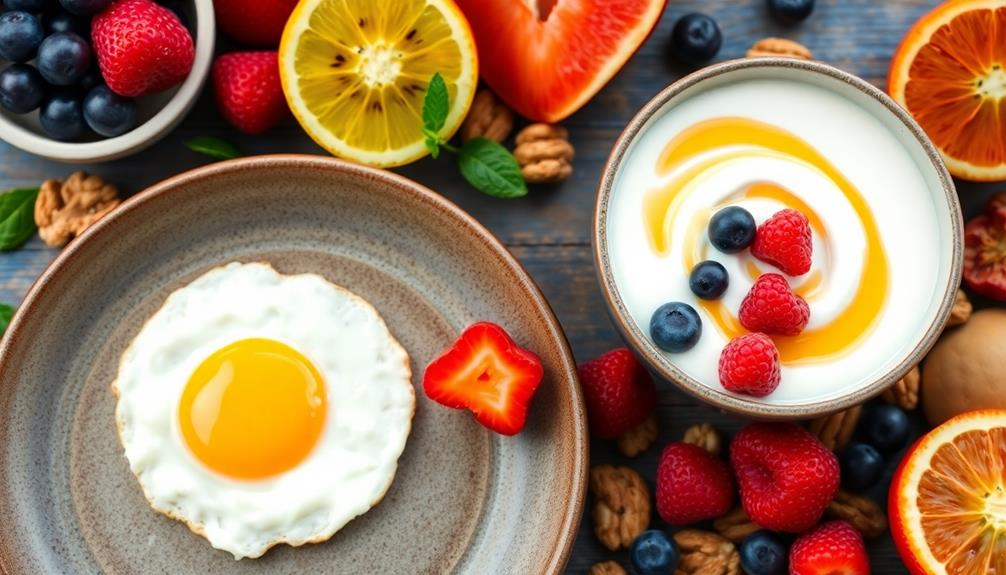
To keep fruit fresh on a breakfast platter, start by choosing ripe, firm fruit and washing it gently with cool water. Dry thoroughly and store properly—for example, refrigerate berries in breathable containers and keep apples in the crisper wrapped loosely in paper towels. To maintain vibrancy, cover cut fruit with lemon juice and avoid overcrowding containers. Proper handling and storage can extend freshness, and if you want tips on keeping fruit looking its best during your breakfast, keep exploring.

Get kitchen staples and gadgets delivered free — and shop member deals
- Fast, free delivery on millions of items
- Access to Prime Big Deal Days deals on October 6–7
- Prime Video, Amazon Music and more included
Key Takeaways
- Select ripe, firm fruit and wash gently before storage to maintain freshness.
- Store berries in breathable containers and apples in the crisper drawer to prevent spoilage.
- Cover cut fruit with lemon juice or citrus solutions to slow oxidation and preserve vibrancy.
- Assemble the platter close to serving time to ensure maximum freshness and appeal.
- Remove spoiled or soft fruit promptly and keep the platter refrigerated if prepared in advance.
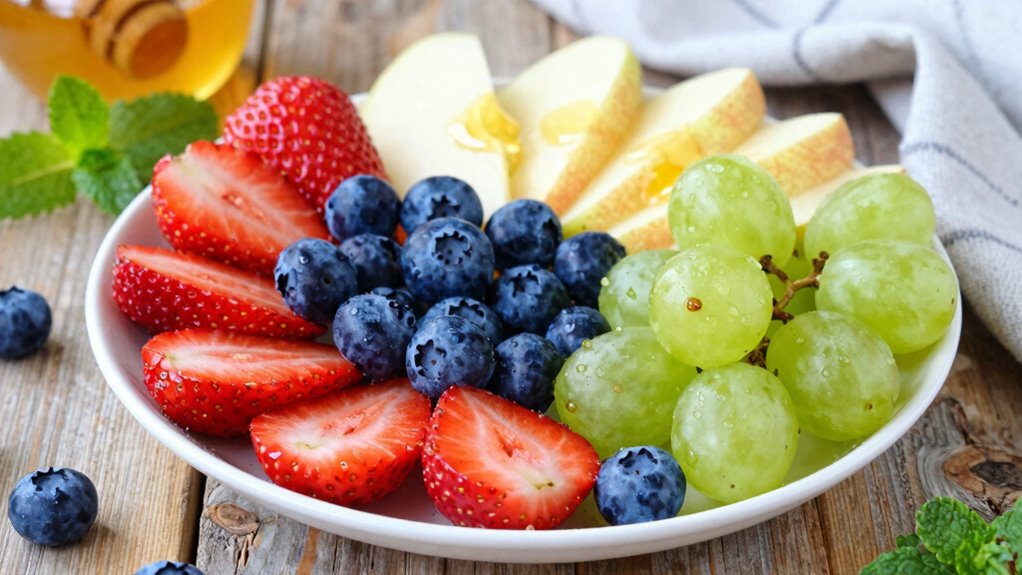
Ever wondered how to extend the freshness of your fruit? Keeping your fruit looking vibrant and tasting delicious on a breakfast platter doesn’t happen by chance. It’s all about proper fruit preservation techniques and freshness tips that prevent spoilage and maintain quality. When you carefully select and store your fruit, you set the stage for a beautiful, inviting presentation that stays fresh longer. Start by choosing ripe, firm fruit, as overripe pieces tend to spoil faster. Once home, wash your fruit gently with cool water and dry thoroughly before storing. Moisture encourages mold growth, so removing excess water helps conserve freshness.
Choose firm, ripe fruit and dry thoroughly to keep your breakfast platter fresh and vibrant longer.
To keep fruit fresh on your breakfast platter, consider storing certain types in specific ways. Berries, for example, should be refrigerated in a breathable container or a shallow dish lined with paper towels to absorb excess moisture. Placing berries in a sealed plastic container can trap humidity, speeding up spoilage. Apples and pears fare best in the crisper drawer, wrapped loosely in paper towels or stored in perforated containers that allow airflow. Citrus fruits like oranges and grapefruits stay fresh longer when stored in a cool, dry place, but they can also be refrigerated if you want to extend their shelf life. Cut fruit, however, requires special attention. Cover it tightly with plastic wrap or store it in airtight containers to prevent dehydration and minimize oxidation, which can turn fruit brown and dull.
If you’re preparing a breakfast platter in advance, consider placing cut fruit in lemon juice or a diluted citrus solution. The acidity helps slow down oxidation, keeping slices looking fresh and appealing. Additionally, avoid overcrowding your storage containers; giving fruit space allows air to circulate, reducing spoilage. When arranging your platter, try to assemble it as close to serving time as possible. If you need to prepare ahead, store the fruit in the fridge and add finishing touches just before presenting it. Using a clean, damp cloth to wipe down slices can also help remove excess moisture and keep the fruit looking vibrant. Proper storage methods are essential to maintaining fruit quality from preparation to serving. Incorporating appropriate preservation techniques can make a significant difference in keeping your fruit fresh longer. Proper temperature control is equally important in preventing rapid spoilage and ensuring your fruit stays as fresh as possible. Additionally, understanding the best storage conditions for different fruits can further optimize their shelf life.
Finally, keep an eye on the fruit’s condition. Remove any pieces that show signs of spoilage, such as mold or soft spots, as they can quickly affect neighboring pieces. Utilizing proper storage conditions can help extend the lifespan of your fruit and reduce waste. With a little planning and some effective fruit preservation strategies, your breakfast platter will not only look stunning but also taste fresh and inviting. These freshness tips ensure your fruit stays appealing from the moment you prepare it to when it reaches the table.
As an affiliate, we earn on qualifying purchases.
Frequently Asked Questions
Can Dried Fruit Stay Fresh Longer on a Platter?
Dried fruit can stay fresh longer on a platter if you store it properly in airtight storage containers, preventing exposure to air and humidity. Unlike fresh fruit, dried fruit doesn’t ripen further, so it stays stable over time. Keep it in a cool, dry place, and use airtight containers to maintain its texture and flavor. This way, your dried fruit remains tasty and fresh for an extended period.
Does Adding Sugar Help Preserve Fruit Freshness?
Adding sugar can act as a sugar coating, which helps preserve fruit freshness temporarily by creating a barrier that slows down spoilage. While it provides some natural preservation, it’s not a foolproof method. Think of sugar as a band-aid—helpful but not a cure-all. For longer-lasting freshness, combine sugar with proper storage techniques like refrigeration and keeping fruit dry, ensuring your platter stays appealing longer.
How Does Fruit Size Affect Its Shelf Life?
You’ll find that smaller fruit pieces ripen faster and have a shorter shelf life because their increased surface area accelerates fruit ripening. Larger fruits, with thicker skins and less exposed flesh, stay fresh longer under proper storage conditions. To maximize freshness, store fruits in cool, dry places or the fridge, and keep in mind that cut or sliced fruit needs to be refrigerated promptly to slow ripening and spoilage.
Is It Better to Store Fruit at Room Temperature or Refrigerated?
You should store most fruit in the refrigerator to slow down ripening and extend freshness. Keep your fruit in breathable storage containers or perforated bags to prevent moisture buildup, which can cause spoilage. Room temperature is fine for ripening fruits like bananas or avocados, but once ripe, refrigerate them promptly. Proper storage containers help maintain fruit quality longer, ensuring your breakfast platter stays appealing and fresh.
Can Using a Fruit Spray Extend Freshness?
Using a fruit spray can effectively extend freshness by slowing down oxidation and preventing dehydration. When you apply a quality fruit spray, it creates a protective barrier that helps keep your fruit looking vibrant and tasting fresh longer. Just make sure to choose a spray designed for edible use and follow the instructions carefully. This simple step can make a noticeable difference in maintaining the fruit’s freshness on your breakfast platter.
Conclusion
As you arrange the vibrant fruit on your breakfast platter, imagine each piece like a tiny treasure, perfectly preserved and ready to delight. By following these simple tips, you’ll keep the colors bright and flavors fresh, just as if you picked them straight from the garden. It’s a small coincidence that, with a little care, your beautiful display will stay inviting from the first bite to the last, turning breakfast into a feast for the senses.
NFL season / tailgating Picks
team gear
As an affiliate, we earn on qualifying purchases.