To master the perfect poached egg at home, start with fresh eggs and use a non-reactive pot filled with cold water just below boiling. Add a splash of vinegar, create a gentle whirlpool, and carefully slip in each egg. Cook for about 3-4 minutes for a runny or slightly firm yolk, then lift with a slotted spoon and drain gently. With these steps, you’ll consistently create beautifully poached eggs; keep going for even more tips to perfect your technique.
Key Takeaways
- Use fresh eggs and maintain water at a gentle simmer (180°F–190°F) with a splash of vinegar for optimal whites and yolk texture.
- Create a gentle whirlpool before adding each egg to help whites shape neatly around the yolk.
- Add eggs one at a time into the center of the whirlpool and cook for 3–5 minutes depending on desired doneness.
- Gently lift eggs with a slotted spoon, drain excess water, and support the entire surface to prevent breakage.
- Serve on toasted bread or greens, garnished as desired, for an elegant and flavorful presentation.
Choosing the Right Eggs for Poaching
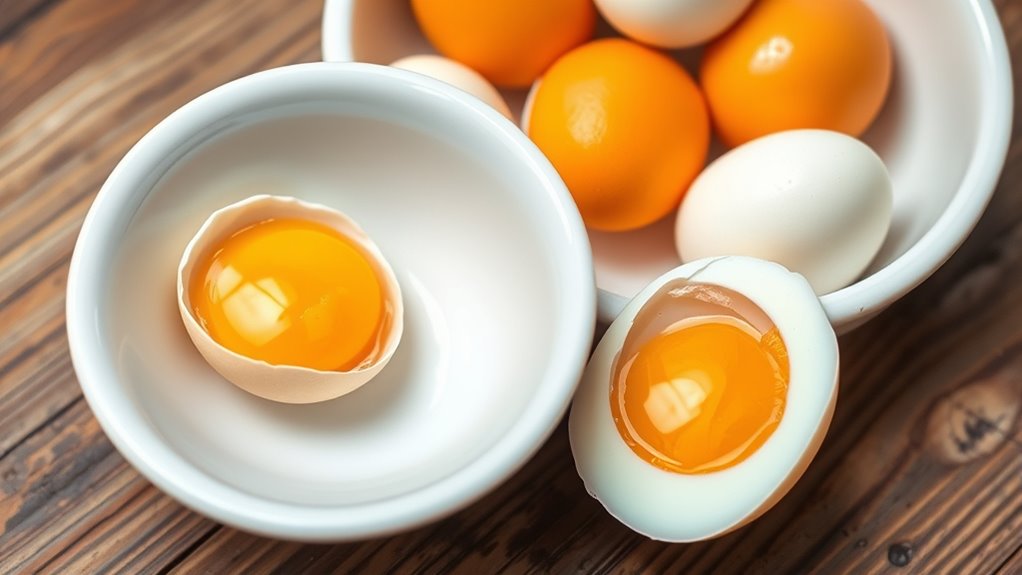
Choosing the right eggs is essential for achieving perfectly poached eggs. Fresh eggs are your best bet because their whites hold together better during cooking, preventing a runny mess. To test freshness, gently place an egg in water—if it sinks and lays flat, it’s fresh; if it floats or stands upright, it’s best to skip it. Egg size also matters; medium or large eggs are ideal because their consistent size makes timing easier and results in evenly cooked yolks and whites. Avoid very small or extra-large eggs, as they can throw off your timing and affect the final look. Selecting fresh, appropriately sized eggs guarantees your poached eggs will turn out beautifully, with firm whites and runny yolks every time. Understanding egg freshness can help you choose the best eggs for your cooking needs.
Preparing the Water and Adding Vinegar
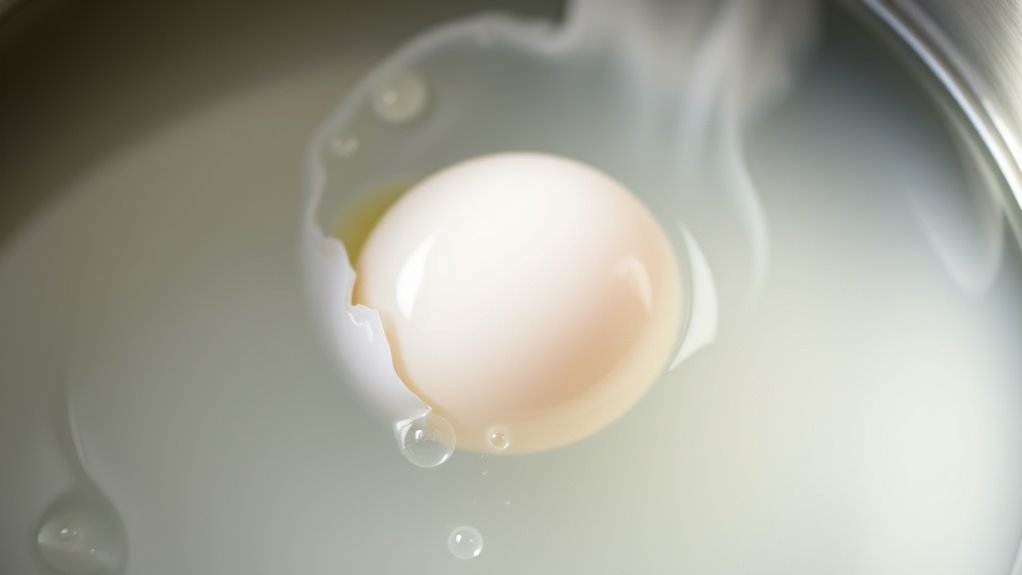
Start by filling your pot with fresh water, enough to fully submerge your eggs. Add a splash of vinegar—about a teaspoon per cup of water—to help the whites hold together. Keep the heat at a gentle simmer; vigorous boiling can break apart the delicate eggs. Using a clean, non-reactive pot can also prevent appliance corrosion that might affect your cooking process.
Use Fresh Water
To guarantee your poached egg turns out perfectly, fill a saucepan with fresh, cold water. Using fresh water ensures superior water quality, which is essential for a smooth, even cook. Older or stagnant water can contain impurities or a higher mineral content that might interfere with the delicate process, causing the egg to spread or not hold its shape. Always choose clean, fresh water right before cooking, as this helps maintain the right temperature and minimizes any unpleasant odors. Avoid using tap water that has been sitting for a while; instead, refill with fresh water each time. This simple step guarantees your poached egg will cook evenly, look pristine, and taste as good as possible. Ensuring the water is free from contaminants supports the proper cooking process and helps achieve the best results.
Add Proper Vinegar
Adding the right amount of vinegar to your simmering water helps the egg whites coagulate quickly and stay together. Use a mild vinegar, like white distilled or rice vinegar, as they won’t overpower the egg’s flavor. Typically, about one to two teaspoons of vinegar per quart of water is sufficient. Be careful not to add too much, as excess vinegar can affect the taste. The vinegar works by lowering the water’s pH, which helps the proteins in the egg whites set faster. Pour the vinegar in gently once the water is simmering, and avoid stirring. This simple step ensures your eggs hold their shape and achieve that perfect, delicate appearance you’re aiming for. Incorporating automation technologies can also streamline the process if you’re making multiple eggs at once.
Maintain Gentle Boil
Achieving the perfect poached egg begins with maintaining a gentle simmer in your water. Keep the water temperature just below boiling, around 180°F to 190°F, to prevent the egg from breaking apart. As the water heats, gently stir in a splash of vinegar to help the egg whites coagulate quickly. When the water reaches the right temperature, reduce the heat to maintain a gentle boil—small bubbles should rise steadily without vigorous movement. Use these stirring techniques:
- Stir the water in a circular motion before adding the egg
- Keep the water moving gently afterward
- Avoid vigorous stirring, which can break the egg apart
This careful control ensures your egg stays intact, and the gentle simmer creates the ideal environment for a perfectly poached egg. Additionally, understanding contrast ratio can help you appreciate how visual clarity and detail are crucial when assessing the quality of your perfectly cooked egg.
Creating a Gentle Swirl Before Adding Eggs
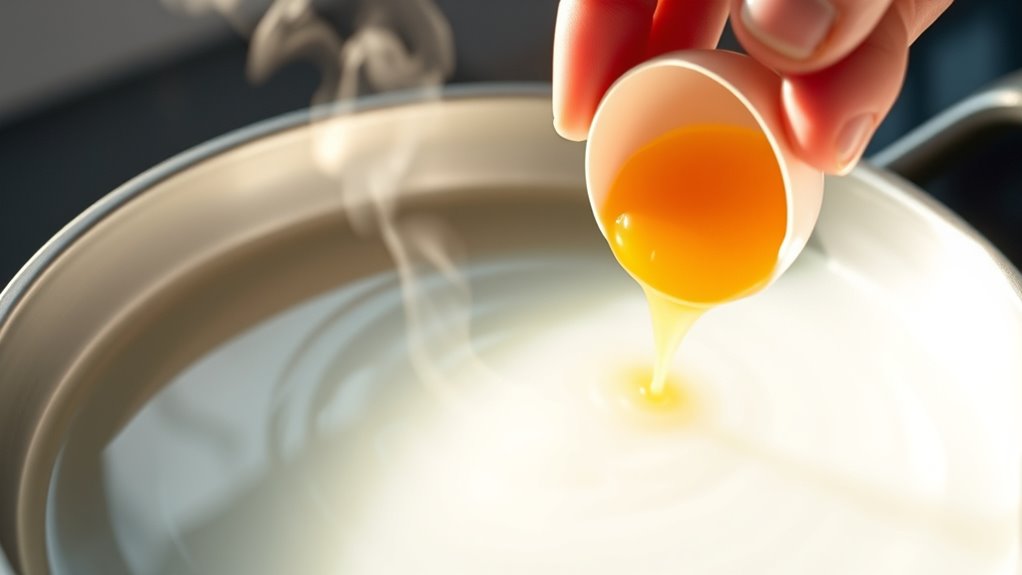
Before you gently slip in the eggs, create a calm swirling motion in the water. Use a spoon or a spatula to stir gently in a circular motion, causing the water to swirl smoothly. This swirling water helps the eggs stay together and prevents them from spreading out too much. When you’re ready, carefully introduce the eggs one at a time into the center of the whirlpool. The movement guides the egg white toward the yolk, promoting a neat, compact shape. Keep the swirl gentle; too strong, and the eggs might break apart or disperse. Incorporating proper water temperature is also crucial for achieving perfect poached eggs, as it ensures the eggs cook evenly and maintain their structure. This simple step ensures a more controlled, elegant poached egg, making your kitchen technique look as refined as it tastes.
Perfect Timing for Different Levels of Doneness

The key to perfect poached eggs is timing them precisely to match your preferred level of doneness. Egg freshness and water temperature play vital roles in achieving this. For runny yolks, use very fresh eggs and cook for about 3 minutes in gently simmering water, which should stay around 180°F (82°C). If you want a slightly firmer yolk, extend the cook time to 4 minutes, maintaining consistent water temperature. For fully set whites and semi-firm yolks, cook for around 5 minutes, ensuring the water remains at a steady simmer. Keep these tips in mind:
- Fresh eggs hold shape better during poaching.
- Water temperature should stay just below boiling point.
- Adjust timing based on egg freshness and desired doneness.
- The quality of the eggs can significantly influence the final result, highlighting the importance of egg freshness in achieving the perfect poached egg.
Removing and Draining the Poached Eggs

Use a slotted spoon to lift the eggs gently from the water. Allow excess water to drain off before transferring them to a plate or toast. Handle the eggs carefully to keep them intact and avoid breaking the delicate whites. For best results, serve the poached eggs promptly to enjoy their perfect texture. Floating on water techniques help ensure a smooth and delicate poaching process.
Using a Slotted Spoon
A slotted spoon is an essential tool for carefully lifting your poached eggs from the water without breaking the delicate whites. Using proper slotted spoon techniques guarantees your eggs stay intact and ready for serving. To maximize egg retrieval tips, gently slide the spoon underneath the egg, supporting the entire surface. Lift slowly to prevent whites from slipping off. Keep the spoon steady and avoid jostling to preserve the perfect shape. Gently shake off excess water before transferring the egg to a plate or toast. Incorporating tuning techniques can also improve your overall cooking precision, ensuring your eggs are perfectly prepared each time.
Draining Excess Water
After lifting your poached egg with a slotted spoon, it’s important to let excess water drain away promptly. Gently shake the spoon to remove most of the water, then transfer the egg onto a clean kitchen towel or a few layers of paper towels. Pat the top lightly to absorb any remaining moisture, ensuring your egg isn’t swimming in water. This step prevents excess moisture from diluting your dish or making the egg slippery. Use a gentle touch to avoid breaking the delicate egg white. Additionally, proper draining techniques are essential for achieving a neat presentation and optimal flavor. Once drained, place the egg on a plate or serving dish, ready for your next step. Proper draining keeps your poached egg neat, tidy, and perfect for presentation and flavor.
Handling With Care
Handling your poached eggs with care is essential to prevent breaking the delicate whites or damaging the yolk. Proper egg handling ensures you maintain their perfect shape and texture. When removing the eggs from water, use a slotted spoon with a gentle grip to avoid crushing or tearing the whites. Be mindful of kitchen safety—hot water and careful movement are key.
To handle eggs safely:
- Gently lift the eggs, supporting the entire surface
- Drain excess water by letting them rest briefly on a paper towel
- Transfer carefully to a plate or toast to prevent breakage
Serving Suggestions to Elevate Your Dish

To truly elevate your poached egg, consider pairing it with fresh, toasted bread or a bed of sautéed greens to add texture and flavor. Garnishing options like chopped chives, cracked black pepper, or a drizzle of hollandaise can enhance visual appeal and taste. Look for complementary side dishes such as crispy bacon, roasted tomatoes, or a light mixed greens salad to round out your meal. These additions bring contrast and balance, making each bite more satisfying. Avoid overcrowding your plate; focus on simple, high-quality ingredients that highlight the delicate egg. By choosing the right garnishes and side dishes, you transform a basic poached egg into a beautifully composed, flavorful dish perfect for any occasion.
Troubleshooting Common Poaching Problems

Despite your best efforts, poached eggs can sometimes turn out less than perfect, with issues like a runny yolk, wispy whites, or broken shells. To troubleshoot, start by checking egg freshness—fresher eggs hold their shape better. Make certain your water temperature is just right; too hot, and whites spread out, too cold, and whites don’t set properly.
Consider these tips:
- Use fresh eggs to prevent wispy whites and broken shells
- Maintain water at a gentle simmer, around 180°F to 190°F
- Create a gentle whirlpool before adding the egg to help it stay intact
Adjusting these factors can considerably improve your poached eggs’ appearance and texture.
Frequently Asked Questions
Can I Use Frozen Eggs for Poaching?
You can use frozen eggs for poaching, but keep in mind that freezing influences their texture and whites. When using frozen eggs, thaw them first in the fridge or under cold water, then gently poach as usual. Be sure to adjust your boiling techniques, keeping water at a gentle simmer rather than a vigorous boil. This helps prevent the whites from spreading and ensures a tender, perfectly poached egg.
What’s the Best Pan Size for Poaching Multiple Eggs?
Did you know that using the right pan size can improve your poached eggs’ success rate? For multiple eggs, choose a pan that’s at least 3 inches deep and wide enough to hold them without crowding—ideally, a 10-inch skillet. Consider pan material too; stainless steel heats evenly, helping you manage egg size and water temperature better. This way, your eggs stay intact and perfectly poached every time.
How Do I Store Leftover Poached Eggs Safely?
When storing leftover poached eggs, follow these storage tips to keep them fresh and safe. Place the eggs in an airtight container and refrigerate promptly, adhering to refrigeration guidelines of consuming within two days. You can reheat them gently in hot water or a microwave. Always check for any off smell or texture changes before eating. Proper storage guarantees your eggs stay safe and tasty for later enjoyment.
Can I Reheat Poached Eggs Without Overcooking?
Imagine you’re in a time machine—reheating poached eggs without overcooking can be tricky. To do it right, use gentle reheating techniques like placing eggs in hot water or microwaving at low power in short bursts. These methods help preserve the egg’s delicate texture. Keep a close eye, and avoid high heat, so your eggs stay tender and delicious without becoming rubbery.
Is It Okay to Add Salt to the Water?
Adding salt to the water is okay, as it helps with salt seasoning and can improve egg preservation. However, keep in mind that too much salt may affect the egg’s texture and make peeling harder. A pinch of salt is enough. This simple step enhances flavor and can help maintain the egg’s integrity during cooking, making your poached eggs tastier and easier to handle.
Conclusion
Mastering the perfect poached egg is easier than you think, especially when you follow these simple steps. Did you know that adding a splash of vinegar can reduce egg whites spreading by up to 50%? With patience and practice, you’ll consistently enjoy beautifully runny or firm yolks. Keep experimenting and refining your technique—soon, poached eggs will become a staple in your breakfast repertoire, impressing family and friends alike.