
Mastering poached eggs is a key skill that elevates any brunch. You can create perfect, delicate whites with a gentle simmer and fresh eggs, using techniques like cracking into ramekins and swirling vinegar in your water. Practice makes perfect—handling with care and shaping with a spoon enhances presentation. With patience, you’ll transform simple eggs into an elegant centerpiece. Keep exploring these tips to unleash the full potential of poached eggs and impress your guests effortlessly.

Get kitchen staples and gadgets delivered free — and shop member deals
- Fast, free delivery on millions of items
- Access to Prime Big Deal Days deals on October 6–7
- Prime Video, Amazon Music and more included
Key Takeaways
- Use fresh eggs and gentle simmering water for firm whites and runny yolks.
- Crack eggs into cups or ramekins for better control and shape.
- Create a gentle swirl in the water and slide eggs in carefully to maintain shape.
- Support eggs with a slotted spoon during cooking and mold into round shapes before serving.
- Practice consistently to improve technique, control, and achieve elegant, perfectly shaped poached eggs.

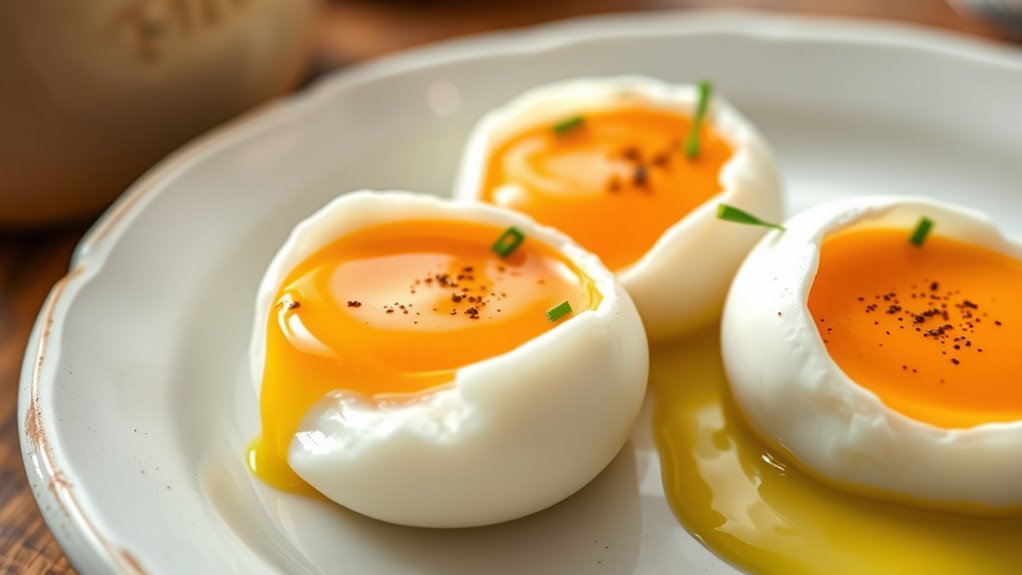
Poached eggs are a versatile and healthy breakfast option that can elevate any meal with their delicate texture and rich flavor. When you master the art of poaching, you open a simple yet impressive way to serve eggs that look as good as they taste. One of the key aspects of perfect poached eggs is understanding egg shaping, which refers to how you handle the egg before cooking to achieve a neat, tidy appearance. To shape your eggs well, start by cracking each egg into a small cup or ramekin; this allows you to gently slide it into the water, controlling the shape and preventing the whites from spreading too much. For a tidy result, some people use a swirl of vinegar in the water to help the whites coalesce quickly, but the real secret is gentle handling and patience.
Cooking techniques play a vital role in achieving that tender, runny-yolk center with a smooth, firm white exterior. You want to bring your water to a gentle simmer—not a rolling boil—because vigorous bubbling can cause the egg to break apart or lose its shape. Using fresh eggs is essential since their whites are firmer and less likely to disperse in the water. When you drop the egg into the water, do so slowly and close to the surface to minimize splashing and maintain control over the shape. You can also use a slotted spoon to gently support the egg as it cooks, helping to keep its form intact. The cooking time is usually around three to four minutes, which yields a runny yolk and a fully set white. Keep an eye on the clock to avoid overcooking, as the texture can quickly turn from perfect to rubbery.
Once cooked, you can lift your poached eggs carefully with a slotted spoon, letting excess water drain away. For presentation, you might gently mold the egg into a round shape with the spoon or use a ramekin to help shape it before transferring to your plate. Consistent practice of egg shaping and refining your cooking techniques will give you better control over the final result. Remember, the key is patience and gentle handling. With each attempt, you’ll get better at understanding how different eggs behave and how to manipulate the water temperature and timing for ideal results. Poached eggs are not just about the taste—they’re about the skill of shaping and cooking them perfectly, transforming a simple ingredient into an elegant brunch centerpiece.
poached egg silicone egg poacher
As an affiliate, we earn on qualifying purchases.
As an affiliate, we earn on qualifying purchases.
Frequently Asked Questions
What Is the Best Type of Vinegar to Use for Poaching Eggs?
You should use white vinegar for poaching eggs, as its mild flavor won’t overpower the delicate taste. When exploring vinegar options, avoid balsamic or apple cider vinegar because their strong flavors can alter the egg’s taste. For the best egg poaching techniques, add a splash of vinegar to boiling water to help the whites coagulate quickly and neatly. Keep the vinegar amount small—just a teaspoon per pot—to achieve perfect, tender poached eggs every time.
How Can I Tell if a Poached Egg Is Perfectly Cooked?
Did you know 85% of people prefer their poached eggs with a runny yolk? To tell if yours is perfect, check the egg white consistency—should be firm but tender—and the yolk firmness—just slightly runny. Gently lift the egg and give it a light shake; if the white stays intact and the yolk jiggles slightly, you’ve nailed that perfect poached egg.
Can I Reuse the Poaching Water for Multiple Eggs?
Yes, you can reuse the poaching water for multiple eggs, but keep in mind that water reuse can influence egg freshness and cooking quality. To maintain good results, avoid using water that’s been sitting too long or contains bits of shell or yolk. Reusing water works best when cooking eggs in quick succession; otherwise, fresh water ensures better flavor and texture for each poached egg.
What Are Common Mistakes to Avoid When Poaching Eggs?
Avoid common mistakes like letting egg whites spread out too much, which ruins their shape, or overcooking eggs, making them rubbery. Keep the water at a gentle simmer to prevent spreading and guarantee a tender texture. Use fresh eggs for better shape and control the cooking time to prevent overcooking. Stir the water lightly before adding eggs to help them stay compact and intact.
How Do I Store Leftover Poached Eggs Safely?
You should refrigerate leftover poached eggs promptly in an airtight container, ideally within two hours of cooking. Use refrigeration tips like placing them in a shallow container to prevent damage. For longer storage, consider freezing techniques by individually wrapping eggs in plastic wrap, then storing them in a freezer-safe bag. When ready to eat, reheat gently in hot water or a microwave, but note that texture may change.
Conclusion
Mastering the art of poached eggs elevates your brunch game, turning simple ingredients into a masterpiece. Like an artist perfecting their brushstrokes, you’ll find joy in each delicate, runny yolk. Remember, even the greatest chefs started with humble beginnings—think of it as your own culinary Odyssey. With patience and practice, you’ll create breakfast that’s as timeless as the stories of Homer. So go ahead, crack that egg and embrace your inner artisan.
Fall Picks
fall essentials
As an affiliate, we earn on qualifying purchases.