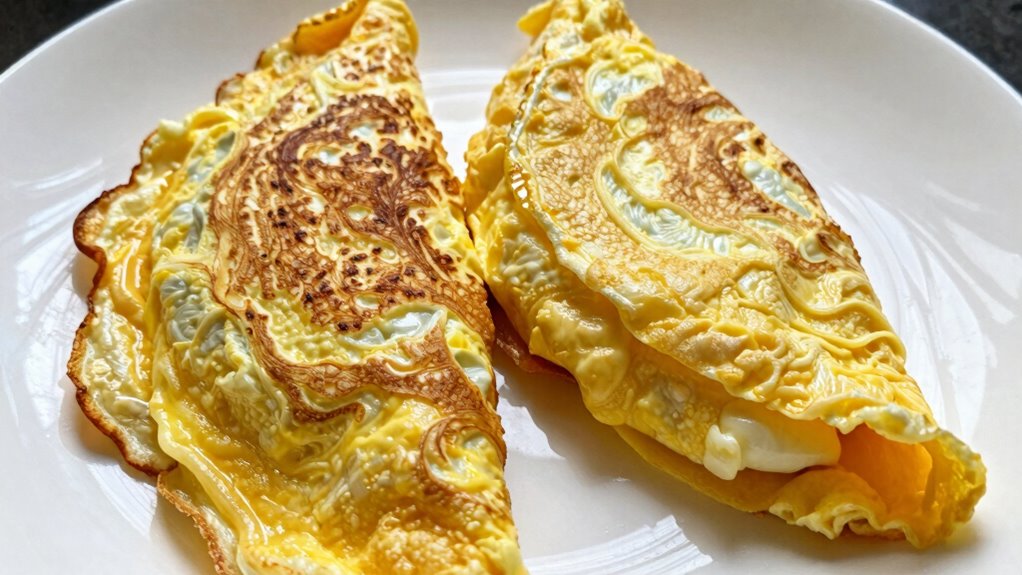

Rubbery omelets happen when you overbeat the eggs, add too much moisture, or cook at too high a temperature, causing proteins to tighten and squeeze out moisture. To stay tender, beat eggs gently, control the heat to medium or low, and remove the omelet from the stove early. Managing moisture and temperature carefully makes the difference. To learn how to master these techniques and get perfect omelets every time, keep exploring the tips below.

Get kitchen staples and gadgets delivered free with Prime
- Fast, free delivery on millions of items
- Prime Video, Amazon Music and more included
- Member-only deals all year
Key Takeaways
- Overbeating eggs introduces excess air, leading to dry, rubbery textures.
- Cooking at high temperatures causes rapid protein tightening, squeezing out moisture.
- Excess moisture during beating or cooking can make eggs watery and hard to cook evenly.
- Overcooking or removing eggs from heat too late results in moisture loss and toughness.
- Using moderate heat and gentle techniques helps maintain tenderness and prevents rubberiness.
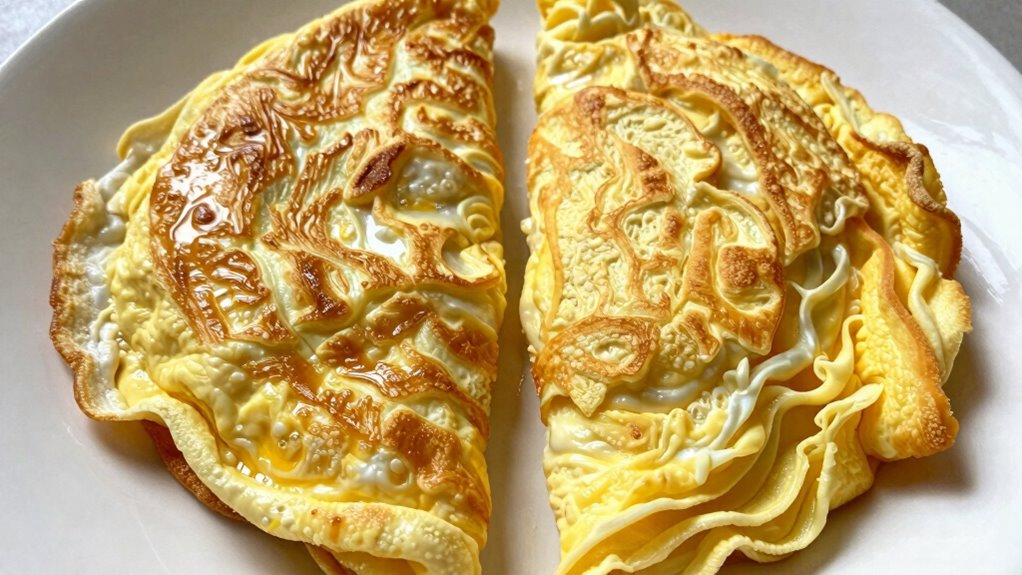
Omelets can be a breakfast favorite, but sometimes they turn out rubbery instead of tender and fluffy. One of the main reasons for this is how you handle egg moisture and cooking temperature. When you beat your eggs, you’re adding moisture, but how you manage that moisture during cooking makes all the difference. If you overbeat the eggs, you incorporate too much air, which can lead to a dry, rubbery texture once cooked. Conversely, if your eggs aren’t beaten enough, they might be unevenly cooked, resulting in tough spots. Achieving the right egg moisture balance is essential: you want enough liquid to keep the eggs tender, but not so much that they become watery or difficult to cook evenly. Controlling the cooking temperature ensures the eggs cook gently and prevent moisture loss.
Cooking temperature plays a key role in determining the texture of your omelet. If you turn the heat up too high, the eggs will cook too quickly on the outside while remaining underdone inside. This rapid cooking causes the proteins in the eggs to tighten and squeeze out moisture, leading to a rubbery consistency. To prevent this, you should cook your omelet over medium to low heat. This allows the eggs to cook gently and evenly, giving you more control over the final texture. When you cook at the right temperature, the eggs stay moist and tender, and you avoid the denser, rubbery results that come from rushing the process.
Timing and technique also matter. As soon as you see the eggs just starting to set around the edges, it’s time to gently lift and tilt the pan to let the uncooked eggs flow underneath. This technique helps cook the omelet evenly without overexposing it to heat, preserving moisture and tenderness. If you cook too long or at too high a temperature, the eggs lose their moisture and turn rubbery. Keeping the heat moderate and removing the eggs from heat promptly once they’re mostly set ensures a soft, fluffy texture.
Frequently Asked Questions
Can the Type of Eggs Affect Omelet Texture?
Yes, the type of eggs can affect your omelet’s texture. Fresh eggs typically produce a creamier, tender omelet, while older eggs might result in a rubbery consistency. Also, the pan material matters—non-stick pans help cook eggs evenly and prevent sticking, maintaining a tender texture. Using fresh eggs and a quality pan makes a noticeable difference, ensuring your omelet stays soft and fluffy rather than rubbery.
Does Altitude Impact Omelet Cooking Results?
Altitude effects can make your omelet cook faster and tougher, like a race car on a steep hill. You’ll need to make cooking adjustments, such as lowering the heat and increasing cooking time, to prevent rubberiness. At higher elevations, water boils at lower temperatures, so you might also add a bit of extra moisture. These tweaks guarantee your omelet stays tender and delicious, no matter how high you climb.
Is It Better to Use Glass or Metal Pans?
Using a metal pan is generally better for omelets because it heats evenly and responds quickly to temperature changes, which helps you control your cooking techniques better. Proper pan preparation, like greasing it well, prevents sticking and guarantees a tender texture. Glass pans heat more slowly and can cause uneven cooking, increasing the risk of rubbery omelets. So, opt for a well-prepared metal pan for the best results.
How Does Age of Eggs Influence Omelet Consistency?
You’ll find that older eggs, typically over a week old, can make your omelet more rubbery because their whites and yolks don’t blend as smoothly. Egg freshness impacts omelet consistency, as fresher eggs tend to be firmer and blend better. To keep your omelet tender, use fresh eggs and cook at a moderate temperature, around medium, to prevent overcooking and rubberiness.
Should Seasoning Be Added Before or After Cooking?
You should add seasoning after cooking your omelet for better flavor enhancement. Seasoning during cooking can sometimes draw out moisture, affecting texture and making it rubbery. By adding salt and spices post-cooking, you preserve the tender, fluffy quality of your omelet. This timing ensures your flavors stay vibrant, and your omelet remains light and delicious. So, for maximum taste and texture, season your omelet after it’s finished cooking.
Conclusion
Mastering the art of a perfect omelet is like tending a delicate garden—you need patience, the right tools, and a gentle touch. When you pay attention to heat and timing, your omelet transforms from a stubborn, rubbery shell into a tender, fluffy cloud of breakfast bliss. Remember, each stir and flip is like a brushstroke on a masterpiece. With practice, you’ll turn everyday eggs into a culinary sunrise—bright, inviting, and irresistibly tender.
NFL season / tailgating Picks
team gear
As an affiliate, we earn on qualifying purchases.