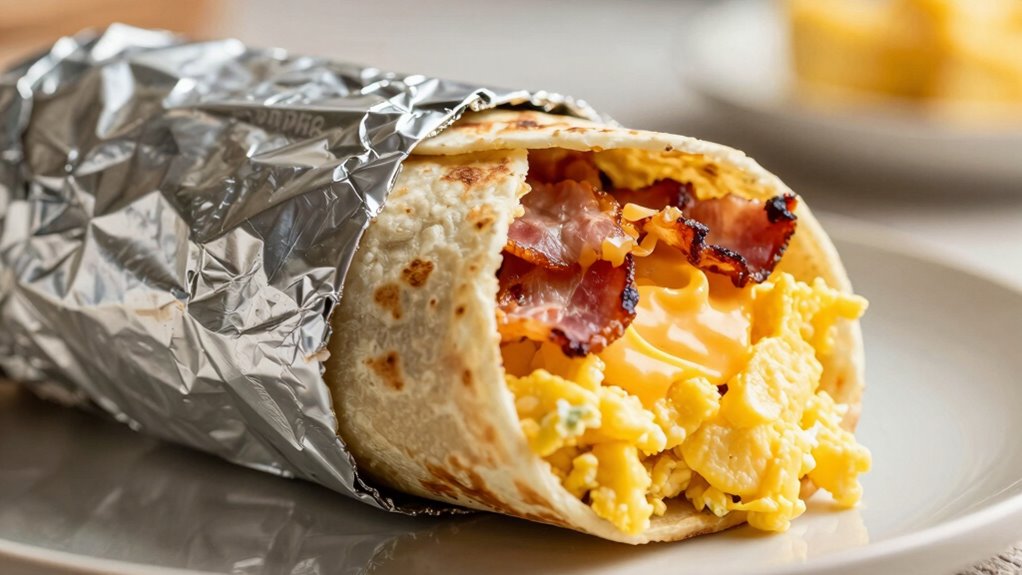

To make the perfect freezer breakfast burrito that reheat without rubber eggs, choose hearty fillings like cooked meats, sturdy cheeses, and sautéed vegetables that hold moisture. Cook eggs gently over low heat with a splash of milk or water for a fluffy texture, and avoid overfilling or overcooking. Wrap tightly in foil or plastic, store in airtight containers, and reheat carefully on low power. Keep exploring these tips to master the ultimate reheatable burrito.

Get kitchen staples and gadgets delivered free with Prime
- Fast, free delivery on millions of items
- Prime Video, Amazon Music and more included
- Member-only deals all year
Key Takeaways
- Cook eggs over low heat with added milk or water for fluffy, moist texture that reheats well.
- Sauté vegetables beforehand to remove excess moisture, preventing sogginess in the burrito.
- Wrap burritos tightly in foil or plastic to prevent air exposure and moisture loss during freezing.
- Reheat slowly in the microwave covered with a damp paper towel to maintain moisture and prevent rubberiness.
- Use high-quality, evenly distributed fillings and avoid overstuffing to ensure even heating and tender eggs.
microwave breakfast burrito warmer
As an affiliate, we earn on qualifying purchases.
As an affiliate, we earn on qualifying purchases.
Why Do Freezer Breakfast Burritos Turn Out Rubberly, and How Can You Fix It?
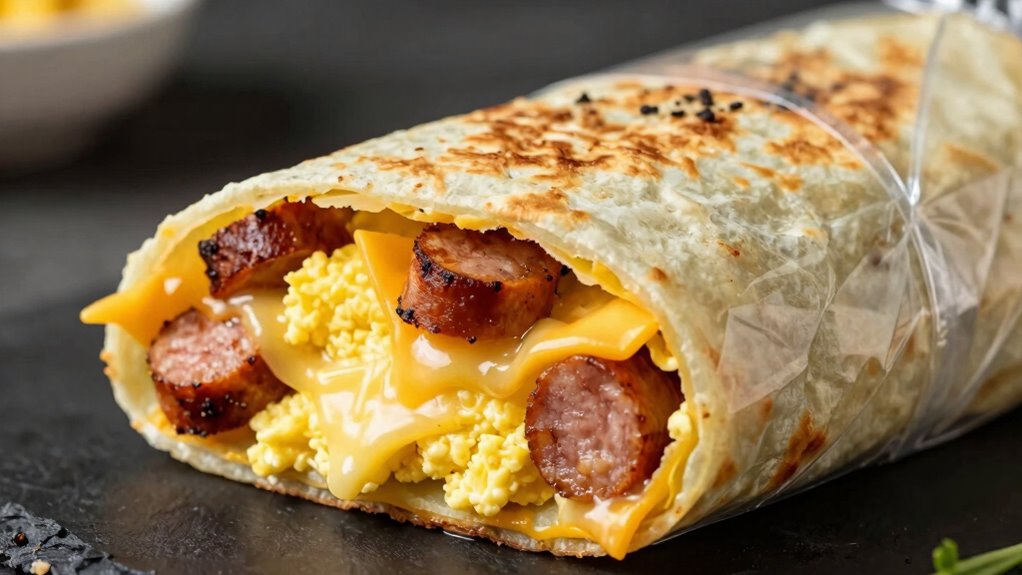
Have you ever wondered why your freezer breakfast burritos sometimes turn out rubbery instead of tender? The main culprit is often egg moisture loss during freezing and reheating, which leads to a tough texture. When eggs are overcooked or have low moisture content, they become dense and rubbery. Filling density also plays a role: overly packed burritos trap less air and moisture, making reheating more challenging. To fix this, guarantee your eggs are cooked just until set, retaining enough moisture for reheating. Avoid overfilling your burritos, which can compress ingredients and cause uneven heating. Wrapping burritos tightly and reheating gently helps preserve egg moisture and prevents the filling from becoming dense and rubbery. Proper preparation keeps your breakfast burritos tender and delicious. Ensuring the right cooking techniques can significantly improve the texture and reheating quality of your burritos, especially by controlling moisture retention during cooking and storage.
Choosing the Best Fillings for Freezer Breakfast Burritos
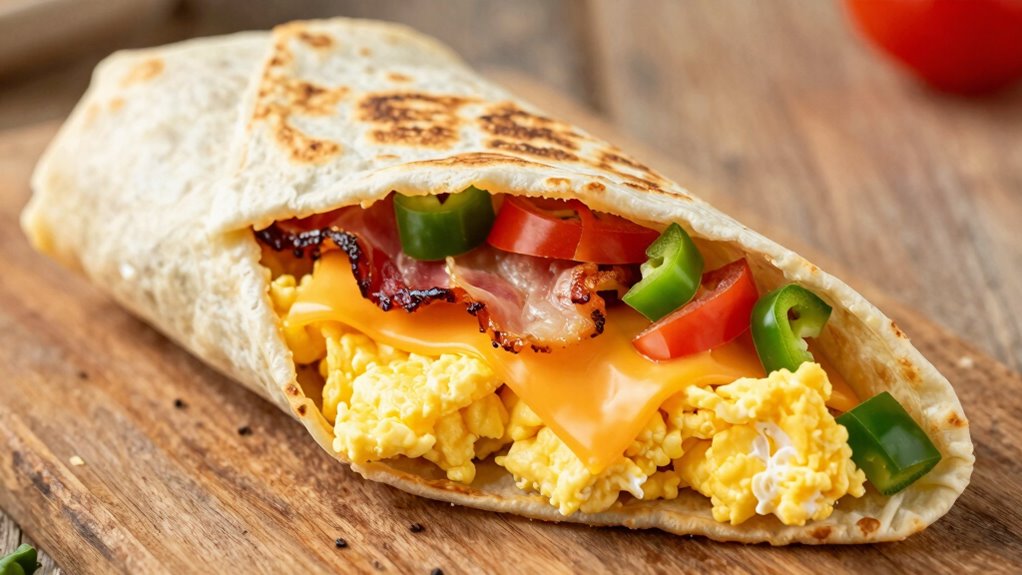
Choosing the right fillings is key to making freezer breakfast burritos that stay tasty and maintain a good texture. When selecting cheese, opt for shredded options like cheddar, Monterey Jack, or pepper jack, which melt well without becoming greasy or rubbery. Avoid using overly soft cheeses that can turn slimy after freezing. For vegetable fillings, choose sturdy options like bell peppers, spinach, or mushrooms, which hold their texture when frozen and reheated. Sauté vegetables before adding them to the burritos to remove excess moisture and improve their texture. Steer clear of watery vegetables like tomatoes, which can make the burrito soggy. Additionally, understanding freezing and reheating techniques can help preserve the quality of your ingredients and prevent sogginess, ensuring your freezer burritos stay flavorful and maintain a satisfying texture after reheating. Proper ingredient preparation can also significantly enhance the overall texture and flavor of your breakfast burritos, especially when considering moisture control during freezing and reheating processes. Paying attention to portioning and wrapping will help prevent freezer burn and maintain the ideal texture in each burrito. Incorporating airtight packaging techniques further ensures freshness and prevents moisture loss during storage.
How to Cook Eggs for Freezer Burritos So They’re Fluffy When Reheated
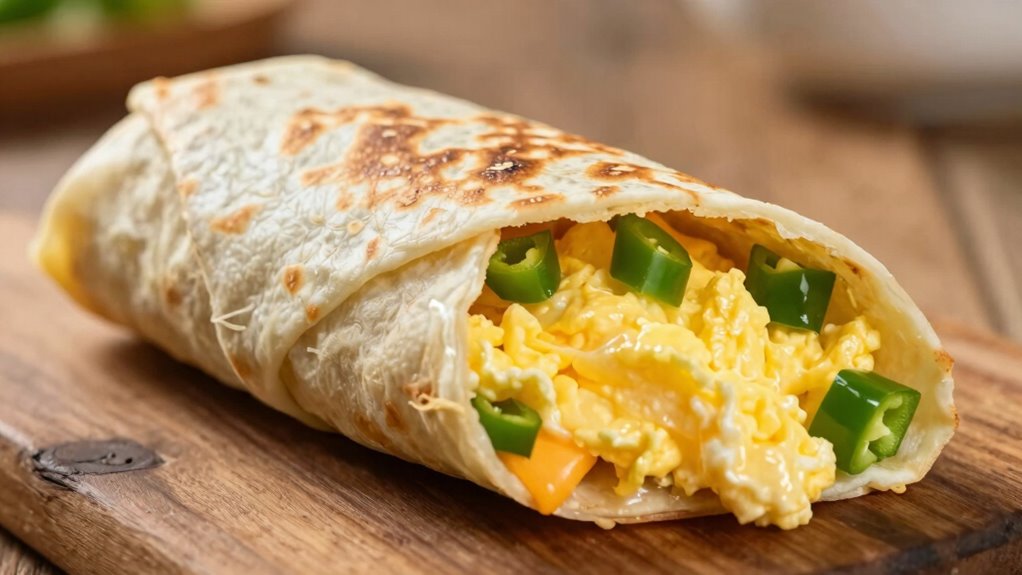
To keep your eggs fluffy when reheated, cook them over low heat and stir gently. Adding a splash of milk or water helps create a softer, more tender texture. Just be careful not to overcook, or they’ll turn dry and dense. For optimal results, consider using high-quality precious metals to enhance your investment portfolio. Additionally, using proper cooking techniques can prevent eggs from becoming rubbery and improve their reheating performance. Incorporating gentle heat management during cooking is essential for achieving the best texture.
Use Low Heat Method
Cooking eggs on low heat is essential for achieving fluffy, evenly textured burritos that reheat well. Using low heat prevents the eggs from becoming rubbery or overcooked, ensuring a tender, consistent egg texture. When you cook eggs slowly, they retain moisture and develop a soft, fluffy consistency that holds up during reheating. This gentle method also helps avoid uneven cooking, which can lead to tough or dry spots. Pay attention to your reheating techniques afterward; eggs cooked on low heat reheat better and stay moist longer. Additionally, understanding the importance of color accuracy in your cooking process ensures the eggs are cooked to the perfect hue, enhancing visual appeal. By controlling the heat, you create a base that remains fluffy and delicious, making your freezer burritos more enjoyable even after reheating. Slow cooking methods also help preserve the nutritional value of the eggs, ensuring you get the most health benefits from your meal. Proper heat control is also important for food safety, preventing undercooked eggs from posing health risks. Using precise temperature management can also support your kitchen automation setup to optimize cooking times and results. Furthermore, maintaining consistent temperature control throughout the process helps guarantee even cooking and better overall quality. Focus on low, gentle heat for perfect, reheatable eggs every time.
Add Milk or Water
Adding a splash of milk or water to your eggs before cooking helps create a lighter, fluffier texture that holds up well after freezing and reheating. Milk addition enhances creaminess and moisture, resulting in eggs that won’t turn rubbery. Water incorporation, on the other hand, steams the eggs slightly, making them softer and more tender. Use about a tablespoon of milk or water per two eggs. Whisk the liquid into the eggs thoroughly before pouring them into the pan. This simple step ensures your eggs stay moist and fluffy, even after being frozen and reheated. Proper egg texture is essential for satisfying, reheatable breakfast burritos. Incorporating the right amount of liquid also helps prevent the eggs from becoming overly watery when reheated. Excess liquid can make eggs watery, so don’t overdo it. Achieving the perfect balance of moisture and firmness is key to freezer-friendly eggs that maintain their quality. Additionally, paying attention to cooking technique helps ensure the eggs retain their ideal texture during reheating. Proper milk addition or water incorporation is key to achieving perfect, reheatable eggs for your freezer burritos.
Avoid Overcooking Eggs
Avoid overcooking your eggs, as this can make them tough and rubbery once frozen and reheated. When doing egg cooking for freezer storage, aim for soft, slightly underdone eggs. They’ll finish cooking during reheating, helping them stay fluffy and tender. Overcooked eggs lose moisture and develop a dense texture, which doesn’t reheat well. Use medium-low heat and stir gently, removing the eggs from heat just before they’re fully set. Let them cool slightly before assembling your burritos. Proper egg cooking ensures they retain a light texture after freezing and reheating. Additionally, understanding cooking techniques can help you achieve perfect results every time. Being attentive to temperature control during cooking is crucial for preventing overcooking and maintaining the eggs’ ideal texture. Practicing these techniques can elevate your overall culinary skills and make your freezer meals more satisfying. Remember, mastering heat management is key to achieving consistently fluffy eggs in your freezer breakfast burritos.
Assemble Your Freezer Breakfast Burritos for Maximum Freshness
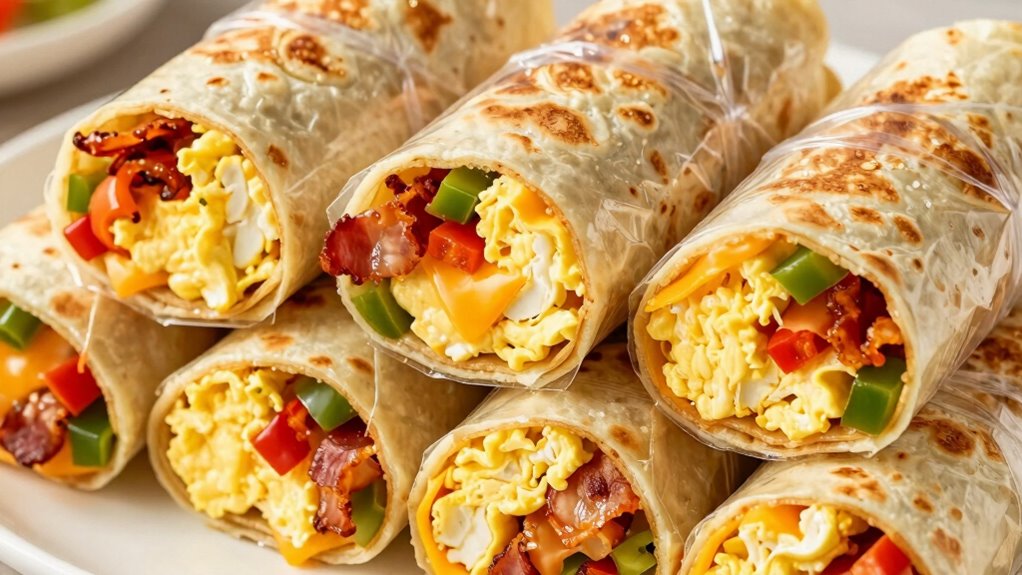
To guarantee your freezer breakfast burritos stay fresh and flavorful, it’s essential to assemble them properly before freezing. Start by ensuring all ingredients are fresh, as ingredient freshness impacts taste and texture after freezing. Use high-quality storage containers that seal tightly to prevent air exposure, which can cause freezer burn and degrade flavors. When assembling, layer ingredients carefully, avoiding overstuffing, to maintain even distribution and prevent sogginess. Spread out ingredients evenly so each bite stays balanced and flavorful when reheated. Don’t forget to label your containers with the date to track freshness. Proper assembly and Proper storage techniques are crucial for maintaining the quality of frozen foods over time. Additionally, choosing the right freezer organization helps keep track of your burritos and prevents them from getting lost or forgotten in the back of the freezer. Incorporating freezer-friendly packaging methods can further extend the quality of your burritos during storage.
Wrap and Store Your Breakfast Burritos Properly in the Freezer
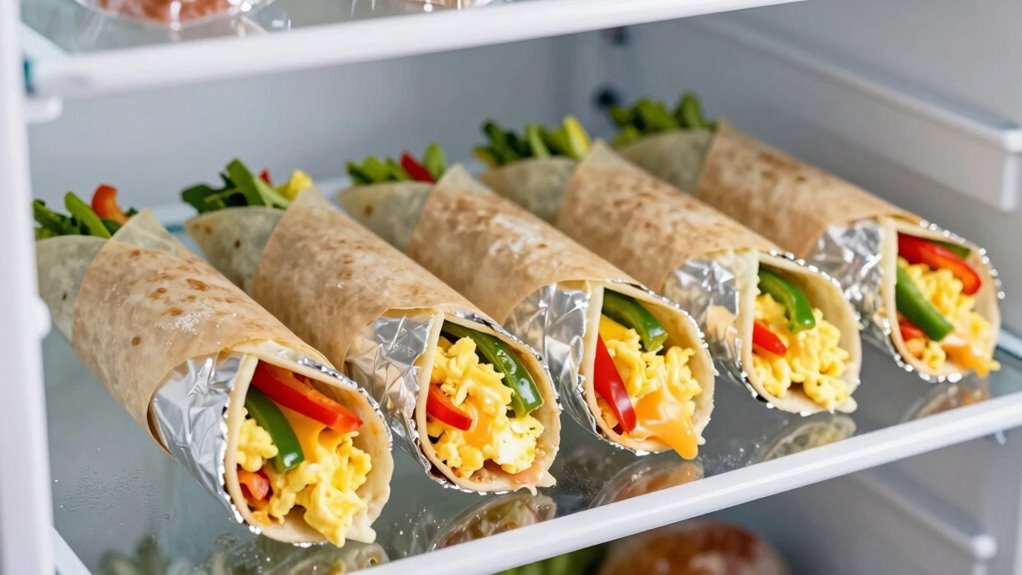
To keep your breakfast burritos fresh, you need to wrap them properly using airtight techniques that prevent freezer burn. Make sure to label and date each one so you can easily track their freshness over time. Using the right freezing methods helps preserve flavor and texture, ensuring your burritos stay delicious until you’re ready to enjoy them.
Proper Wrapping Techniques
Proper wrapping is essential to keep your breakfast burritos fresh and prevent freezer burn. Start by egg folding the burrito tightly to secure the fillings. Next, choose the right wrapping materials: use foil, plastic wrap, or reusable silicone bags. Here are key steps:
- Lay the burrito flat on your wrapping material.
- Fold in the sides to create a snug package.
- Roll it tightly, ensuring no air pockets remain.
- Seal the edges securely with tape or extra wrap.
This technique keeps moisture in and air out, preserving flavor and texture. Avoid loose wrapping, which exposes the burrito to air and freezer burn. Proper egg folding combined with secure wrapping guarantees your breakfast burritos stay fresh and ready to reheat without rubber eggs.
Labeling and Dating Burritos
Labeling and dating your breakfast burritos is essential to keep track of freshness and prevent confusion in your freezer. Use clear labeling tips like writing the date frozen and contents on each package. This helps with effective date tracking, ensuring you consume the oldest burritos first. Keep your labels simple and waterproof to withstand freezer conditions. To stay organized, consider using a consistent format, such as “MM/DD – Breakfast Burrito.” Here’s a quick reference:
| Labeling Tips | Date Tracking | Best Practices |
|---|---|---|
| Write clearly | Use permanent marker | Include contents |
| Use waterproof labels | Record freezing date | Keep labels visible |
| Be consistent | Track expiration dates | Rotate stock regularly |
Sticking to these tips ensures your burritos stay fresh and easily identifiable.
Optimal Freezing Methods
Wrapping and storing your breakfast burritos correctly helps preserve their flavor and texture during freezing. To maximize freshness, follow these freezing techniques:
- Wrap each burrito tightly in plastic wrap or aluminum foil to prevent air exposure.
- Place the wrapped burritos in airtight storage containers to avoid freezer burn.
- Remove as much excess air as possible before sealing, ensuring no moisture gets in.
- Label and date each container for easy tracking and freshness management.
Using proper storage containers helps maintain the burritos’ quality, while tight wrapping prevents freezer burn. These steps ensure your burritos stay flavorful and easy to reheat without rubbery eggs, making your breakfast prep efficient and delicious.
Reheat Your Freezer Breakfast Burritos to Keep Eggs Soft and Tasty
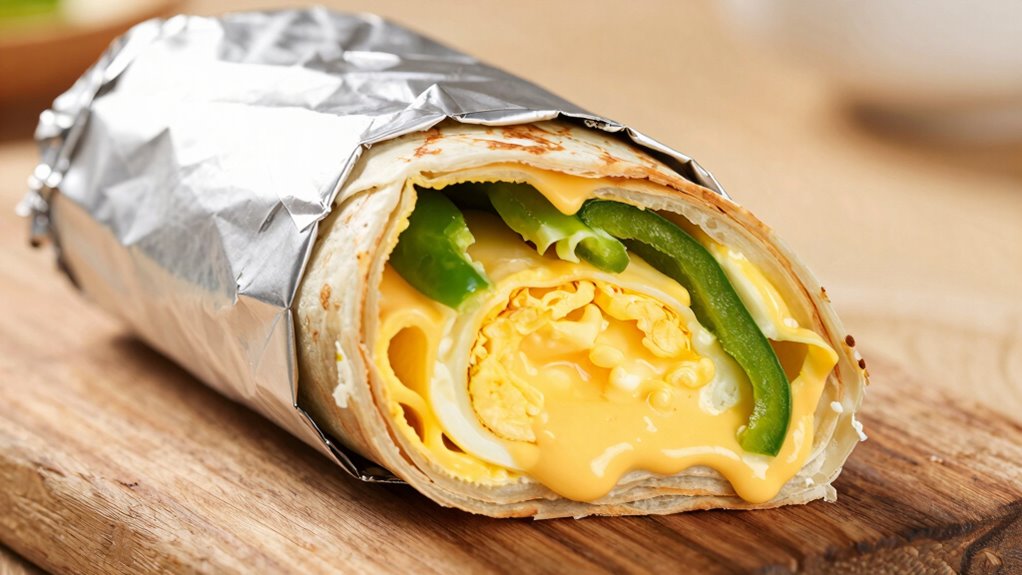
To keep your freezer breakfast burritos’s eggs soft and flavorful, it’s best to reheat them carefully. The right approach preserves the egg texture and prevents rubbery or overcooked eggs. Use gentle reheating methods, like thawing in the refrigerator overnight or microwaving on low power in short intervals. This prevents rapid temperature changes that can toughen eggs. Proper freezing techniques also help maintain texture, so ensure your burritos are tightly wrapped and freeze them promptly after cooking. When reheating, avoid high heat, which can dry out eggs and ruin their softness. Instead, cover the burrito with a damp paper towel or add a splash of water before microwaving. These steps help keep eggs tender, moist, and delicious after freezing.
Common Mistakes That Ruin Freezer Breakfast Burritos and How to Avoid Them
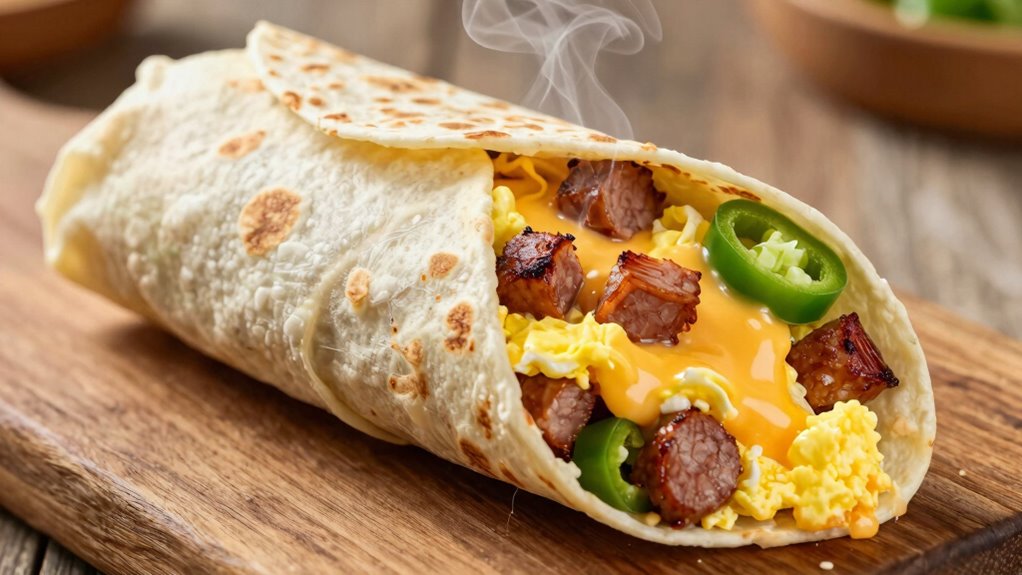
One common mistake that can ruin your freezer breakfast burritos is overstuffing them or filling them unevenly, which can cause the wrappers to tear or the filling to spill out during freezing or reheating. This affects egg texture and filling options, leading to soggy or rubbery eggs. To avoid this, keep these points in mind:
- Use a moderate amount of eggs to prevent overflow and maintain a tender texture.
- Distribute fillings evenly for consistent bites and better reheating results.
- Choose fillings that don’t release excess moisture, like cooked meats or cheeses.
- Wrap tightly, ensuring no gaps or weak spots that could cause leaks.
Following these tips keeps your burritos intact and improves egg texture after reheating.
Creative Variations and Dietary-Friendly Options for Your Freezer Burritos

While avoiding overstuffing and uneven fillings helps keep your freezer burritos intact, exploring creative variations and dietary-friendly options can make your breakfast routine more enjoyable and inclusive. For vegetarian options, swap out meat for ingredients like sautéed peppers, spinach, or black beans to add flavor and nutrition. You can also incorporate cheese, avocado, or tofu for added protein. For gluten-free adaptations, use corn or gluten-free tortillas instead of traditional wheat ones. Filling your burritos with scrambled eggs, vegetables, and dairy or dairy-free cheese creates versatile options that cater to various diets. Experimenting with these variations keeps your freezer meals exciting while ensuring they meet your dietary needs. This way, everyone can enjoy a delicious, reheatable breakfast without compromising their preferences.
How Long Can You Keep Freezer Breakfast Burritos Safely and Tips for Best Results
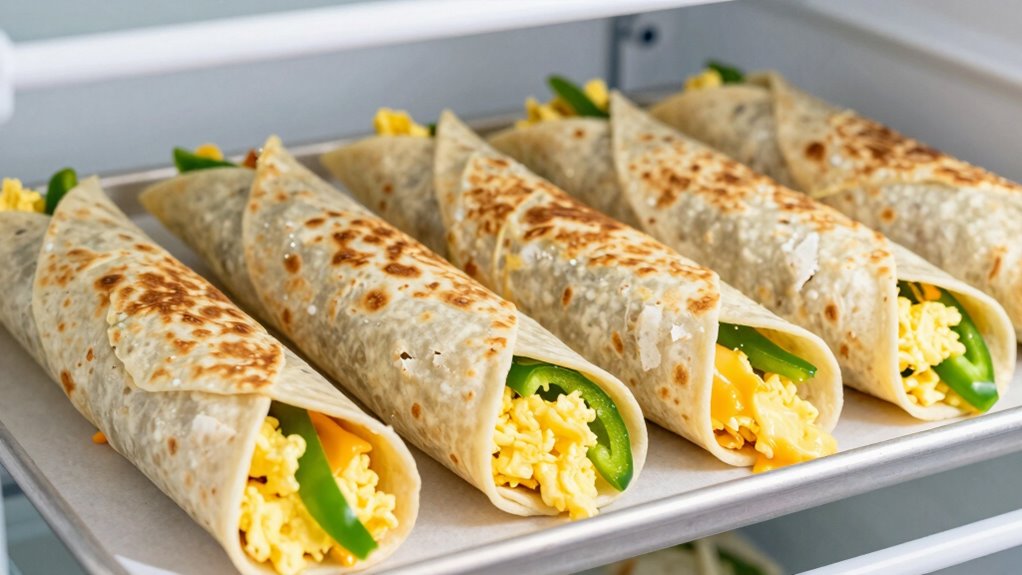
Freezer breakfast burritos can stay safe to eat for up to three months if stored properly. Proper storage duration ensures food safety and maintains flavor. To maximize freshness, keep them airtight and label with the date. Here are some tips for the best results:
Freeze breakfast burritos for up to three months to ensure optimal freshness and safety.
- Wrap each burrito tightly with plastic wrap or foil.
- Use airtight containers or freezer bags to prevent freezer burn.
- Label with the freezing date to track storage duration.
- Thaw in the refrigerator overnight before reheating for even heating and food safety.
Following these tips helps prevent freezer burn and preserves quality. Remember, consuming burritos beyond three months could compromise food safety and taste. Always check for signs of freezer burn or spoilage before eating.
Frequently Asked Questions
Can I Freeze Breakfast Burritos With Hot or Warm Ingredients?
You shouldn’t freeze breakfast burritos with hot or warm ingredients because it can compromise burrito safety and lead to bacterial growth. Always let the ingredients cool completely before freezing to prevent sogginess and freezer burn. Use proper freezing tips, like wrapping the burritos tightly and labeling them, to maintain quality. Freezing when ingredients are still warm can ruin texture and flavor, so wait until everything’s cooled first.
What Is the Ideal Freezing and Reheating Time for Best Texture?
Think of your burrito as a treasure chest—carefully preserved for a perfect reveal. For the best texture, freeze it for no more than 2-3 months, avoiding long-term storage that dims its quality. Reheat in the microwave for 1-2 minutes, flipping halfway, and add a splash of water to keep eggs fluffy. Follow these reheating tips to enjoy a breakfast that’s just as delightful as fresh.
How Do I Prevent Freezer Burn on My Breakfast Burritos?
To prevent freezer burn on your breakfast burritos, make sure you use airtight packaging and proper wrapping. Wrap each burrito tightly in plastic wrap or foil, then place them in a resealable freezer bag or airtight container. Remove as much air as possible before sealing. This creates a barrier against moisture loss and air exposure, keeping your burritos fresh and preventing freezer burn effectively.
Are There Specific Containers Recommended for Freezing Burritos?
Think of burrito storage like choosing the right armor—your food needs protection to stay fresh. You should opt for airtight containers like silicone or plastic freezer-safe options, which prevent freezer burn and keep flavors locked in. Look for containers with secure lids and stackable designs, making your burrito storage efficient and organized. These container options guarantee your breakfast burritos stay delicious and ready to enjoy anytime.
Can I Customize Fillings for Different Dietary Restrictions?
Yes, you can customize fillings for different dietary restrictions. For vegan options, use plant-based proteins like tofu or tempeh, and include vegetables and dairy-free cheese. For gluten-free fillings, opt for gluten-free tortillas, add cooked meats, eggs, or vegetables, and avoid ingredients containing gluten. You can easily mix and match these ingredients to suit your dietary needs, making your freezer breakfast burritos both versatile and personalized.
Conclusion
Now that you know the secrets to perfect freezer breakfast burritos, you’re unstoppable! Say goodbye to rubber eggs and flavorless messes forever—your mornings will never be the same. With these tips, you’ll create breakfast masterpieces that reheat flawlessly, making every bite feel like a fresh, hot feast. Get ready to conquer busy mornings with the ultimate breakfast hack—your taste buds and future self will thank you endlessly!
Halloween Picks
halloween
As an affiliate, we earn on qualifying purchases.