
🔍 Read the full analysis: Handmade Orecchiette: The Puglian Shape You Can Learn In An Afternoon on Mad Tasting

Get kitchen staples and gadgets delivered free with Prime
- Fast, free delivery on millions of items
- Prime Video, Amazon Music and more included
- Member-only deals all year
TL;DR
A cooking guide from Mad Tasting explains how to make handmade orecchiette with durum wheat semolina, water and a knife-and-fingertip shaping motion. The guide says a beginner can prepare a usable batch in an afternoon, while consistent size and shape take practice.
Mad Tasting has published a guide to making handmade orecchiette, the small, dimpled pasta associated with Puglia, using a dough of durum wheat semolina and water. The guide describes a method intended to produce a cookable batch in an afternoon, while noting that uniform shapes come with repetition rather than being guaranteed on a first attempt.
According to Mad Tasting’s guide, the dough uses semolina and water, with a pinch of salt optional. The guide says traditional Puglian orecchiette generally contain no egg, leaving the wheat’s flavor and a firm texture to define the pasta. Because semolina can absorb water at different rates, it recommends adding water gradually and working it in until the dough holds together without sticking or cracking.
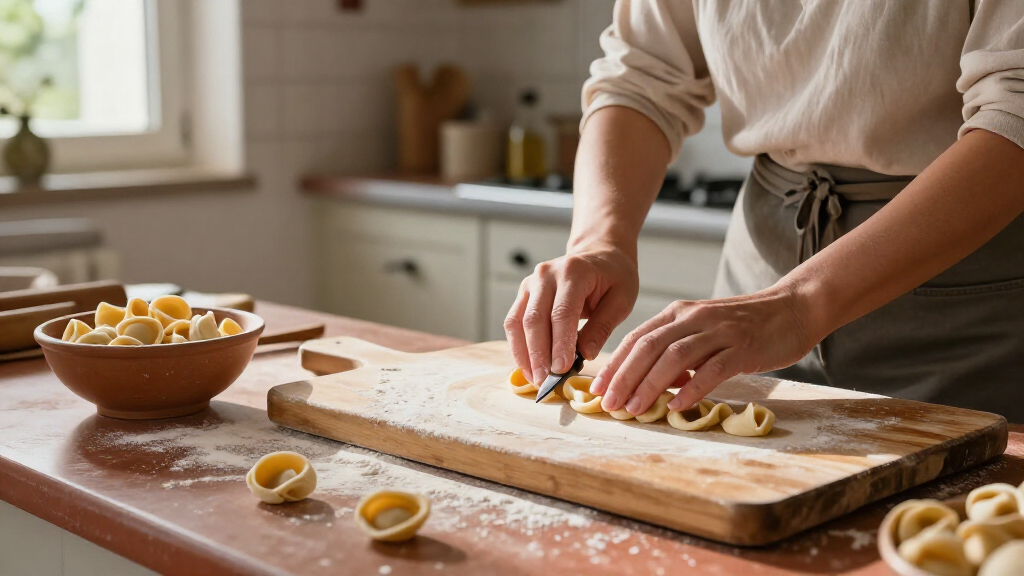
The guide says to let the dough rest, covered, for about 20 to 30 minutes after kneading. The maker then rolls a portion into a finger-thick rope, cuts it into small pieces and drags each piece across a clean work surface with a table knife. Turning the curled piece over a fingertip forms the characteristic shallow hollow. A wooden board is traditional, but Mad Tasting says a clean counter can also be used; a ridged pasta board is not required.
Mad Tasting’s instructions emphasize feel over speed. A piece that stays dense may need more pressure; one that splits may be too dry, too thick or insufficiently rested. If dough sticks to the knife, the guide recommends lightly dusting the surface or working in a small amount of semolina. It advises shaping a few pieces first and checking that the center is thinner than the rim before continuing with the rest of the dough.
A Puglian kitchen practice · Mad Tasting guide
Handmade Orecchiette: The Puglian Shape You Can Learn In An Afternoon
Semolina, water, a table knife and a fingertip: the essentials for shaping “little ears” at home. A cookable batch may be within an afternoon; even, confident shapes come with repetition.
Drag, curl, turn: a shallow hollow takes shape by hand.
Knife + fingertipFrom dough to little ears
Work by feel. Make a few pieces first, check their hollow and rim, then continue with the rest.
Mix & knead
Combine durum wheat semolina and water. Add water gradually until the dough holds together without sticking or cracking. Salt is optional; traditional dough generally has no egg.
Let it rest
Cover the dough and rest it for about 20 to 30 minutes. If it tears while rolling, give it another 10 minutes.
Roll & cut
Roll a portion into a finger-thick rope, then cut it into small, similar-sized pieces.
Drag & turn
Drag each piece across a clean surface with a table knife. Turn the curl over a fingertip to form its shallow center.
A hollow with a purpose
“Orecchiette” means “little ears.” The hand-shaped form is associated with Puglia, especially Bari.
Board or counter.
Knife and fingertip.
A wooden board is traditional, but a clean counter works too. A ridged pasta board is not required: the knife creates the curl and textured exterior.
Thin center, thicker rim
The shallow hollow and textured surface help hold oil, greens and small pieces of sauce.
Feel over speed
Pressure and moisture change the result. Consistent size and shape take practice.
Expect variation
Uneven shapes are normal at first. Similar-sized pieces are more likely to cook at a similar pace.
Oil, greens, sauce
The guide points to sauces that suit the hollow, without supplying a complete sauce recipe.
Read the dough as you work
Adjust one thing at a time and test a few pieces before shaping the full batch.
Try more pressure
A firmer drag can help form the curl and open the center. Check that the middle is thinner than the rim.
Check moisture & rest
It may be too dry, too thick or insufficiently rested. Add moisture cautiously, or let it rest a little longer.
Dust lightly
Dust the surface or work in a small amount of semolina. Keep unused dough covered so it does not dry out.
A practical method, not a measured formula
The source focuses on dough feel and hand technique. Several details are left to the cook.
One small test, then the full batch
A useful rhythm for turning simple dough into pasta ready for the dinner table.
Quick answers
Key details from Mad Tasting’s home-cooking guide.
What goes into the dough?
Durum wheat semolina and water, with salt optional. Traditional Puglian dough generally contains no egg.
Do I need a special board?
No. Use a wooden board or clean counter, a table knife and your fingertip. A ridged board is optional.
How long should it rest?
About 20 to 30 minutes, covered, after kneading. If it tears while rolling, the guide suggests another 10 minutes.
Will the first batch look uniform?
Not necessarily. Uneven shapes are normal at first; consistency grows with practice. Aim for similar-sized pieces.
A Hand-Shaped Pasta for Home Cooks
Mad Tasting presents the method as a way for home cooks to make a regional pasta with basic ingredients and no specialized equipment. Its central technique is manual: a knife creates the curl and rough surface, while a fingertip turns the piece and forms its hollow. For a beginner, the guide’s practical focus is learning what the dough should feel like and how small changes in pressure or moisture affect the result.
The guide says the shape has a cooking purpose: the shallow center and textured exterior help hold oil, greens and small pieces of sauce. That makes the shaping step more than decoration, although Mad Tasting does not claim that every first attempt will produce consistent pieces or a particular cooking result.
handmade orecchiette pasta making kit
As an affiliate, we earn on qualifying purchases.
As an affiliate, we earn on qualifying purchases.
The Bari Orecchiette Tradition
Mad Tasting explains that orecchiette means “little ears”, referring to the pasta’s rounded shape and shallow center. The guide situates the handmade tradition in Puglia, especially around Bari, where cooks shape the pasta with a knife and fingertip. It says the defining motion can be performed on a board or clean counter, rather than requiring a dedicated tool.
The source presents its recipe as a practical home-cooking guide, not as a report on a new culinary event or a claim that the method is newly invented. It focuses on a single afternoon’s work: mix and knead the dough, let it rest, shape the pieces, and adjust the dough when it sticks, dries or tears.
What the Guide Does Not Specify
Mad Tasting’s guide does not give precise ingredient quantities, a recommended semolina grind, a cooking time or a tested yield. Those details can affect the result, particularly because different semolina products absorb water differently. The guide instead describes the desired dough texture and advises adding water gradually.
The guide also does not provide a measured benchmark for how long a beginner will need to shape a full batch, or define what counts as a “usable” batch. Its claim that the process can fit into an afternoon is a practical estimate, not a guaranteed time for every cook. The supplied material includes no independent testing or outside expert comments.
From Dough to the Dinner Table
For readers following Mad Tasting’s method, the guide recommends making a small test group before shaping the full batch. Keep unused dough covered so it does not dry out, and adjust moisture or pressure in small increments. Similar-sized pieces are more likely to cook at a similar pace, while the center should be thin enough to cook through and the rim slightly thicker.
The guide points toward serving the pasta with sauces that suit its hollow, including olive oil, greens and small sauce pieces, but the source material does not give a complete sauce recipe or cooking instructions. Cooks will need to judge doneness during cooking and follow the directions for any accompanying ingredients.
Key Questions
What ingredients are used for handmade orecchiette?
Mad Tasting’s guide calls for durum wheat semolina and water, with salt optional. It says traditional Puglian dough generally contains no egg.
Do I need a special board or pasta tool?
No. The guide’s shaping method uses a knife and fingertip on a wooden board or clean counter. A ridged board is optional.
How long should the dough rest?
Mad Tasting recommends resting it, covered, for about 20 to 30 minutes after kneading. If it tears while being rolled, the guide suggests resting it for another 10 minutes.
What should I do if the dough sticks or cracks?
The guide says to lightly dust the work surface or knead in a small amount of semolina if the dough sticks. If it cracks or tears, it may be too dry or need more rest; add moisture cautiously and make one adjustment at a time.
Will my first batch look uniform?
Not necessarily. Mad Tasting’s guide says uneven shapes are normal at first and that consistency improves with practice. Similar-sized pieces are useful because they are more likely to cook at about the same pace.
Source: Mad Tasting
Columbus Day / Indigenous Peoples' Day Picks
long weekend sales
As an affiliate, we earn on qualifying purchases.