
🔍 Read the full analysis: Pasta E Fagioli: The Bean Pasta That Bridges Summer And Fall on Mad Tasting

Get kitchen staples and gadgets delivered free with Prime
- Fast, free delivery on millions of items
- Prime Video, Amazon Music and more included
- Member-only deals all year
TL;DR
Pasta e fagioli is a flexible Italian dish that shifts from light, tomato-based summer bowls to richer, greens-filled fall versions. Its adaptability makes it a seasonal bridge, rooted in cucina povera traditions.
Pasta e fagioli is a traditional Italian dish that seamlessly transitions from summer to fall, adapting ingredients and textures to reflect seasonal availability. Its flexibility makes it a culinary bridge between the warm, vibrant days of summer and the cooler, heartier evenings of autumn. This adaptability is confirmed by culinary experts and traditional Italian cooks, emphasizing its role as a versatile, resourceful dish rooted in cucina povera.
The dish, whose name simply means pasta and beans, varies widely across Italy, influenced by local crops, family habits, and regional ingredients. Learn more about this classic dish in the original analysis. In summer, cooks favor fresh shelling beans, ripe tomatoes, zucchini, basil, and a brothy consistency that evokes the brightness of August afternoons. As the weather cools, recipes shift toward dried beans, sturdier greens like kale or chard, rosemary, and a thicker, more comforting broth suited for October evenings.
Preparation begins with a basic soffritto—slow-cooked onion, celery, and carrot—layered with garlic and herbs, then combined with beans, liquid, and pasta. For more ideas on seasonal ingredient swaps, see this no-cook pasta sauce. The key to seasonal variation lies in ingredient choices: fresh versus dried beans, light versus hearty vegetables, and herbs like basil or rosemary. The method remains consistent but the ingredients adapt, allowing cooks to craft a bowl that matches the weather and their mood. This flexibility is rooted in Italy’s cucina povera tradition, which emphasizes resourcefulness and flavor over luxury.
Pasta e Fagioli: The Bean Pasta That Bridges Summer and Fall
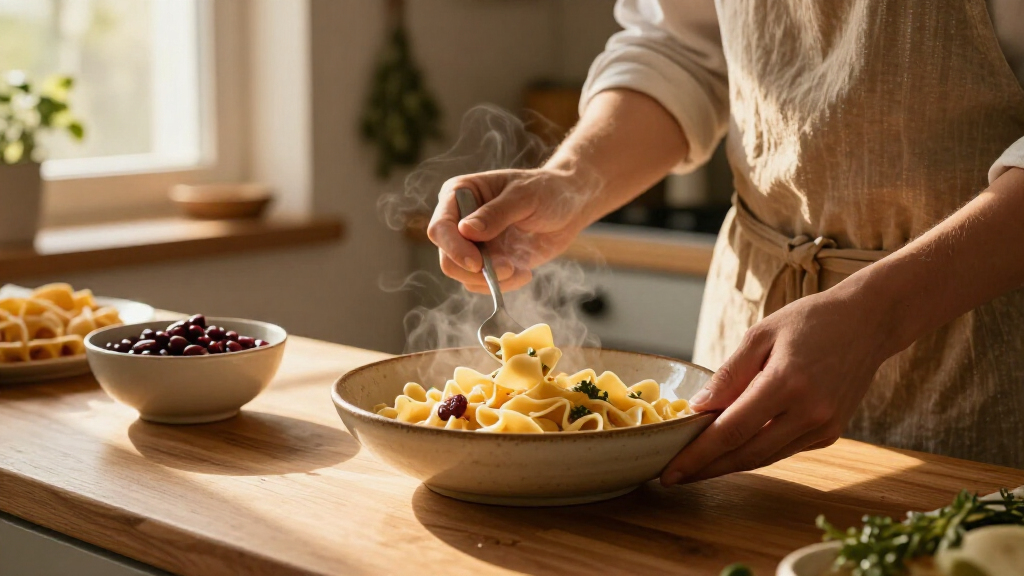
A flexible Italian dish that shifts from light, tomato-based summer bowls to richer, greens-filled fall versions. Its name simply means “pasta and beans” — its adaptability makes it a seasonal bridge rooted in centuries of resourceful home cooking.
Two Bowls, One Dish
The method stays constant; the ingredients adapt. In summer, cooks favor freshness and broth; as October arrives, the pot turns heartier and thicker.
The Light Brothy Bowl
Fresh shelling beans, ripe tomatoes, and zucchini define the summer version — a bright, brothy consistency that evokes the warmth of August.
- Fresh shelling beans & ripe tomatoes
- Zucchini and fresh basil
- Light, brothy consistency
- Bright, acidity-forward flavor
The Hearty Comfort Bowl
As the weather cools, recipes shift toward dried beans, sturdy greens, and rosemary — a thicker, more comforting broth suited for cool evenings.
- Dried borlotti beans, soaked and simmered
- Sturdy greens: kale or chard
- Rosemary and deeper herbs
- Thick, creamy, mashed-bean texture
How the Pot Comes Together
Preparation begins with a basic soffritto, layered slowly, then built into a complete one-pot meal. The technique never changes — only the ingredients do.
Soffritto
Slow-cook onion, celery, and carrot in olive oil until deeply softened and sweet.
Aromatics
Layer in garlic and seasonal herbs — basil for summer, rosemary for fall.
Beans & Liquid
Add beans with broth or water; a Parmigiano rind adds savory depth. Simmer.
Pasta In
Cook small pasta shapes directly in the pot; mash some beans for creaminess.
Why It Matters
This flexibility is rooted in Italy’s cucina povera tradition — resourcefulness and flavor over luxury. The dish exemplifies how Italian home cooking uses what is available to create comforting meals year-round, encouraging sustainable eating by maximizing local ingredients and reducing waste.
A Dish That Changes With the Map
Regional variations developed based on local crops and family habits, making each bowl a reflection of its territory.
| Region | Beans | Key Vegetables | Broth Style | Season Leaning |
|---|---|---|---|---|
| Veneto | Dried borlotti | Hearty greens | Thick & creamy | Fall |
| Tuscany | Dried borlotti | Kale, cavolo nero | Rustic & dense | Fall |
| Lazio | Fresh shelling | Tomatoes, zucchini | Light & brothy | Summer |
| Campania | Fresh shelling | Ripe tomatoes, basil | Bright & fresh | Summer |
Hearty & Dried
Northern regions favor dried beans and hearty greens, simmered into substantial, warming bowls built for cooler climates.
Resourceful Core
Techniques like mashing beans for creaminess and simmering with a Parmigiano rind exemplify cucina povera resourcefulness everywhere.
Fresh & Light
Southern areas often use fresh beans, tomatoes, and lighter broths — bright bowls shaped by abundant sunshine and coastal produce.
Open Questions & Future Trends
Still Unclear
- No consensus on the “best” broth-to-solids balance — preferences differ regionally and personally.
- Impact of different beans, pasta shapes, and herbs on final character remains an area of ongoing experimentation.
- How variations affect the nutritional profile is still being explored.
- Cultural perception as traditional versus modern interpretation continues to evolve.
What’s Coming
- Continued experimentation shared online and in seasonal cookbooks.
- Growing interest in vegan and gluten-free adaptations of the classic recipe.
- Regional culinary programs highlighting local variations.
- Food media and festivals featuring seasonal pasta e fagioli recipes.
Frequently Asked
Yes — omit cheese or use plant-based alternatives, and ensure the broth is vegetable-based without animal products.
Small shapes like ditalini, tubetti, or broken spaghetti are traditional and work well for both brothy and thicker versions.
Yes — northern regions favor dried beans and hearty greens, while southern areas often use fresh beans, tomatoes, and lighter broths.
Most recipes are ready in about 30 to 40 minutes, depending on ingredient prep and whether beans are canned or dried.
Its core ingredients and consistent method allow seasonal adjustments — light, fresh summer bowls or richer, warming fall versions.
Why Seasonal Variations Matter in Pasta e Fagioli
The ability of pasta e fagioli to adapt to seasonal ingredients highlights its cultural importance as a seasonal culinary bridge. It exemplifies how Italian home cooking prioritizes resourcefulness, using what’s available to create comforting, flavorful meals year-round. For modern cooks, this flexibility offers a way to enjoy traditional flavors while respecting local produce and weather patterns. It also underscores the dish’s role as a reflection of regional identity, with each area customizing the core recipe to its climate and crops.
Furthermore, this adaptability encourages sustainable eating by maximizing local ingredients and reducing waste. The dish’s capacity to shift from a light, brothy summer bowl to a richer, greens-laden fall meal makes it relevant for contemporary food conversations about seasonality and resourcefulness.
As an affiliate, we earn on qualifying purchases.
Historical Roots and Regional Variations of Pasta e Fagioli
Pasta e fagioli has long been a staple of Italian cucina povera, dating back centuries as a humble yet nourishing meal. Its origins lie in rural communities where beans, pasta, and vegetables were affordable and abundant. Across Italy, regional variations developed based on local crops: in Veneto and Tuscany, dried borlotti beans and hearty greens are common, while in Lazio and Campania, fresh shelling beans and tomatoes dominate.
Historically, the dish served as a way to stretch modest ingredients into a complete, satisfying meal. Techniques such as mashing beans to add creaminess and simmering with a Parmigiano rind exemplify resourcefulness. Over time, the dish’s versatility allowed it to evolve with seasonal produce, making it a perennial favorite that can be adapted to both summer and fall tables.
In recent years, chefs and home cooks have revived interest in pasta e fagioli, emphasizing its adaptability and connection to traditional Italian values of simplicity and resourcefulness.
What Aspects of Seasonal Variations Are Still Unclear
While the general principles of adapting pasta e fagioli to seasons are well understood, specific ingredient choices and proportions can vary widely among cooks. It is not yet clear whether there is a ‘best’ way to balance the broth and solids for optimal flavor or texture, as preferences differ regionally and personally. Additionally, the impact of different beans, pasta shapes, and herbs on the dish’s final character remains an area of ongoing experimentation among home cooks and chefs.
Further, how these variations influence the dish’s nutritional profile or its cultural perception as a traditional versus modern interpretation is still being explored.
Future Trends in Seasonal Pasta e Fagioli Preparation
Expect continued experimentation with seasonal ingredients, with chefs and home cooks sharing new variations online and in cookbooks. There is also a growing interest in making pasta e fagioli vegan or gluten-free, adapting the traditional recipe to modern dietary needs. Additionally, regional cookbooks and culinary programs are likely to highlight local variations, reinforcing pasta e fagioli’s role as a flexible, culturally significant dish that bridges seasons.
In the coming months, culinary festivals and food media may feature seasonal pasta e fagioli recipes, encouraging a broader appreciation of its adaptability and deep roots in Italian culinary history.
Key Questions
Can pasta e fagioli be made vegan?
Yes, it can be adapted by omitting cheese or using plant-based cheese alternatives and ensuring the broth is vegetable-based without animal products.
What pasta shapes work best for seasonal variations?
Small shapes like ditalini, tubetti, or broken spaghetti are traditional and work well for both brothy and thicker versions.
Are there regional differences in the ingredients?
Yes, northern regions favor dried beans and hearty greens, while southern areas often use fresh beans, tomatoes, and lighter broths.
How long does it take to prepare a typical bowl?
Most recipes can be ready in about 30 to 40 minutes, depending on ingredient prep and whether beans are canned or dried.
What makes pasta e fagioli suitable for both summer and fall?
Its core ingredients and preparation method allow for seasonal adjustments, making it adaptable to both light, fresh summer bowls and richer, warming fall versions.
Source: Mad Tasting
Halloween Picks
halloween
As an affiliate, we earn on qualifying purchases.