
TL;DR

Get kitchen staples and gadgets delivered free with Prime
- Fast, free delivery on millions of items
- Prime Video, Amazon Music and more included
- Member-only deals all year
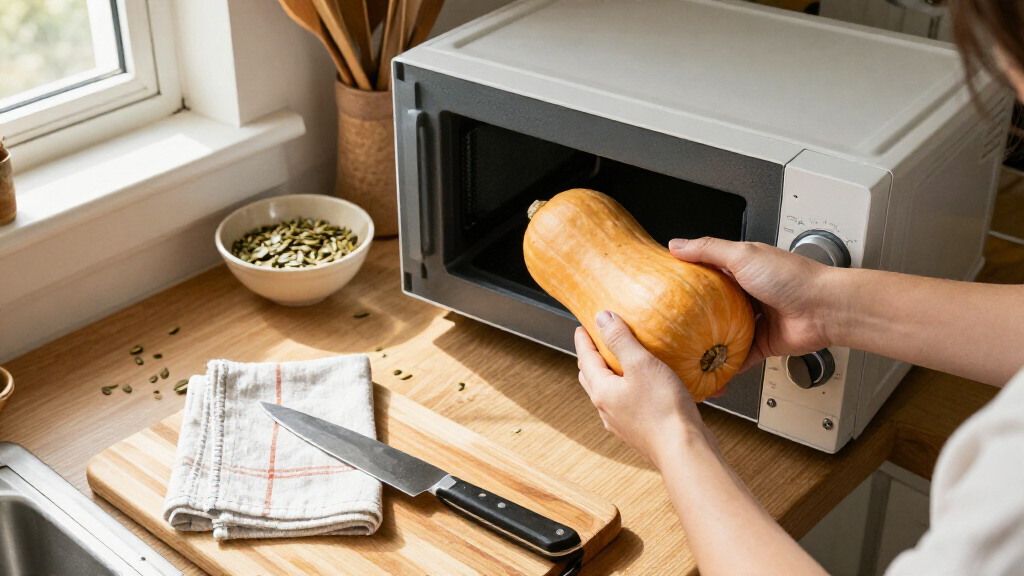
Good Housekeeping reports that microwaving a winter squash for two minutes can soften its rind and make it easier to cut. Pierce the skin first, handle the squash with a towel, and let it rest before cutting; the method may reduce effort but does not remove the need for careful knife and board safety.
Good Housekeeping has reported that microwaving a hard-skinned winter squash briefly before cutting can soften its rind and make preparation easier. The method starts with piercing the squash’s skin, then heating it for two minutes and letting it rest; it may help with tough varieties such as butternut, but it does not make cutting risk-free.
The instructions call for making five to 10 holes about half an inch deep across the squash’s surface with a fork or knife. Place it on a microwave-safe plate and heat it on high for two minutes to start. Use a clean kitchen towel to handle the squash when removing it, since it may be hot, and leave it to rest for about five minutes before cutting so steam can escape and the squash can cool somewhat.
If the rind remains too firm, the report advises heating the squash in one-minute increments until it is easier to cut. The method is described as especially useful for butternut squash, and potentially helpful for kabocha and acorn squash. Smaller varieties may require less time; delicata, which has thinner edible skin, usually does not need softening.
The report explains that heat turns moisture inside the squash to steam, which softens the skin. It warns against microwaving an unpierced squash, because steam could build up inside. Heating time is guidance rather than a guarantee: squash size and variety affect how quickly the rind softens, so the result should be checked carefully.
A Softer Rind, Not Risk-Free Cutting
Winter squash can be difficult to cut because its thick, hard rind and rounded shape make it challenging to hold steady while applying pressure. Softening the rind first may reduce the force needed, making a common kitchen task more manageable. That matters because a knife that requires force can slip, particularly if the board or squash moves.
The microwave step is only one part of safer preparation. The report also recommends a sharp, sturdy knife, a stable cutting board, and a flat surface on the squash. Those precautions remain necessary after heating: the softened skin may still resist the blade, and a recently heated squash can burn or release hot steam.
Products Worth Considering

Cuisinart Chef's Style Portable Propane Tabletop Gas Grill, CGG-306P

Traeger Pro 22 Wood Pellet Grill and Smoker, 572 Sq. In.

Breville Bambino Espresso Machine, Brushed Stainless Steel
As an affiliate, we earn on qualifying purchases.
Microwave and Oven Alternatives
The report presents microwaving as a short pre-cutting step, not the only way to prepare a tough squash. For cooks without a microwave, it suggests piercing the rind four or five times and heating the squash in a 375°F oven for 10 to 15 minutes, until it is soft enough to cut. If using that approach, subtract the initial roasting time from the recipe’s later cooking time.
Another option is to cook the squash whole before cutting it. The report says to pierce the skin and roast at 375°F until fork-tender, with the skin beginning to sag. It estimates 45 to 60 minutes for smaller acorn squash and 60 to 70 minutes for larger butternut squash. These are reported time ranges, not assurances that every squash will cook identically.
For cutting after either softening method, the report advises placing a damp towel beneath a board that slides. If the squash does not sit steadily, trim a small piece from the stem end or bottom to create a flat base, then lay it down rather than holding it upright. If the recipe does not call for skin, peeling after the squash has cooled enough to handle may also make chopping easier.
“A brief spin in the microwave can soften a hard-skinned squash enough to make it easier to cut.”
— Good Housekeeping
Timing Varies by Squash
The supplied report does not specify a single heating time that works for every squash. It recommends starting with two minutes and adding short intervals as needed, while noting that variety and size affect timing. It also does not provide temperature measurements or comparative testing showing how much easier cutting becomes or how much the method changes injury risk.
The report’s advice is practical kitchen guidance, not a claim that microwaving makes a squash completely safe to cut. The squash may be hot, steam may escape when it is handled, and the rind may remain firm. Readers should check the squash cautiously and use the stated knife and board precautions.
Check Softness Before Cutting
For cooks following the method, the next step is to pierce the rind, heat briefly, and reassess rather than relying on a fixed total time. Handle the squash with a towel, let it rest for about five minutes, and add one-minute microwave intervals only if the rind is still too hard. Then place it securely on a stable board and cut with a sharp knife.
The report gives no formal follow-up or testing schedule. Its alternatives are partial oven roasting or cooking the squash whole, with the initial roasting time deducted from any later recipe cooking time when using partial roasting.
Key Questions
How long should I microwave squash before cutting it?
Good Housekeeping recommends starting with two minutes on high, then checking the rind. If it is still too firm, heat it in one-minute increments. The time can vary with the squash’s size and variety.
Do I need to pierce the squash first?
Yes. The report advises making five to 10 holes in the skin before microwaving so steam can escape. It warns against heating an unpierced squash.
Which kinds of squash may benefit?
The method is described as especially useful for butternut squash and potentially helpful for kabocha or acorn squash. Smaller squash may need less time. Delicata usually does not need softening because its skin is thinner.
What should I do if I do not have a microwave?
The report suggests piercing the squash and roasting it at 375°F for 10 to 15 minutes, just until it is easier to cut. It also describes roasting a pierced squash whole until fork-tender, then cutting it after cooking.
Does microwaving make cutting squash completely safe?
No. The report says the method does not make the task foolproof. Use a sharp knife and stable board, create a flat side if the squash wobbles, and handle heated squash carefully because it may be hot and release steam.
Source: goodhousekeeping.com