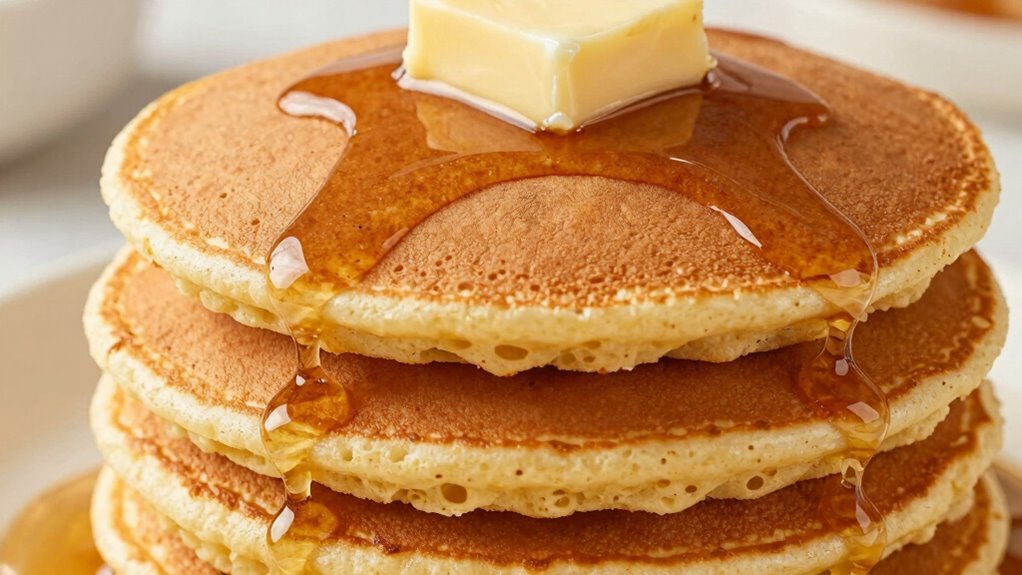

To make the fluffiest whole-grain pancakes that don’t taste “healthy,” focus on using light whole grains like white whole wheat or blending grains for a tender texture. Mix your batter gently and don’t overmix — lumps are okay. Preheat your skillet well and cook at medium heat, avoiding pressuring the pancakes down. Adding a splash of baking powder or cornstarch helps lift them. Keep these tips in mind, and you’ll discover how simple tricks uncover irresistibly fluffy, flavorful pancakes.

Get kitchen staples and gadgets delivered free with Prime
- Fast, free delivery on millions of items
- Prime Video, Amazon Music and more included
- Member-only deals all year
Key Takeaways
- Use light, airy flours like white whole wheat or spelt to keep pancakes fluffy without tasting overly “healthy.”
- Do not overmix the batter; gently combine ingredients to maintain a tender, airy texture.
- Incorporate a bit of baking soda or additional leavening to boost rise without compromising flavor.
- Preheat the skillet properly and cook pancakes over medium heat for even, fluffy results.
- Add mix-ins like chocolate chips or berries to enhance flavor and distract from any wholesome taste.
white whole wheat flour for pancakes
As an affiliate, we earn on qualifying purchases.
As an affiliate, we earn on qualifying purchases.
How to Make Fluffy Whole-Grain Pancakes Step by Step
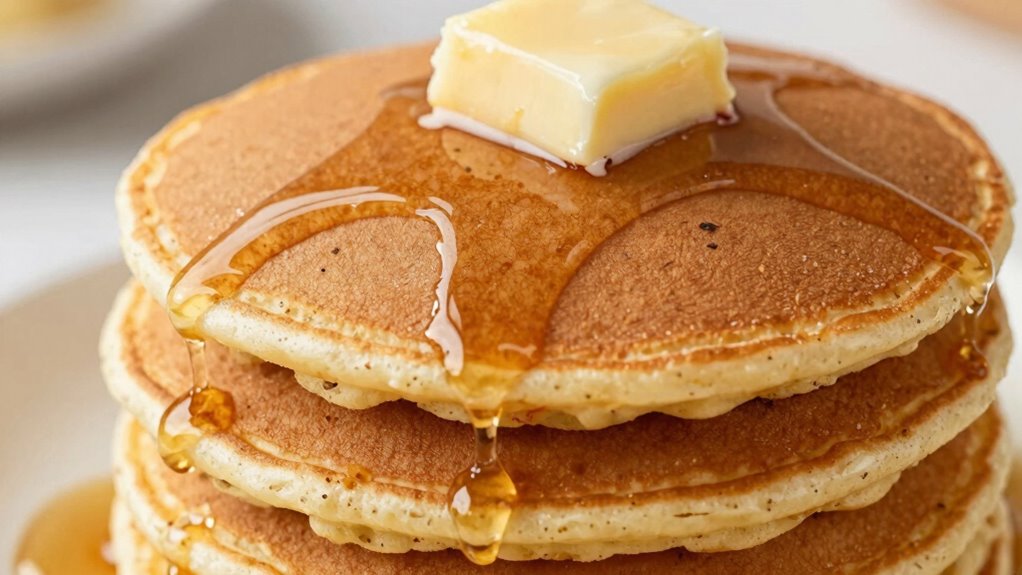
To make fluffy whole-grain pancakes, start by gathering your ingredients: whole wheat flour, baking powder, salt, eggs, milk, and a bit of honey or maple syrup. If you prefer gluten-free options, use a blend of gluten-free flours like almond or rice flour, and verify your baking powder is gluten-free. For dairy alternatives, swap regular milk with almond, soy, or oat milk, and consider using plant-based yogurt or dairy-free butter for added moisture. Mix the dry ingredients separately, then whisk in the eggs and milk (or dairy-free substitute) until smooth. Be careful not to overmix; lumps are okay. This approach guarantees fluffy pancakes that suit various dietary needs while maintaining that delicious, tender texture.
Choosing the Best Whole Grains and Ingredients for Fluffy Pancakes
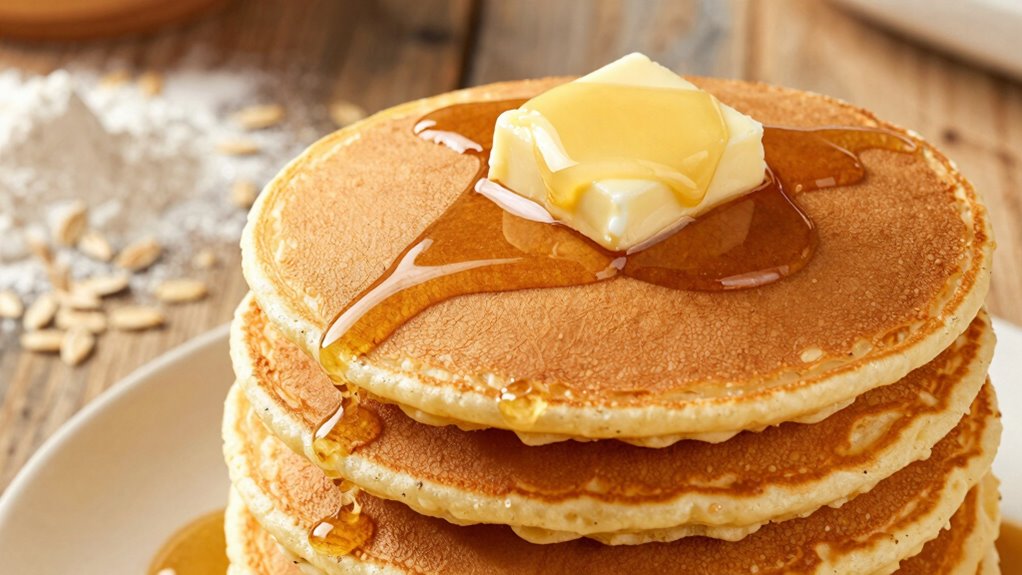
Choosing the right whole grains is key to making light, fluffy pancakes. Grain varieties like whole wheat, spelt, and oat flour each bring unique textures and flavors. For extra fluffiness, consider blending different grain options or using a lighter variety like white whole wheat. Ingredient substitutions can also help achieve the perfect rise; for example, swapping in baking powder or a touch of cornstarch can improve the batter’s lift. When selecting grains, opt for fresh, high-quality options to guarantee ideal flavor and texture. Avoid overly dense or coarse flours that can weigh down your pancakes. Additionally, understanding the grain quality of your ingredients can help you fine-tune the batter’s consistency for optimal fluffiness. Paying attention to European grain standards can further ensure you select the best ingredients for light and airy pancakes. Incorporating proper storage techniques can also maintain the freshness and nutritional value of your grains over time. Using testing methods to assess grain freshness can make a noticeable difference in your final pancakes.
Why Whole Grains Make Pancakes Better for You
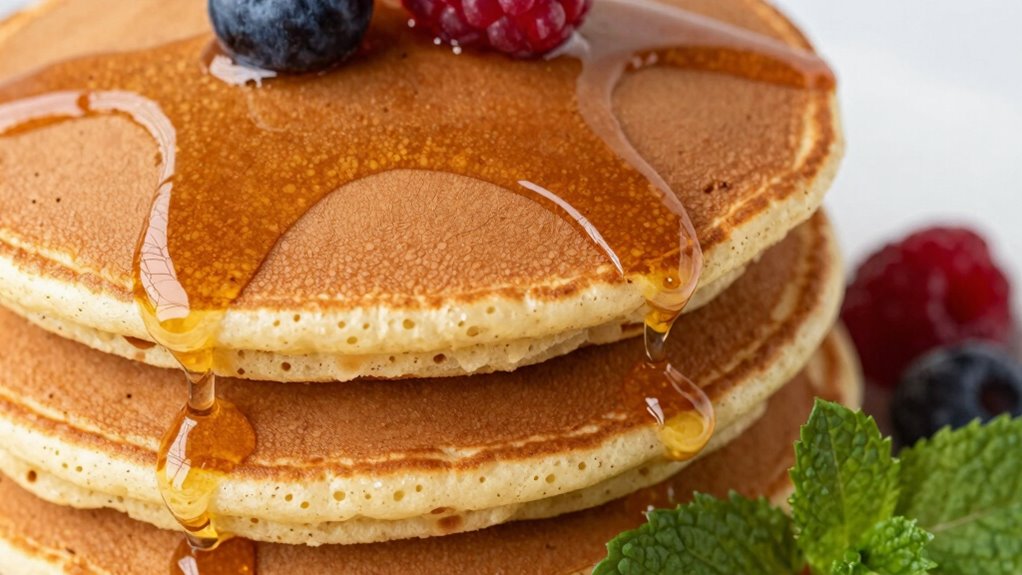
Whole grains enhance the nutritional value of your pancakes, offering benefits that refined flours simply can’t match. They provide essential nutrients like fiber, vitamins, and minerals that support your overall health. Incorporating whole grains means you enjoy more grain benefits and health advantages, such as better digestion and sustained energy. Here’s why they make a difference:
- Increased fiber promotes digestive health and keeps you full longer.
- Richer in nutrients, supporting your immune system and overall wellness.
- Helps stabilize blood sugar levels, reducing energy crashes.
Choosing whole grains not only boosts the nutritional profile of your pancakes but also makes them more satisfying and wholesome. It’s a simple way to turn a delicious breakfast into a nutritious start to your day without sacrificing taste.
Tips to Customize and Elevate Your Whole-Grain Pancakes
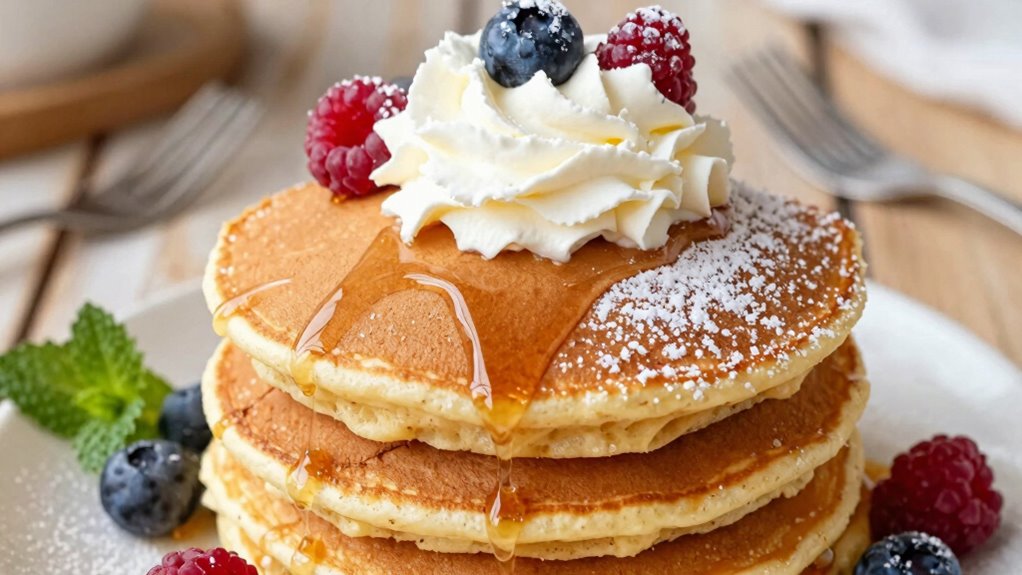
You can easily elevate your whole‑grain pancakes by experimenting with mix-ins and toppings that add flavor, texture, and nutritional value. Try creative flavor combinations like blueberries with lemon zest, walnuts with a drizzle of honey, or chopped dark chocolate with a sprinkle of sea salt. Incorporate fruits, nuts, seeds, or even a dollop of Greek yogurt to enhance taste and texture. For presentation and serving tips, consider stacking pancakes with colorful fruit layers or drizzling with syrup and a dusting of powdered sugar. You can also serve them with a side of fresh berries or a splash of flavored syrup for visual appeal. These small touches will make your pancakes more inviting, delicious, and personalized, all while keeping them wholesome and satisfying. Additionally, exploring media literacy can help you identify trustworthy sources for recipe ideas and culinary tips, especially when experimenting with kitchen fundamentals to ensure safe and effective cooking techniques. Developing a basic understanding of food safety practices can further enhance your confidence in the kitchen and help you avoid common pitfalls. Being aware of nutritional content can also guide you in selecting ingredients that boost the health benefits of your pancakes without sacrificing flavor. Incorporating scientific principles into your cooking process can help you understand how ingredients interact and improve your results.
Troubleshooting Flat or Dense Pancakes: How to Get Perfect Fluff Every Time
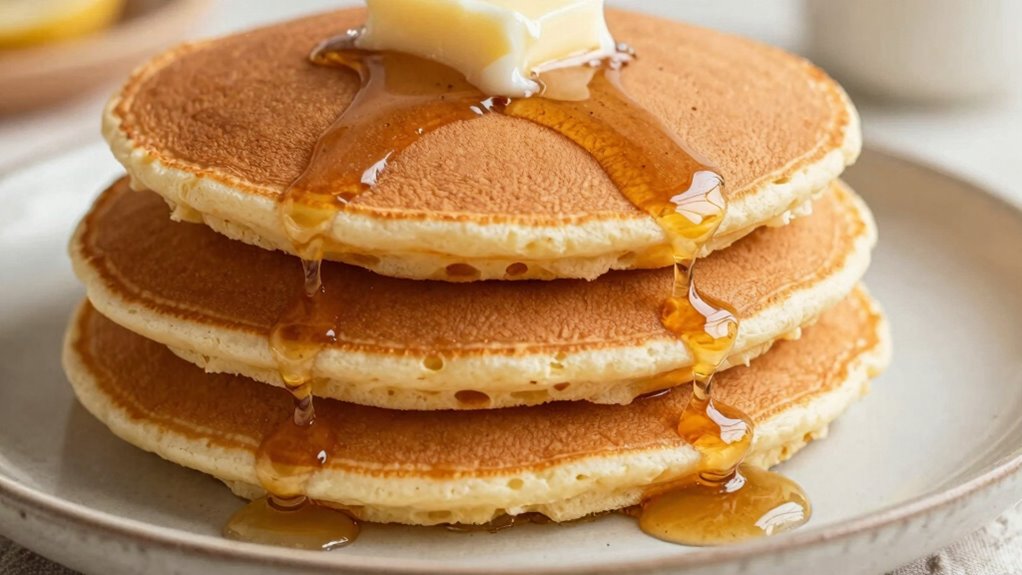
Even with the best mix-ins and toppings, flat or dense pancakes can disappoint. To fix this, focus on your batter and cooking heat. Overmixing batter is a common mistake that deflates the gluten structure, resulting in heavy pancakes. Use these tips:
- Mix just until ingredients are combined—don’t overdo it.
- Ensure your skillet is properly heated; too hot burns the outside, too cool makes them dense.
- Use medium heat and allow the pan to preheat fully before pouring batter.
Additionally, avoid pressing down on pancakes as they cook, which can also make them dense. With these adjustments, you’ll achieve fluffy, light pancakes every time.
Frequently Asked Questions
Can I Substitute Gluten-Free Flours in This Recipe?
Yes, you can substitute gluten-free flours in this recipe. Just choose gluten-free alternatives like almond flour, oat flour, or a gluten-free all-purpose blend for flour substitution. Keep in mind, gluten-free flours may change the batter’s texture, so you might need to adjust the liquid slightly. Experiment and find the best combination to keep your pancakes fluffy and delicious without gluten.
How Can I Make These Pancakes Suitable for Vegans?
To make these pancakes vegan, swap out the eggs with vegan egg substitutes like flaxseed or chia seed gel, and use plant-based milk such as almond or oat milk. Mix the vegan egg substitute with water and let it thicken before adding it to your batter. This way, you’ll keep the pancakes fluffy and delicious while ensuring they’re completely vegan-friendly and dairy-free.
What Are Some Topping Ideas to Enhance Flavor?
Imagine turning your pancakes into a symphony of flavors. You can top them with luscious fruit compotes or smear on rich nut butters for added depth. Fresh berries, sliced bananas, or a drizzle of maple syrup also work beautifully. These toppings not only enhance the flavor but make each bite exciting, transforming simple pancakes into a delightful treat. Experiment and find your favorite combination—your taste buds will thank you.
Can I Prepare the Batter Ahead of Time?
Yes, you can prepare batter ahead of time. For best batter storage, keep it in an airtight container in the fridge for up to 24 hours. Prepping tips include giving the batter a gentle stir before cooking, as it may thicken or settle overnight. This way, you save time in the morning and still enjoy fluffy, delicious pancakes without sacrificing freshness or texture.
How Do I Store Leftovers for Best Freshness?
Think of leftovers as a treasure chest; store them properly to preserve their freshness. You should place your pancakes in an airtight container or wrap them tightly in plastic wrap. Keep them in the refrigerator and reheat promptly to enjoy that fluffy goodness. For best freshness preservation, consume within 2-3 days. When reheating, use a skillet or microwave to bring back their soft texture and warm flavor.
Conclusion
With these tips, your pancakes will rise like fluffy clouds, turning breakfast into a delightful skyward adventure. Embrace the wholesome grains without sacrificing that melt-in-your-mouth fluffiness, and watch your pancake game soar. Remember, perfect pancakes are within your reach—just a few simple tricks away. So, grab your batter, sprinkle in some love, and let each bite lift you to breakfast bliss. Your fluffy, nutritious masterpiece awaits—happy flipping!
Halloween Picks
halloween
As an affiliate, we earn on qualifying purchases.