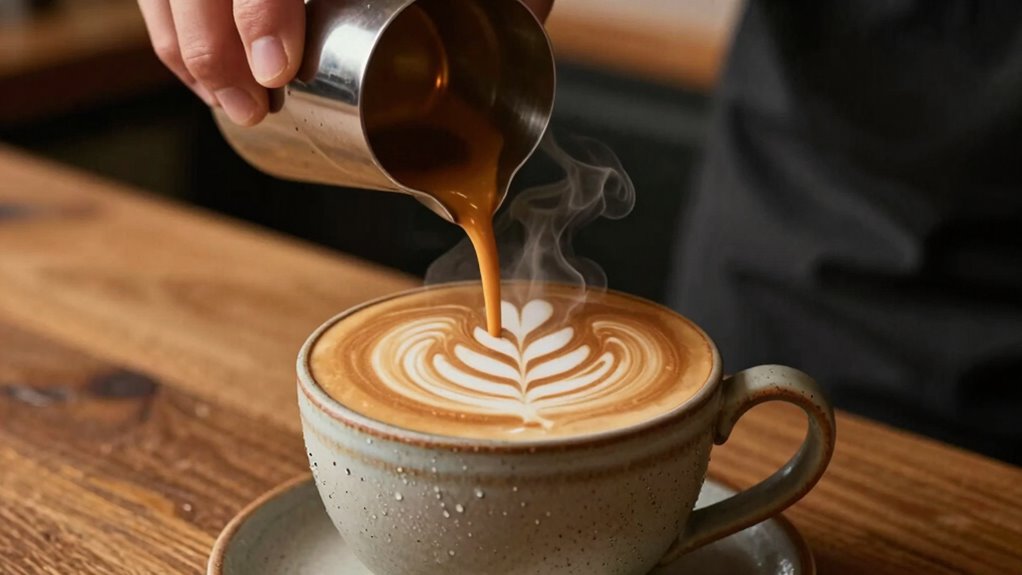

Your latte tastes different in a café because the extraction process varies, affecting flavor. Factors like grind size, water temperature, brew time, and barista techniques influence how the coffee’s compounds are pulled from the beans. Small adjustments in these areas can lead to more acidic, bitter, or balanced flavors. If you want to understand how these elements work together to create consistent, tasty lattes, explore the details below.
Key Takeaways
- Variations in grind size affect extraction rate, influencing flavor balance and consistency in your latte.
- Differences in water temperature and brew time can lead to under- or over-extraction, altering taste.
- Inconsistent bean freshness and storage practices impact flavor quality and stability.
- Variations in barista techniques, such as pouring and frothing, influence extraction and overall flavor.
- Equipment differences, like pressure and heat, affect extraction efficiency and the latte’s flavor profile.
How Extraction Affects the Flavor of Your Coffee
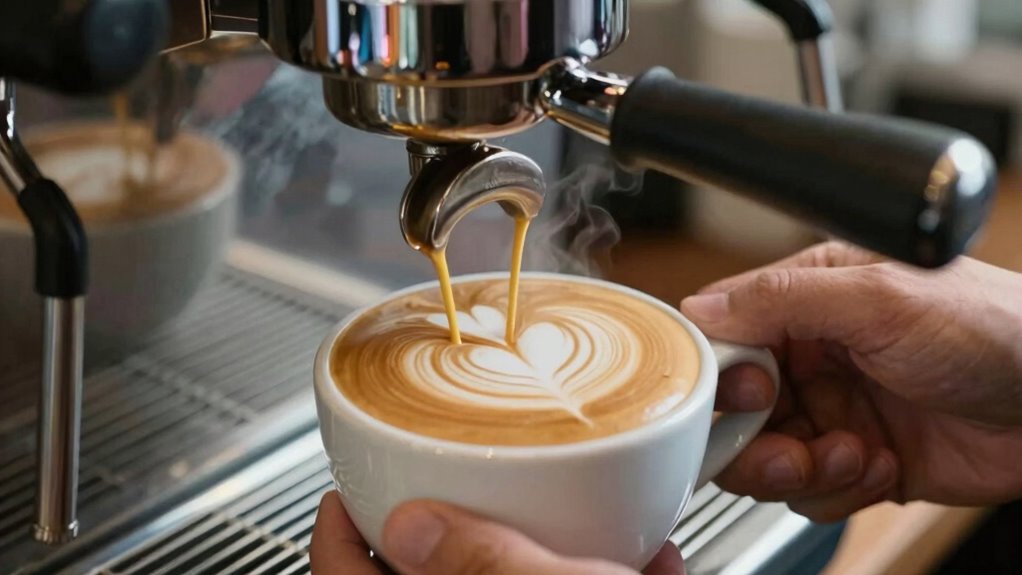
Extraction plays a crucial role in shaping the flavor of your coffee. The coffee bean origin influences the compounds extracted, giving each cup a unique taste profile. Beans from different regions have distinct acidity, sweetness, and body, which become more or less prominent depending on extraction. Your brewing equipment also impacts extraction efficiency; for example, espresso machines and pour-over setups deliver heat and pressure differently, affecting how flavors are pulled from the beans. If extraction is too short, you may notice sour or underdeveloped flavors. Too long, and the coffee can become bitter or harsh. Achieving the right extraction ensures you maximize the beans’ inherent qualities, resulting in a well-balanced, flavorful latte. Understanding the mechanics of brewing can help you troubleshoot and perfect your technique for consistent, delicious coffee. Proper equipment and bean origin are key to consistent, delicious coffee. Additionally, mastering extraction time and pressure is essential for optimizing flavor extraction and achieving your ideal espresso shot. Paying attention to grind size and tamping can further refine your extraction process, leading to better-tasting coffee.
How Grind Size Impacts Coffee Extraction
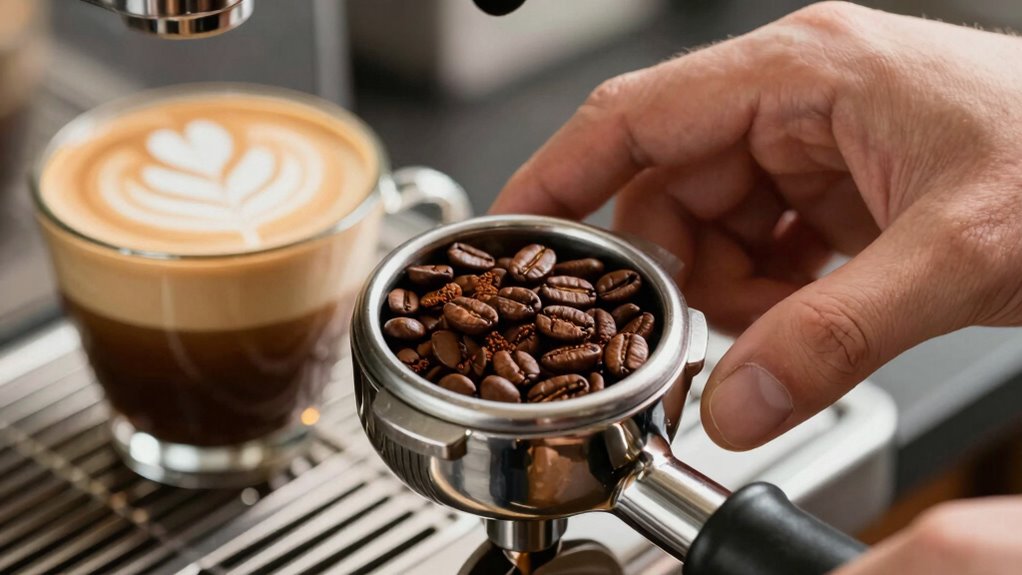
The size of your coffee grind directly influences how quickly and efficiently flavors are extracted during brewing. If your grind is uneven, with inconsistent particle sizes, extraction becomes unpredictable—some particles extract too quickly, others too slowly. This uneven particle distribution can cause over-extraction or under-extraction, affecting your latte’s taste. A uniform grind ensures consistent contact with water, allowing flavors to develop evenly. Fine grinds increase surface area, leading to faster extraction, while coarser grinds slow it down. Adjusting grind size helps you control flavor extraction, balancing bitterness and acidity. Remember, achieving grind uniformity is crucial to a well-extracted coffee, producing a balanced and flavorful latte every time. Proper grind size and particle distribution are essential for consistent, high-quality results, and understanding extraction techniques can further refine your brewing process. Additionally, using appropriate grinder settings can help achieve that desired uniformity for optimal flavor. Paying attention to particle size distribution ensures your coffee grounds extract evenly, leading to better flavor control. Recognizing the importance of consistent grind size can significantly improve your brewing results and overall coffee quality, especially when considering backyard transformation essentials such as optimizing equipment for better extraction.
Water Temperature and Brew Time for Consistent Coffee
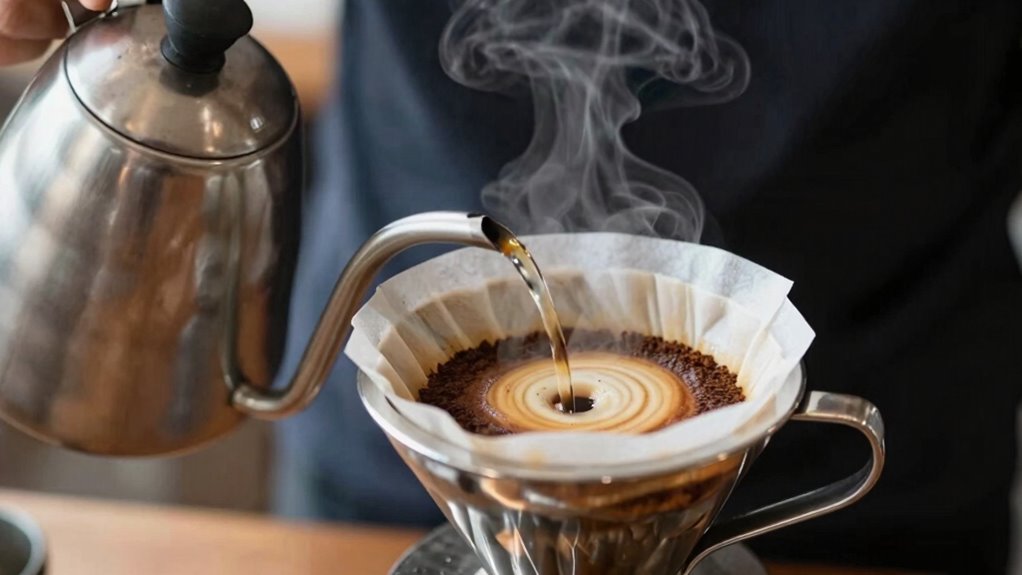
Optimizing grind size sets the stage for good flavor, but water temperature and brew time also play vital roles in achieving a consistently delicious latte. Water chemistry influences extraction, so maintaining the right temperature guarantees maximum solubility of coffee compounds. Too hot or too cold, and you’ll notice flavor imbalances. Using quality brewing equipment helps control these variables precisely, ensuring consistent results. Typically, water should be between 195°F and 205°F to extract the best flavors without over-extraction. Brew time also matters; too short and the coffee under-extracts, too long and it becomes bitter. Adjusting these factors based on your equipment and water chemistry guarantees a balanced, flavorful shot each time, making your latte taste just as good as in a café. Proper temperature control ensures your espresso extraction remains consistent and optimal. Additionally, understanding water temperature and its impact on extraction can help you troubleshoot flavor issues and refine your brewing process for better results. Implementing these considerations can help achieve a more consistent flavor profile in every cup. Moreover, paying attention to extraction timing allows for further fine-tuning to match your preferred taste. For example, temperature stability in your brewing process can significantly influence the overall flavor.
Barista Techniques That Improve Coffee Extraction

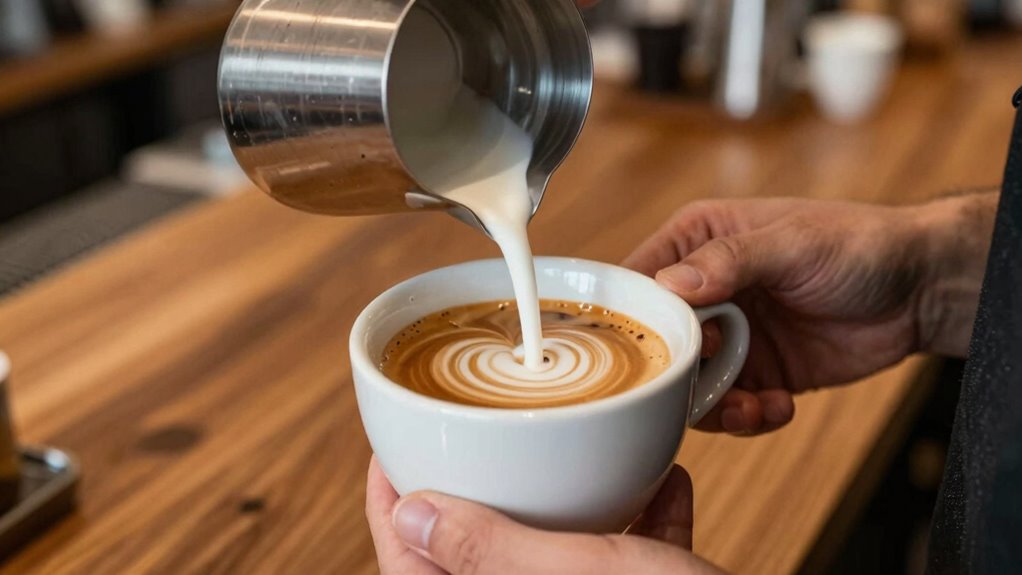
Mastering barista techniques is key to maximizing coffee extraction and ensuring a rich, balanced flavor in your latte. Proper milk frothing creates a smooth, velvety microfoam that blends seamlessly with espresso, enhancing flavor and mouthfeel. Focus on controlling your milk temperature and aeration to avoid over- or under-whipping. Your pour techniques also matter; a steady, controlled pour helps distribute coffee evenly and promotes uniform extraction. When pouring milk, start from a higher position to incorporate air, then lower the pitcher to pour with a gentle, consistent stream. This not only improves the visual latte art but also improves extraction efficiency by ensuring the coffee and milk are well integrated. Paying attention to extraction techniques can significantly influence flavor balance and overall quality in your latte. Understanding the keys to creative entrepreneurship can also inspire innovative brewing methods that set your café apart. Additionally, understanding the key traits of successful QA engineers can help ensure your brewing process is consistently high quality. Incorporating industry trends into your brewing practices can further elevate the flavor profile of your coffee.
Troubleshooting Why Your Coffee Tastes Different Every Time
If your coffee tastes different every time, it’s often due to inconsistencies in your brewing process or variables you might overlook. Factors like coffee bean origin and brewing equipment can cause flavor fluctuations. To troubleshoot, keep your brewing conditions steady, such as water temperature and grind size. Be aware that different coffee bean origins have unique profiles, affecting taste. Also, verify your brewing equipment is clean and functioning properly, as residue or wear can alter extraction. Use this table to identify common issues:
| Issue | Solution |
|---|---|
| Variable coffee bean origin | Choose a consistent source and roast level |
| Inconsistent brewing equipment | Regular cleaning and calibration |
| Uneven grind size | Use a burr grinder for uniformity |
| Fluctuating temperature | Use a reliable thermometer and control heat |
Additionally, monitoring brewing variables can help maintain consistent flavor profiles. Understanding the extraction process and how each parameter influences flavor can lead to more consistent and enjoyable coffee. Moreover, paying attention to the roast level and storage conditions of your beans can greatly impact flavor consistency. Consistent grind size is also essential, as it directly affects extraction efficiency and flavor clarity. Incorporating proper storage techniques ensures the beans retain their freshness and flavor integrity over time.
Frequently Asked Questions
How Does Altitude Affect Coffee Extraction and Flavor?
Altitude influences coffee extraction and flavor because higher elevations generally produce beans with brighter, more vibrant flavors. You’ll notice more nuanced flavor nuances due to slower maturation and unique growing conditions. The thinner air at high altitudes also affects brewing, often requiring adjustments. When you brew coffee at different altitudes, you’ll find that the flavor profile shifts, making each cup uniquely complex and rich in taste.
Can the Type of Water Impact Extraction Quality?
Yes, the type of water impacts extraction quality. Water mineralization, like calcium and magnesium levels, influences how flavors develop during brewing. Hard water enhances extraction but can cause scale buildup, while soft water might result in under-extraction. Additionally, water temperature matters—ideally between 195-205°F—to optimize flavor extraction. Using the right mineral balance and temperature guarantees a richer, more balanced latte flavor every time.
Does the Age of Coffee Beans Influence Extraction?
Like a fine wine, coffee beans age like a well-tended garden, impacting extraction. You’ll notice that older beans lose their vibrancy, leading to dull flavors. Freshness factors such as proper storage conditions preserve essential oils and aromas, ensuring ideal extraction. When beans sit too long, their oils degrade, making your brew taste flat. So, always choose fresh beans stored correctly to reveal rich, lively flavors in every cup.
How Does Atmospheric Pressure in a Café Alter Brewing?
Atmospheric pressure in a café impacts your brewing by affecting barometric pressure, which can alter water boiling points and extraction rates. When pressure fluctuates, it can lead to inconsistent brewing, making your latte taste different each time. Higher or lower barometric pressure changes how water interacts with coffee grounds, so maintaining a stable environment helps guarantee brewing consistency and a more predictable, flavorful latte every time you enjoy it.
Are There Seasonal Variations That Affect Extraction Consistency?
Sure, seasonal variations do mess with your perfect brew. As climate change throws unpredictable weather at us, temperature and humidity fluctuate, impacting bean storage and extraction consistency. You might notice your latte’s flavor shifts with the seasons, thanks to these subtle environmental changes. So, next time your coffee tastes off, blame the weather, not your barista — it’s nature’s sneaky way of sabotaging your caffeine fix.
Conclusion
Think of your coffee as a symphony, where each element—grind size, water temp, extraction—is a essential instrument. When they play in harmony, you get a beautiful, consistent flavor. But if one falls out of tune, the whole performance suffers. By understanding these factors, you become the maestro of your own coffee experience, ensuring every sip hits the right note. So, experiment and fine-tune—your perfect latte is waiting to be brewed.