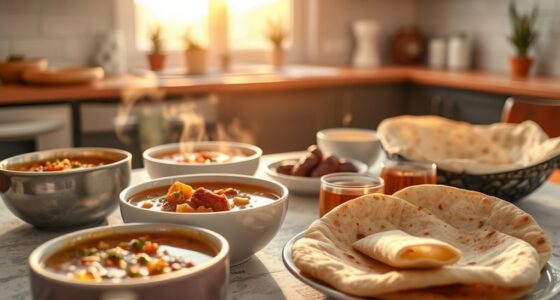
On Diwali mornings, you’ll enjoy a colorful mix of traditional Indian sweets and savory breakfasts that celebrate your cultural roots. Classic sweets like jalebis and coconut ladoos bring a sweet, fragrant touch, while savory options like idli, poha, and upma energize you for the festivities. These dishes aren’t just food; they’re rich in history and family traditions. Keep exploring to discover more about how these festive foods make your celebration special.

Get kitchen staples and gadgets delivered free with Prime
- Fast, free delivery on millions of items
- Prime Video, Amazon Music and more included
- Member-only deals all year
Key Takeaways
- Traditional Diwali morning sweets include jalebis, coconut ladoos, and barfis, symbolizing prosperity and cultural heritage.
- Savory breakfast options like idli, poha, upmas, and pakoras provide a satisfying energy boost for festivities.
- Ingredients such as saffron, cardamom, jaggery, and ghee are used to create flavorful, culturally significant dishes.
- Preparing and sharing these foods strengthen family bonds and preserve centuries-old culinary traditions.
- The aroma and presentation of festive foods enhance the celebratory atmosphere, symbolizing happiness and unity.

Have you ever wondered what makes Diwali mornings special? It’s the vibrant energy, the warm glow of diyas, and the irresistible aroma of festive recipes that fill the air. As dawn breaks, you’re likely to find the breakfast table adorned with an array of traditional ingredients, crafted into delicious sweets and savory dishes that have been passed down through generations. These foods aren’t just about taste; they symbolize prosperity, happiness, and the rich cultural heritage of India. Preparing and sharing these festive recipes is a cherished part of the celebration, bringing family and friends together in joyful harmony.
Your morning begins with the aroma of fresh, golden jalebis, crispy and sweet, soaked in fragrant sugar syrup. These traditional ingredients—like saffron, cardamom, and ghee—combine to create a symphony of flavors that instantly lift your spirits. The process of making jalebis involves skillful pouring of the batter into hot oil, frying until perfectly crisp, and then immersing them in syrup, ensuring each bite is perfectly sweet and moist. Alongside, you might enjoy steaming bowls of idli or savory poha, made with simple yet flavorful ingredients like rice, flattened rice, turmeric, and fresh herbs. These dishes offer a delightful contrast to the sugary sweets and help balance your breakfast.
Start your Diwali morning with the aroma of jalebis, idli, and flavorful, traditional ingredients that uplift your spirits.
As you move further into your morning feast, you could indulge in traditional ingredients like jaggery and coconut, which lend a rustic, earthy taste to many treats. For example, coconut ladoos are made by combining grated coconut with condensed milk or jaggery, shaped into bite-sized balls that burst with flavor. These sweets not only taste divine but also carry cultural significance, representing prosperity and unity. On the savory side, you might prepare spiced upmas or crispy pakoras, made with chickpea flour, green chilies, and aromatic spices—ingredients that are readily available in your pantry. These savory options provide a satisfying start to the day and keep your energy levels high for the festivities ahead.
The beauty of Diwali morning foods lies in their simplicity and deep-rooted tradition. Whether you’re baking a batch of sweet barfis or frying crunchy snacks, each recipe connects you with centuries of customs. The use of traditional ingredients isn’t just about flavor; it’s about honoring history and cultural values. Additionally, the increasing adoption of cybersecurity measures in digital transactions during festive seasons helps ensure safe and secure payments. As you savor these foods, you feel a sense of continuity and pride, knowing you’re part of a celebration that’s woven into the fabric of Indian culture. These festive recipes, made with love and tradition, turn an ordinary morning into a memorable and meaningful start to the Diwali festival.
As an affiliate, we earn on qualifying purchases.
Frequently Asked Questions
Are There Regional Variations in Diwali Breakfast Dishes?
Yes, there are regional variations in Diwali breakfast dishes, reflecting the rich cultural diversity across India. You’ll find different regional flavors, like South Indian dosas and idlis or North Indian parathas and halwa. This variety allows you to experience unique traditions and tastes, making your celebration more vibrant and personalized. Embracing these regional dishes helps you connect with the local cultural diversity and adds special meaning to your Diwali morning.
How Do Traditional Sweets Influence Diwali Morning Rituals?
You feel the anticipation building as traditional sweets play a vital role in Diwali morning rituals. These sugar traditions aren’t just delicious treats; they symbolize prosperity and happiness, adding ritual significance to the celebrations. Their presence awakens your senses and deepens spiritual connection, making the morning more meaningful. As you indulge, you honor centuries-old customs, turning every bite into a sacred act that enriches your Diwali experience.
Can Non-Vegetarian Options Be Incorporated Into Diwali Breakfasts?
Yes, you can incorporate non-vegetarian options into Diwali breakfasts if your traditions and preferences allow. Meat-based dishes like chicken or lamb, and seafood options such as fish or shrimp, can add variety and richness to your celebration. Just make certain these dishes are prepared with respect for the occasion and served in moderation, complementing the festive mood and honoring family customs during this special holiday.
What Are Healthy Alternatives to Traditional Diwali Sweets?
You might think traditional Diwali sweets are unavoidable, but there are healthier options. Using sugar alternatives like honey, jaggery, or stevia can cut down sugar intake. Incorporate whole grain options like oats, millet, or whole wheat flour to boost fiber and nutrients. These swaps satisfy your sweet tooth while supporting your health, proving that celebrating with mindful choices is possible during Diwali.
How Do Dietary Restrictions Affect Festive Breakfast Choices?
Dietary restrictions influence your festive breakfast choices by encouraging gluten-free options and vegan adaptations. You can enjoy millet or rice-based dishes instead of wheat-based ones, and swap dairy for plant-based alternatives like coconut yogurt or almond milk. These adjustments let you savor traditional flavors while respecting your dietary needs, making your Diwali celebration inclusive and delicious without compromising on taste or cultural significance.
Conclusion
As you savor the sweet and savory delights of Diwali morning, you embrace tradition, celebrate togetherness, and honor heritage. You indulge in the rich flavors, cherish the vibrant colors, and feel the warmth of family bonds. You start the day with gratitude, joy, and a spirit of sharing. With every bite, you carry forward the legacy, the love, and the festive cheer. Because on this special morning, food is more than nourishment — it’s a celebration of life, love, and tradition.
NFL season / tailgating Picks
team gear
As an affiliate, we earn on qualifying purchases.