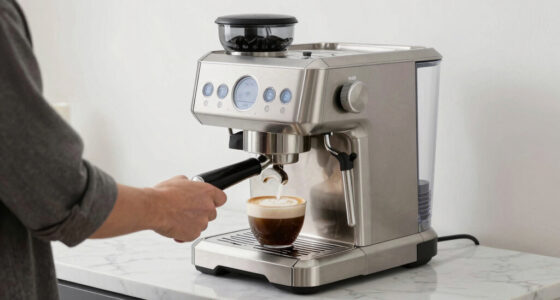
The best espresso machine for most home baristas is the Breville Barista Express, because it bundles a built-in grinder, precise pressure control, and a capable steam wand into one machine — the two things that matter most for café-quality shots at home are fresh grounds and stable pressure, and it delivers both. If counter space or budget is tight, the Breville Bambino offers surprisingly serious espresso in a compact footprint, while the Breville Barista Touch adds automated milk texturing for buyers who want consistency over hands-on craft. The main tradeoff in this category is convenience versus control: machines with grinders and touchscreens cost more and take up more room, while cheaper manual models demand skill and a separate grinder. Cheaper still, budget units like the IMUSA and Aromaster make milk drinks but won’t produce true espresso character. Keep reading for the full breakdown of all 15 machines, including who each one is for and which ones to skip.

Get kitchen staples and gadgets delivered free with Prime
- Fast, free delivery on millions of items
- Prime Video, Amazon Music and more included
- Member-only deals all year
Complete the kit


Key Takeaways
- Breville dominates the top of this lineup because its grinder-equipped models (Barista Express, Barista Touch) solve the freshness problem that plagues most budget machines — pre-ground coffee is the single biggest reason home espresso disappoints.
- The lineup splits into three clear tiers: do-it-all machines with built-in grinders ($500+), steam-wand machines that need a separate grinder ($150–$300), and steam-driven budget units under $100 that make milk drinks but not true espresso.
- Several products in this list are near-duplicates — the three Barista Express colorways are identical machines, and the two XIXUBX models differ only in finish — so choosing between them comes down to price and aesthetics, not performance.
- Compact machines like the Bambino and De’Longhi Stilosa prove that footprint and espresso quality aren’t directly linked; the real tradeoff is steam power and warm-up time, not shot quality.
- The Ninja Luxe Café is the outlier: it’s the only machine here that also makes drip coffee and cold brew, making it the strongest pick for households where espresso is a sometimes-drink rather than a daily ritual.
| CASABREWS CM5418 Compact Espresso Machine with Milk Frothing Steam Wand |  | Best Value for Small Kitchens | Model: CM5418 | Type: Semi-automatic espresso machine | Pressure: 20 bar | VIEW LATEST PRICE | See Our Full Breakdown |
| Breville Barista Express Espresso Machine, Brushed Stainless Steel |  | Best Overall | Model: BES870XL | Grinder: Integrated conical burr grinder | Bean hopper capacity: 1/2 lb | VIEW LATEST PRICE | See Our Full Breakdown |
| Breville Barista Express Espresso Machine, Black Truffle |  | Best Overall, Dark Finish Alternative | Model: BES870BTR | Color: Black Truffle | Grinder: Integrated precision conical burr grinder | VIEW LATEST PRICE | See Our Full Breakdown |
| XIXUBX Espresso Machine with Milk Frother, Gray |  | Best for Iced Coffee Drinkers | Type: Semi-automatic espresso machine | Power: 1350 W | Pump pressure: 20 bar | VIEW LATEST PRICE | See Our Full Breakdown |
| Breville Bambino Espresso Machine, Brushed Stainless Steel | 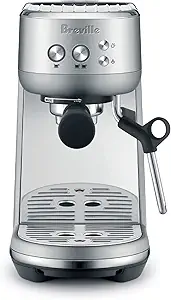 | Best Compact Speed Demon | Model: BES450BSS | Heating system: ThermoJet | Heat-up time: 3 seconds | VIEW LATEST PRICE | See Our Full Breakdown |
| Spacekey Espresso Machine with Grinder and Milk Frother, 30 Grind Settings, 20-Bar Pump |  | Best Grinder Flexibility | Grind settings: 30 | Grinder: Built-in conical burr grinder | Pump pressure: 20 bar | VIEW LATEST PRICE | See Our Full Breakdown |
| IMUSA 4-Cup Electric Espresso and Cappuccino Maker with Milk Frother, Black |  | Best Budget Starter | Capacity: 4 cups | Type: Electric espresso maker | Milk frother: Included | VIEW LATEST PRICE | See Our Full Breakdown |
| CASABREWS 3700 Essential Stainless Steel Espresso Machine with Steam Wand |  | Best Compact Value | Machine type: Semi-automatic espresso machine | Pump pressure: 20 bar | Power: 1350 watts, 120 volts | VIEW LATEST PRICE | See Our Full Breakdown |
| Aromaster 1400W Espresso Machine with Milk Frother |  | Best for Easy Maintenance | Power: 1400W | Pump pressure: 20 bar | Operation mode: Semi-automatic | VIEW LATEST PRICE | See Our Full Breakdown |
| Ninja Luxe Café Premier 3-in-1 Espresso, Drip Coffee, and Cold Brew Machine |  | Best All-in-One Versatility | Drink types: Espresso, drip coffee, cold brew | Espresso styles: Double shot and quad shot | Drip coffee styles: Classic, rich, over ice | VIEW LATEST PRICE | See Our Full Breakdown |
| XIXUBX Espresso Machine with Milk Frother, Silver |  | Best Starter Bundle | Pump pressure: 20 bar | Water tank capacity: 42 oz | Steam wand: 360° rotating, detachable | VIEW LATEST PRICE | See Our Full Breakdown |
| De’Longhi Stilosa Compact Manual Espresso Machine with Manual Milk Frother | 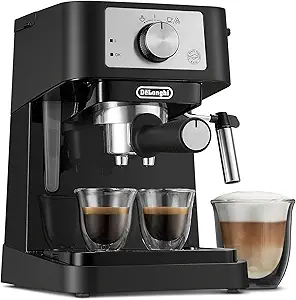 | Best Budget Entry Point | Type: Manual espresso machine | Milk frother: Manual | Boiler material: Stainless steel | VIEW LATEST PRICE | See Our Full Breakdown |
| Arecovas Espresso Machine with 20-Bar Pressure and Milk Frother |  | Best Space-Saving Tech Pick | Machine type: Semi-automatic espresso machine | Pressure: 20 bar | Power: 1300 watts | VIEW LATEST PRICE | See Our Full Breakdown |
| Breville Barista Express Espresso Machine, Black Sesame |  | Best Grinder-in-One Value | Model: BES870BSXL | Grinder: Integrated precision conical burr grinder | Water tank capacity: 67 oz | VIEW LATEST PRICE | See Our Full Breakdown |
| Breville Barista Touch Espresso Machine, Brushed Stainless Steel (BES880BSS) |  | Best Premium All-in-One | Model: BES880BSS | Grinder: Integrated precision conical burr grinder | Heating system: ThermoJet; reaches extraction temperature in 3 seconds | VIEW LATEST PRICE | See Our Full Breakdown |
| espresso machines for home | Water tank capacity | Power | Warranty |
|---|---|---|---|
| CASABREWS CM5418 Compact Espre | 34 oz | — | — |
| Breville Barista Express Espre | 67 oz | 1600 W, 120 V | 1 year limited |
| Breville Barista Express Espre | 67 oz | 1600 W, 120 V | 1-year limited |
| XIXUBX Espresso Machine with M | — | 1350 W | 1 year |
| Breville Bambino Espresso Mach | — | 1560 W, 110–120 V | 1-year limited |
| Spacekey Espresso Machine with | 61 oz removable | — | One-year limited |
| IMUSA 4-Cup Electric Espresso | — | — | — |
| CASABREWS 3700 Essential Stain | 43.9 oz removable | 1350 watts, 120 volts | — |
| Aromaster 1400W Espresso Machi | 37 oz removable | 1400W | — |
| Ninja Luxe Café Premier 3-in-1 | — | — | — |
| XIXUBX Espresso Machine with M | 42 oz | — | 1 year |
| De’Longhi Stilosa Compact Manu | — | — | — |
| Arecovas Espresso Machine with | 1.2 L (41 oz) | 1300 watts | — |
| Breville Barista Express Espre | 67 oz | 1600 W | 1 year limited |
| Breville Barista Touch Espress | 67 oz | 1680 watts | 2-year limited |
More Details on Our Top Picks
CASABREWS CM5418 Compact Espresso Machine with Milk Frothing Steam Wand
This option stands out as the most space-friendly entry point in the lineup, pairing a 20-bar pump with a genuinely usable steam wand at a fraction of the footprint of the Breville Barista Express. The built-in pressure gauge is a rare touch at this size — it gives beginners visible feedback on whether their grind and tamp are in the right zone, something the XIXUBX Gray skips entirely. The tradeoff is patience: after steaming milk, the machine needs to cool down before you can pull the next shot, so back-to-back lattes for guests become a slow process. Compared with the De’Longhi Stilosa, the stainless build and removable 34 oz tank feel more durable and easier to live with daily, though serious dialing-in still falls on the user.
Pros:- Built-in pressure gauge helps beginners diagnose grind and tamp issues
- Compact stainless steel body fits tight counters
- Steam wand produces froth suitable for lattes and basic latte art
- Removable 34 oz tank simplifies refills and cleaning
Cons:- Must cool down after frothing before brewing again
- Shot quality depends heavily on user dialing in grind, dose, and tamp
Best for: First-time espresso buyers in apartments or offices who want real milk drinks without a counter-hogging machine
Not ideal for: Households making multiple milk drinks in a row — the mandatory cool-down between steaming and brewing kills throughput
- Model:CM5418
- Type:Semi-automatic espresso machine
- Pressure:20 bar
- Wattage:1350 W
- Water tank capacity:34 oz
- Milk frother:Steam wand
- Material/finish:Brushed stainless steel
Our verdict“The smart pick for solo drinkers with limited counter space who want to learn espresso fundamentals without a big investment.”
Breville Barista Express Espresso Machine, Brushed Stainless Steel
For most home baristas, this is the machine that makes the most sense as a do-everything centerpiece. The integrated conical burr grinder eliminates the separate grinder purchase that machines like the Breville Bambino force on you, dosing fresh grounds straight into the 54 mm portafilter. PID temperature control and low-pressure pre-infusion translate into repeatable, balanced shots — the difference between guessing and actually improving week over week. The 67 oz tank means fewer refills than the compact CASABREWS CM5418. The honest tradeoff: everything is manual. Grinding, dosing, tamping, and milk texturing all take practice, and unlike the Barista Touch, there’s no touchscreen shortcut. Buyers who want push-button consistency should skip it, but those willing to learn get café-level control.
Pros:- Integrated burr grinder removes the need for a separate grinder purchase
- PID temperature control and pre-infusion produce repeatable balanced extraction
- Steam wand supports full manual milk texturing and latte art
- Complete accessory kit including milk jug, tamper, and cleaning tools
Cons:- Steep learning curve before shots taste consistently good
- Manual milk texturing adds time and skill demands to every drink
Best for: Coffee enthusiasts ready to invest time in the full grinding-and-brewing ritual for noticeably better shots
Not ideal for: Anyone wanting one-touch convenience — every drink requires hands-on grinding, extraction, and manual milk texturing
- Model:BES870XL
- Grinder:Integrated conical burr grinder
- Bean hopper capacity:1/2 lb
- Water tank capacity:67 oz
- Power:1600 W, 120 V
- Portafilter size:54 mm
- Shot options:Single or double
- Warranty:1 year limited
Our verdict“The best all-around choice for buyers who want fresh-ground espresso and are willing to work for it.”
Breville Barista Express Espresso Machine, Black Truffle
This is functionally the same machine as the stainless Barista Express, so the decision here is aesthetic rather than performance-driven — and that’s a legitimate reason to choose it. The Black Truffle finish suits kitchens where silver appliances would clash, giving the same grinder-plus-PID workflow a darker, more understated presence. Like its stainless sibling, the integrated precision burr grinder and PID control deliver the fresh-ground, temperature-stable extraction that separates it from grinder-less rivals like the XIXUBX or De’Longhi Stilosa. The drawbacks are identical too: full manual operation means a real learning curve, and the one-year warranty is short for a machine at this level. Pick this over the stainless version purely on looks; pick the Barista Touch instead if automation matters more than finish.
Pros:- Same integrated burr grinder and PID extraction as the stainless Barista Express
- Black Truffle finish complements darker kitchen palettes
- Fresh grounds dosed directly into the portafilter
- Steam wand supports manual microfoam and latte art
Cons:- Fully manual operation demands practice and attention every drink
- Only a 1-year limited warranty at this price tier
Best for: Buyers sold on the Barista Express workflow who want a dark finish to match a modern kitchen
Not ideal for: Anyone hoping for a performance upgrade over the stainless model — the internals and tradeoffs are the same
- Model:BES870BTR
- Color:Black Truffle
- Grinder:Integrated precision conical burr grinder
- Bean hopper capacity:1/2 lb
- Water tank capacity:67 oz
- Power:1600 W, 120 V
- Portafilter size:54 mm
- Warranty:1-year limited
Our verdict“Choose it when you want the best-overall Barista Express experience in a finish that fits a darker kitchen.”
XIXUBX Espresso Machine with Milk Frother, Gray
What separates this model from nearly everything else in the roundup is one-touch cold brew — a genuine rarity among espresso machines, and the main reason to pick it over the similarly priced CASABREWS CM5418. The 1350W heater reaching temperature in roughly 30 seconds also beats most budget rivals on morning speed, though the Breville Bambino still laps it with its 3-second ThermoJet system. NTC temperature control keeps extraction steadier than unregulated budget machines, and the included frothing pitcher means one less accessory to buy. The catch is control: with no pressure gauge or temperature dial, dialing in a shot is trial and error in a way the CASABREWS’s gauge makes visible. Buyers who mostly drink hot, carefully tuned espresso should look elsewhere; iced-drink fans get real value here.
Pros:- One-touch cold brew is uncommon among espresso machines
- Reaches brewing temperature in about 30 seconds
- Adjustable steam wand plus included frothing pitcher
- Simple push-button controls lower the learning curve
Cons:- No pressure gauge or temperature controls for manual fine-tuning
- Build and extraction quality trail the Breville options
Best for: Households that split their order between hot espresso and iced or cold brew drinks and want one machine for both
Not ideal for: Tinkering-focused buyers — the absence of gauges or dials removes the manual adjustment that shot-tuning demands
- Type:Semi-automatic espresso machine
- Power:1350 W
- Pump pressure:20 bar
- Heating time:About 30 seconds
- Brewing options:Hot espresso and one-touch cold brew
- Temperature control:NTC sensor
- Milk frother:Adjustable steam wand
- Warranty:1 year
Our verdict“The pick for iced-coffee-first households that still want basic hot espresso and steamed milk capability.”
Breville Bambino Espresso Machine, Brushed Stainless Steel
This model wins on a single spec that changes daily use: 3-second heat-up via the ThermoJet system. Compared with the CASABREWS CM5418, which needs warm-up time and a cool-down after steaming, the Bambino goes from off to extracting almost instantly — a real advantage for one-coffee mornings. Despite the small footprint, it inherits precise temperature control and pre-infusion from Breville’s pricier machines, so shot quality punches above its size. What you give up versus the Barista Express is the integrated grinder: you’ll need a separate burr grinder, which adds cost and counter space. The 19-gram dose capacity and dual-wall baskets help beginners, but milk texturing and extraction still take practice. It’s the best compact choice here — just not the cheapest once you add a grinder.
Pros:- 3-second ThermoJet heat-up enables genuine grab-and-go brewing
- Compact footprint fits cramped counters
- Precise temperature control and low-pressure pre-infusion for balanced shots
- Steam wand produces microfoam suitable for latte art
Cons:- Requires a separate grinder, adding cost and space
- Espresso and milk texturing still demand a learning period
Best for: Small-kitchen espresso drinkers who value instant availability and already own or will buy a standalone grinder
Not ideal for: Buyers wanting an all-in-one setup — no built-in grinder means an extra purchase and more counter clutter
- Model:BES450BSS
- Heating system:ThermoJet
- Heat-up time:3 seconds
- Power:1560 W, 110–120 V
- Portafilter size:54 mm, 19 g dose
- Settings:1 cup, 2 cups, hot water, steam
- Warranty:1-year limited
Our verdict“The fastest, most space-efficient path to quality espresso — provided you already have a grinder.”
Spacekey Espresso Machine with Grinder and Milk Frother, 30 Grind Settings, 20-Bar Pump
This option stands out for having 30 grind settings on its built-in conical burr grinder — more than the Ninja Luxe Café Premier‘s 25 and a serious advantage for anyone learning to dial in espresso. Compared with the CASABREWS 3700, which uses pre-ground coffee only, this model covers the whole workflow from bean to cup, and the PID temperature control keeps shot-to-shot results steadier than machines without it. The dedicated cold brew function is a rarity at this tier and adds real versatility.
The tradeoff is the 51 mm portafilter, a non-standard size that limits compatibility with popular aftermarket baskets and accessories built for 54 mm or 58 mm systems. Buyers who plan to upgrade their tools over time should factor that in before committing.
Pros:- Built-in conical burr grinder with 30 adjustable settings for precise dialing in
- PID temperature control for more consistent shots
- Dedicated cold brew function adds drink variety
- Large 61 oz removable water tank means fewer refills
Cons:- Non-standard 51 mm portafilter limits aftermarket accessory compatibility
- Cleaning and maintenance guidance is thin, which matters with a built-in grinder
Best for: Home baristas who want to grind fresh beans and fine-tune their espresso without buying a separate grinder
Not ideal for: Tinkerers who want to upgrade portafilters and baskets later — the 51 mm size narrows accessory options considerably
- Grind settings:30
- Grinder:Built-in conical burr grinder
- Pump pressure:20 bar
- Temperature control:PID
- Water tank capacity:61 oz removable
- Motor power:1350 W
- Portafilter:51 mm with single and double shot baskets
- Dimensions:11.6 x 9 x 14 in
- Warranty:One-year limited
Our verdict“A strong all-in-one choice for espresso drinkers who value grind control above everything else and don’t plan to customize their portafilter setup.”
IMUSA 4-Cup Electric Espresso and Cappuccino Maker with Milk Frother, Black
Not everyone needs burr grinders and PID loops. The IMUSA 4-Cup makes the list because it does the basics — brewing multiple servings and frothing milk — at a fraction of the complexity of machines like the Spacekey or Ninja Luxe Café Premier. Where the De’Longhi Stilosa targets single-serve manual purists, this one leans the other way: four cups per cycle means it can serve a household or small office without back-to-back brewing.
The permanent filter basket removes the ongoing cost of paper filters, and the removable drip tray keeps cleanup honest. Realistically, this is steam-pressure territory rather than true 20-bar pump espresso, so expectations should calibrate accordingly — it produces approachable, milder coffee rather than café-grade shots.
Pros:- Brews up to four cups per cycle for sharing
- Built-in milk frother handles cappuccinos and lattes
- Permanent filter basket eliminates paper filter costs
- Compact footprint fits dorm rooms and small counters
Cons:- Plastic construction feels less durable than stainless rivals like the CASABREWS 3700
- Brew pressure and temperature control can’t match pump-driven machines for shot quality
Best for: First-time espresso drinkers or students who want cappuccino-capable coffee for multiple people without a learning curve
Not ideal for: Espresso enthusiasts chasing crema-rich, café-quality shots — this is a convenience brewer, not a precision instrument
- Capacity:4 cups
- Type:Electric espresso maker
- Milk frother:Included
- Filter:Permanent filter basket
- Drip tray:Removable
- Exterior:Heat-resistant plastic, black
- Voltage:120 V
Our verdict“A low-commitment entry point for casual milk-coffee drinkers who prioritize serving capacity and simplicity over shot quality.”
CASABREWS 3700 Essential Stainless Steel Espresso Machine with Steam Wand
The CASABREWS 3700 earns its spot as the straightforward middle path in this lineup. It skips the built-in grinder of the Spacekey and the multi-drink versatility of the Ninja Luxe Café Premier, and in exchange delivers a 20-bar pump, stainless steel body, and a proper steam wand in a footprint small enough for a desk-side counter. The 43.9 oz removable tank hits a practical sweet spot — larger than the Aromaster’s 37 oz, smaller than machines that dominate the countertop.
Buyers supply their own ground coffee, which is a genuine tradeoff: it means buying a separate grinder (or using pre-ground) but also one less component to clean and eventually repair. The absence of a pressure gauge means dialing in shots relies on taste and visual cues rather than data, which suits relaxed brewers more than methodical ones.
Pros:- True 20-bar pump extraction for genuine espresso character
- Stainless steel build outclasses plastic-bodied budget rivals
- Steam wand produces foam fine enough for latte art
- Compact enough for small kitchens or office break rooms
Cons:- Ground coffee only — no built-in grinder, so fresh-bean workflow costs extra
- No pressure gauge for shot diagnosis
- Requires a first-use priming cycle before brewing
Best for: Apartment dwellers who already own a grinder and want real pump espresso with milk drinks in minimal counter space
Not ideal for: Data-driven home baristas who want pressure readouts and grinder integration — this is deliberately stripped down
- Machine type:Semi-automatic espresso machine
- Pump pressure:20 bar
- Power:1350 watts, 120 volts
- Coffee input:Ground coffee
- Water tank capacity:43.9 oz removable
- Milk frother:Steam wand
- Included filters:One-cup and two-cup brewing filters
- Color:Silver
Our verdict“The pick for buyers who want dependable pump espresso and serious milk texturing without paying for a grinder they may already own.”
Aromaster 1400W Espresso Machine with Milk Frother
What separates the Aromaster from similarly priced rivals is its attention to the unglamorous side of ownership: a one-touch descaling function, anti-dry-burn protection, auto shut-off, and even a cup warmer. Compared with the CASABREWS 3700, which offers no descaling guidance and demands a manual first-use cycle, the Aromaster reduces the routine chores that quietly shorten a machine’s lifespan. The 1400W fast heating with PID control also gets it brewing quicker than most in this batch.
The swivel 360° steam wand is more maneuverable than fixed wands on budget models, helping with pitcher positioning. On the flip side, the 37 oz tank is the smallest among the mid-range picks here, and semi-automatic operation still means hands-on dosing and tamping every morning — buyers wanting push-button mornings should look at the Ninja Luxe Café Premier instead.
Pros:- One-touch descaling and removable parts make upkeep genuinely easy
- 1400W fast heat-up with PID temperature stability
- Pre-infusion and anti-dry-burn protection improve shots and protect the machine
- 360° swivel steam wand offers better pitcher control than fixed wands
Cons:- Smallest water tank of the mid-range picks at 37 oz
- Semi-automatic workflow still requires manual dosing and tamping each use
Best for: Set-and-forget types who want espresso several times a week with minimal descaling and maintenance hassle
Not ideal for: High-volume households — the 37 oz tank and compact workspace mean frequent refills during multi-drink sessions
- Power:1400W
- Pump pressure:20 bar
- Operation mode:Semi-automatic
- Water tank capacity:37 oz removable
- Special features:Pre-infusion, PID control, descaling function, auto shut-off, cup warmer
- Steam wand:360° swivel
- Material:Stainless steel
- Dimensions:13 x 7 x 14 in
Our verdict“A smart pick for daily drinkers who value low-maintenance ownership and fast heat-up over maximum capacity or automation.”
Ninja Luxe Café Premier 3-in-1 Espresso, Drip Coffee, and Cold Brew Machine
The Ninja Luxe Café Premier is the most capable machine in this batch, and the only one that replaces three appliances. Espresso (including quad shots), drip coffee in three styles, and genuine cold brew all live in one unit — something the Spacekey’s cold brew function only partially matches. Where the Breville Barista Express demands learned technique, Ninja’s guided dosing, weight-based measurement, and assisted tamping walk beginners toward repeatable results, and the hands-free dual froth system with four presets removes the steaming learning curve entirely.
The cost of that breadth is twofold: a large countertop footprint that dwarfs the CASABREWS 3700, and a settings menu deep enough that mastering the machine takes real time. This pick makes the most sense for households with mixed coffee preferences rather than single-minded espresso purists.
Pros:- Three drink categories in one machine: espresso, drip, and cold brew
- Guided grinding, weight-based dosing, and assisted tamping teach beginners proper technique
- Hands-free milk frothing with four presets plus manual mode
- 70 oz removable reservoir and built-in accessory storage reduce daily friction
Cons:- Large footprint consumes serious countertop real estate
- Extensive settings and modes take time to learn before results become consistent
Best for: Households where one person wants espresso, another wants drip, and someone else wants cold brew — all without three machines
Not ideal for: Small kitchens or minimalists — its multi-function footprint is the largest here and the learning curve is real
- Drink types:Espresso, drip coffee, cold brew
- Espresso styles:Double shot and quad shot
- Drip coffee styles:Classic, rich, over ice
- Serving sizes:6, 8, 10, 12, 14, 16, and 18 oz
- Grinder:Built-in conical burr grinder with 25 settings
- Water reservoir:70 oz removable
- Frothing:Dual froth system with four presets and manual mode
- Included accessories:Portafilter, milk jug, baskets, assisted tamper, cleaning tools, hard water test kit
Our verdict“The best choice for a multi-drinker household willing to trade counter space and learning time for unmatched drink variety.”
XIXUBX Espresso Machine with Milk Frother, Silver
This option stands out for what comes in the box rather than raw capability: a stainless steel frothing pitcher is included, so a first-time buyer can pull shots and steam milk on day one without shopping for accessories. The 360° rotating steam wand is genuinely useful at this level, giving enough control for latte art practice that most budget machines can’t touch. Compared with the De’Longhi Stilosa, the XIXUBX trades a slightly larger footprint for a 42 oz water tank that keeps refills to a minimum across multiple drinks. The visible pressure gauge is a nice learning tool, though it reads pump pressure, not extraction quality. The main tradeoff is that everything is manual — frothing, dosing, tamping — so expect a learning curve before drinks taste consistent.
Pros:- Includes a stainless steel milk frothing pitcher so beginners can start immediately
- 360° rotating steam wand produces microfoam suitable for latte art
- 42 oz water tank supports multiple servings between refills
- Visible pressure gauge helps beginners understand their extraction
Cons:- All milk frothing is manual, which takes practice to master
- No listed dimensions makes it hard to plan counter space before ordering
Best for: Espresso beginners who want a complete out-of-the-box setup with a frothing pitcher included
Not ideal for: Buyers who want push-button drinks — every step here is manual, including milk texturing
- Pump pressure:20 bar
- Water tank capacity:42 oz
- Steam wand:360° rotating, detachable
- Body material:Stainless steel
- Included accessory:Stainless steel milk frothing pitcher
- Warranty:1 year
Our verdict“A sensible first espresso machine for someone who wants accessories bundled in and is willing to learn manual technique.”
De’Longhi Stilosa Compact Manual Espresso Machine with Manual Milk Frother
The Stilosa earns its place by being the lowest-commitment way into real espresso in this lineup. Where the Breville Barista Express asks a serious investment and includes a grinder, the Stilosa keeps things lean: a stainless steel boiler, a portafilter with single- and double-shot baskets, and a manual frother. The compact footprint is its strongest card against roomier rivals like the XIXUBX, fitting on cramped counters or in small apartments without dominating the space. The two-level cup holder is a small touch that matters daily, letting you brew into anything from a small demitasse to a taller latte glass. The tradeoff is honest simplicity — no PID, no pressure gauge, no programmable anything — so shot quality depends entirely on your grind and technique.
Pros:- Compact design fits small counters and tight kitchen spaces
- Manual frother handles cappuccinos, lattes, and flat whites
- Includes single- and double-shot filters for flexibility
- Two-level cup holder accommodates everything from espresso cups to latte glasses
Cons:- Fully manual operation means more hands-on time for every drink
- No automatic milk frothing or temperature control features
Best for: Budget-conscious buyers or students in small spaces who want genuine espresso without a big spend
Not ideal for: Anyone who wants consistency aids like PID control or preset shot volumes — this machine offers none
- Type:Manual espresso machine
- Milk frother:Manual
- Boiler material:Stainless steel
- Included accessories:Portafilter and two filters for single or double espresso
- Cup holder:Two-level, accommodates different cup sizes
- Design:Compact and easy to clean
Our verdict“The cheapest credible path to learning espresso fundamentals, as long as you accept that the machine won’t do any of the work for you.”
Arecovas Espresso Machine with 20-Bar Pressure and Milk Frother
At just 5.2 inches wide, the Arecovas slides into gaps other machines can’t — a genuine advantage over the bulkier Breville Barista Express if counter real estate is scarce. What separates it from other compact picks like the De’Longhi Stilosa is PID temperature control with dual NTC sensors, which keeps water temperature stable enough that shot-to-shot consistency doesn’t depend purely on luck. The touchscreen interface with a real-time pressure gauge adds a modern layer of feedback, and the dedicated Americano function up to 350 ml covers the morning when you just want a long black instead of espresso. Note that it’s ground-coffee only — no grinder here — so you’ll need a separate grinder or good pre-ground to get the most from it.
Pros:- PID temperature control with dual NTC sensors for stable, repeatable extraction
- Slim 5.2-inch width fits where standard machines can’t
- Single-shot, double-shot, and Americano presets add convenience
- Steam wand produces foam fine enough for latte art
Cons:- Requires ground coffee, so a separate grinder is needed for best results
- Semi-automatic operation still means hands-on dosing and tamping
Best for: Tech-minded buyers in tight kitchens who want temperature stability and a slim footprint without a built-in grinder
Not ideal for: Whole-bean purists — there’s no grinder, so fresh-ground coffee requires a separate purchase
- Machine type:Semi-automatic espresso machine
- Pressure:20 bar
- Power:1300 watts
- Water tank capacity:1.2 L (41 oz)
- Dimensions:12 × 5.2 × 11.9 in (D × W × H)
- Interface:Touchscreen with LED pressure gauge display
- Included accessories:One-cup and two-cup filters, portafilter, tamper with spoon
Our verdict“The pick for small-space buyers who want temperature-controlled precision at a footprint most machines can’t match.”
Breville Barista Express Espresso Machine, Black Sesame
This model makes the most sense for the buyer ready to graduate from pre-ground coffee. Its integrated conical burr grinder doses directly into the portafilter, which is the single biggest jump in espresso quality available — and the main reason to choose it over slimmer picks like the Arecovas, where you’d need to buy a separate grinder. PID temperature control and low-pressure pre-infusion work together to smooth out extraction, forgiving some inconsistency in your tamping while you learn. The 67 oz water tank and half-pound bean hopper mean fewer interruptions between drinks than the smaller XIXUBX or Stilosa can offer. The honest tradeoff: it’s fully manual, takes up serious counter space, and milk texturing on the steam wand takes weeks to master rather than days.
Pros:- Built-in conical burr grinder doses fresh coffee straight into the portafilter
- PID control and low-pressure pre-infusion support balanced extraction
- 67 oz water tank and half-pound bean hopper minimize refills
- Ships with a full accessory kit including tamper, milk jug, and cleaning tools
Cons:- Fully manual operation requires hands-on preparation for every drink
- Milk texturing on the steam wand has a real learning curve
- Large footprint demands serious counter space
Best for: Coffee enthusiasts who want fresh-ground espresso from one machine and don’t mind a hands-on ritual
Not ideal for: Casual drinkers who want one-touch convenience — every drink here requires grinding, dosing, and manual steaming
- Model:BES870BSXL
- Grinder:Integrated precision conical burr grinder
- Water tank capacity:67 oz
- Bean hopper capacity:1/2 lb
- Power:1600 W
- Shots:Single or double
- Temperature control:Digital PID
- Warranty:1 year limited
Our verdict“The sweet spot for serious home baristas who want everything integrated except the skill — which you’ll build over time.”
Breville Barista Touch Espresso Machine, Brushed Stainless Steel (BES880BSS)
The Barista Touch is what happens when you take the Barista Express’s formula and remove the friction. The automatic steam wand is the headline difference — it textures milk to your chosen temperature and texture on its own, eliminating the hardest skill the Barista Express demands. Add the ThermoJet heating system that reaches extraction temperature in about three seconds, five pre-programmed café drinks, and the ability to save eight custom drink profiles, and this becomes the machine for households where two people want very different coffees. The touchscreen walks non-technical users through each step. It’s still not maintenance-free: regular cleaning is required, and the two-year warranty, while longer than most here, feels modest for a premium machine. You’re paying for automation, so pure hobbyists may prefer the Express’s hands-on control.
Pros:- Automatic steam wand textures milk to adjustable temperature and texture without practice
- ThermoJet heating reaches extraction temperature in roughly 3 seconds
- Saves up to 8 personalized drink profiles plus 5 pre-programmed café favorites
- Integrated burr grinder and extensive accessory kit included
Cons:- Requires regular manual cleaning and maintenance despite the automation
- Premium pricing may be hard to justify for occasional espresso drinkers
Best for: Busy households and mixed-skill users who want café-quality drinks with minimal technique required
Not ideal for: Hands-on hobbyists who enjoy the manual craft — and budget buyers, since it’s the priciest approach here
- Model:BES880BSS
- Grinder:Integrated precision conical burr grinder
- Heating system:ThermoJet; reaches extraction temperature in 3 seconds
- Milk texturing:Automatic steam wand with adjustable temperature and texture
- Touchscreen:Yes, with 5 pre-programmed drinks and up to 8 custom settings
- Water tank capacity:67 oz
- Power:1680 watts
- Warranty:2-year limited
Our verdict“The best choice for buyers who want the Barista Express’s fresh-ground quality without needing to learn barista skills to get it.”
How We Picked
I evaluated these 15 machines against the criteria that actually determine whether home espresso succeeds or ends up gathering dust: shot quality potential (pump pressure stability, temperature control, grind compatibility), grinding solution (built-in burr grinder, portafilter dosing, or none), milk steaming capability (real steam wand versus frother wand), ease of use and learning curve, build quality and expected durability, and footprint relative to typical kitchen counters. Because this roundup is specifically for home use, I weighted daily-usability factors — warm-up time, cleanup, noise — more heavily than a café or office buyer would.
The ranking logic follows a simple principle: a machine that removes the most common failure points ranks higher. Since stale, pre-ground coffee ruins more home shots than any machine flaw, grinder-equipped Breville models take the top spots. Steam-wand machines that accept fresh grounds fill the middle tier, and steam-driven budget units rank lower because they fundamentally can’t produce the 9-bar extraction that defines espresso. Where two products are functionally identical, I treated them as one recommendation and noted the differences so buyers don’t pay extra for a color.
Factors to Consider When Choosing Espresso Machines For Home
Before choosing from the 15 machines above, it helps to understand the structural differences between espresso machine types — because the most common buying mistake in this category isn’t picking a bad machine, it’s picking the wrong kind of machine for how you actually drink coffee.Grinder or No Grinder: The Decision That Shapes Everything Else
The single most consequential choice is whether your machine includes a grinder, because espresso demands grounds that are finer and fresher than anything sold pre-ground in a bag. Coffee goes stale within roughly two weeks of grinding, and stale grounds produce sour, thin shots no matter how good the machine is. If you buy a grinder-less machine like the Bambino or Stilosa, you need to budget for a separate burr grinder — often costing as much as the machine itself — or accept compromises with pre-ground coffee. Built-in grinders, like those on the Barista Express and Spacekey, simplify the workflow but lock you into that machine’s grind quality forever. Buyers who already own a quality grinder should skip grinder bundles entirely and put the savings toward a better brew group or boiler.
Pump-Driven vs. Steam-Driven: Why Price Tiers Exist
True espresso requires roughly 9 bars of pressure delivered steadily through the coffee puck, and only pump-driven machines can do this reliably. Steam-driven machines — like the IMUSA and similar sub-$100 units — build pressure by boiling water, which produces bitter, over-extracted coffee closer to strong drip than espresso. The “20-bar pump” claims on several budget machines are marketing shorthand; the pump’s maximum rating matters far less than its stability at 9 bars during extraction. This is why the market divides so sharply: below a certain price, you’re buying a moka-pot experience with a milk frother attached. Anyone who genuinely wants espresso character should treat pump-driven as a non-negotiable floor, then compare machines within that tier.
Milk Steaming: Real Steam Wand vs. Frothing Shortcut
If your daily drink is a latte or cappuccino, the milk system deserves as much scrutiny as the coffee side. A proper steam wand — found on the Breville models, CASABREWS machines, and the Stilosa — lets you texture milk to your preferred consistency and is the only path to café-quality microfoam for latte art. Frother wands on budget machines aerate milk but produce coarse, soapy foam better suited to sweetened drinks. Automated systems, like the Barista Touch’s, trade some hands-on control for repeatable results with one button — a genuine advantage for households with multiple users of varying skill. Ask yourself honestly whether you’ll enjoy the 30-second steaming ritual daily or whether it will become the reason the machine goes unused.
Learning Curve and Daily Effort
Manual espresso has a real skill ceiling, and the gap between a beginner’s first month and their third is enormous. Machines with assisted dosing, preset shot volumes, and clear feedback — the Barista Touch is the strongest example here — flatten that curve, while fully manual machines like the Stilosa reward practice with better shots but punish early attempts with inconsistency. A common mistake is buying a highly manual machine for its lower price, then abandoning it when results stay inconsistent. Also factor in the daily routine: how long the machine takes to warm up, how many parts need rinsing between drinks, and how often the grinder needs adjusting as beans and humidity change. The best machine for you is the one whose workflow you’ll still enjoy in month six.
Counter Space, Water Tank, and Household Reality
Espresso machines live on the counter, not in a cabinet — they’re too heavy and too involved to stow daily — so measure your space before buying, including height clearance for filling the water tank and width for the steam wand’s swing. Grinder-equipped machines run noticeably wider and deeper than compact units like the Bambino, which matters in small kitchens. Tank size determines how often you’ll refill: singles and couples can live with smaller reservoirs, but a household of three or four daily latte drinkers will resent a tiny tank quickly. Also consider noise — grinders and pumps are loud, and some machines echo dramatically under cabinets. If you share walls or make coffee before the household wakes, quieter compact models earn their spot.
When to Pay More — and When Not To
Paying more in this category buys three things: a grinder, temperature stability, and build quality that survives years of daily use. If you drink one or two milk drinks a day, every day, a higher-end machine amortizes quickly and is worth the stretch. But if espresso is an occasional weekend treat, spending Barista Touch money is wasteful — a compact pump machine plus decent pre-ground or a small hand grinder will satisfy most casual drinkers. Watch also for paying twice: buying a cheap machine, being disappointed, and then buying the expensive one anyway costs more than starting sensibly. And beware near-identical variants: when a machine comes in multiple colors or finishes at different prices, the performance is identical, so let price decide rather than assuming the pricier version is upgraded.
Frequently Asked Questions
Is the Breville Barista Touch worth the extra money over the Barista Express?
The difference comes down to automation and convenience rather than shot quality — both machines pull comparably good espresso when dialed in. The Barista Touch adds a touchscreen interface, preset drink recipes, and automated milk texturing that heats and froths milk to a set temperature without your involvement, which makes it the better choice for multi-user households or anyone who values repeatability over the hands-on process. The Barista Express rewards involvement: its manual steam wand and grind-by-dose workflow give you more room to grow as a barista, and its physical gauges teach you what’s happening inside the machine. If you enjoy the ritual of making coffee, the Express is arguably the more satisfying machine. If you want cafe drinks with minimal effort on busy mornings, the Touch justifies its premium — but pure espresso quality alone doesn’t.
Can a budget espresso machine like the CASABREWS or Aromaster actually make good espresso?
These machines can make enjoyable coffee drinks, but expectations need calibrating. Their pump-driven design with a pressurized portafilter produces a crema-like layer and decent strength, which works well for milk-based drinks where espresso nuance gets covered anyway. Where they fall short is with straight shots: pressurized baskets can’t highlight bean origin flavors the way a non-pressurized 9-bar extraction can, and their thermoblock heating gives less stable temperatures shot to shot. The practical ceiling is also limited by grinding — pairing these machines with pre-ground coffee caps your results regardless of technique. For a latte-focused drinker on a budget, they represent genuine value; for someone chasing true espresso character, they’re a stepping stone rather than a destination.
Why does the same Breville Barista Express appear in three different colors — which should I buy?
Brushed Stainless Steel, Black Truffle, and Black Sesame versions of the Barista Express are functionally identical machines with the same internals, grind settings, and performance — only the exterior finish differs. The practical advice is to buy whichever color is priced lowest at the time of purchase, since paying more for a specific finish buys nothing functionally. If prices are equal, choose based on your kitchen: stainless finishes blend with steel appliances and show fewer fingerprints on the smear-prone plastic trim, while the darker finishes hide scratches and water spots better over years of use. One small note: darker finishes can make the machine read as smaller on the counter, which matters in tight spaces. Don’t let color availability delay your purchase — any version gives you the same espresso.
Do I need a machine with a built-in grinder, or should I buy a grinder separately?
A built-in grinder wins on convenience, counter efficiency, and guaranteed compatibility — the Barista Express’s grind-to-brew workflow removes an entire category of beginner mistakes. A separate grinder wins on quality ceiling and flexibility: standalone burr grinders typically offer finer adjustment steps, less clumping, and the ability to upgrade your machine later without replacing your grinding setup. If you see yourself eventually owning a higher-end espresso machine, buying a quality standalone grinder now protects that investment. If you want one appliance, one button, and minimal fuss, integrated is the right call. The one path to avoid is no grinder at all with no plan — pre-ground coffee is the most common reason home espresso disappoints, and no machine in this lineup can fix stale grounds.
Is the Ninja Luxe Café a real espresso machine or a multi-cooker compromise?
It’s a genuine espresso machine that happens to do other things, which is a meaningful distinction. The Luxe Café uses pump pressure for its espresso mode and produces legitimately good shots, while its drip and cold brew functions share the same footprint — so the espresso side isn’t dumbed down the way it is in some hybrid machines. The tradeoff is mastery of none: a dedicated espresso machine at this level typically offers finer control over extraction, and a dedicated drip brewer offers larger carafes and simpler operation. This model makes the most sense for households split between espresso drinkers and drip coffee drinkers, or for people who want cold brew in summer without buying separate gear. If espresso is your only priority, a dedicated machine serves you better; if variety is the goal, the compromise is worth it.
Conclusion
After comparing all 15 machines, the right pick depends less on which is “best” and more on what kind of home barista you are. For the best overall choice, the Breville Barista Express earns the top spot because it removes the two biggest failure points — stale grounds and inconsistent dosing — while leaving room to develop your skills. The best premium option is the Breville Barista Touch, which automates milk texturing and drink recipes for buyers who want café results without the learning curve. For best value, the Breville Bambino delivers genuine espresso quality in a small, affordable package — just pair it with good fresh grounds. Beginners on a budget should look at the De’Longhi Stilosa or CASABREWS 3700 as honest entry points with real steam wands, while milk-drink-focused casual users will be happy with the CASABREWS CM5418. For specific needs: the Ninja Luxe Café suits multi-drink households, and the Spacekey offers the most features per dollar among grinder-equipped alternatives. Whatever you choose, remember that fresh coffee matters more than any machine on this list — no purchase compensates for stale beans.
NFL season / tailgating Picks
team gear
As an affiliate, we earn on qualifying purchases.