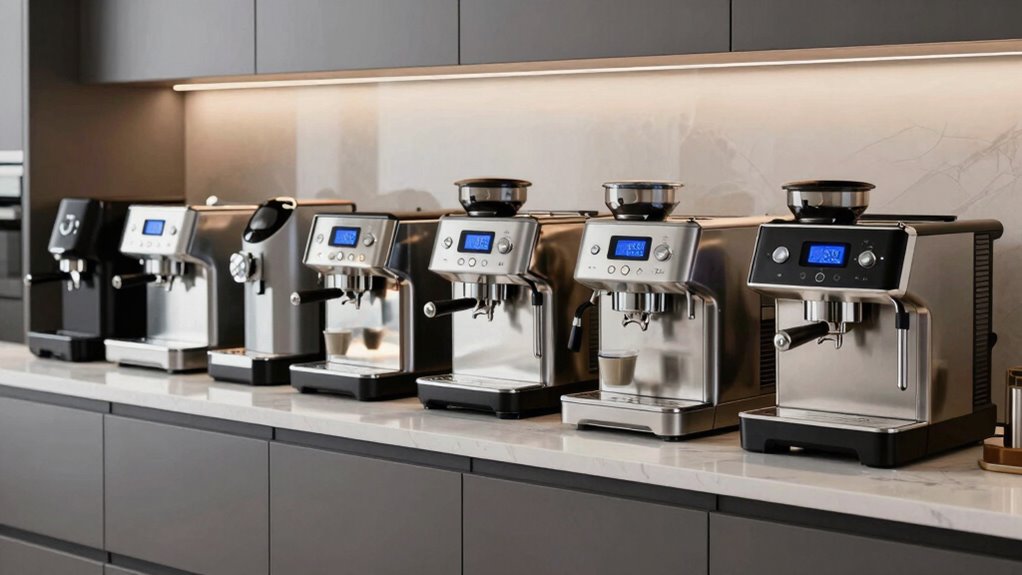
Choosing a high-ticket espresso machine with built-in grinding means deciding how much work you want the machine to handle. I’d start with the Breville Oracle Touch for guided drink-making, automatic milk texturing, and saved café-style favorites. The Meraki Dual Boiler suits home baristas who want more hands-on control, including built-in weighing scales and simultaneous brewing and steaming.

Get kitchen staples and gadgets delivered free with Prime
- Fast, free delivery on millions of items
- Prime Video, Amazon Music and more included
- Member-only deals all year
These are both substantial counter appliances, but they take different routes to espresso. Breville makes repeatable drinks more approachable through its touchscreen and automation; Meraki puts more emphasis on dialing in doses and extraction. Neither is a small, simple appliance, and the right choice depends less on a feature checklist than on whether you prefer convenience or participation.
Complete the kit


Key Takeaways
- The Breville Oracle Touch is my pick for convenient drink-making, thanks to touchscreen recipes, automatic microfoam texturing, and up to eight saved favorites.
- The Meraki Dual Boiler is better suited to hands-on espresso work, pairing semi-automatic operation with built-in scales and PID temperature control.
- Both machines combine a grinder and espresso equipment in one large footprint, so measure the counter area and clearance before choosing.
- Breville’s automation can reduce the learning curve for milk drinks, while Meraki’s controls reward users who want to adjust dose and yield.
- Choose the Oracle Touch for guided consistency; choose the Meraki when weighing and adjusting each shot is part of the appeal.
| Breville BES990BSS Oracle Touch Espresso Machine, Brushed Stainless Steel |  | Best Overall for Guided, Consistent Café Drinks | Operation: Fully automatic | Grinder: Built-in conical burr grinder with adjustable settings | Milk: Automatic microfoam texturing | VIEW ON AMAZON | See Our Full Breakdown |
| Meraki Dual Boiler Espresso Machine with Grinder and Built-In Scales |  | Best for Hands-On Control and Shot Dial-In | Operation: Semi-automatic | Boiler setup: Dual boilers | Grinder and scales: Integrated grinder and built-in weighing scales | VIEW ON AMAZON | See Our Full Breakdown |
| high ticket built in espresso machine for home barista | Operation | Power and voltage | Grinder | Milk |
|---|---|---|---|---|
| Breville BES990BSS Oracle Touc | Fully automatic | 1650 watts; 120V | Built-in conical burr grinder with adjustable settings | Automatic microfoam texturing |
| Meraki Dual Boiler Espresso Ma | Semi-automatic | 1600 watts; 120 volts | — | — |
More Details on Our Top Picks
Breville BES990BSS Oracle Touch Espresso Machine, Brushed Stainless Steel
I rank the Oracle Touch first because it offers the more approachable path from whole beans to milk-based drinks. Its touchscreen presents customizable beverage options, and the machine combines a built-in conical burr grinder with automatic microfoam texturing. That pairing matters for home baristas who want fresh grinding and steamed milk without taking on every step manually. Up to eight saved favorites also give a household a way to keep preferred drinks ready to repeat.
Compared with the Meraki Dual Boiler, Breville prioritizes guidance and automation over hands-on adjustment. The Meraki’s built-in scales and semi-automatic workflow better suit someone who enjoys weighing dose and yield and steering the shot. Oracle Touch is the stronger fit when the goal is a repeatable drink with less active technique, especially when several people use the machine. Its programmable controls make personalization available without making every cup a new experiment.
The compromise is that automation takes space. At 14.7 inches wide, 14.5 inches deep, and 17.6 inches tall, this is not a low-profile machine, and its 35.5-pound weight makes moving it less convenient. The listed 67-ounce water tank and 4.2-pound bean hopper support a built-in setup, but buyers still need to plan for refilling, cleaning, and access around the appliance. Choose it over Meraki for guided drinks and milk convenience; skip it if manual shot control is the main reason you want a serious home machine.
Pros:- Touchscreen drink options and up to eight saved favorites support repeatable personalized drinks.
- Automatic microfoam texturing reduces the manual skill needed for milk-based beverages.
- Built-in conical burr grinder with adjustable settings keeps grinding integrated with brewing.
- Programmable features and temperature control serve households with varied drink preferences.
Cons:- Its 14.7-inch width and 17.6-inch height call for meaningful counter space and clearance.
- At 35.5 pounds, it is awkward to move for cleaning or kitchen rearrangement.
- The automated approach offers less of the hands-on weighing and shot adjustment that some enthusiasts want.
Best for: Home baristas who want a built-in grinder, guided touchscreen drink choices, saved personal recipes, and automatic milk texturing.
Not ideal for: Buyers who want a compact machine, prefer to control each espresso step manually, or want built-in scales to weigh dose and yield.
- Operation:Fully automatic
- Grinder:Built-in conical burr grinder with adjustable settings
- Milk:Automatic microfoam texturing
- Controls:Touchscreen with programmable drinks and up to eight saved favorites
- Water tank:67 oz
- Bean hopper:4.2 pounds
- Power and voltage:1650 watts; 120V
- Dimensions and weight:14.5 x 14.7 x 17.6 inches; 35.5 pounds
Our verdict“I recommend the Oracle Touch for buyers who want an integrated, guided espresso setup with automatic milk texturing more than a fully hands-on workflow.”
Meraki Dual Boiler Espresso Machine with Grinder and Built-In Scales
The Meraki Dual Boiler is the more enthusiast-oriented pick. Its semi-automatic operation makes room for a home barista to take a more active role, while the integrated grinder and built-in scales bring key parts of preparation into one machine. The stated dual boilers and PID temperature control are appealing for users who want to brew and steam at the same time and manage temperature with more precision. A 58 mm portafilter and commercial rotary pump round out a specification set aimed at serious home use.
Where the Oracle Touch leans on a touchscreen and automatic milk texturing, Meraki’s appeal is direct control over the process. Built-in scales can help users measure dose and track yield without adding a separate scale to the counter. That may make a difference to someone who changes beans or recipes and wants to adjust one variable at a time. The tradeoff is a steeper learning curve: unlike Breville’s guided approach, this machine asks the owner to become comfortable with a more involved workflow.
Its footprint is also close to the Oracle Touch’s, at 14.57 inches deep, 14.57 inches wide, and 16.33 inches tall. It is not the choice for a kitchen where every inch matters. I place it second because its strengths are more specialized: precision and participation will matter greatly to some baristas, but the Oracle is easier to recommend across a wider range of household skill levels. Pick Meraki if you want to learn and tune shots; pick Breville if you would rather save a drink and repeat it with less effort.
Pros:- Dual boilers are designed to support brewing and steaming at the same time.
- Built-in scales support more deliberate dosing and yield tracking without a separate scale.
- Integrated grinder with micro-adjustment offers flexibility when dialing in different coffee profiles.
- PID temperature control, a 58 mm portafilter, and a commercial rotary pump target controlled espresso preparation.
Cons:- Semi-automatic operation has a higher learning curve than the Oracle Touch’s guided interface.
- Its dimensions still require a substantial, dedicated counter area.
- The more hands-on workflow may feel like extra work to users who mainly want quick, repeatable drinks.
Best for: Experienced or motivated home baristas who want an integrated grinder and scales, dual-boiler workflow, and more involvement in dialing in shots.
Not ideal for: Beginners who want step-by-step drink automation, buyers with limited counter space, or anyone who would rather avoid manual espresso adjustments.
- Operation:Semi-automatic
- Boiler setup:Dual boilers
- Grinder and scales:Integrated grinder and built-in weighing scales
- Temperature control:PID
- Portafilter:58 mm
- Output pressure:9 bar
- Power and voltage:1600 watts; 120 volts
- Dimensions:14.57 x 14.57 x 16.33 inches
Our verdict“I’d choose the Meraki over the Oracle Touch when built-in weighing and hands-on shot control matter more than touchscreen-led convenience.”

How We Picked
I compared these two machines against the needs implied by high-ticket built-in espresso equipment for home baristas: an integrated grinder, credible control over brewing, useful milk capability, and a design that can make daily café-style drinks without requiring a separate grinder. I also looked at how much each machine asks of its owner. An expensive appliance should earn its place through a clear fit, not simply a long feature list.
The ranking reflects different definitions of convenience. I put the Breville Oracle Touch first as the stronger all-rounder for households that value guided operation and automatic milk texturing. Its saved drink profiles and touchscreen reduce repeated setup. The Meraki takes the second position not because it lacks serious capability, but because its semi-automatic approach and more involved controls are a better match for users who already want to participate in dialing in espresso.
I weighed the tradeoffs alongside the benefits: counter space, machine size, learning demands, and the degree of control each design offers. Product details provided for this comparison describe the Meraki as having dual boilers, integrated scales, a grinder, PID control, and a 58 mm portafilter. I treat those as its stated capabilities, rather than assuming performance beyond the supplied information. Both picks are substantial investments and both require a dedicated area; neither is a compact solution for a cramped kitchen.
| high ticket built in espresso machine for home barista | Operation |
|---|---|
| Breville BES990BSS Oracle Touc | Fully automatic |
| Meraki Dual Boiler Espresso Ma | Semi-automatic |
Factors to Consider When Choosing High Ticket Built In Espresso Machine For Home Baristas
These machines both integrate core espresso equipment, but they are built around different relationships between the barista and the machine. I would decide based on how much of the process you want to control, then check counter fit and milk-drink needs before comparing smaller details.
Decide how hands-on you want to be
The Oracle Touch is the more guided option: its touchscreen, programmable choices, and automatic microfoam are designed to simplify repeatable drinks. That makes it a stronger fit if you want to choose a beverage and let the machine handle more of the routine. Meraki gives more room for active involvement. Its semi-automatic format and integrated scales suit a barista who wants to weigh ingredients and work through shot adjustments. If you enjoy learning espresso technique, that control can be the point; if you want a quick morning routine, it can feel like added effort.
Match the machine to your milk-drink routine
For frequent cappuccinos and lattes, Breville’s automatic microfoam texturing is a clear convenience advantage in this comparison. It reduces the manual skill involved in preparing textured milk. Meraki includes a milk frother and dual boilers, with its stated setup designed to allow brewing and steaming at once. That configuration may appeal to someone who wants a more traditional, active workflow. Do not treat the two milk systems as identical: Breville emphasizes automatic texture, while Meraki’s listed strengths center on control and simultaneous operation.
Treat counter space as a buying requirement
Neither model is a compact countertop choice. Their widths are both around 14.5 inches, and each needs room for a grinder-equipped espresso setup, daily access, cleaning, and any overhead clearance needed in your kitchen. Breville is 17.6 inches tall and weighs 35.5 pounds; Meraki is listed at 16.33 inches tall. Measure the actual space, including cabinet clearance and access to the water tank or other service points, before choosing. A feature-rich machine is a poor fit if it blocks normal kitchen use.
Think about repeatability versus experimentation
Saved favorites make the Oracle Touch attractive to households where different people want familiar drinks without recreating settings each time. Meraki’s scales and micro-adjustable integrated grinder are more relevant to someone who plans to change beans, adjust dose, and monitor yield. Both approaches can support a thoughtful home espresso routine, but they serve different habits. Ask whether you would rather repeat a preferred recipe or spend time refining one. That answer is more useful than choosing by a long list of technical features alone.
Plan for cleaning and daily ownership
An integrated grinder and milk system reduce the need for separate appliances, but they still need regular care. Make sure the machine’s location leaves room for routine cleaning and that you are comfortable maintaining the milk components and grinder. The Oracle Touch’s large, heavy body is less convenient to move, while Meraki’s more involved workflow may require more attention during shot preparation. I would also review the current manufacturer guidance for cleaning schedules, water use, and warranty coverage before purchase; the supplied product details do not spell out every maintenance requirement.
Frequently Asked Questions
Which machine is better for a first-time home barista?
I would steer most first-time buyers toward the Breville Oracle Touch. Its touchscreen drink choices, programmable favorites, and automatic microfoam lower the number of skills a new user must manage at once. Meraki may be a better long-term fit for a beginner who actively wants to learn weighing and shot adjustment, but its semi-automatic operation asks for more practice from the start.
Which machine offers more hands-on espresso control?
The Meraki Dual Boiler is the more hands-on choice in this pairing. Its semi-automatic operation and built-in scales are suited to users who want to take an active role in dosing and yield. Oracle Touch still offers adjustable grinder settings and personalized drinks, but its central appeal is guided convenience rather than managing each stage of espresso preparation.
Do both machines have built-in grinders?
Yes. The Oracle Touch includes a built-in conical burr grinder with adjustable settings, and Meraki is described as having an integrated grinder with micro-adjustment. Both reduce the need for a separate grinder on the counter. Their difference is the larger workflow around grinding: Breville pairs it with touchscreen-led drinks, while Meraki pairs it with weighing and semi-automatic preparation.
Which one makes more sense for milk drinks?
For a buyer who values automated milk preparation, I would choose the Oracle Touch because automatic microfoam texturing is one of its defining capabilities. Meraki includes a milk frother and a dual-boiler design intended to support simultaneous brewing and steaming, which may suit a barista who prefers a more active routine. Choose based on whether automatic texture or hands-on control matters more to you.
Are these built-in espresso machines suitable for a small kitchen?
Neither is an especially compact option. Both are roughly 14.5 inches wide and deep, and the Oracle Touch is 17.6 inches tall; Meraki is listed at 16.33 inches tall. I would measure the counter, overhead clearance, and working area before buying. Their integrated equipment can reduce the number of separate appliances, but the machines themselves still need a dedicated space.
Conclusion
My overall recommendation is the Breville Oracle Touch for home baristas who want a capable all-in-one setup with guided drink choices, saved recipes, and automatic microfoam. It is the easier of these two to share across a household, though its size and weight call for a permanent counter spot. Choose the Meraki Dual Boiler if you are more interested in weighing, adjusting, and learning the details of espresso preparation than in touchscreen convenience. Both bring grinder and espresso equipment together; the better fit comes down to whether you want the machine to simplify your routine or give you more control over it.
Halloween Picks
halloween
As an affiliate, we earn on qualifying purchases.