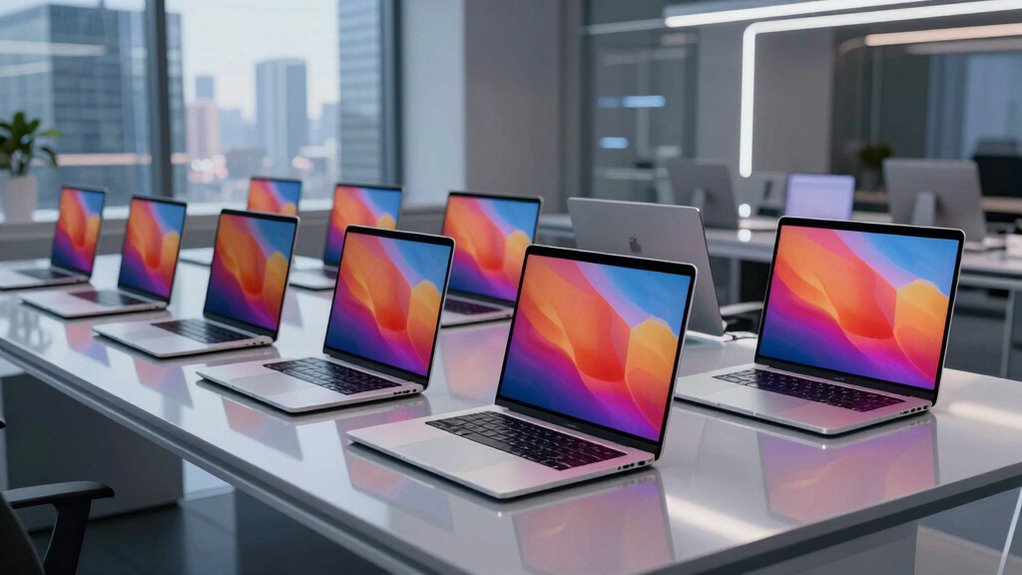

If you want a MacBook Pro with 64GB unified memory, my best overall pick is the 14-inch M5 Max with a 2TB SSD: it pairs a powerful chip with a more portable size and ample storage. The 16-inch M5 Max with a Nano-texture display is a standout for demanding work in bright spaces, while the 14-inch M5 Pro offers a less graphics-focused alternative. The main tradeoffs are chip capability versus portability, display size and finish, SSD capacity, and whether a renewed older model fits your workload. Read on for how the options differ and which configuration makes sense for your needs.

Get kitchen staples and gadgets delivered free with Prime
- Fast, free delivery on millions of items
- Prime Video, Amazon Music and more included
- Member-only deals all year
Key Takeaways
- The M5 Max models lead this comparison for buyers who need high-end CPU and GPU capability; the 14-inch 2TB configuration balances that power with easier portability.
- The 16-inch M5 Max Nano-texture option has a distinct screen advantage for bright work environments, but the larger display and finish matter more than raw memory capacity for many buyers.
- The M5 Pro configurations offer a different kind of value: they retain 64GB memory while pairing it with less GPU capacity than the listed M5 Max models.
- Storage separates otherwise similar configurations. The 14-inch M5 Max with 4TB suits large active projects better than a 2TB or 1TB model, while external storage may make the smaller SSD workable.
- Renewed M1 Max and M2 Max models trade newer-generation hardware for a lower-cost entry point. Their condition, battery health, and support terms deserve more scrutiny than the new-model specifications.


| macbook pro with 64gb unified memory | Processor | Graphics | Memory | Storage |
|---|---|---|---|---|
| Apple MacBook Pro Laptop with | M5 Max, 18-core CPU | 40-core GPU | 64GB | 2TB SSD |
| Apple MacBook Pro Laptop with | M5 Max, 18-core CPU | 40-core GPU | 64GB | 2TB SSD |
| Apple MacBook Pro Laptop with | M5 Max; CPU core count not specified | Integrated Apple GPU | 64GB | 2TB SSD |
| Apple MacBook Pro 16-inch with | Apple M1 Max, 10-core CPU | 24-core Apple M1 Max GPU | 64GB DDR4 RAM | 1TB SSD |
| Apple 14-inch MacBook Pro with | Apple M5 Pro, 18-core CPU | 20-core GPU | 64GB, listed as DDR3 RAM | 2TB SSD |
| Apple 14-inch MacBook Pro with | Apple M5 Max, 18-core CPU | 40-core GPU | 64GB | 4TB SSD |
| Apple MacBook Pro 16.2-inch wi | Apple M2 Max, 12-core CPU | 38-core GPU | 64GB unified memory | 1TB SSD |
| Apple 2021 MacBook Pro with M1 | Apple M1 Max, 10-core CPU | 24-core GPU | 64GB | 2TB SSD |
| Apple MacBook Pro 16-inch M5 P | Apple M5 Pro, 18-core CPU | 20-core GPU | 64GB unified memory | 1TB SSD |
| Apple MacBook Pro 14-inch with | Apple M5 Max, 18-core CPU | 40-core GPU | 64GB | Capacity not specified; SSD described as up to twice as fast |
More Details on Our Top Picks
Apple MacBook Pro Laptop with M5 Max, 18-core CPU, 40-core GPU, 14.2-inch Display, 64GB RAM, 2TB SSD, Silver
I’d pick this configuration when 64GB of unified memory and high-end graphics matter more than having the largest screen. Its M5 Max with a 40-core GPU is suited to demanding creative and AI workloads, while the 14.2-inch Liquid Retina XDR display makes the system easier to fit into a mobile workflow than the 16.2-inch M5 Max model. You still get the same listed 2TB SSD, memory, and port selection as that larger option, so the main trade is screen space and portability rather than storage. The cost of that compact setup is a listed 5.5-pound weight, which is substantial for a 14-inch laptop. I’d choose the 16.2-inch version for more room to work, but this one makes more sense when a smaller display is worth carrying a powerful GPU.
Pros:- M5 Max pairs an 18-core CPU with a 40-core GPU for demanding workloads.
- 64GB of memory supports work with large creative projects and multiple demanding apps.
- 2TB SSD provides substantial built-in storage for active projects.
- Thunderbolt 5, HDMI, SDXC, and MagSafe 3 cover several common connection needs.
Cons:- The 14.2-inch display offers less working area than the 16.2-inch M5 Max configuration.
- At a listed 5.5 pounds, it is heavy for a compact-display laptop.
- The product data does not specify a battery runtime beyond the general all-day claim.
Best for: Video editors, 3D artists, and AI developers who need M5 Max graphics and 64GB of memory in the smaller listed display size.
Not ideal for: Buyers who prioritize a large on-laptop workspace or frequent light travel; the 14.2-inch screen is smaller, and the listed 5.5-pound weight is still considerable.
- Processor:M5 Max, 18-core CPU
- Graphics:40-core GPU
- Memory:64GB
- Storage:2TB SSD
- Display:14.2-inch Liquid Retina XDR
- Weight:5.5 pounds
- Ports:Three Thunderbolt 5, MagSafe 3, SDXC, HDMI, headphone jack
- Wireless:Wi-Fi 7, Bluetooth 6
Our verdict“Choose this if you want M5 Max graphics and 64GB of memory in the smaller display option, and accept its substantial listed weight.”
Apple MacBook Pro Laptop with M5 Max, 18-core CPU, 40-core GPU, 16.2-inch Nano-Texture Display, 64GB Memory, 2TB SSD, Space Black
This is the M5 Max pick I’d favor when screen area matters as much as 64GB of memory. Its 16.2-inch Liquid Retina XDR display gives timelines, canvases, and side-by-side windows more room than the 14.2-inch M5 Max model, while the listed 18-core CPU and 40-core GPU match that smaller configuration’s processor and graphics counts. The 2TB SSD also keeps storage on par across the pair. The trade is mobility: the supplied product data lists this model at 7.4 pounds, making it a less appealing choice for frequent carrying. Its Nano-Texture display is named in the title, though the supplied specs do not give additional details about that finish. I’d choose the 14.2-inch model for a smaller footprint; this one is better for a desk-centered creative workflow.
Pros:- 16.2-inch Liquid Retina XDR display provides more workspace than the 14.2-inch M5 Max model.
- M5 Max includes an 18-core CPU and 40-core GPU for demanding professional tasks.
- 64GB memory and a 2TB SSD match the core capacity of the smaller M5 Max configuration.
- Includes Thunderbolt 5, HDMI, SDXC, and MagSafe 3 connections.
Cons:- The listed 7.4-pound weight is a serious drawback for routine travel.
- Compared with the 14.2-inch M5 Max model, it takes up more space in a bag and on a desk.
- The supplied data does not specify battery runtime or explain the Nano-Texture display finish.
Best for: Video professionals and creative teams who work with large timelines or several windows at once and want M5 Max performance with a 16.2-inch display.
Not ideal for: Commuters and frequent travelers who need a lightweight laptop; the listed 7.4-pound weight makes this the less portable M5 Max option here.
- Processor:M5 Max, 18-core CPU
- Graphics:40-core GPU
- Memory:64GB
- Storage:2TB SSD
- Display:16.2-inch Liquid Retina XDR with Nano-Texture listed in title
- Weight:7.4 pounds
- Ports:Three Thunderbolt 5, MagSafe 3, SDXC, HDMI, headphone jack
- Wireless:Wi-Fi 7, Bluetooth 6
- Color:Space Black
Our verdict“Pick this for a larger workspace and M5 Max power when you expect to work mostly at a desk rather than carry it often.”
Apple MacBook Pro Laptop with M5 Max, 16.2-inch Display, 64GB RAM, 2TB SSD, Space Black
This configuration combines 64GB of memory, a 2TB SSD, and a 16.2-inch Liquid Retina XDR display, making it a fit for professionals who want a spacious built-in screen and substantial working capacity. Compared with the M5 Max model that specifies an 18-core CPU and 40-core GPU, this listing names the M5 Max but leaves its CPU core count unspecified; its graphics are described only as an integrated Apple GPU. That makes the other M5 Max listing the clearer choice for buyers choosing by documented GPU capability. This product’s stated 8.5-pound weight is also the highest among the supplied current M5 Max configurations, a significant portability tradeoff. I’d shortlist it when screen size and memory lead the decision, but verify the exact chip and graphics configuration before relying on it for GPU-heavy work.
Pros:- 64GB of memory supports demanding multitasking and large project files.
- 2TB SSD offers substantial internal storage for active work.
- 16.2-inch Liquid Retina XDR display gives more workspace than the 14.2-inch M5 Max option.
- Listed connectivity includes Thunderbolt 5, HDMI, SDXC, and MagSafe 3.
Cons:- The processor description omits CPU core count, unlike the other listed M5 Max configuration.
- Graphics are identified only as an integrated Apple GPU, without a core count.
- The listed 8.5-pound weight makes it a poor fit for buyers seeking a portable large-screen laptop.
Best for: Professionals who want 64GB of memory, 2TB of storage, and a 16.2-inch display, and who can confirm the exact chip configuration before purchase.
Not ideal for: GPU-focused creators who need a clearly stated core count, or mobile workers who cannot accommodate the listed 8.5-pound weight.
- Processor:M5 Max; CPU core count not specified
- Graphics:Integrated Apple GPU
- Memory:64GB
- Storage:2TB SSD
- Display:16.2-inch Liquid Retina XDR
- Weight:8.5 pounds
- Ports:Three Thunderbolt 5, MagSafe 3, SDXC, HDMI, headphone jack
- Connectivity:Wi-Fi 7, Bluetooth 6
- Color:Space Black
Our verdict“Consider this for its large display, 64GB memory, and 2TB SSD only if you confirm the unspecified M5 Max and graphics details first.”
Apple MacBook Pro 16-inch with M1 Max Chip (Renewed Premium)
I’d look at this Renewed Premium M1 Max when 64GB of memory and a 16.2-inch XDR display matter more than having the latest chip generation. Its 10-core CPU and 24-core GPU are specified, giving buyers a clearer picture of the hardware than the M5 Max listing with unspecified core counts, but it is an older platform than the M5 Max options in this roundup. The 1TB SSD is half the capacity of those 2TB configurations, so large media libraries may need external storage. Its display and 64GB memory still suit demanding workflows, yet the listing’s port information is less detailed: it says “3 USB ports” rather than naming the full connection set. I’d choose an M5 Max model for newer-generation performance and more built-in storage; this one is for buyers who specifically want a renewed M1 Max system.
Pros:- 64GB of memory supports demanding multitasking and professional applications.
- M1 Max configuration specifies a 10-core CPU and 24-core GPU.
- 16.2-inch Liquid Retina XDR display provides a large workspace.
- Renewed Premium designation may suit buyers specifically seeking a renewed model.
Cons:- M1 Max is an older chip generation than the M5 Max configurations in this roundup.
- The 1TB SSD provides less built-in storage than the 2TB alternatives.
- Port details are limited to “3 USB ports” in the supplied specifications.
Best for: Mac professionals seeking a renewed 16-inch-class M1 Max workstation with 64GB of memory and a clearly stated CPU and GPU configuration.
Not ideal for: Buyers who need the newer M5 Max generation, 2TB of internal storage, or precise confirmation of every available port.
- Processor:Apple M1 Max, 10-core CPU
- Graphics:24-core Apple M1 Max GPU
- Memory:64GB DDR4 RAM
- Storage:1TB SSD
- Display:16.2-inch Liquid Retina XDR
- Color:Space Gray
- Operating system:Mac OS
- Ports:3 USB ports, as listed
Our verdict“Choose this renewed M1 Max if its specified hardware and 64GB memory fit your workflow, but prefer an M5 Max model for newer-generation performance and 2TB storage.”
Apple 14-inch MacBook Pro with M5 Pro Chip, 64GB RAM, 2TB SSD, Space Black
This is the lineup’s clearest alternative for buyers who want 64GB of memory and 2TB of storage but may not need the M5 Max GPU. The listed M5 Pro has an 18-core CPU and 20-core GPU, while the M5 Max options specify a 40-core GPU; that gap makes the Max configurations the more direct fit for graphics-heavy work, and this Pro model the more measured choice for CPU-led professional tasks. Its 14.2-inch, 120Hz Liquid Retina XDR display and stated battery life of up to 24 hours are useful on the move, though the product data does not provide its weight. The memory type is listed as DDR3, a detail that differs from the unified-memory framing of this roundup and should be verified. I’d confirm that specification before buying.
Pros:- M5 Pro configuration lists an 18-core CPU and 20-core GPU.
- 64GB of memory and a 2TB SSD provide substantial capacity for professional workflows.
- 14.2-inch Liquid Retina XDR display is listed with a 120Hz refresh rate.
- Product data states up to 24 hours of battery life.
Cons:- The listed 20-core GPU has fewer cores than the 40-core GPU in the M5 Max options.
- Memory is described as DDR3 rather than unified memory, so the specification needs verification.
- Weight is not specified, limiting portability comparisons with the other models.
Best for: Mobile professionals who need 64GB of memory and 2TB of storage for CPU-heavy work, but do not require the M5 Max’s listed 40-core GPU.
Not ideal for: GPU-intensive creators who want the M5 Max’s higher listed GPU core count, or buyers unwilling to verify the conflicting memory-type and product details.
- Processor:Apple M5 Pro, 18-core CPU
- Graphics:20-core GPU
- Memory:64GB, listed as DDR3 RAM
- Storage:2TB SSD
- Display:14.2-inch Liquid Retina XDR, 3024 x 1964 pixels, 120Hz
- Battery life:Up to 24 hours
- Color:Space Black
- Operating system:macOS
Our verdict“Pick this M5 Pro configuration for a 14.2-inch, 64GB-and-2TB setup if its listed memory type checks out and M5 Max graphics are unnecessary.”
Apple 14-inch MacBook Pro with M5 Max chip, 18-core CPU, 40-core GPU, 64 GB RAM, 4 TB SSD, Space Black, 96W
This 14-inch configuration pairs 64GB unified memory with a substantial 4TB SSD, making it a strong fit for creators who keep large project files, libraries, or media assets on the laptop. Its M5 Max chip and 40-core GPU put it in a different performance tier from the 16-inch M5 Pro model, which has fewer GPU cores, while the smaller chassis is easier to carry than that larger-screen option. The tradeoff is that this listing prioritizes storage and graphics power over display space: editors who want a roomier timeline may prefer the 16-inch M5 Pro. Memory and storage are fixed at purchase, so I’d choose this capacity only if the local-workflow need is clear.
Pros:- 64GB unified memory supports demanding multitasking and professional applications.
- 4TB SSD gives large media libraries and project files room on the laptop.
- M5 Max with a 40-core GPU is suited to graphics-heavy workloads.
- 14.2-inch Liquid Retina XDR display combines high brightness with a more portable footprint.
Cons:- The 14-inch display offers less workspace than the 16-inch M5 Pro model.
- Memory and SSD capacity are not user-upgradable.
- The listing’s 96W adapter is a lower wattage than the 140W adapter specified for the 16-inch M5 Pro.
Best for: Video editors, 3D artists, and developers who need 64GB memory plus several terabytes of local project storage in a more portable 14-inch system.
Not ideal for: Buyers who mainly need a large built-in workspace, or who do not expect to use 4TB of internal storage and would rather choose a less storage-heavy configuration.
- Processor:Apple M5 Max, 18-core CPU
- Graphics:40-core GPU
- Memory:64GB
- Storage:4TB SSD
- Display:14.2-inch Liquid Retina XDR, 3024 × 1964
- Peak brightness:Up to 1600 nits
- Battery life:Up to 24 hours
- Power adapter:96W
- Color:Space Black
Our verdict“Choose this M5 Max configuration if you need 64GB memory, strong graphics, and 4TB of internal storage without moving to a 16-inch chassis.”
Apple MacBook Pro 16.2-inch with M2 Max Chip (Renewed)
The main appeal here is a 16.2-inch XDR display paired with 64GB unified memory: it gives creative applications more screen area while retaining the memory capacity this roundup centers on. The M2 Max is an older generation than the M5 Max in the 14-inch, 4TB configuration, so buyers should favor this model for its larger display rather than for the newest chip. Its 1TB SSD also leaves less room for local media than that 4TB alternative. As a renewed laptop, condition and warranty terms matter more than they do with a new model; the supplied product details do not specify a warranty. I’d pick it only when the screen size and renewed status suit the workflow.
Pros:- 16.2-inch Liquid Retina XDR display provides more room for timelines, panels, and split-screen work.
- 64GB unified memory accommodates demanding professional workflows.
- M2 Max combines a 12-core CPU with a 38-core GPU.
- Specified battery life reaches up to 22 hours.
Cons:- Older M2 Max chip is a generation behind the M5 Max options in this roundup.
- 1TB SSD is limited beside the 4TB M5 Max configuration.
- Renewed condition may vary, and warranty coverage is not specified in the provided details.
Best for: Video editors and music producers who want a large built-in display and 64GB memory, and are comfortable buying a renewed previous-generation MacBook Pro.
Not ideal for: Buyers who need the latest-generation processing, substantial internal storage, or the predictability of a new product with clearly stated warranty coverage.
- Processor:Apple M2 Max, 12-core CPU
- Graphics:38-core GPU
- Memory:64GB unified memory
- Storage:1TB SSD
- Display:16.2-inch Liquid Retina XDR
- Battery life:Up to 22 hours
- Color:Space Gray
- Condition:Renewed
Our verdict“Pick this renewed M2 Max if a 16-inch screen matters more than current-generation performance and you accept the uncertainty of a renewed unit.”
Apple 2021 MacBook Pro with M1 Max Chip, 14-inch, 64GB RAM, 2TB SSD, Silver (Renewed)
This renewed 2021 model offers a practical combination of 64GB memory and a 2TB SSD for established creative workflows that do not depend on the newest chip generation. Its 14-inch size is more portable than the renewed 16-inch M2 Max, while the 24-core GPU and M1 Max still target demanding graphics work. The gap is age: both M5 Max configurations in this roundup offer newer processors, and this listing gives no battery-life estimate beyond a stated capacity above 80% of original. It also comes with a 90-day limited warranty, generic packaging, and non-original accessories. Compared with newer choices, I’d treat it as a legacy-workflow pick, not the one for buyers seeking the longest runway.
Pros:- 64GB memory supports memory-intensive multitasking.
- 2TB SSD offers more local storage than the renewed M2 Max model’s 1TB drive.
- M1 Max includes a 10-core CPU and 24-core GPU.
- The stated battery capacity exceeds 80% of original.
Cons:- 2021 M1 Max is substantially older than the M5 Max options in this roundup.
- Renewed unit has a 90-day limited warranty and generic packaging.
- Accessories are not original, and no specific battery runtime is provided.
Best for: Creative professionals with software and workflows already suited to Apple silicon who want 64GB memory and 2TB storage in a renewed 14-inch MacBook Pro.
Not ideal for: Buyers who need a new machine, a clearly specified long battery runtime, or current-generation performance for sustained graphics-heavy work.
- Model year:2021
- Processor:Apple M1 Max, 10-core CPU
- Graphics:24-core GPU
- Memory:64GB
- Storage:2TB SSD
- Display:14-inch Retina, 2560 × 1600
- Battery condition:Capacity exceeds 80% of original
- Warranty:90-day limited
- Color:Silver
Our verdict“Choose this renewed M1 Max for a 64GB, 2TB setup if your existing workflow suits the older generation and you accept limited warranty coverage.”
Apple MacBook Pro 16-inch M5 Pro with 18-Core CPU, 20-Core GPU, 64GB RAM, 1TB SSD
This 16-inch M5 Pro balances a large XDR workspace and 64GB unified memory with a current-generation 18-core CPU. It makes more sense for code, photo work, and multitasking across large windows than the 14-inch M5 Max models if screen area is the daily priority. The distinction is graphics: its 20-core GPU has fewer cores than the M5 Max’s 40-core GPU, so GPU-heavy 3D rendering or effects work favors those Max configurations. Its 1TB SSD is also modest beside the 4TB 14-inch M5 Max. I’d choose this when CPU capability and a spacious display matter more than maximum graphics throughput or internal storage.
Pros:- 16.2-inch Liquid Retina XDR display provides generous workspace at 3456 × 2234 resolution.
- 64GB unified memory supports large projects and concurrent applications.
- M5 Pro has an 18-core CPU for demanding processor-led tasks.
- 120Hz refresh rate supports smooth scrolling and motion.
Cons:- 20-core GPU has fewer graphics cores than the M5 Max options in this roundup.
- 1TB SSD provides less local capacity than the 2TB and 4TB alternatives.
- The 16-inch size is less convenient for frequent travel than a 14-inch model.
Best for: Software developers, photographers, and professionals who want a 16-inch display, 64GB memory, and a recent CPU for multitasking and CPU-led workloads.
Not ideal for: 3D artists and video editors whose workloads lean heavily on GPU rendering, or buyers who need more than 1TB of internal storage.
- Processor:Apple M5 Pro, 18-core CPU
- Graphics:20-core GPU
- Memory:64GB unified memory
- Storage:1TB SSD
- Display:16.2-inch Liquid Retina XDR, 3456 × 2234
- Refresh rate:120Hz
- Camera:12MP Center Stage
- Power adapter:140W USB-C
- Color:Space Black
Our verdict“Choose this M5 Pro if you want a roomy 16-inch display and 64GB memory, and your work benefits more from CPU capability than maximum GPU power.”
Apple MacBook Pro 14-inch with M5 Max Chip
This 14-inch M5 Max is the pick for professionals who value on-device ports and media features alongside 64GB memory. The listing specifies three Thunderbolt ports, HDMI, MagSafe 3, SDXC, and a headphone jack, reducing the need for adapters when moving between cameras, displays, and audio gear. Its 18-core CPU and 40-core GPU match the chip configuration in the 4TB M5 Max model, but this listing says storage is only “up to twice as fast SSD” and gives no capacity. That makes it harder to judge local project space against the explicitly specified 4TB option. I’d favor this one for its listed connectivity and audio, while choosing the 4TB configuration when storage certainty is the priority.
Pros:- M5 Max pairs an 18-core CPU with a 40-core GPU for demanding creative workloads.
- 64GB memory supports substantial multitasking and professional applications.
- HDMI, SDXC, MagSafe 3, and headphone jack support common work accessories without relying solely on adapters.
- Six-speaker system and 12MP Center Stage camera suit media and video-call use.
Cons:- The listing does not specify a firm SSD capacity, unlike the 4TB M5 Max alternative.
- 14-inch display offers less workspace than the 16-inch M5 Pro.
- High-performance hardware may be more than buyers with everyday workloads need.
Best for: Mobile video and audio professionals who need 64GB memory, a high-performance GPU, and built-in ports for camera cards, external displays, and headphones.
Not ideal for: Buyers who need a confirmed SSD capacity, or who want a larger 16-inch screen for extended editing sessions.
- Processor:Apple M5 Max, 18-core CPU
- Graphics:40-core GPU
- Memory:64GB
- Storage:Capacity not specified; SSD described as up to twice as fast
- Display:Liquid Retina XDR
- Camera:12MP Center Stage with Desk View
- Connectivity:Three Thunderbolt ports, HDMI, MagSafe 3, SDXC slot, headphone jack
- Audio:Six-speaker system with Spatial Audio and Dolby Atmos
Our verdict“Choose this 14-inch M5 Max when built-in connectivity and media features matter most, but pick the 4TB configuration if you need clearly stated storage capacity.”

How We Picked
I ranked these options by how well they serve the specific buyer who already knows they need 64GB of unified memory. I weighed chip tier and graphics capability, screen size and finish, SSD capacity, portability, and how sensibly each configuration balances those features. A strong configuration ranks higher when its extras solve a clear workflow problem rather than simply adding specification headroom.
The list puts current-generation M5 Max options near the top for demanding creative and compute-heavy work, then distinguishes them by size, display finish, and storage. M5 Pro models follow as compelling choices for memory-intensive work that may not need the Max GPU. Renewed M1 Max and M2 Max models sit lower because their age and condition add uncertainty, even when their memory capacity remains relevant. I treat product names and listed configurations as supplied; buyers should confirm the exact chip, memory, display, and renewal terms before ordering.
| macbook pro with 64gb unified memory | Processor | Color |
|---|---|---|
| Apple MacBook Pro Laptop with | M5 Max, 18-core CPU | — |
| Apple MacBook Pro Laptop with | M5 Max, 18-core CPU | Space Black |
| Apple MacBook Pro Laptop with | M5 Max; CPU core count not specified | Space Black |
| Apple MacBook Pro 16-inch with | Apple M1 Max, 10-core CPU | Space Gray |
| Apple 14-inch MacBook Pro with | Apple M5 Pro, 18-core CPU | Space Black |
| Apple 14-inch MacBook Pro with | Apple M5 Max, 18-core CPU | Space Black |
| Apple MacBook Pro 16.2-inch wi | Apple M2 Max, 12-core CPU | Space Gray |
| Apple 2021 MacBook Pro with M1 | Apple M1 Max, 10-core CPU | Silver |
| Apple MacBook Pro 16-inch M5 P | Apple M5 Pro, 18-core CPU | Space Black |
| Apple MacBook Pro 14-inch with | Apple M5 Max, 18-core CPU | — |
Factors to Consider When Choosing Macbook Pro With 64gb Unified Memory
Choosing among these systems starts with matching the workload to the whole configuration, not treating 64GB as the only decision. These broader checks can help avoid paying for power you will not use—or buying a machine whose screen, storage, or condition becomes a daily frustration.
Decide whether you need Max-class graphics
Memory capacity and GPU performance solve different problems. Large codebases, virtual machines, and complex multitasking can benefit from 64GB without requiring the strongest graphics tier. 3D rendering, GPU-heavy effects, and some machine-learning workflows may make an M5 Max more useful than an M5 Pro. Check the software you rely on, since its ability to use GPU acceleration can matter more than a chip label. A common mistake is choosing Max automatically because the memory number looks like a workstation specification. If your applications do not use the extra graphics capability, the Pro configuration may be the more balanced purchase.
Choose screen size around your working setup
A 14-inch model is easier to carry and fits better on crowded desks, but its smaller workspace can mean more window switching. A 16-inch screen gives timelines, code, and side-by-side documents more room, which can reduce reliance on an external monitor. Think about where the laptop will spend most of its time, not just how often you travel with it. Nano-texture can be useful when reflections disrupt work, though the display finish is a personal preference rather than a substitute for choosing the right screen size. If you mostly dock the laptop, paying for a larger built-in display may bring less benefit. Match the screen to your actual environment and use.
Size the SSD for active work, not just archived files
Large media libraries, local datasets, and project files can make a 1TB drive feel restrictive faster than expected. A 2TB configuration offers more room for active work, while 4TB can reduce how often large projects need to move to external storage. External SSDs can expand capacity, but they add another item to carry and can complicate a portable editing setup. Separate active projects from archives when estimating your needs; not every file must live on the internal drive. Also allow space for applications, caches, and temporary files. Choose internal capacity based on what you need available offline and at working speed.
Treat 64GB as a workload requirement, not a future-proofing slogan
Before buying, identify the tasks that regularly exceed the memory in a lower configuration: multiple virtual machines, large creative projects, or substantial datasets are stronger reasons than a general desire for a powerful laptop. More memory can reduce pressure to close applications, but it does not make every task run faster by itself. Some buyers may be better served by spending their budget on more SSD capacity or a display that suits their workspace. Check whether your most demanding applications have specific memory guidance. If your workload is likely to grow, estimate that growth from concrete projects rather than vague future-proofing. The aim is to pay for capacity you can use.
Compare renewed models by condition and support
A renewed M1 Max or M2 Max can make sense when the workload fits and the purchase terms are clear. The model name alone does not tell you the battery condition, cosmetic state, included accessories, or length of return coverage. Review the seller’s definition of renewed condition and the available warranty before comparing it with a new M5 model. Also check compatibility expectations for software and peripherals you plan to keep using over several years. Older hardware may be powerful enough for current work, but its remaining useful life can differ from a newer generation. Treat the lower purchase cost as one part of the decision, not proof of better value.
Frequently Asked Questions
Is an M5 Pro MacBook Pro enough if I need 64GB of memory?
It can be, if your main reason for choosing 64GB is handling large projects, heavy multitasking, or memory-intensive development rather than maximum GPU throughput. In this lineup, the M5 Pro models pair that memory capacity with less GPU capability than the M5 Max options. Check whether your core applications benefit from the Max graphics tier before paying for it. If GPU rendering or similar accelerated work is central to your day, the Max models are a closer fit. The memory amount alone does not make the Pro and Max configurations interchangeable.
Should I choose the 14-inch or 16-inch model for professional work?
Choose based on how often you carry the laptop and how much workspace you need without an external monitor. The 14-inch versions are more convenient for travel and smaller desks, while the 16-inch models give documents, editing timelines, and code more room. If you work mostly at a fixed desk, a separate monitor can reduce the value of the larger built-in screen. If you regularly work away from a desk, the larger display may be worth the extra bulk. Neither size changes the basic need to match the chip and storage to your workload.
Is the 4TB M5 Max configuration worth choosing over a 2TB model?
The 4TB option is most useful when large files need to stay on the laptop for active work, such as extensive media projects or local datasets. If you can archive completed work or use fast external storage, a 2TB model may be adequate. Consider whether your projects must be available offline and how often connecting a drive would interrupt your workflow. The larger SSD is less valuable if most of its space would sit unused. Estimate active storage needs, including project caches and application files, before deciding.
What should I check before buying a renewed M1 Max or M2 Max MacBook Pro?
Confirm the exact memory and storage configuration, the stated condition, battery health information if available, and what accessories are included. Read the return and warranty terms closely, since renewed products can vary by seller and condition. Check that the older chip supports the applications and system versions your work requires. Compare the purchase terms and expected years of use with a new model, rather than judging by specifications alone. A renewed option is most appealing when its condition is clearly described and its capabilities already fit your workload.
Is the Nano-texture display a good reason to choose the 16-inch M5 Max?
It can be a meaningful reason if reflections regularly interfere with work in bright rooms or other challenging lighting. It is not automatically the right choice for every buyer, since display finish preferences vary and the 16-inch size also affects portability. If you mostly work in controlled lighting or use an external display, the finish may matter less than chip, storage, or carrying comfort. Compare the full configuration rather than treating Nano-texture as a performance upgrade. It changes the viewing experience, not the underlying memory capacity.
Conclusion
For most buyers who need serious performance and 64GB of memory, I recommend the 14-inch M5 Max with 2TB SSD as best overall: it combines a high-end chip with a portable format and substantial storage. My best premium pick is the 16-inch M5 Max Nano-texture model for buyers who want a larger workspace and work around reflections; choose the 4TB M5 Max instead when internal project storage is the priority. For best value among new configurations, consider an M5 Pro model if your work needs 64GB but not Max-level graphics. For beginners moving into demanding workflows, the 14-inch M5 Pro is the more measured starting point, provided its GPU capacity suits the software. The renewed M1 Max or M2 Max models are best for buyers willing to verify condition and support to get a capable older system; skip them if long-term support certainty matters more than the upfront tradeoff.