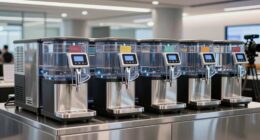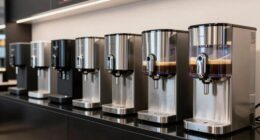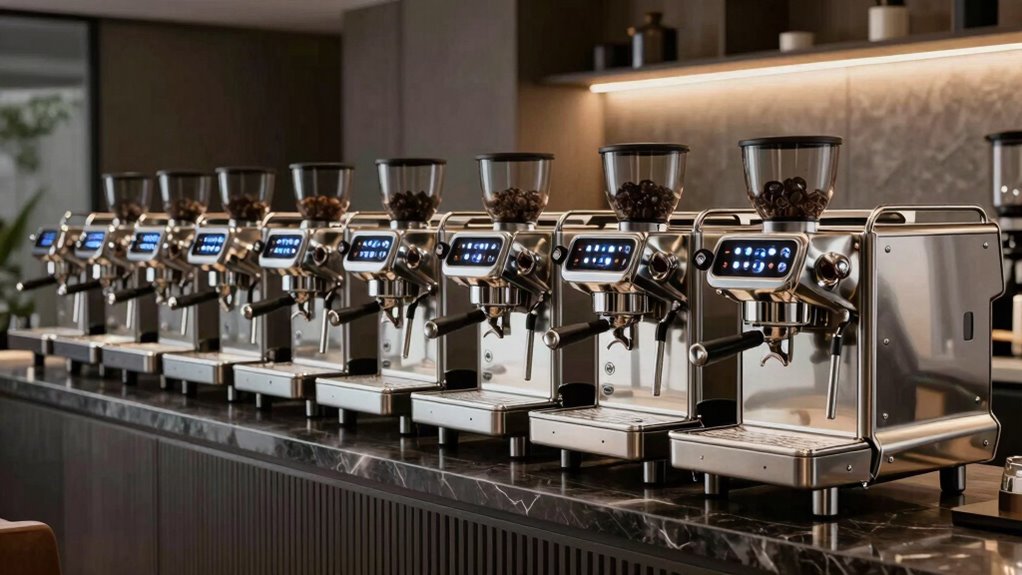

A prosumer espresso machine brings more control and better café-style workflow home, but the right choice depends on how much you want to do by hand. My best overall pick is the Meraki Dual Boiler for its dual-boiler design and built-in scales; the Breville Barista Touch stands out for guided operation, while the Gaggia Classic Evo Pro suits buyers who want a more hands-on machine. The main tradeoffs are convenience versus control, an integrated grinder versus a separate one, and the counter space and upkeep each setup demands. Read on for how all 11 options differ and which one fits your routine.

Get kitchen staples and gadgets delivered free with Prime
- Fast, free delivery on millions of items
- Prime Video, Amazon Music and more included
- Member-only deals all year
Complete the kit


Key Takeaways
- The Meraki Dual Boiler offers the most integrated control in this lineup, pairing dual boilers with a grinder and built-in scales; its added features may be more than a casual espresso drinker needs.
- Breville’s all-in-one machines reduce setup friction by combining grinder and espresso workflow, while the Bambino models leave grinding to you and take up less counter space.
- The Bambino Plus and Barista Touch make milk drinks easier through assisted steaming, while the Gaggia Classic Evo Pro better suits buyers willing to manage more of the process themselves.
- The Barista Express Impress adds assisted dosing and tamping to the familiar integrated-grinder format, making it a more guided choice than the standard Barista Express.
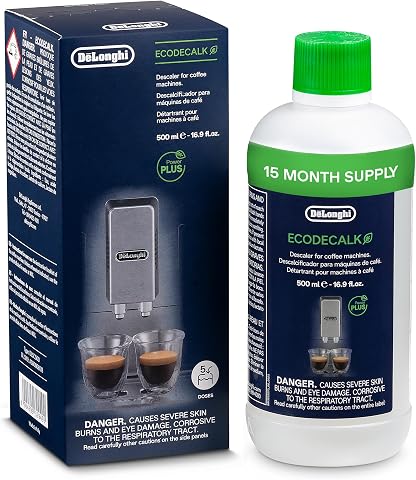
- Machine choice is only part of the setup: a capable grinder, fresh beans, water care, and room for cleaning can matter as much as extra machine features.
| De’Longhi La Specialista Opera Espresso Machine with Built-in Grinder |  | Best for Guided, All-in-One Brewing | Machine type: Espresso machine | Operation: Semi-automatic | Grinder: Built-in burr grinder with 15 settings | VIEW ON AMAZON | See Our Full Breakdown |
| Meraki Dual Boiler Espresso Machine with Grinder and Built-In Dual Scales |  | Best for Advanced Workflow Control | Boiler system: Dual boilers: 350 ml brew and 550 ml steam | Grinder: Espresso-tuned burr grinder with 45 settings | Built-in scales: Dose and yield measurement within 0.2 g | VIEW ON AMAZON | See Our Full Breakdown |
| Breville BES876BSS Barista Express Impress, Brushed Stainless Steel |  | Best for Supported Skill-Building | Material: Stainless steel | Grinder: Integrated conical burr grinder with 25 settings | Water tank capacity: 2 liters | VIEW ON AMAZON | See Our Full Breakdown |
| Breville Bambino Espresso Machine, Brushed Stainless Steel |  | Best Compact Pick | Operation: Semi-automatic | Material: Stainless steel | Heating system: ThermoJet, stated 3-second heat-up | VIEW ON AMAZON | See Our Full Breakdown |
| Espresso Machine with Grinder and Frother, 30 Grind Settings, 20 Bar |  | Best Compact All-in-One Value | Operation: Semi-automatic | Grinder: Integrated conical burr grinder with 30 settings | Pressure: 20 bar | VIEW ON AMAZON | See Our Full Breakdown |
| Breville Bambino Plus Espresso Machine, Brushed Stainless Steel |  | Best Compact Pick | Operation mode: Semi-automatic | Wattage: 1560 watts | Voltage: 120V | VIEW ON AMAZON | See Our Full Breakdown |
| Breville BES880BSS Barista Touch Espresso Machine, Brushed Stainless Steel |  | Best for Guided, Customizable Drinks | Operation mode: Fully automatic | Wattage: 1680 watts | Voltage: 120V | VIEW ON AMAZON | See Our Full Breakdown |
| Breville BES878BSS Barista Pro Espresso Machine, Brushed Stainless Steel |  | Best for Hands-On All-in-One Brewing | Wattage: 1680 watts | Voltage: 120V | Water tank capacity: 67 oz | VIEW ON AMAZON | See Our Full Breakdown |
| Breville BES870BTR Barista Express Espresso Machine, Black Truffle |  | Best for Traditional Semi-Automatic Control | Operation mode: Semi-automatic | Wattage: 1600 watts | Voltage: 120V | VIEW ON AMAZON | See Our Full Breakdown |
| De’Longhi Classic Signature Espresso Machine with Adjustable Milk Frother |  | Best for Ground-Coffee Simplicity | Operation mode: Fully automatic | Coffee input: Ground coffee | Output pressure: 15 bar | VIEW ON AMAZON | See Our Full Breakdown |
| Gaggia RI9380/46 Classic Evo Pro Espresso Machine, Brushed Stainless Steel | 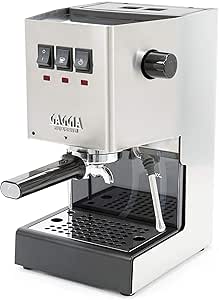 | Best for Hands-On Espresso Traditionalists | Model: RI9380/46 | Finish: Brushed stainless steel | Pressure: 9 bar | VIEW ON AMAZON | See Our Full Breakdown |
| rated prosumer espresso machine | Dimensions | Weight | Wattage | Voltage |
|---|---|---|---|---|
| De’Longhi La Specialista Opera | 17.72"D x 17.83"W x 21.38"H | 28.1 pounds | 1450 watts | — |
| Meraki Dual Boiler Espresso Ma | — | — | — | — |
| Breville BES876BSS Barista Exp | 12.5"D x 14.5"W x 16.5"H | 23.7 pounds | 1600 watts | — |
| Breville Bambino Espresso Mach | 13.7"D x 6.3"W x 12"H | 10.9 pounds | 1560 watts | — |
| Espresso Machine with Grinder | 12"D x 10"W x 14"H | 15 pounds | 1350 watts | — |
| Breville Bambino Plus Espresso | 7.6" D x 12.5" W x 12.2" H | 11 pounds | 1560 watts | 120V |
| Breville BES880BSS Barista Tou | 12.7" D x 15.5" W x 16" H | 21.8 pounds | 1680 watts | 120V |
| Breville BES878BSS Barista Pro | 13" D x 14" W x 16" H | 19.5 pounds | 1680 watts | 120V |
| Breville BES870BTR Barista Exp | 13.8" D x 12.5" W x 15.9" H | 22.1 pounds | 1600 watts | 120V |
| De’Longhi Classic Signature Es | 11.22" D x 13.98" W x 15.94" H | 9.3 pounds | 1350 watts | 120V |
| Gaggia RI9380/46 Classic Evo P | 8" D × 9.5" W × 14.2" H | 20 pounds | — | 120V |
More Details on Our Top Picks
De’Longhi La Specialista Opera Espresso Machine with Built-in Grinder
The La Specialista Opera suits buyers who want grinder, tamping support, and milk steaming in one machine without giving up semi-automatic control. Its 15-setting burr grinder and smart tamping reduce some of the repetitive guesswork, while three temperature settings let baristas adjust their brewing approach. Compared with the Breville Barista Express Impress, this De’Longhi adds cold extraction and offers a wider, heavier footprint; the Breville instead provides more grind steps and a smaller listed height and width. The Opera’s steam wand supports microfoam, but dialing in shots and managing the workflow still take practice. Its main compromise is space: at nearly 18 inches wide and over 21 inches tall, it is a substantial countertop commitment.
Pros:- Built-in conical burr grinder offers 15 settings
- Smart tamping technology helps make puck preparation more consistent
- Three active temperature settings provide brewing adjustment
- Steam wand supports microfoam and latte-art practice
Cons:- Large, heavy body needs substantial counter space
- Semi-automatic brewing still requires practice and hands-on adjustments
- Many integrated features may be unnecessary for buyers who want a simpler setup
Best for: Home baristas who want an integrated grinder and tamping assistance, plus the flexibility to make milk drinks and cold coffee.
Not ideal for: Small-kitchen owners or espresso newcomers seeking a simple, compact machine with minimal hands-on dialing in.
- Machine type:Espresso machine
- Operation:Semi-automatic
- Grinder:Built-in burr grinder with 15 settings
- Temperature control:Active temperature control with 3 settings
- Output pressure:19 bar
- Wattage:1450 watts
- Dimensions:17.72″D x 17.83″W x 21.38″H
- Weight:28.1 pounds
Our verdict“Choose the La Specialista Opera if you want an all-in-one machine with helpful tamping support and can spare the counter space.”
Meraki Dual Boiler Espresso Machine with Grinder and Built-In Dual Scales
The Meraki Dual Boiler is the most workflow-focused pick here: independent brew and steam boilers let you prepare milk while pulling a shot, and its built-in scales track dose and yield to within 0.2 g. PID control, a heated grouphead, pre-infusion, and a 58 mm portafilter point toward a setup for baristas who want to refine repeatable recipes. That level of control goes beyond the more guided De’Longhi La Specialista Opera, which bundles smart tamping and cold extraction but lists fewer grinder settings. The Meraki’s 45-setting grinder and commercial rotary pump are compelling on paper, yet they also bring complexity and a larger likely footprint. Buyers who prefer a quick, low-involvement routine may find its hands-on controls and setup more work than benefit.
Pros:- Independent boilers allow brewing and steaming at the same time
- Built-in scales measure dose and yield within 0.2 g
- 45-setting espresso-tuned burr grinder supports fine adjustments
- PID control, heated grouphead, and pre-infusion provide detailed brewing control
Cons:- Advanced controls and setup may take time to learn
- Likely bulkier than compact home machines such as the Breville Bambino
- Its feature set may be excessive for buyers who want simple, repeatable drinks
Best for: Experienced home baristas who want simultaneous brewing and steaming, measured dosing and yield, and room to fine-tune extraction.
Not ideal for: Beginners or buyers seeking a compact, straightforward machine; its advanced setup and controls may add unnecessary complexity.
- Boiler system:Dual boilers: 350 ml brew and 550 ml steam
- Grinder:Espresso-tuned burr grinder with 45 settings
- Built-in scales:Dose and yield measurement within 0.2 g
- Pump:Commercial rotary pump
- Portafilter:58 mm
- Temperature control:PID
- Additional brewing features:Heated grouphead and pre-infusion
Our verdict“Pick the Meraki if precise, simultaneous brew-and-steam control matters more to you than simplicity or a small footprint.”
Breville BES876BSS Barista Express Impress, Brushed Stainless Steel
The Barista Express Impress is a strong fit for someone learning espresso who wants an integrated grinder but still plans to work on dosing, milk texture, and shot adjustments. Its intelligent dosing system and assisted tamping help make puck preparation more consistent, while 25 grind settings offer more adjustment steps than the De’Longhi Opera’s listed 15. Unlike the compact Breville Bambino, this model includes a grinder, so it takes up more counter space but keeps the main espresso workflow together. The manual steam wand leaves room to practice microfoam rather than automating milk preparation. That hands-on approach is rewarding for learners, but the machine is neither especially small nor effortless: first-time users still need to learn grinding, dialing in, and steaming.
Pros:- Integrated conical burr grinder has 25 settings
- Intelligent dosing and assisted tamping support more consistent preparation
- Manual steam wand allows practice making textured milk
- Includes a 54 mm portafilter and stainless steel milk jug
Cons:- Larger and heavier than the grinder-free Breville Bambino
- First-time setup and dialing in can take practice
- Manual milk texturing requires more involvement than an automatic system
Best for: Newer home baristas who want grinder and dosing assistance while building hands-on espresso and milk-steaming skills.
Not ideal for: Buyers with very limited counter space or anyone who wants a compact machine without an integrated grinder.
- Material:Stainless steel
- Grinder:Integrated conical burr grinder with 25 settings
- Water tank capacity:2 liters
- Wattage:1600 watts
- Dimensions:12.5″D x 14.5″W x 16.5″H
- Weight:23.7 pounds
- Portafilter:54 mm stainless steel
- Included milk jug:480 ml stainless steel
Our verdict“Choose the Barista Express Impress if you want one machine to support a guided but still hands-on path into espresso.”
Breville Bambino Espresso Machine, Brushed Stainless Steel
The Breville Bambino is the clear space-saver in this group: at just 6.3 inches wide and 10.9 pounds, it is easier to fit into a crowded kitchen than the grinder-equipped Barista Express Impress or the much larger La Specialista Opera. Its ThermoJet system is specified to reach brewing temperature in three seconds, a practical advantage for quick coffee routines. The tradeoff is that this is not an all-in-one setup: buyers need a separate grinder, and the semi-automatic process still involves manual steps. Its steam wand gives milk-drink makers room to texture milk, though it does not remove the learning curve. For buyers who already own a capable grinder, the Bambino prioritizes a small footprint over integrated features and advanced workflow controls.
Pros:- Compact 6.3-inch width suits tight counter spaces
- ThermoJet system reaches brewing temperature in a stated 3 seconds
- Manual steam wand supports milk texturing
- Lightweight at 10.9 pounds compared with integrated-grinder models
Cons:- No built-in grinder, so a separate grinder is needed
- Semi-automatic brewing and manual steaming still require practice
- Does not offer the integrated dosing and workflow features of the Barista Express Impress
Best for: Apartment dwellers and espresso drinkers with a separate grinder who want a narrow machine for quick home brewing.
Not ideal for: Buyers who need an integrated grinder or want dual boilers and built-in measurement tools in one prosumer setup.
- Operation:Semi-automatic
- Material:Stainless steel
- Heating system:ThermoJet, stated 3-second heat-up
- Water capacity:47 fluid ounces
- Wattage:1560 watts
- Dimensions:13.7″D x 6.3″W x 12″H
- Weight:10.9 pounds
- Filter type:Reusable
Our verdict“Pick the Bambino if counter space and fast startup matter more than having a grinder or advanced controls built in.”
Espresso Machine with Grinder and Frother, 30 Grind Settings, 20 Bar
This unnamed all-in-one model pairs a built-in conical burr grinder with a compact 12-by-10-inch footprint, making it a space-conscious alternative to the considerably wider De’Longhi La Specialista Opera. Its 30 grind settings and PID temperature control offer useful adjustment, while the LCD display and support for whole beans or ground coffee add flexibility. The listed 20-bar pump is one spec, not a guarantee of better espresso than the other machines; grind quality and dialing in still matter. Compared with the grinder-free Breville Bambino, this machine keeps more of the coffee workflow in one unit, but it also asks the buyer to learn its grinder and controls. The supplied description lists a steam wand and cold-brew function, though the overall feature set and brand details are less established here than with the named Breville and De’Longhi models.
Pros:- Integrated conical burr grinder offers 30 settings
- PID temperature control and LCD display provide adjustment and at-a-glance operation
- Compact listed dimensions of 12″D x 10″W x 14″H
- Accepts whole beans or ground coffee
Cons:- The product details do not identify a brand or specify the grinder and brewing components in depth
- Semi-automatic operation and multiple settings can take practice
- Does not list advanced workflow tools such as built-in scales or dual boilers
Best for: Budget-conscious home users who want a compact machine with an integrated grinder, adjustable settings, and support for both beans and pre-ground coffee.
Not ideal for: Buyers who prioritize a well-established machine platform or want detailed, clearly specified prosumer workflow components such as the Meraki’s dual boilers and built-in scales.
- Operation:Semi-automatic
- Grinder:Integrated conical burr grinder with 30 settings
- Pressure:20 bar
- Temperature control:PID
- Water capacity:1.8 liters
- Wattage:1350 watts
- Dimensions:12″D x 10″W x 14″H
- Weight:15 pounds
- Display:LCD digital display
Our verdict“Choose this model if you want a compact grinder-equipped setup and are comfortable with less-detailed product specifications.”
Breville Bambino Plus Espresso Machine, Brushed Stainless Steel
The Bambino Plus suits buyers who want espresso and milk drinks without giving over a large stretch of counter space. At 7.6 inches deep and 12.5 inches wide, it is the smallest-footprint choice in this group, and its ThermoJet heating cuts waiting between turning it on and pulling a shot. Automatic milk texturing also reduces the technique needed for a latte, unlike the manual steam wand on the Barista Pro and Barista Express. The tradeoff is that the Bambino Plus has no built-in grinder, so you need a separate grinder and must manage more of the workflow yourself. Its water capacity is also described as relatively small, making it less convenient for repeated drinks. I’d choose it for limited counter space, not for an all-in-one setup.
Pros:- Compact 12.5-inch width suits kitchens with limited counter space.
- Automatic milk texturing simplifies making milk-based drinks.
- ThermoJet heating supports quick readiness.
- Precise temperature control supports consistent espresso extraction.
Cons:- No built-in grinder, so the setup needs another piece of equipment.
- Relatively small water capacity can mean more frequent refills.
- Semi-automatic controls still require some practice.
Best for: Apartment dwellers and home baristas who want automatic milk texturing in a compact machine and already own, or are willing to buy, a grinder.
Not ideal for: Buyers seeking a one-box grinder-and-espresso setup or anyone making many drinks between refills.
- Operation mode:Semi-automatic
- Wattage:1560 watts
- Voltage:120V
- Dimensions:7.6″ D x 12.5″ W x 12.2″ H
- Weight:11 pounds
- Color:Brushed stainless steel
Our verdict“Choose the Bambino Plus if counter space and easier milk texturing matter more than having a grinder built into the machine.”
Breville BES880BSS Barista Touch Espresso Machine, Brushed Stainless Steel
The Barista Touch is the lineup’s most guided all-in-one option: its touchscreen, built-in grinder, and automatic milk texturing bring several parts of the espresso routine together. Pre-programmed favorites and adjustable drink settings can make repeat orders easier to reproduce, while the 67-ounce water tank reduces refill interruptions compared with the Bambino Plus’s smaller-capacity setup. That convenience comes at the cost of counter space: at 15.5 inches wide and 16 inches high, it is substantially larger than the Bambino Plus. It also leaves less of the hands-on workflow to the user than the Barista Pro, whose manual steam wand better suits people who want to practice milk texturing themselves. I’d pick the Touch for guided customization, but skip it if compactness or manual control is the priority.
Pros:- Built-in conical burr grinder combines grinding and brewing in one machine.
- Touchscreen and saved favorites make drink adjustments easier to repeat.
- Automatic microfoam texturing reduces the skill needed for milk drinks.
- 67-ounce water tank supports multiple drinks before refilling.
Cons:- Larger footprint needs more counter space than the Bambino Plus.
- Multiple settings and features may take time for beginners to learn.
- Automatic milk texturing offers less hands-on control than the Barista Pro’s manual wand.
Best for: Households that want an integrated grinder, guided touchscreen controls, and repeatable customized milk drinks.
Not ideal for: Small-kitchen buyers or hands-on espresso hobbyists who prefer a manual steam wand and fewer guided controls.
- Operation mode:Fully automatic
- Wattage:1680 watts
- Voltage:120V
- Water tank capacity:67 oz
- Dimensions:12.7″ D x 15.5″ W x 16″ H
- Weight:21.8 pounds
- Warranty:2 years
Our verdict“Choose the Barista Touch if you want an integrated grinder and guided customization, and have room for its larger body.”
Breville BES878BSS Barista Pro Espresso Machine, Brushed Stainless Steel
The Barista Pro combines an integrated conical burr grinder with a manual steam wand, giving buyers a practical middle ground between an all-in-one machine and a more hands-on routine. Its LCD display helps track the process, while the manual wand leaves room to shape milk texture and practice latte art. That makes it a better fit for skill-building than the Barista Touch, which automates milk texturing and guides more of the drink-making process. The Pro’s ThermoJet heating helps reduce the wait to get started, but its 14-inch width and 16-inch height still require dedicated counter space. It is also a less forgiving choice for someone who wants milk drinks with minimal technique. I’d pick it over the Touch when manual milk control matters more than touchscreen-led convenience.
Pros:- Integrated conical burr grinder keeps grinding and brewing in one setup.
- Manual steam wand gives control for milk texture and latte art.
- ThermoJet heating supports quick readiness.
- LCD interface presents brewing progress and settings.
Cons:- Manual milk steaming takes practice, unlike the Barista Touch’s automatic texturing.
- Its 14-inch width and 16-inch height need a substantial counter area.
- The grinder-and-machine combination weighs 19.5 pounds.
Best for: Home baristas who want a built-in grinder and quick heat-up, but also want to learn manual milk steaming and latte art.
Not ideal for: Beginners looking for automatic milk texturing or buyers with little space for a full-height machine.
- Wattage:1680 watts
- Voltage:120V
- Water tank capacity:67 oz
- Bean hopper capacity:1/2 lb
- Dimensions:13″ D x 14″ W x 16″ H
- Weight:19.5 pounds
- Material:Stainless steel
Our verdict“Choose the Barista Pro if you want a built-in grinder but would rather develop manual steaming skills than rely on automatic milk texturing.”
Breville BES870BTR Barista Express Espresso Machine, Black Truffle
The Barista Express pairs a built-in conical burr grinder with semi-automatic brewing, so buyers can grind and pull shots on one machine while keeping direct control over the process. Its PID temperature control supports more consistent extraction, and the manual steam wand invites hands-on milk texturing. Compared with the Barista Touch, it offers a less guided, more tactile workflow; compared with the Barista Pro, it is a clear alternative for shoppers who prioritize semi-automatic operation. The tradeoff is that the routine takes practice, and at 22.1 pounds it is the heaviest option in this five-product group. Its 12.5-inch width is manageable, but its depth and height still call for a dedicated spot. I’d choose it for control, not for the easiest learning curve.
Pros:- Integrated conical burr grinder avoids the need for a separate grinder.
- PID temperature control supports consistent brewing temperature.
- Manual steam wand allows hands-on milk texturing.
- 67-ounce water tank limits interruptions for refills.
Cons:- Manual grinding, shot preparation, and steaming require practice.
- At 22.1 pounds, it is heavy to move or reposition.
- The deeper body needs more counter depth than the Bambino Plus.
Best for: Home espresso drinkers who want an integrated grinder, semi-automatic shot control, and a manual wand for learning milk technique.
Not ideal for: People who want touchscreen guidance, automatic milk texturing, or a lightweight machine they can move often.
- Operation mode:Semi-automatic
- Wattage:1600 watts
- Voltage:120V
- Water tank capacity:67 oz
- Bean hopper capacity:1/2 lb
- Dimensions:13.8″ D x 12.5″ W x 15.9″ H
- Weight:22.1 pounds
Our verdict“Choose the Barista Express if you want an all-in-one machine with semi-automatic control and are prepared to learn its manual workflow.”
De’Longhi Classic Signature Espresso Machine with Adjustable Milk Frother
The De’Longhi Classic Signature stands apart from the Breville all-in-ones because it uses ground coffee rather than building a grinder into the machine. That keeps the routine focused on brewing and frothing, but means buyers must supply pre-ground coffee or a separate grinder; it is not the pick for someone seeking a complete bean-to-cup setup like the Barista Pro or Barista Touch. Its adjustable steam wand and customizable presets add flexibility for common drinks, while the removable tank makes refilling more straightforward. At 9.3 pounds, it is much lighter than those Breville machines, though its nearly 14-inch width is not as narrow as the Bambino Plus. The listed fully automatic mode may appeal to convenience-minded buyers, but its ground-coffee input limits freshness control unless you grind separately.
Pros:- Adjustable steam wand accommodates different milk-frothing preferences.
- Customizable presets support convenient preparation of familiar drinks.
- Removable tank makes refilling easier.
- At 9.3 pounds, it is lighter than the Breville grinder-equipped machines.
Cons:- Ground-coffee input means there is no integrated grinder for fresh grinding.
- It is not listed as compatible with coffee pods.
- Nearly 14 inches wide, so it is not as narrow as the Bambino Plus.
Best for: Buyers who already use ground coffee and want a lighter espresso machine with an adjustable frother and customizable drink presets.
Not ideal for: Bean-to-cup shoppers who want an integrated grinder, or pod users seeking pod compatibility.
- Operation mode:Fully automatic
- Coffee input:Ground coffee
- Output pressure:15 bar
- Wattage:1350 watts
- Voltage:120V
- Dimensions:11.22″ D x 13.98″ W x 15.94″ H
- Weight:9.3 pounds
Our verdict“Choose the De’Longhi Classic Signature if you prefer ground coffee, adjustable milk frothing, and a lighter machine over an integrated grinder.”
Gaggia RI9380/46 Classic Evo Pro Espresso Machine, Brushed Stainless Steel
The Gaggia Classic Evo Pro suits buyers who want a traditional semi-automatic workflow and commercial-style components without a built-in grinder. Its 9-bar pressure, portafilter, and commercial single- and double-shot baskets give you room to refine dosing and extraction, while the steam wand supports manual milk texturing. Compared with the Breville Barista Express, it leaves grinding to a separate machine, so the setup takes more counter space and coordination; in return, it avoids bundling in a grinder you may not want. The 2.1-liter reservoir means fewer refills during regular home use, and its compact footprint is easier to place than many all-in-one setups. The tradeoff is a more hands-on routine, plus a 20-pound body that is not convenient to move often.
Pros:- Commercial single- and double-shot baskets support a more hands-on approach to espresso.
- 9-bar brewing pressure and a commercial-style steam wand suit espresso and milk-drink preparation.
- 2.1-liter water capacity reduces how often the reservoir needs refilling.
- Brushed stainless steel housing and Italian manufacture give it a durable, classic machine profile.
Cons:- No built-in grinder, unlike the Breville Barista Express, so a separate grinder is needed for a complete setup.
- Manual brewing and milk steaming require more practice than a guided or automated machine.
- At 20 pounds, it is relatively heavy to move or reposition.
Best for: Home espresso enthusiasts who already own a capable grinder and want manual control, commercial-style baskets, and a traditional steam wand.
Not ideal for: Beginners seeking a guided, all-in-one machine or buyers who want a built-in grinder and a faster setup; the separate grinder and manual workflow add steps.
- Model:RI9380/46
- Finish:Brushed stainless steel
- Pressure:9 bar
- Water capacity:2.1 liters
- Power:1200 watts
- Voltage:120V
- Dimensions:8″ D × 9.5″ W × 14.2″ H
- Weight:20 pounds
- Included baskets:Pressurized double-shot, commercial single-shot, and commercial double-shot baskets
Our verdict“Choose the Gaggia if you have a good grinder and want a traditional, hands-on prosumer setup; skip it if convenience and an all-in-one design matter more.”
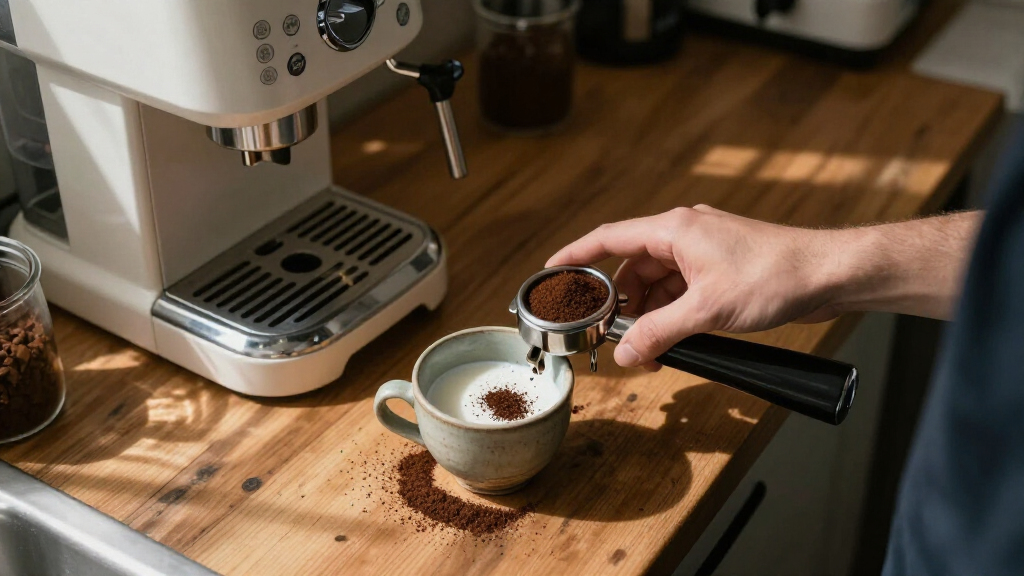
How We Picked
I compared these machines as home prosumer setups, giving weight to espresso workflow, temperature and pressure control, milk preparation, grinder integration, and the learning each model asks of its owner. I also considered day-to-day usability, cleaning demands, footprint, and how well a machine can suit someone who wants to improve rather than rely on preset drinks.
The order reflects the balance of capability and accessibility, not a claim that every buyer needs the most feature-rich machine. Machines with strong control and useful workflow advantages rank ahead of simpler or more specialized picks, while compact and beginner-friendly models retain a place for buyers with different priorities. Product-specific performance can vary with grinder setup, beans, water, and technique, so I treat machine features as part of a complete espresso routine rather than guarantees of cup quality.
Factors to Consider When Choosing Rated Prosumer Espresso Machine
Before choosing, decide what you want the machine to take off your hands and what you want to learn yourself. A feature-heavy machine can save steps, but it cannot replace a suitable grinder or good upkeep.
Choose a workflow you will use every morning
Think through the whole sequence: grinding, dosing, tamping, pulling a shot, steaming milk, and cleaning. Integrated grinders and assisted tamping can make the routine more orderly, but they also tie more of your setup to one machine. A separate grinder gives you room to change or upgrade that part without replacing the espresso machine. Buyers who value repeatable, quick drinks may prefer guided controls, while people who enjoy adjusting recipes may want fewer prompts and more manual input. Avoid paying for automation you will rarely use, but do not underestimate how much a simpler workflow can help you make coffee consistently.
Decide how much control you want over milk
Milk preparation is a major dividing line between home machines. Assisted or automatic steaming can make texture more repeatable and reduce the coordination needed for milk drinks, which helps newer users. A manual wand gives you more direct control over texture and temperature, but asks for practice and cleanup after each session. If you mostly drink straight espresso, a sophisticated milk system may add cost and complexity without improving your routine. If you make several milk drinks in a row, consider how quickly the machine can move between brewing and steaming. Match the milk system to your usual drinks, not an occasional café-style project.
Treat the grinder as part of the espresso machine
Espresso requires a grinder that can make fine, consistent adjustments; a machine with a built-in grinder is convenient only if its adjustment range suits your beans and preferences. Integrated grinders keep the setup compact and reduce the number of separate purchases, but they can limit upgrade flexibility. A standalone grinder costs counter space and adds another tool to clean, yet lets you improve grinding independently. Do not assume a high pressure figure or a long list of grind settings guarantees good extraction. Fresh beans, dose consistency, and fine adjustment usually matter more than headline numbers. If you already own a capable espresso grinder, a machine without one may be the better fit.
Balance boiler design, speed, and counter space
Boiler and heating design affect how a machine handles brewing and milk steaming, especially when you prepare both close together. A dual-boiler setup can support simultaneous brewing and steaming, but it may bring a larger footprint and more system complexity. Compact machines can suit small kitchens and occasional use, though you may need to work in a more deliberate sequence. Measure not only the machine’s base but also space above it for filling and room beside it for a grinder, tamper, and milk pitcher. Check your likely daily volume before prioritizing speed; a faster workflow has little value if the machine crowds out the rest of your setup. Pick capacity for your real household routine rather than a rare gathering.
Plan for cleaning, water, and repair access
Espresso machines need regular attention: spent grounds, milk residue, and mineral buildup can all undermine performance over time. Automatic prompts or accessible parts may simplify care, but no design removes the need to follow cleaning instructions. Water quality matters because mineral content can affect both flavor and scale buildup; check the manufacturer’s guidance before choosing a filter or descaling routine. A machine with more internal features may offer convenience while making repair or maintenance more involved. Consider whether replacement parts and service information are available where you live. The easiest machine to own is often the one whose routine care you will actually keep up with.
Frequently Asked Questions
Should I choose an integrated grinder or buy one separately?
An integrated grinder saves counter space and makes it easier to start with a single coordinated setup. A separate grinder gives you more choice over grind adjustment and lets you upgrade the grinder without replacing the machine. If you already have a grinder suitable for espresso, paying for another one may not add much value. If you are starting from scratch, compare the integrated grinder’s adjustment options with your interest in changing beans and recipes. For buyers who expect to refine their technique, flexibility can matter more than a tidier footprint.
Is a dual-boiler machine worth choosing for home use?
A dual boiler is most useful when you regularly make milk drinks and want brewing and steaming to happen at the same time. It can make a busy routine smoother, particularly when preparing several drinks in succession. If you usually make one espresso at a time or do not steam milk, that capability may not justify the machine’s added size and complexity. Consider your typical number of drinks, not the busiest day of the year. A compact, simpler machine can be a better match when counter space and ease of care matter more than speed.
Which kind of machine makes sense for a first-time home barista?
A first-time buyer should prioritize a workflow that makes dosing, tamping, and milk preparation manageable, rather than choosing solely by the number of controls. Guided features can shorten the learning curve, while a compact machine can leave room to improve with a separate grinder later. Think about whether you want to learn manual steaming or prefer assistance with milk drinks. Also leave room in your setup for a scale, cleaning supplies, and a knock box if needed. A machine that fits your habits is more useful than one that demands a routine you will not maintain.
Do more pressure bars or grind settings mean better espresso?
Those figures alone do not tell you how consistently a machine can make a good shot. Espresso quality depends on the relationship between the grind, dose, water, and extraction, along with the machine’s control and the user’s technique. A high advertised pressure number does not automatically mean better flavor, and a count of grind settings does not describe how useful each adjustment is. Look for practical control, clear operating guidance, and a grinder that can make suitably fine changes. Treat specifications as clues about workflow, not a direct ranking of cup quality.
Should I buy a machine with automatic milk steaming if I mainly drink espresso?
If straight espresso is your usual drink, automatic milk features are unlikely to be a deciding advantage. They can still be useful for occasional guests, but they add equipment and a cleaning task that you may rarely use. Put more emphasis on grinder quality, shot control, and how comfortably the machine fits your counter. If your preferences shift toward cappuccinos or lattes, assisted steaming can make those drinks easier to repeat. Choose for your regular routine while allowing a little room for the drinks you make often enough to justify the extra features.
Conclusion
For a strong combination of control and integrated features, I would start with the Meraki Dual Boiler as best overall, while recognizing that its capability may exceed a lighter-use routine. The Breville Barista Express is my best-value direction for buyers who want an all-in-one setup, and the Barista Touch is the best premium fit for people who value guided drink preparation. For beginners who want a compact machine and are comfortable pairing it with a grinder, I would look at the Bambino Plus; choose the standard Bambino if assisted milk steaming matters less. For hands-on control and a more traditional approach, the Gaggia Classic Evo Pro is the specific-needs pick. Match the machine to how you make coffee, then give equal attention to the grinder, beans, water, and care routine.
Fall Picks
fall essentials
As an affiliate, we earn on qualifying purchases.