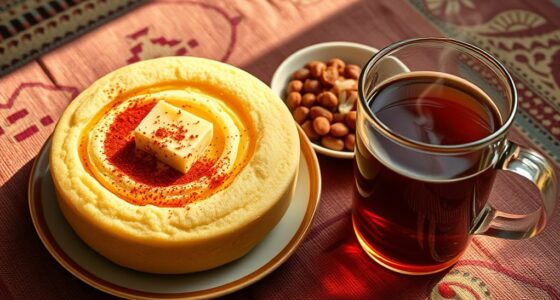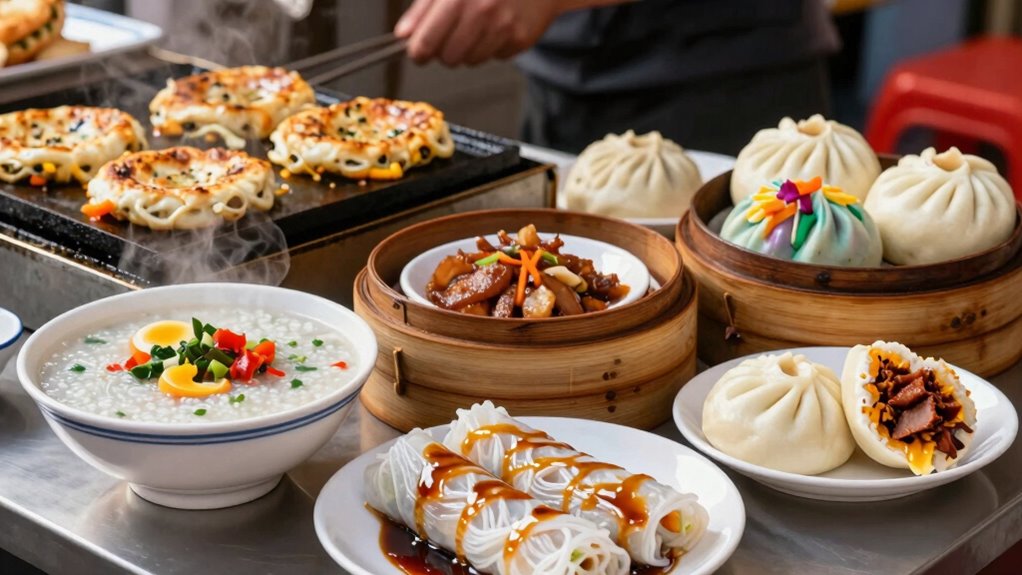

You might think all Chinese breakfasts are similar, but they vary more than most realize. In the north, you’ll find quick, hearty foods like steamed buns and fried dough sticks, while the south favors relaxed meals like dim sum and rice noodles served with delicate teas. Western regions add unique flavors from Tibetan and Uyghur cultures, emphasizing customs and social rituals. Exploring these regional differences reveals a rich tapestry of traditions that go beyond stereotypes—there’s much more to discover.
Listen free for 30 days with Audible
Thousands of audiobooks and originals — cancel anytime.
As an affiliate, we earn on qualifying purchases.
Key Takeaways
- Northern breakfasts prioritize quick, hearty foods like steamed buns and congee, reflecting practical, on-the-go customs.
- Southern breakfasts feature delicate teas and diverse dishes like dim sum, emphasizing social and relaxed dining.
- Western regions incorporate ethnic influences such as Tibetan and Uyghur foods, with unique flavors and rituals.
- Tea culture and etiquette vary regionally, with southern China emphasizing social, mindful tea-drinking practices.
- Local customs deeply influence breakfast rituals, showcasing China’s rich cultural and spiritual diversity across regions.
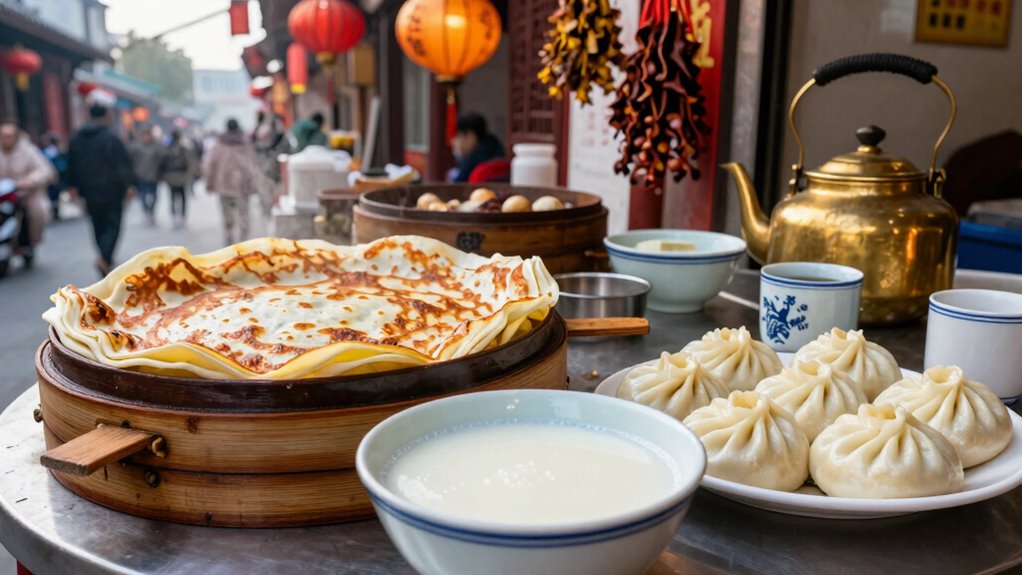
Many people assume Chinese breakfasts are fairly uniform, but in reality, they vary considerably from region to region. If you travel across China, you’ll quickly notice how local customs shape the way people start their day. This diversity isn’t just about different dishes; it extends deeply into the tea culture and breakfast etiquette that define each region’s morning routines. Understanding these nuances helps you appreciate the cultural richness behind each local breakfast experience.
Chinese breakfast customs vary regionally, shaped by local dishes, tea traditions, and etiquette, revealing rich cultural diversity.
In northern China, breakfast often revolves around hearty, filling foods like steamed buns, fried dough sticks (youtiao), and congee. Here, tea plays a supporting role rather than taking center stage, with simple cups of green or black tea accompanying the meal. Breakfast etiquette emphasizes efficiency and straightforwardness, with many locals grabbing breakfast on the go. You might find vendors selling warm buns or porridge on busy street corners, and it’s common to eat quickly before heading to work or school. The focus is on practicality, and tea is typically served in small, straightforward cups, sometimes with a quick sip between bites, rather than elaborate tea ceremonies.
Contrast this with southern China, where tea culture takes a more prominent role. In places like Guangdong or Fujian, breakfast often includes dim sum, rice noodles, or congee served with an array of side dishes. Here, breakfast etiquette encourages a more relaxed, social atmosphere—people gather in teahouses to enjoy their meals and sip delicate teas like jasmine or oolong. The act of drinking tea isn’t just about hydration; it’s about creating a calm, communal experience. You’re expected to take your time, savoring both the food and the tea, often engaging in polite conversation. The etiquette emphasizes respect and patience, with gentle gestures and a mindful approach to tea pouring and drinking that reflects the region’s refined tea culture. Additionally, the regional variations in tea highlight the diverse ways tea is integrated into breakfast routines across China, shaped by local customs and regional preferences. These differences are often reinforced by the distinctive customs that accompany tea drinking, shaping each region’s unique approach to breakfast.
In the west of China, you’ll find breakfast customs influenced by Tibetan, Uyghur, or other ethnic traditions, with unique foods and tea practices. These regions often feature strong, flavored teas like butter tea, which is deeply embedded in their breakfast etiquette. Drinking tea here can be a ritual, symbolizing hospitality and community. The etiquette may involve specific gestures, such as offering tea with both hands or pouring for others before yourself. These customs reflect a culture where breakfast is more than just nourishment; it’s a social and spiritual act.
As an affiliate, we earn on qualifying purchases.
Frequently Asked Questions
How Do Regional Breakfast Ingredients Differ Across China?
You’ll notice regional breakfast ingredients differ greatly across China, showcasing diverse flavors and ingredient diversity. In the north, you might enjoy hearty wheat-based foods like mantou and soy milk, while southern regions favor rice porridge and fresh dim sum. In the east, seafood and pickled vegetables are common, and in the west, you’ll find hearty lamb dishes and flatbreads. These regional flavors reflect local ingredients and cultural traditions, making each breakfast unique.
Are There Specific Health Benefits Associated With Regional Breakfast Dishes?
You can hit two birds with one stone by enjoying regional Chinese breakfasts, which often boast unique health benefits. Nutritional variations cater to different dietary restrictions, like high-protein options in northern dishes or digestive aids in southern recipes. These traditional dishes may boost your immune system, improve digestion, and provide essential vitamins. So, savoring regional breakfasts not only delights your palate but also helps support your overall well-being.
How Do Local Cultures Influence Breakfast Presentation Styles?
You notice that local cultures heavily influence breakfast presentation styles through cultural symbolism and presentation art. In some regions, dishes are arranged to reflect traditions or beliefs, like auspicious symbols for good fortune. You see vibrant colors, intricate plating, and specific serving methods that honor cultural identity. These elements turn breakfast into a visual expression of history and values, making each regional style uniquely meaningful and visually appealing.
What Are Common Beverages Served With Regional Chinese Breakfasts?
They say, “You are what you drink,” and with Chinese breakfasts, beverages play a essential role. You’ll often find tea varieties like green, black, or jasmine served alongside breakfast, respecting local breakfast etiquette. These drinks complement dishes perfectly and help wake you up. Whether it’s a steaming cup of soy milk or herbal tea, these beverages are integral, adding warmth and tradition to your morning routine.
How Have Modern Influences Changed Traditional Breakfast Menus?
Modern influences have transformed traditional Chinese breakfast menus by introducing fusion cuisines, blending local flavors with international ingredients. You might find Western-style toast alongside congee or dim sum with a modern twist. Breakfast etiquette has also shifted, making meals quicker and more casual to suit busy lifestyles. These changes reflect evolving tastes, yet many still cherish traditional dishes, creating a dynamic mix that keeps regional breakfasts vibrant and diverse.
Conclusion
So, next time you start your day with a familiar breakfast, remember it’s just one verse in China’s diverse culinary symphony. Each region’s morning meal tells a story, rich with history and culture, like a hidden gem waiting to be discovered. Don’t let the surface fool you—beneath the familiar lies a world of vibrant flavors and traditions. Embrace the journey, and let your taste buds be your guide through China’s breakfast tapestry.
Back to school Picks
back to school
As an affiliate, we earn on qualifying purchases.