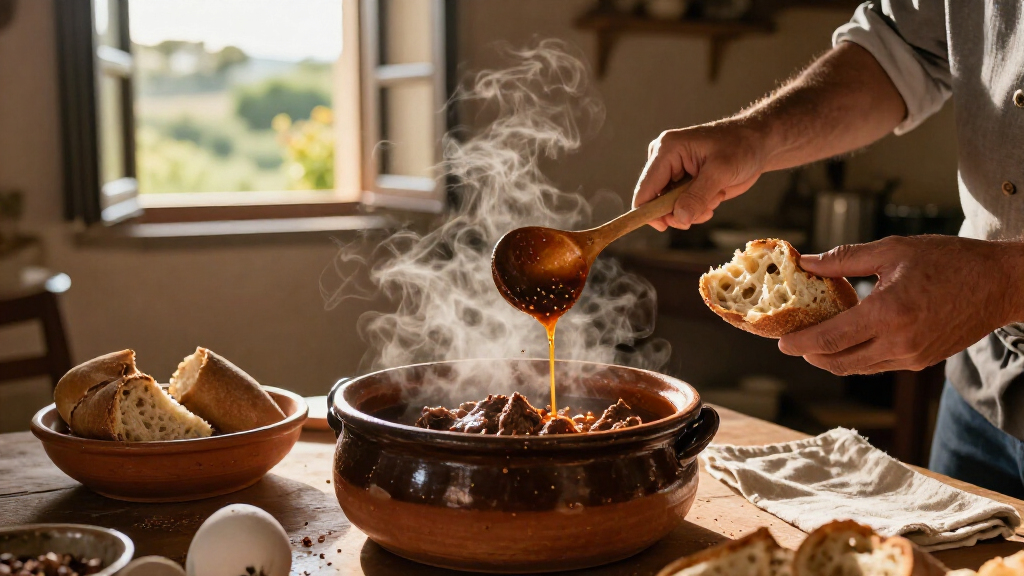

🔍 Read the full analysis: Peposo: The Black-Pepper Beef Stew Of Impruneta on Mad Tasting

Get kitchen staples and gadgets delivered free with Prime
- Fast, free delivery on millions of items
- Prime Video, Amazon Music and more included
- Member-only deals all year
TL;DR
Peposo is a slow-braised Tuscan beef stew associated with Impruneta, near Florence. Its defining ingredients are beef suited to long cooking, dry red wine, garlic and generous black pepper; the popular story that kiln workers created it is difficult to verify.
Peposo, a slow-cooked beef stew associated with Impruneta near Florence, is defined by a short list of ingredients: beef, dry red wine, garlic, salt and plenty of black pepper. A food feature from Mad Tasting describes how several hours of gentle cooking soften collagen-rich beef and concentrate the wine into a dark sauce, while cautioning that the familiar kiln-worker origin story is difficult to verify.
The stew’s character comes from the contrast between tender beef and the warmth of black pepper. Unlike a chile-based stew, peposo gets its heat primarily from pepper, which also contributes aroma as the beef and wine cook together. The name is linked to the Italian word pepe, meaning pepper. The source describes a successful version as peppery and savory, rather than simply hot or dominated by one seasoning.
For a long braise, Mad Tasting recommends cuts such as chuck, shoulder or shin, which contain connective tissue that softens with time in moist heat. Shin can produce a richer, more gelatinous sauce; chuck generally gives soft, distinct pieces. The feature suggests cutting the beef into evenly sized chunks—about two inches across as a home-cooking guide—so the pieces cook at a similar pace.
A dry red wine, such as Chianti or another Tuscan red, is suggested to stand up to the beef and pepper. As the liquid reduces, sweet wine may leave the sauce tasting heavy, the source says. Recipes vary on whether to brown the meat first: browning adds roasted notes but takes extra work, while adding ingredients directly to the pot keeps the method simpler. Either approach depends on maintaining a gentle simmer and cooking until the beef yields easily to a fork.
Peposo The Black-Pepper Beef Stew of Impruneta
This slow-braised Tuscan stew pairs tender beef with dry red wine, garlic and generous black pepper. Its connection to Impruneta is part of local tradition, while its popular kiln-worker origin story remains difficult to verify.
What gives peposo its character
A short ingredient list makes the choices matter.
Choose a braising cut
Chuck, shoulder or shin soften during a long cook. Shin can make the sauce more gelatinous; chuck tends to hold soft pieces.
Pepper leads
Generous black pepper brings warmth and aroma, balanced by savory beef rather than heat alone.
Keep it dry
Dry red wine, such as Chianti or another Tuscan red, stands up to the beef and pepper.
The patient braise
Time and moist heat turn collagen-rich beef tender and give the wine sauce body.
Cut the beef into similarly sized chunks so they cook at a similar pace.
Brown the meat for roasted notes, or add the ingredients directly to the pot for a simpler method.
Cook for several hours and check the texture: the beef is ready when it yields easily to a fork.
Tradition and evidence
Impruneta is associated with both terracotta kilns and peposo.
- Kiln workers are said to have left beef and wine to cook slowly near the furnaces.
- The story fits the dish’s patient method.
- The supplied feature describes the origin as a popular local tale.
- Its details are difficult to verify; the account does not establish when or how the stew began.
Serve the concentrated sauce
The feature suggests accompaniments, without naming one required pairing.
Why Peposo’s Slow Method Matters
The practical point of peposo is how time and moist heat transform a relatively tough cut into tender meat and give the sauce body. The dish’s restrained ingredient list also makes its choices consequential: the cut needs to suit a long braise, the wine should be dry, and the pepper must remain prominent without overwhelming the beef.
For home cooks, the source’s guidance is less about following a fixed clock than watching the pot. Cooking time changes with the cut, chunk size, cookware and heat. A hard boil can leave the meat firm and allow the liquid to evaporate too quickly; a gentle simmer gives connective tissue time to soften. The stew is therefore better suited to a meal planned several hours ahead than to a quick weeknight dinner.
Peposo also offers a food connection to Impruneta’s terracotta heritage. That association gives the stew a local identity, but the account of its origins should not be treated as established history. The distinction matters: a compelling food tradition can explain how people remember a dish without proving exactly when or how it began.
To serve it, the source suggests bread, polenta or mashed potatoes, which can accompany the concentrated sauce. These are serving ideas rather than a required part of the recipe; the feature does not identify a single mandatory accompaniment or one definitive version.
Products Worth Considering

Philips 3300 Series Fully Automatic Espresso Machine with LatteGo

Le Creuset Stainless Steel Roasting Pan with Nonstick Rack, 16.25 x 13.25 in

Weber Lumin Portable Electric Grill, Black
As an affiliate, we earn on qualifying purchases.
Impruneta’s Kilns and the Origin Story
Impruneta, a town near Florence, is associated with terracotta kilns as well as peposo. A popular local story says kiln workers put beef and wine in a pot and left it near the furnaces to cook slowly while they worked. Mad Tasting presents this as local tradition, not verified history: the details are difficult to confirm.
The tale fits the dish’s long, patient cooking method, but that fit is not evidence that the story happened as told. The source does not provide dated records, named witnesses or historical documentation establishing the stew’s origin. Its cooking advice is more specific: choose beef suited to braising, use dry wine and give the pot several hours at a gentle simmer.
There is also no single procedure in the material for every household. Some cooks brown the beef first; others begin with the ingredients in the pot. The stated tradeoff is additional roasted flavor versus additional work, rather than a claim that one method is the only authentic approach.
“The details are hard to verify, but the tale fits the dish’s patient method.”
— Mad Tasting
What the Stew’s History Cannot Confirm
The kiln-worker origin story remains unverified in the supplied material. It does not establish when peposo was first cooked, whether kiln workers created it, or how closely the story reflects the dish’s actual history. The association with Impruneta is presented as a local connection, while the origin account is described as a popular tale.
Cooking details also vary. The source gives no single authoritative recipe, exact cooking temperature or fixed duration, and notes that browning is optional. The amount of pepper is described as generous but not specified, so cooks must judge it to taste. The source likewise does not give a tested quantity of wine or beef in the material supplied here.
How to Plan the Long Braise
The next step for cooks is to select a braising cut, cut it into evenly sized chunks, and choose a dry red wine. Brown the beef if a deeper roasted flavor is wanted, or skip that step for a simpler preparation. Add the beef, wine, garlic, salt and black pepper, then keep the pot at a gentle simmer and check that liquid remains as it cooks.
Allow several hours, but use the meat’s texture rather than a set time to decide when it is ready: it should yield easily to a fork. Serve with bread, polenta or mashed potatoes. The material provides no scheduled culinary event, new announcement or follow-up historical research; the kiln-worker story remains a tradition rather than a confirmed account.
Key Questions
What is peposo?
Peposo is a Tuscan beef stew associated with Impruneta, near Florence. It is made with beef, dry red wine, garlic, salt and a generous amount of black pepper, then cooked slowly until tender.
Is the kiln-worker origin story proven?
No. Mad Tasting describes the story that Impruneta terracotta workers cooked beef and wine near their kilns as a popular local tale whose details are difficult to verify.
Which beef cuts work best for peposo?
Chuck, shoulder and shin are suggested because they are suited to long braising. The source says shin can make the sauce more gelatinous, while chuck tends to hold together in soft chunks.
How long should peposo cook?
Plan for several hours at a gentle simmer, but do not rely on one fixed time. The cut, size of the pieces, pot and heat all affect cooking; the beef is ready when it yields easily to a fork.
What should be served with peposo?
The source suggests bread, polenta or mashed potatoes alongside the stew. They provide a way to serve the dark, concentrated sauce, but no single accompaniment is described as required.
Source: Mad Tasting