Your toast never tastes like a café’s because home equipment and techniques fall short of professional standards. Cafés use high-wattage, advanced toasters, perfect bread selection, and precise control over toasting settings. They often work with denser, crustier breads sliced just right for even crispness. If you want to get closer to café-quality toast, you need to optimize your bread, settings, and technology. Keep exploring, and you’ll discover how to elevate your toast game.
Key Takeaways
- Café toast often uses high-quality, dense bread like sourdough or rustic loaves for better texture and crispness.
- Commercial toasters with advanced heating technology provide more even, consistent browning than typical home appliances.
- Professional cafes carefully select bread slices with uniform thickness and proper storage to ensure optimal toasting results.
- Cafés often fine-tune toaster settings and monitor toasting closely for perfect browning, unlike standard home toasting methods.
- The freshness and specific bread preparation techniques used in cafes significantly impact the flavor and texture of their toast.
What Types of Bread Make the Crispiest, Most Flavorful Toast?

Choosing the right bread is key to achieving crispy, flavorful toast. Not all bread varieties toast equally; some create a perfect crunch while enhancing flavor. Sourdough and rustic country loaves tend to produce the crispiest results because their dense crumb and thicker crust hold up well under heat. Breads with a sturdy texture, like baguettes or artisan multigrain, also deliver that satisfying crunch. On the other hand, softer bread types like white bread or sandwich bread may turn soggy or limp. To boost flavor enhancements, consider slightly toasting the bread first or choosing loaves with added ingredients like seeds or grains, which add depth and complexity to each bite. Selecting the right variety makes a noticeable difference in achieving café-quality toast. Incorporating proper bread selection can significantly improve the texture and flavor of your toasted bread. Additionally, experimenting with toasting techniques can help you achieve the perfect level of crispness every time, while paying attention to heat control ensures your bread doesn’t burn before reaching the ideal crunch. Moreover, understanding bread freshness helps in choosing loaves that toast evenly and retain their texture longer, and using freshly baked bread can elevate the overall quality of your toast.
How to Master Toasting Techniques for Perfect, Café-Quality Results

To get café-quality toast, you need to start with the right bread and adjust your settings accordingly. Keep an eye on the toasting process, flipping the slices when needed to guarantee even browning. Mastering these techniques helps you achieve that perfect, crispy texture every time. Additionally, understanding smart toaster settings can help you customize your toast for consistent results. Paying attention to toaster calibration ensures your toaster heats evenly and produces reliable outcomes. Properly managing home electrical load can also prevent uneven heating and ensure your toaster operates at optimal performance. Being aware of kitchen appliance specifications can further optimize your toasting experience.
Choose the Right Bread
Have you ever noticed how the type of bread you select can make or break your toast? Your bread selection impacts not only flavor but also texture variance, which is essential for that perfect crunch. Opt for sturdier breads like sourdough, rye, or artisanal loaves, as they hold up better during toasting and develop a rich, even crust. Lighter, softer breads may become soggy or unevenly toasted, ruining the café-quality experience. Consider the crust thickness and crumb density—these factors influence how well the bread crisps. Choosing the right bread ensures your toast has the ideal balance of crunch and tenderness, mimicking that professional, café-style result. So, pick wisely, and your toast will instantly elevate to the next level. Remember, Free Floating techniques can help you achieve a more consistent and professional toast every time. Additionally, understanding the significance of bread quality can further enhance your toasting outcomes. A well-selected bread with the right texture contributes significantly to achieving that perfect, bakery-quality toast. For example, researching bread fermentation methods can help you understand how sourdough starters influence flavor and structure.
Adjust Toasting Settings Properly
Once you’ve selected the right bread, the next step is mastering your toaster’s settings to achieve that perfect, café-quality toast. Start by adjusting the browning level to match your preferred bread pairing—lighter for delicate breads, darker for hearty options. Familiarize yourself with your toaster’s features and experiment with different settings until you find the ideal shade. Proper toaster maintenance is essential; clean the crumb tray regularly and ensure the heating elements function correctly to prevent uneven toasting. Keep notes on your preferred settings for different types of bread. Smart toasters with customizable profiles can help streamline this process and ensure consistent results. Consistency is key, so always use the same settings for similar bread to recreate that café-style crunch and color every time. Understanding toasting techniques helps you achieve more uniform results and better texture. Additionally, being aware of your toaster’s performance characteristics can help you troubleshoot uneven toasting issues. With practice, you’ll fine-tune your toaster for perfect results.
Monitor and Flip Consistently
Monitoring your toast closely during the toasting process is essential to achieve that perfect, café-quality finish. Consistent flipping helps guarantee even browning and prevents burning, which can ruin the flavor enhancement you’re aiming for. Keep a close eye on the color and adjust the timing if needed, as different bread types require different toasting times for ideal bread pairing. Regularly flipping the slices allows heat to distribute evenly, resulting in a uniform crust. This technique also gives you control over the final texture, mimicking café-style toasts. Remember, patience and vigilance are key. By mastering this, you’ll elevate your toast game, making every slice taste just as good as a café’s, with the perfect balance of flavor and crunch. Understanding pinball machine weight can also help you move and handle your toaster safely if needed. Additionally, paying attention to AI detection methods can help you refine your approach to achieving consistent toasting results. Proper toasting timing is crucial for avoiding under- or over-toasting, ensuring each slice reaches that ideal level of crispness.
Why Commercial Toasters Make Better Toast: and How to Get That at Home

Commercial toasters often outperform home models because they’re built for speed and consistency, delivering perfectly toasted bread every time. They handle a wide range of bread varieties, from thick bagels to thin slices, without uneven results. This versatility helps debunk common toasting myths, like the idea that only specific bread types can be toasted evenly. Commercial toasters have higher wattage, advanced heating elements, and precise controls, which contribute to uniform browning and faster toasting. To get similar results at home, invest in a high-quality toaster with adjustable settings and wider slots. Using bread that’s properly sliced and not overly frozen also improves your toast. Remember, consistent results come from equipment designed for performance, not just from the bread itself. Additionally, understanding sector performance metrics can help you choose appliances that are engineered for efficiency and durability. Recognizing the importance of proper maintenance can extend the lifespan and performance of your toaster, ensuring consistently excellent toast. Incorporating advanced heating technology can further optimize your toasting experience, making your home appliance nearly as efficient as commercial models.
Does Toast Thickness Really Matter? How Slicing Affects Texture
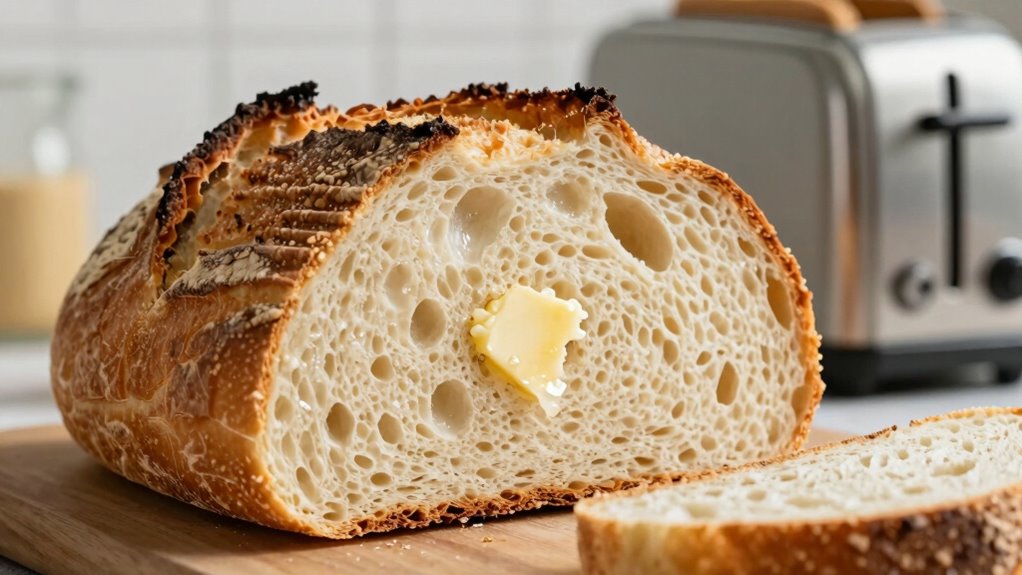
The thickness of your bread slices plays a key role in how your toast turns out. Thinner slices toast faster and tend to be crispier, while thicker slices may stay softer longer. Uniform slices help achieve even browning and the perfect texture every time. Paying attention to slice thickness can make a significant difference in achieving your desired toast quality. Additionally, using proper toasting techniques can further enhance the flavor and texture of your toast. For those seeking a more gourmet experience, experimenting with creative breakfast crepes recipes can elevate your breakfast routine and add variety to your morning meal. Being aware of reconditioning techniques for kitchen appliances can also optimize your breakfast preparation equipment for better results.
Thinner Slices Toast Faster
Slices of bread that are thinner tend to toast faster because there’s less material for heat to penetrate. When your slices are thinner, your toaster can evenly cook the bread more quickly, resulting in a crispier texture. Keep in mind, the thickness also impacts how you store bread—thinner slices dry out faster if not properly stored. Additionally, thinner slices make butter application easier after toasting, creating a smoother spread without tearing. To optimize your toasting process, consider slicing bread to your preferred thickness, balancing toast speed and texture. Remember, thinner slices not only save time but also influence the overall experience of your toast.
- Faster toasting means less time waiting
- Less bread material reduces uneven heating
- Proper bread storage prevents drying out
- Easier butter application for a better spread
- Thinner slices improve overall toast texture
Thickness Affects Crispiness
While the thickness of your bread slices might seem like a minor detail, it actually plays a significant role in achieving the perfect crispiness. Thicker slices have higher bread density, meaning more moisture and structure, which can resist crisping evenly. This results in a softer interior and less crunchy crust. Conversely, thinner slices toast faster and develop a crisper crust because less moisture remains, and heat penetrates more quickly. The crust thickness also varies with slice thickness; thinner slices tend to have a proportionally thicker crust, enhancing crunch. If your slices are too thick, they may stay doughy inside, preventing that satisfying crispiness you get from café toasts. Adjusting thickness helps balance crust and crumb, making your toast crispier and more evenly textured.
Uniform Slices Promote Even Browning
Uneven slices can lead to inconsistent browning, making your toast less appealing. When your bread shape isn’t uniform, some parts toast faster than others, ruining toasting uniformity. To achieve perfect, café-style toast, slice your bread evenly. Uniform slices ensure each piece gets equal heat exposure, resulting in a consistent, golden-brown finish.
Consider these tips:
- Use a sharp bread knife for clean cuts
- Aim for consistent thickness across all slices
- Pay attention to bread shape to prevent uneven toasting
- Avoid overly thick slices that resist browning
- Slice bread just before toasting for freshness
Tuning Your Toaster Settings for Consistent, Golden-Brown Toast
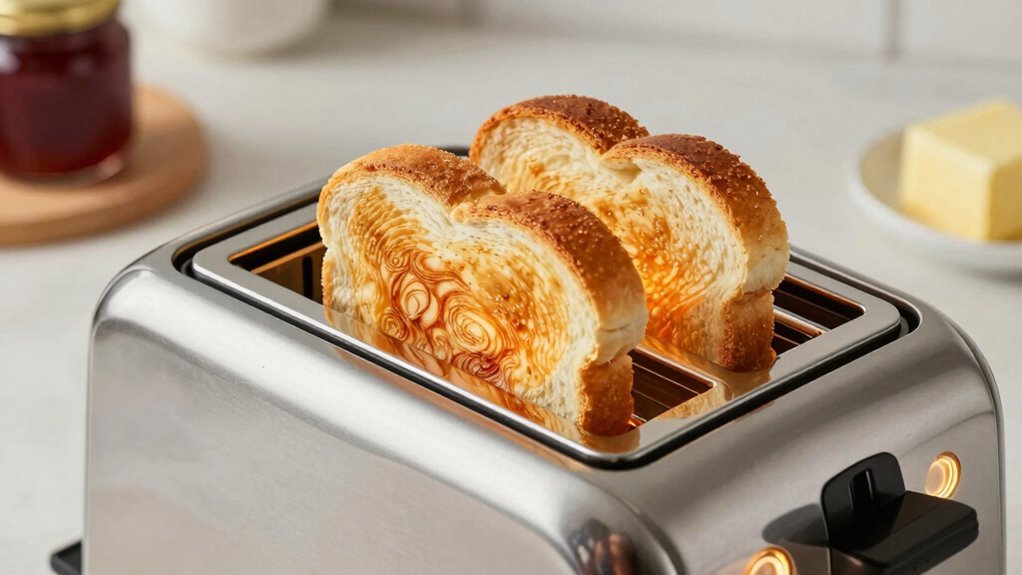
To achieve consistently golden-brown toast, adjusting your toaster’s settings is essential. Your bread selection greatly influences the ideal setting; thicker or denser bread often needs a higher toasting level, while thinner slices require less. Pay attention to your preferred toast texture—whether you like it lightly crisp or deeply toasted—and set your toaster accordingly. Many toasters have adjustable dials or browning controls, so experiment with small increments to find the perfect balance. Keep track of your preferred settings for different bread types, and avoid over- or under-toasting by making gradual adjustments. Consistency comes from understanding how your specific toaster reacts to various settings and bread choices, helping you achieve that café-quality, golden-brown toast every time. Additionally, modern connected appliances can offer precise control and customization to perfect your toasting experience.
Common Toasting Mistakes That Ruin Your Results

Even with perfectly adjusted toaster settings, small mistakes can sabotage your efforts to achieve ideal toast. One common error is using low-quality bread, which can burn easily or lack flavor. Over-toasting can make the bread tough, while under-toasting leaves it pale and soggy. Neglecting to preheat your toaster or rushing the process can lead to uneven results. Another mistake is applying butter too early, which can cause it to melt unevenly or burn. Additionally, using too much butter or not spreading it evenly ruins the texture and flavor. Finally, failing to clean your toaster regularly can cause uneven heating and smoky flavors. Be mindful of bread quality, butter application, and maintenance to avoid these mistakes and get closer to café-quality results.
Insider Tips to Elevate Your Home Toast to Café Standards

Achieving café-quality toast at home is within your reach by mastering a few insider techniques. First, use buttered spreads generously; soft, room-temperature butter melts evenly and creates a richer flavor. To avoid dry or stale bread, store it properly—keep bread in a sealed container or bread box, away from heat and moisture, ensuring freshness. When preparing your toast, consider lightly toasting the bread first, then adding butter or spreads while still warm, allowing flavors to meld perfectly. For an extra touch, opt for high-quality bread with a sturdy crust, which holds up better to toasting. These small adjustments elevate your home toast, making it taste more like what you’d find at a café. With the right storage and spreading techniques, every slice becomes a gourmet experience.
Frequently Asked Questions
Can the Type of Bread Affect the Aroma of Toasted Bread?
Yes, the type of bread affects the aroma of toasted bread. Your bread selection plays a vital role in aroma enhancement, as different breads contain varying ingredients and moisture levels that influence how they toast. Hearty, artisanal breads with richer grains or seeds produce a more complex, inviting aroma, while simpler bread types may lack that fragrant depth. Choosing the right bread can truly elevate your toast’s aroma and taste.
Does the Humidity Level in Your Kitchen Influence Toast Crispiness?
Sure, humidity influence in your kitchen environment definitely affects your toast’s crispiness. When the air is humid, moisture seeps into the bread, making it harder to achieve that perfect crunch. On dry days, your toast crisps up beautifully. So, next time your toast turns out soggy or limp, blame the humidity influence in your kitchen environment—an ironic twist, since the very air you breathe can sabotage your breakfast masterpiece.
Are There Specific Brands of Toasters That Consistently Produce Café-Quality Toast?
Yes, certain commercial toasters and bread brands help you get café-quality toast. Look for high-end commercial toasters with precise temperature controls and even heat distribution. Brands like Waring, KitchenAid, or Breville are dependable choices. Pair these with quality bread brands such as Dave’s Killer Bread or La Brea Bakery. This combination guarantees consistent, crispy, and beautifully browned toast, just like your favorite café.
How Does the Age or Freshness of Bread Impact Toast Texture?
You’ll find that the freshness impact of bread considerably affects your toast’s texture. Storing bread properly, like in a bread box or airtight container, keeps it fresh longer. When bread is too fresh, it can be too moist and soggy after toasting, while slightly stale bread tends to crisp better and yields a more café-like toast. So, aging your bread slightly can help you achieve that perfect, crispy texture you’re after.
Can Pre-Soaking Bread Before Toasting Improve Flavor and Crunch?
You might find that pre-soaking bread before toasting can boost flavor and crunch, especially if you add butter enhancement or a splash of milk. As the bread absorbs moisture, it becomes more receptive to flavor infusion, resulting in a richer taste and improved texture. This coincidence of moisture and heat creates a beautifully crisp exterior and tender interior, making your toast irresistibly café-like with every bite.
Conclusion
If you think café toast is magic, it’s really just science—using the right bread, equipment, and technique. Slicing bread evenly and adjusting your toaster can make all the difference. Some say commercial toasters are unfairly superior, but with a bit of practice, you can get that golden, crispy perfection at home. So don’t just dream about café toast—try these tips and make it happen yourself!