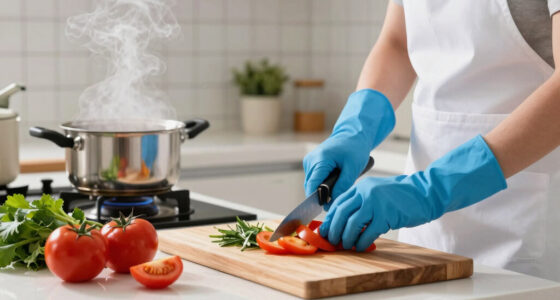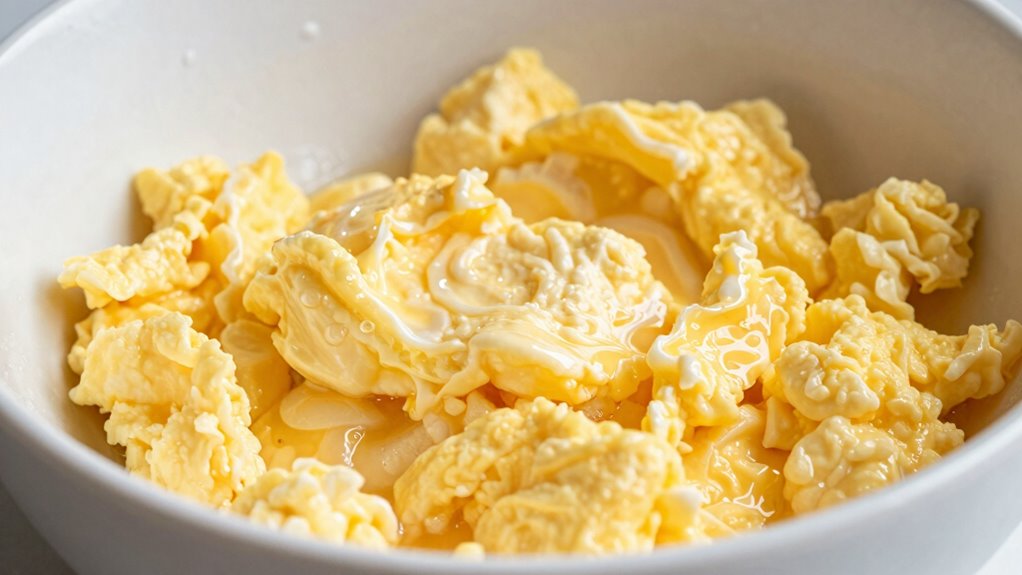

Watery scrambled eggs often happen when you cook at too high a temperature, overmix, or aren’t whisking thoroughly to incorporate enough air. Using eggs that are very fresh can also make this worse because their whites hold more moisture. To avoid this, cook gently over low heat, whisk well to create a fluffy batter, and control moisture and heat carefully. Keep these tips in mind, and you’ll discover how to perfect your scramble every time.

Get kitchen staples and gadgets delivered free — and shop member deals
- Fast, free delivery on millions of items
- Access to Prime Big Deal Days deals on October 6–7
- Prime Video, Amazon Music and more included
Key Takeaways
- Overcooking or cooking at too high a temperature causes moisture loss, making scrambled eggs watery.
- Insufficient whisking and aeration lead to uneven texture and excess water release during cooking.
- Hot spots and uneven heat distribution in the pan cause parts of eggs to overcook and release moisture.
- Using old or cracked eggs increases moisture content and decreases shell integrity, resulting in watery eggs.
- Proper temperature control, thorough whisking, and using fresh eggs help prevent watery scrambled eggs.
As an affiliate, we earn on qualifying purchases.
Why Your Eggs Turn Watery: Common Causes and Fixes
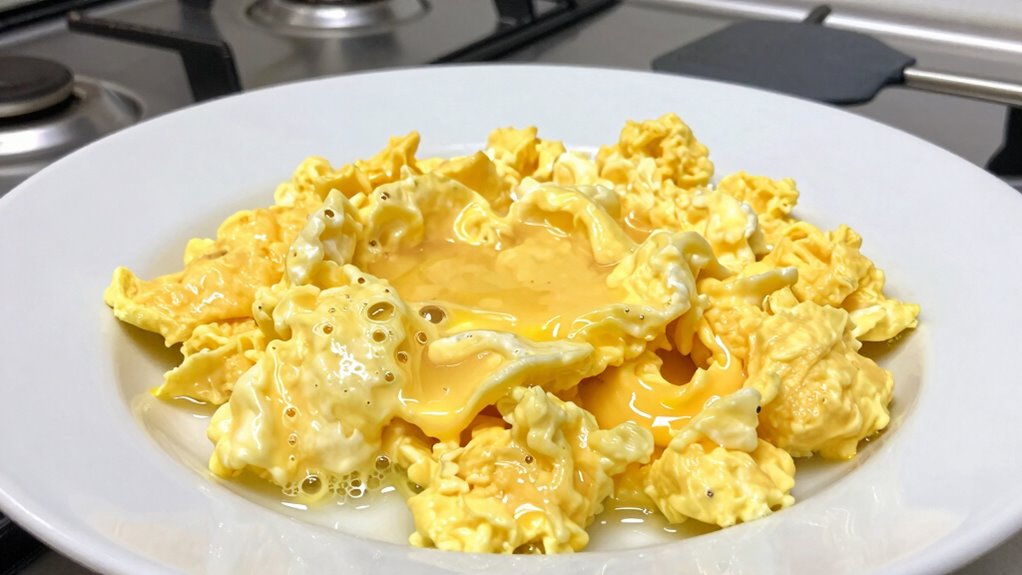
If your scrambled eggs turn watery, the most common cause is overcooking or cooking at too high a temperature. When eggs cook too quickly, they lose moisture retention, resulting in excess liquid. Egg separation can also occur if the eggs aren’t mixed well, causing uneven cooking and more moisture release. To prevent this, whisk the eggs thoroughly to combine whites and yolks evenly, promoting better moisture retention. Cooking over medium-low heat allows eggs to set gently, reducing the risk of watery texture. Avoid rushing the process, as high heat causes proteins to tighten too fast, squeezing out liquid. Using a high-quality skillet with a non-stick surface can help distribute heat evenly and prevent hotspots that cause uneven cooking. Additionally, paying attention to temperature control during cooking helps maintain the ideal moisture balance, ensuring fluffy, non-watery scrambled eggs every time. Proper heat regulation is essential for controlling moisture and achieving the perfect texture. For optimal results, consider simmering at low heat to give eggs more time to cook gently and retain moisture. By managing temperature and ensuring proper egg mixture, you can maintain the right moisture balance, achieving fluffy, non-watery scrambled eggs every time.
Does Egg Freshness Really Matter for Fluffy Scrambled Eggs?
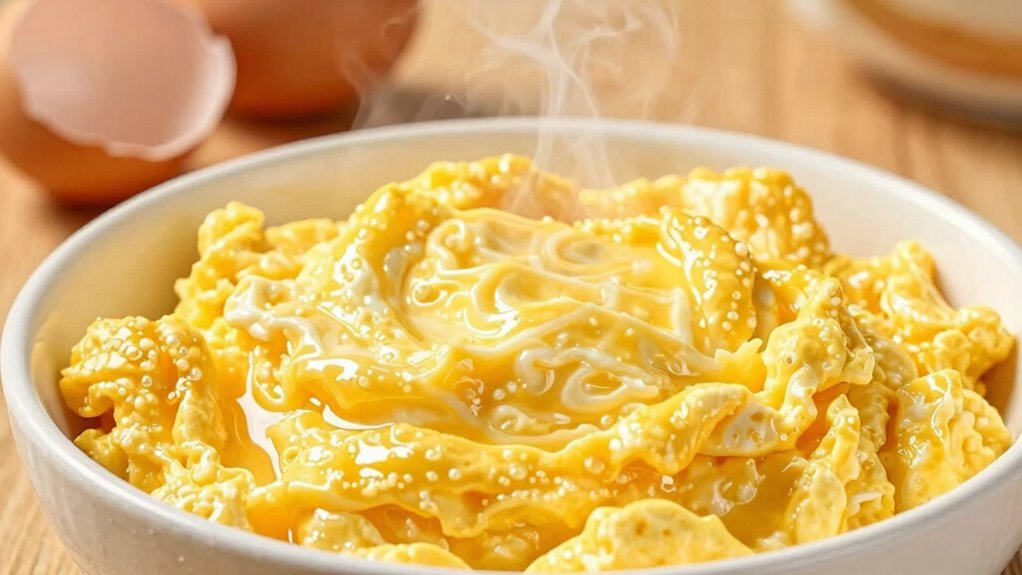
Many cooks believe that using fresh eggs is essential for achieving fluffy scrambled eggs, but in reality, freshness has less impact on texture than you might think. Egg shell quality and storage conditions play a bigger role. Fresh eggs with intact shells are easier to handle and less prone to leakage, but the primary factor for fluffiness is how you beat and cook the eggs, not their age. Proper egg storage conditions—keeping eggs refrigerated and away from drastic temperature changes—help maintain overall quality, but even slightly older eggs can produce fluffy results if prepared correctly. Additionally, understanding egg preservation techniques can help ensure your eggs stay at optimal quality longer. Good shell integrity is indicative of overall egg quality, which influences both safety and cooking performance. To further enhance your results, consider the best storage practices for eggs, which can help prolong freshness and quality. Maintaining the correct storage temperature is crucial for preserving egg quality over time. Ultimately, using eggs within their expiration date and ensuring good shell quality ensures safety and convenience, while your technique determines the final texture of your scrambled eggs.
How Does Cooking Temperature Affect Egg Texture?

Cooking eggs at different temperatures changes their texture because heat causes proteins to denature and bond differently. Using gentle heat results in soft, creamy eggs, while high heat makes them tough and rubbery. Understanding this process helps you control how your eggs turn out every time. Proper heat management is key to achieving the perfect consistency. Additionally, free floating techniques in cooking can help ensure even heat distribution, preventing overcooking in certain areas. Mastering protein denaturation allows you to anticipate how eggs will respond to various cooking methods, giving you more control over texture. Being aware of temperature control techniques can further help you fine-tune your eggs’ final texture for ideal results. For example, maintaining a consistent temperature prevents sudden changes that can cause undesirable textures, making temperature regulation an essential skill in perfecting scrambled eggs.
Protein Denaturation Process
When you heat eggs, their proteins undergo a process called denaturation, which fundamentally changes their structure. This transformation occurs because heat impact causes the proteins to unfold from their natural, compact shape. As the temperature rises, these proteins bond together, forming new networks that turn the liquid egg into a solid or semi-solid mass. The degree of protein denaturation directly influences the egg’s texture; gentle heat causes minimal changes, resulting in tender, moist eggs. Conversely, high heat accelerates denaturation, making eggs tough and rubbery. Understanding this process helps you control cooking temperature effectively, ensuring your scrambled eggs stay soft and creamy instead of becoming watery or overly firm. Proper heat management preserves the desired protein structure for perfect eggs every time. Additionally, using energy-efficient appliances can help maintain precise temperatures, enhancing your cooking results while supporting sustainable practices. Recognizing the importance of temperature control in cooking can also help prevent overcooking and preserve egg quality. Recent advances in AI-driven research have deepened our understanding of protein behavior, opening new possibilities for culinary innovation and food science.
Gentle vs. High Heat
The temperature at which you cook eggs directly impacts their final texture. Using gentle heat allows proteins to coagulate slowly, resulting in tender, creamy eggs. High heat causes rapid protein denaturation, leading to rubbery, dry textures. Proper heat management is key to mastering cooking techniques that prevent watery eggs. Additionally, understanding heat distribution helps in maintaining a consistent temperature across the pan, further preventing overcooking. Employing precise temperature control tools can significantly improve the outcome of your scrambled eggs. Being aware of cooking techniques can also help you adapt your method for perfect results every time. For instance, using even heat sources ensures your eggs cook uniformly and avoid hot spots that can cause uneven textures. Using thermal sensors can give you real-time feedback on the actual temperature, helping to fine-tune your process.
Pro Tips: How Chefs Keep Eggs Fluffy and Non-Watery
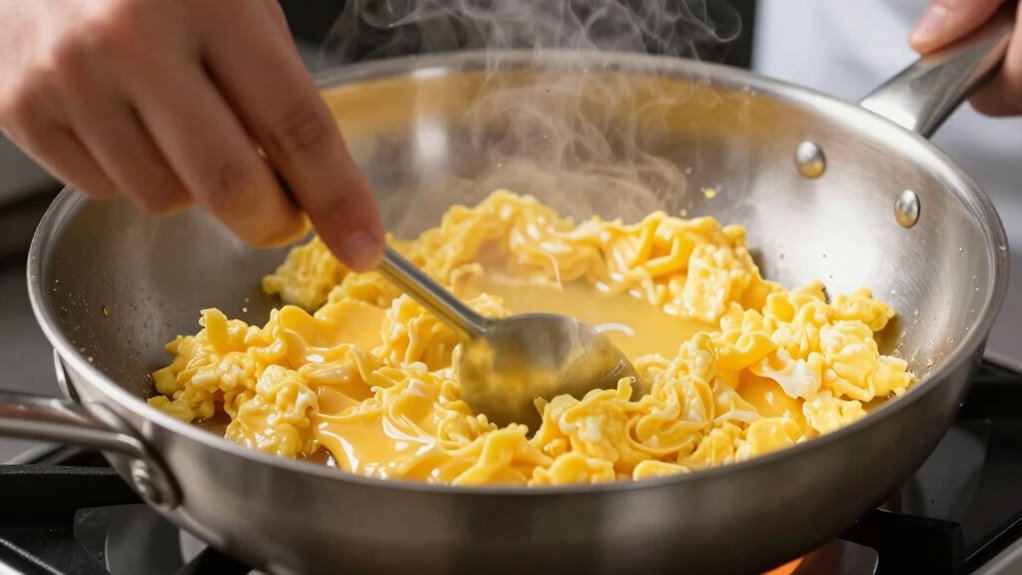
Chefs keep eggs fluffy and prevent them from becoming watery by paying close attention to the preparation process. They use seasoning techniques that enhance flavor without breaking down the eggs’ structure, like adding salt just before cooking or seasoning after. Proper mixing ensures air gets incorporated, creating a light, airy texture. When it comes to serving suggestions, they often present eggs immediately to maintain fluffiness and avoid excess moisture. Using a gentle heat and stirring gently helps retain moisture without overcooking or releasing too much water. Additionally, seasoning in moderation prevents overpowering the eggs and keeps their natural texture intact. Recognizing the importance of protein coagulation helps in controlling the texture and moisture content of your eggs. Maintaining the correct cooking temperature can make a significant difference in avoiding watery eggs. Keeping an eye on heat level prevents the eggs from releasing too much water during cooking. Paying attention to moisture balance is essential for achieving the perfect fluffy scramble and avoiding watery eggs. Understanding thermal expansion can also assist in controlling how eggs set during cooking, ensuring they stay fluffy and firm.
Preparing Eggs Perfectly: Tips Before You Cook

Start by choosing fresh eggs, as they have a better structure for fluffy, non-watery scrambled eggs. Before cooking, whisk the eggs thoroughly to break up the whites and yolks, ensuring a smooth mixture. Proper preparation sets the foundation for perfect eggs every time.
Use Fresh Eggs
Using fresh eggs is essential for achieving fluffy, well-structured scrambled eggs. Fresh eggs typically have better shell quality, making them easier to crack without mess and ensuring minimal contamination. When eggs are fresh, the whites stay firm, and the yolks remain centered, resulting in a more cohesive scramble. Proper egg storage methods also play a crucial role; keep eggs refrigerated in their original carton to preserve freshness and slow down quality deterioration. Avoid using eggs that are past their expiration date or have cracks, as these can introduce unwanted bacteria and affect texture. Fresh eggs create a richer flavor and a more stable structure, preventing your scramble from becoming watery or runny. Prioritizing egg freshness is a simple yet vital step toward perfect scrambled eggs.
Whisk Thoroughly Before Cooking
To guarantee your scrambled eggs turn out light and fluffy, it’s essential to whisk them thoroughly before cooking. Your whisking technique determines how well you incorporate air into the eggs, which affects their texture. Use brisk, circular motions to break up the yolks and blend the whites evenly. Aeration methods, like whisking vigorously for about 30 seconds, create a uniform mixture with tiny air bubbles that help produce soft, fluffy eggs. Avoid under-whisking, which leaves the mixture thick and dense, or over-whisking, which can incorporate too much air and cause watery eggs. Proper aeration ensures a smooth, consistent batter that cooks evenly. Remember, thorough whisking before you heat the eggs is a simple but essential step to achieving perfect scrambled eggs.
Troubleshooting: How to Fix Watery Scrambled Eggs
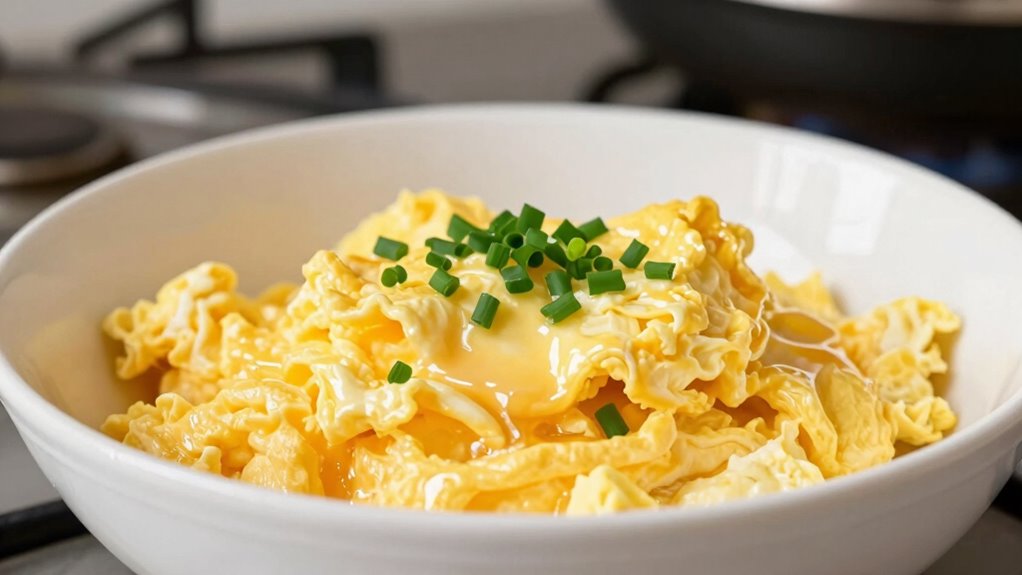
When your scrambled eggs turn out watery, the problem often stems from overcooking or adding too much liquid. To fix this, start by removing the eggs from heat immediately once they reach your desired consistency. Proper egg storage is key; store eggs properly to maintain freshness, which helps prevent excess moisture. Use seasoning techniques wisely—avoid adding too much liquid seasoning or milk. Instead, season eggs after cooking for better control. To salvage watery eggs, try gently folding in some cooked, drained, and well-drained vegetables or cheese to absorb excess moisture. Keep in mind:
| Issue | Solution |
|---|---|
| Overcooking | Remove from heat early, stir gently |
| Excess liquid in eggs | Drain and fold in absorbent ingredients |
| Egg storage (old eggs) | Use fresh eggs for better texture |
| Seasoning techniques | Add seasonings after cooking to prevent added moisture |
Frequently Asked Questions
Can Adding Milk or Water Make Eggs More Watery?
Adding milk or water can make eggs more watery, especially if you use too much. When you add dairy alternatives or baking ingredients like milk, it dilutes the eggs, resulting in a runnier texture. To avoid this, use a small amount or skip liquids altogether. Stick to fresh eggs and beat them well for fluffy, creamy scrambled eggs without excess water.
Does Using Non-Stick Pans Affect Egg Texture?
Using a non-stick pan can influence your egg texture, but it’s not always better. Non-stick disadvantages include potential for uneven heat distribution and the need for less oil, which may cause eggs to stick or cook unevenly if the coating wears off. Pan material effects matter too; for example, stainless steel pans heat more evenly and give eggs a firmer texture, while non-stick surfaces can produce softer, more delicate eggs.
How Does Overcooking Influence Egg Moisture Levels?
Overcooking eggs damages their protein structure, causing them to lose moisture through evaporation. When you cook eggs too long, the heat tightens the protein bonds, squeezing out moisture and making the eggs dry and rubbery. To keep them moist, remove the eggs from heat just before they’re fully set, allowing residual heat to finish cooking. This prevents excessive moisture evaporation and keeps your scrambled eggs tender and creamy.
Are Organic Eggs Less Likely to Turn Watery?
Organic eggs aren’t necessarily less likely to turn watery; egg quality and cooking temperature matter more. When you use fresh, high-quality eggs, they tend to hold moisture better. Keep your cooking temperature moderate to prevent excess water release during scrambling. Overcooking causes protein breakdown and makes eggs watery. So, focus on choosing good eggs and controlling heat to achieve fluffy, firm scrambled eggs without unwanted water.
What’s the Best Way to Reheat Scrambled Eggs Without Losing Texture?
To reheat scrambled eggs without losing texture, use gentle reheating techniques like microwave on low power or stovetop over low heat. Stir frequently to distribute heat evenly, which helps preserve their fluffy consistency. Avoid high heat or overcooking, as this causes eggs to become rubbery and watery. Covering the eggs briefly can also help retain moisture, ensuring they stay moist without becoming watery or tough.
Conclusion
Think of your eggs as a canvas, where each decision shapes the masterpiece. When you master temperature, freshness, and technique, you wield the brush, preventing watery strokes. Your careful touch transforms raw potential into fluffy, inviting clouds—symbols of comfort and mastery. With patience and skill, you turn simple ingredients into a work of art, proving that even in cooking, harmony and precision can elevate the everyday into something extraordinary.
NFL season / tailgating Picks
team gear
As an affiliate, we earn on qualifying purchases.